From Willow to Wickets: The Journey of a Cricket Bat
Cricket is more than a sport — it’s an emotion that connects people across the globe. And at the very center of this beloved game lies the cricket bat. Whether it’s a young player’s first-ever boundary in a local park or a professional batsman’s record-breaking century on the international stage, the cricket bat is always there — silently shaping stories of glory.
But have you ever wondered what goes into the making of this iconic piece of equipment? A cricket bat is not just a block of wood; it’s the result of years of cultivation, craftsmanship, and science. Its journey from willow trees to wickets is fascinating and deserves to be told in detail.
In this in-depth blog, we’ll take you through the entire journey of a cricket bat — from its roots in the willow fields to its role in creating magical cricketing moments.
Step 1: The Birthplace — Willow Trees
Every cricket bat begins its life as a willow tree. There are two primary varieties of willow used for bats:
- English Willow (Salix Alba Caerulea):
- Grown in England, particularly in Essex.
- Soft, lightweight, and high in moisture content.
- Produces bats with great rebound and balance.
- The choice of most professional cricketers.
- Kashmir Willow:
- Grown in Kashmir, India.
- Harder and denser than English willow.
- Slightly heavier bats but much more affordable.
- Widely used by beginners and club-level players.
Willow trees take 12–15 years to mature before they can be harvested. The growth conditions — climate, rainfall, soil fertility, and temperature — determine the quality of the wood and ultimately, the performance of the bat.
Step 2: Harvesting the Willow
Once matured, the willow is carefully cut down and processed into clefts — rectangular blocks of wood that will later be shaped into bats. The harvesting process involves:
- Seasoning: The clefts are air-dried for months or even years to reduce their natural moisture content. This makes the wood stronger and less prone to cracking.
- Sorting & Grading: Each cleft is graded according to its grain structure, density, and overall appearance.
- Grade 1: Premium quality with straight, even grains and minimal blemishes.
- Grade 2 & 3: Good quality with minor imperfections.
- Grade 4 & below: Economical options with visible blemishes but playable quality.
The grading system ensures that bats of all price ranges are available, catering to both professionals and amateurs.
Step 3: Pressing and Shaping
After seasoning, the cleft goes through mechanical pressing. This process:
- Compresses the fibers to improve durability.
- Enhances rebound so the ball springs off the bat’s surface.
- Reduces the risk of cracks.
Shaping the cleft is where craftsmanship shines. Skilled bat-makers use traditional tools to carve the bat, paying close attention to balance and weight. Key aspects include:
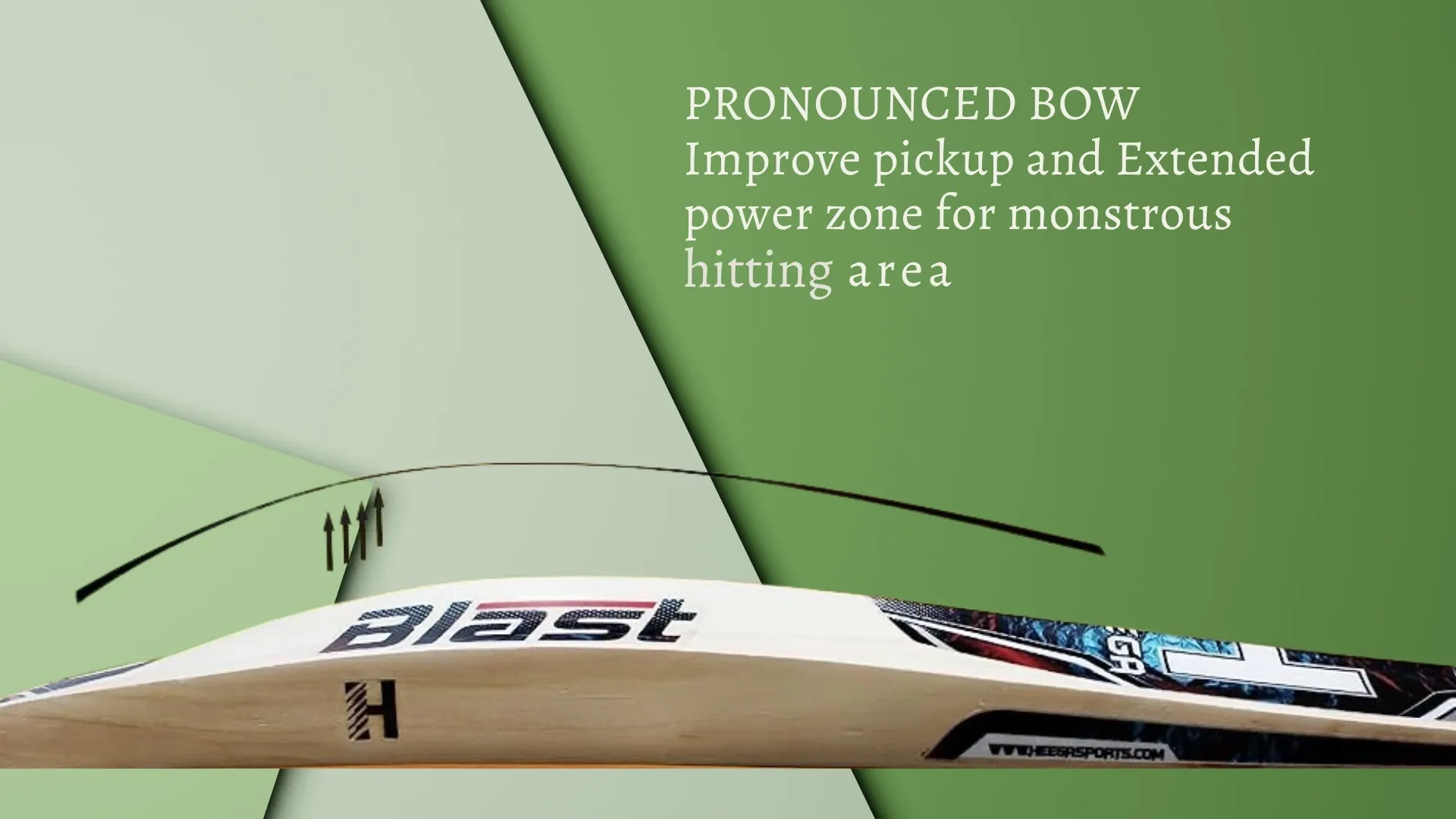
- Profile: Defines the curve and sweet spot. Modern bats often have thicker edges and a low-to-mid sweet spot.
- Spine: The raised ridge at the back of the bat that adds power.
- Weight Distribution: Ensures the bat feels light in hand despite its actual weight.
Step 4: Handle Insertion
A cricket bat is incomplete without its handle. Handles are usually made from cane, reinforced with rubber strips for flexibility. The purpose of the handle is:
- To absorb shock from ball impact.
- To transfer energy from the player’s swing into the ball.
- To provide grip and control.
There are different handle types:
- Round Handle: More common in Asia, suitable for bottom-hand dominant players.
- Oval Handle: Popular in England and Australia, offers better top-hand control.
Step 5: The Finishing Touches
At this stage, the bat finally begins to look like the one we see in matches. The finishing process involves:
- Sanding & Polishing: To smooth the blade.
- Applying Stickers: Branding elements are placed on the bat.
- Adding a Grip: A rubber grip is rolled onto the handle for comfort and better hold.
- Protective Coating: Some bats get an anti-scuff sheet or toe guard for extra durability.
Step 6: Knocking-In — Preparing the Bat
Even though the bat is shaped and finished, it is not ready to face balls yet. The bat must be “knocked-in,” a process that conditions the bat’s fibers to withstand high-speed impacts.
- Traditionally done using a knocking hammer or mallet.
- The face and edges are gently struck repeatedly to compress the fibers.
- Can take several hours but drastically improves durability.
Many modern players also oil their bats lightly with linseed oil to prevent dryness and cracks.
Step 7: From Workshop to Stadium
Once knocked-in, the bat is ready to be used. It travels from workshops to sports stores, academies, and eventually into the hands of aspiring and professional cricketers.
Players choose their bats based on:
- Weight preference (light for quick shots, heavy for power hitters).
- Sweet spot position (low for front-foot players, mid/high for back-foot players).
- Handle shape for control.
A bat is deeply personal for every cricketer. Many professionals test dozens before picking “the one” that feels just right.
Step 8: Modern Technology in Bat-Making
Over the years, cricket bat-making has evolved. Some modern advancements include:
- Computer-aided shaping for precision.
- Advanced pressing techniques to optimize performance.
- Protective coatings like fiberglass or carbon fiber sheets for extended lifespan.
- Custom-made bats tailored to a player’s technique.
Despite these innovations, traditional craftsmanship still plays the biggest role in making a great cricket bat.
The Emotional Journey of a Bat
A cricket bat isn’t just a tool; it’s a companion. From street cricket matches to international tournaments, bats carry memories and emotions:
- A child’s first bat often becomes a lifelong treasure.
- A professional batsman’s record innings may be remembered by the bat they used.
- Every scratch and dent tells a story of battles fought on the pitch.
Bat Care: Keeping the Journey Alive
To make sure your bat lasts long and performs well, proper maintenance is crucial:
- Always knock-in your bat before use.
- Apply protective oil or anti-scuff sheets.
- Store in a cool, dry place away from moisture.
- Avoid using cheap, hard cricket balls that damage the bat.
- Get minor damages repaired promptly.
A well-maintained bat can last several seasons, continuing its journey with you.
Conclusion
The journey of a cricket bat — from willow trees swaying in the fields to the wickets where centuries are scored — is nothing short of magical. It’s a blend of nature, craftsmanship, and technology that creates the soul of cricket.
The next time you hold a bat, remember its story — the years it took to grow, the hours of craftsmanship, and the countless hands that shaped it before you wrote your own cricketing chapter with it.
Shop Now for Premium Heega Cricket Bats
Related posts
 English Willow Cricket Bat Knocking-In Explained: Preparing the Blade Before Match UseLearn how to knock in an English Willow cricket bat, prepare the blade before match use, avoid common mistakes, and protect your bat from premature damage.
 Kashmir Willow Cricket Bat Durability: What Causes Cracks, Surface Wear and Blade Damage?Discover what affects Kashmir Willow cricket bat durability, why cracks and surface damage occur, and how proper care can extend your bat's lifespan.
 Cricket Rules for Kids Explained: Understanding Runs, Wickets, Overs and Fielding Positions.Learn cricket rules for kids, including runs, wickets, overs, fielding positions, batting, bowling, and basic match rules in a simple beginner's guide.