How Should You Improve Your Footwork Against Fast Bowlers?
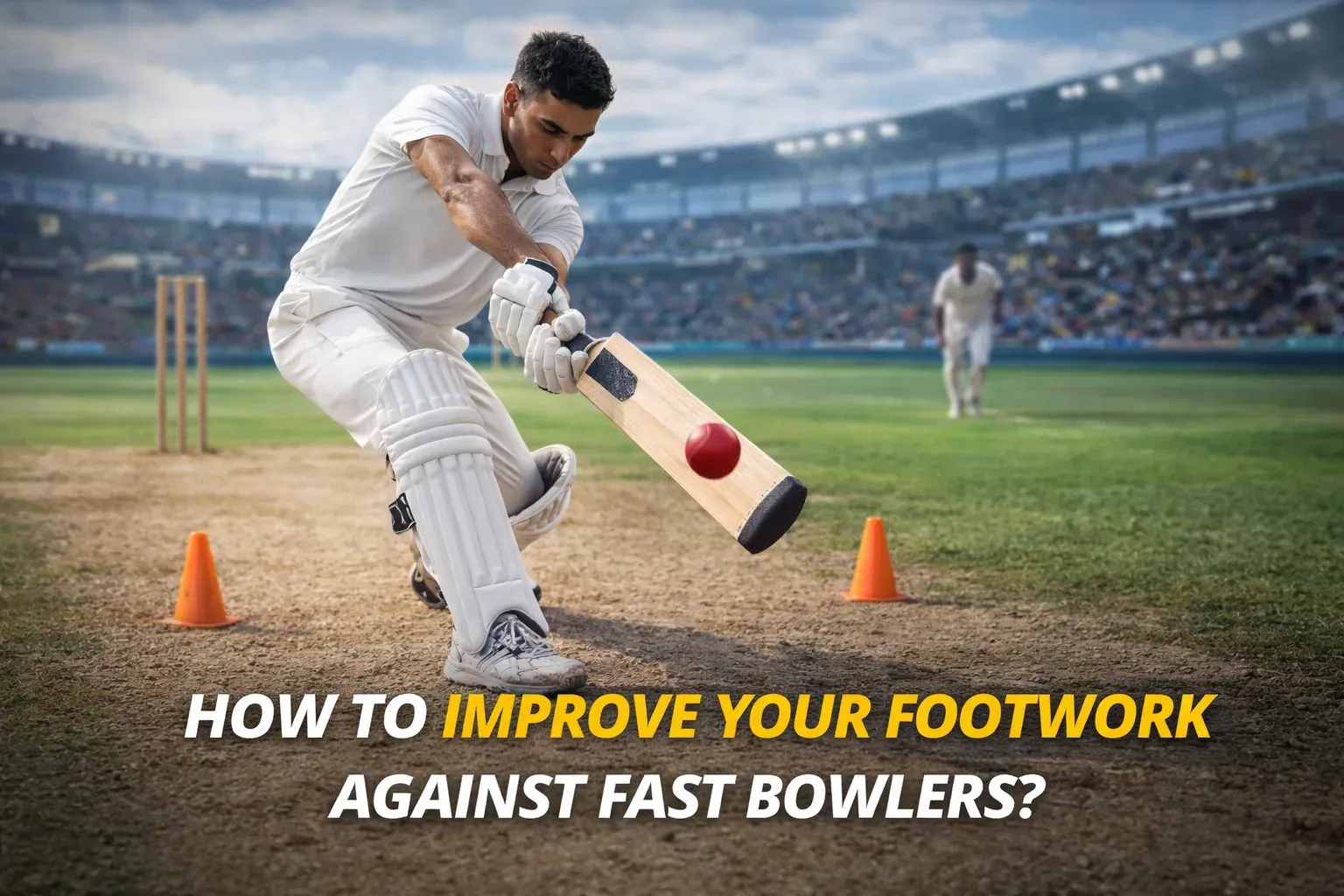
Facing a fast bowler is one of the most challenging and exciting parts of cricket. Whether you are playing at club level, school level, or competitive tournaments, quality pace bowling tests your technique, confidence, and decision-making. Many talented batters struggle not because they lack skill, but because their footwork is slow, unbalanced, or unsure.
Good footwork against fast bowlers allows you to get into the right position, judge length early, control your shots, and reduce the risk of getting out. In this detailed guide, we will break down everything you need to know about improving your footwork against pace — from basics and common mistakes to advanced drills and match strategies.
Why Footwork Matters Against Fast Bowlers
Fast bowlers give you less time to react. The ball travels quickly, often swings in the air or seams off the pitch. Without proper foot movement:
- You get stuck on the crease.
- You play away from your body.
- You lose balance.
- You mistime shots.
- You become vulnerable to LBW and edges.
Strong footwork helps you:
- Get closer to the pitch of the ball.
- Cover swing and seam movement.
- Transfer weight correctly.
- Play with control and confidence.
- Dominate both front-foot and back-foot shots.
In simple words, your feet decide whether you survive or struggle.
Step 1: Start With the Right Stance
Footwork begins before the bowler even releases the ball.
Key Points for a Good Stance:
- Feet shoulder-width apart.
- Weight slightly on the balls of your feet.
- Knees slightly bent.
- Head steady and eyes level.
- Relaxed body, not stiff.
If your weight is stuck on your heels, your reaction time slows down. Stay light and ready to move in any direction.
Step 2: Master the Initial Trigger Movement
Most professional batters use a small “trigger movement” just before the bowler releases the ball. This prepares the body to react quickly.
What Is a Trigger Movement?
It is a small movement of the feet, usually:
- A slight back-and-across movement, or
- A small press forward.
This helps:
- Load your body weight.
- Stay balanced.
- React quickly to length.
Practice this in nets until it becomes natural. A controlled trigger movement improves timing significantly.
Step 3: Learn to Judge Length Early
Footwork depends on reading the length early. Against fast bowlers, you must decide quickly:
- Full ball → Go forward.
- Short ball → Go back.
- Good length → Small decisive movement.
How to Improve Length Judgment:
- Watch the bowler’s hand closely.
- Focus on the release point.
- Train in throwdowns at different speeds.
- Practice with sidearm specialists in nets.
The earlier you pick the length, the smoother your footwork will be.
Step 4: Perfect Your Front Foot Movement
When facing full deliveries or half-volleys, strong front-foot movement is crucial.
Correct Front Foot Technique:
- Take a confident stride towards the pitch of the ball.
- Keep your head over the front knee.
- Transfer weight fully forward.
- Keep the bat close to the body.
Avoid:
- Over-striding (losing balance).
- Planting the foot too early.
- Falling over to the off side.
A solid forward movement helps you drive confidently and defend safely.
Step 5: Improve Your Back Foot Game
Fast bowlers often bowl short-of-length deliveries to test you.
Correct Back Foot Technique:
- Move quickly onto the back foot.
- Create space inside the crease.
- Stay balanced.
- Keep your head steady.
Back-foot movement is important for:
- Cut shots
- Pull shots
- Back-foot defense
If you don’t move back properly, you get cramped and mistime the ball.
Step 6: Stay Side-On and Balanced
Balance is everything. Even perfect footwork fails if your head and shoulders fall over.
Always remember:
- Head should be still.
- Eyes level.
- Front shoulder pointing towards the bowler.
- Weight transfer smooth and controlled.
You should finish every shot in a balanced position.
Step 7: Practice Specific Drills to Improve Footwork
Here are some effective drills:
1. Shadow Batting Drill
Practice front and back foot movements without a ball.
Focus on:
- Smooth strides.
- Balanced position.
- Proper head alignment.
2. Drop Ball Drill
Have a partner drop a tennis ball randomly in front or slightly short.
React quickly and move accordingly.
3. Cone Movement Drill
Place cones:
- One forward.
- One backward.
Coach calls “front” or “back,” and you react instantly.
4. Throwdown Practice
Start with medium pace and gradually increase speed.
Focus only on movement, not power.
Step 8: Improve Reaction Time and Fitness
Footwork is not just technique — it’s also physical ability.
Exercises That Help:
- Skipping rope (improves agility)
- Ladder drills
- Short sprints
- Squats and lunges
- Core strengthening exercises
Better fitness = faster foot movement.
Step 9: Play Late and Under Your Eyes
Against fast bowlers, playing the ball late gives you more control.
To do this:
- Don’t commit too early.
- Keep the bat close to the body.
- Let the ball come to you.
When you move your feet properly, playing late becomes easier.
Step 10: Common Mistakes to Avoid
Many batters struggle because of these mistakes:
Stuck on the crease
Heavy feet
Over-committing forward
Falling across the line
Playing away from the body
Not watching the ball till the end
Fixing these small errors can dramatically improve performance.
Mental Approach Against Fast Bowlers
Footwork is also mental.
If you fear pace:
- You freeze.
- You hesitate.
- You move late.
To overcome this:
- Practice against higher speeds gradually.
- Wear proper protective gear.
- Build confidence through repetition.
Confidence improves movement naturally.
Match Strategy Tips
When facing a new fast bowler:
- Watch first few balls carefully.
- Play straight initially.
- Avoid risky cross-batted shots early.
- Get used to the bounce.
- Adjust according to pitch conditions.
On bouncy pitches, focus more on back-foot play.
On slow pitches, be ready to come forward more often.
How Long Does It Take to Improve Footwork?
Improving footwork is not instant. With regular net practice and drills:
- 2–3 weeks → Noticeable improvement.
- 1–2 months → Significant control.
- 3+ months → Natural and automatic movement.
Consistency is the key.
Final Thoughts
Improving your footwork against fast bowlers is one of the most important steps toward becoming a better cricketer. Good foot movement allows you to:
- Control pace.
- Handle swing and seam.
- Play confidently.
- Reduce dismissals.
- Score freely.
Remember, your bat does not decide your success — your feet do.
Work on your stance, trigger movement, balance, and reaction time. Practice specific drills regularly. Stay fit, stay confident, and focus on watching the ball early.
Master your footwork, and even the fastest bowlers will look manageable.
Related posts
 Cricket Shoes for Fast Bowlers: How Ankle Support, Heel Stability and Traction Affect the Bowling ActionLearn how cricket shoes for fast bowlers affect ankle support, heel stability, traction, and landing control. Find the right fit for your bowling action.
 Why Cricket Players Struggle Against Certain Bowlers: Understanding the Psychology of MatchupsWhy do cricket players struggle against certain bowlers? Discover how bowling styles, matchups, confidence, technique, decision-making, and psychology influence batting performance.
 Wicket Keeping Leg Guards Explained: Fit, Flexibility and Protection for Faster Movement Behind the StumpsDiscover how to choose wicketkeeping leg guards with the right fit, flexibility, and protection for quicker movement, comfortable crouching, and confident keeping.