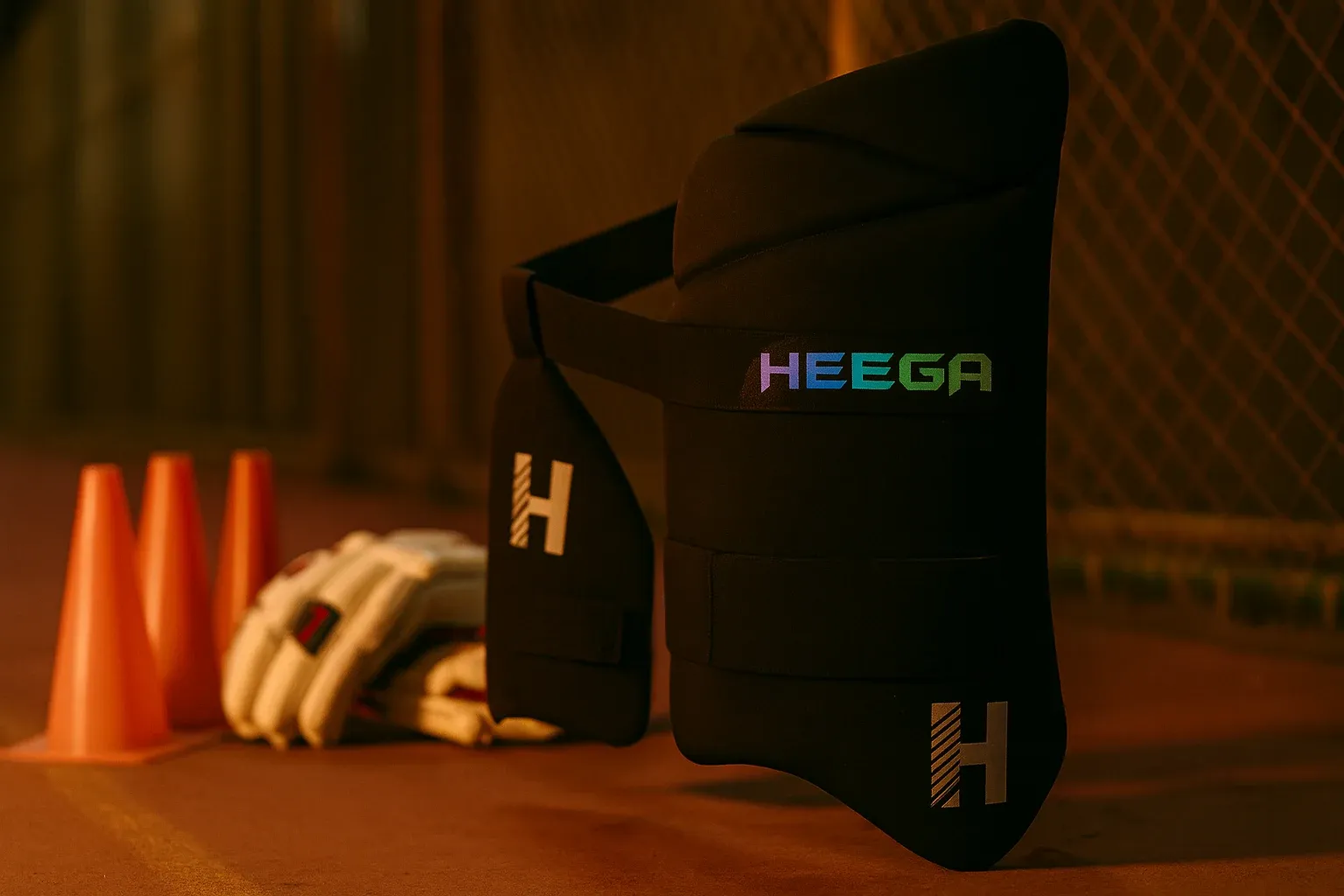
Cricket is a sport of finesse, power, and precision—but it is also a game that demands courage. A fast bowler delivering at 140+ km/h leaves batsmen with only milliseconds to react, and even the most experienced players face the risk of serious injury. Among all protective gear, the thigh guard plays one of the most crucial roles. It shields one of the most exposed and vulnerable parts of a batsman’s body—the thigh, hip, and sometimes the groin area depending on the design.
For decades, thigh guards were bulky, rigid, and uncomfortable. They protected players, yes—but not without limiting mobility, affecting running between the wickets, or even causing sweating and distraction. Professional and amateur players alike accepted this discomfort as part of the game.
But cricket gear technology has evolved dramatically.
Today’s thigh guards are nothing short of lightweight armor—scientifically-engineered protectors crafted to absorb impact without adding weight, designed to move with the player instead of against them.
This blog explores the advanced materials, modern engineering, design thinking, and protective technologies that make today’s thigh guards essential for every cricketer. Whether you’re a seasoned professional or an aspiring youngster, understanding this tech helps you choose the right guard—and play fearlessly.
The Evolution of Thigh Guards: From Heavy Shields to Lightweight Armor
Cricket gear has gone through several revolutions, but thigh guards have seen one of the biggest transformations. Let’s look at how far they’ve come.
1. The Early Days — Heavy, Thick, and Rigid
The earliest thigh guards were:
- Thick slabs of foam
- Wrapped in cotton
- Held together by straps
- Difficult to adjust
- Heavy and stiff
These guards provided protection but compromised mobility. Batsmen had to choose between comfort and safety, a trade-off no modern player would accept.
2. Mid-Transition Era — Foam Layers & Fabric Wrapping
Over time, manufacturers introduced:
- Multi-layered foams
- Slightly flexible construction
- Adjustable straps
These guards were better—but still bulky and prone to slipping during intense play.
3. The Modern Revolution — Lightweight, Slim, and Ergonomic
The last decade introduced groundbreaking innovations:
- High-density EVA foam
- Polycarbonate shields
- Ergonomic shaping
- Moisture-wicking fabrics
- 3D contour padding
- Dual thigh guard systems
Today’s thigh guards feel more like performance gear than protection equipment. They are designed with sports science in mind—balancing impact resistance, movement, and comfort.
What Makes Modern Thigh Guards “Lightweight Armor”?
To understand the brilliance behind modern thigh guards, let’s break down the core technologies and design principles that define them.
1. Advanced Lightweight Materials: Built for Protection Without Weight
One of the biggest breakthroughs in cricket gear is the use of high-tech materials that are light yet incredibly strong.
● High-Density (HD) EVA Foam
The heart of most premium thigh guards is EVA foam, known for:
- High impact absorption
- Feather-light weight
- Flexibility
- Durability
EVA distributes shock across its structure, reducing the force delivered to the thigh during ball impact.
● Polycarbonate Armor Plates
Some thigh guards feature polycarbonate shells, a material commonly used in:
- Motorcycle helmets
- Riot shields
- Safety goggles
This makes the guards:
- Resistant to cracking
- Capable of dispersing high-force impacts
- Consistent under varying temperatures
Unlike old-fashioned foam, polycarbonate adds real armor-like protection without adding weight.
● Multi-Layered Construction
Premium thigh guards combine:
- HD foam
- Soft comfort foam
- Polycarbonate plates
- Mesh ventilation layers
This multi-layer approach creates a protective zone that is:
- Impact-resistant
- Breathable
- Lightweight
- Comfortable for long innings
2. Ergonomic Design — Shaped to Fit the Human Body
Modern thigh guards are not flat slabs—they are sculpted to follow the natural curves of the leg, hip, and thigh.
Key ergonomic features include:
● Pre-Curved Design
The guards naturally wrap around the thigh, improving:
- Fit
- Stability
- Comfort
● 3D Contoured Padding
Contours ensure:
- No awkward pressure spots
- Better shock distribution
- More freedom of movement
● Dual Thigh Guard Systems
Many premium models now combine:
- Main thigh guard
- Inner/secondary thigh guard
This eliminates the need for a separate inner guard and ensures complete 360° coverage.
● Adjustable, Sweat-Resistant Straps
Straps are designed to:
- Stay in place
- Prevent slipping
- Dry quickly
- Minimize irritation
Players can tailor their fit based on preference.
3. Ventilation & Sweat Management — Stay Cool While You Stay Protected
A significant complaint about old thigh guards was heat and sweat accumulation. Modern guards solve this through:
● Ventilated mesh layers
These allow airflow to reach the skin, reducing:
- Sweat
- Odor
- Discomfort
● Moisture-wicking inner fabric
This prevents sweat from collecting and sticking to the thigh.
● Lightweight foam composition
The material itself doesn’t trap heat the way older foams did.
The result?
A player can now wear thigh guards for an entire innings without feeling weighed down or overheated.
4. Impact-Absorbing Technology — Science That Saves You From Pain
The real magic lies in how modern thigh guards handle a high-speed cricket ball.
● Shock Dispersion
Impact energy is spread across the guard instead of hitting one point.
● Multi-layer Impact Buffer
Each layer absorbs different types of shock:
- Outer shell → disperses shock
- HD foam → absorbs force
- Soft foam → provides comfort
● Energy Dissipation Zones
Certain areas are reinforced to withstand the strongest impacts—like the side of the thigh and groin area.
● No “Dead Spots”
Older guards had vulnerable spots where protection was insufficient. Modern manufacturing ensures uniform protection across the entire guard.
5. Mobility Engineering — Move Freely, Run Faster
Protection is useless if it restricts performance.
That’s why new thigh guards emphasize:
- Full running stride mobility
- Zero hindrance in shots like pull, flick, or sweep
- Natural leg movement
How this is achieved:
- Slimmer, lighter padding
- Flexible joints
- Pre-curved ergonomic shaping
- Secure straps to eliminate bouncing or slipping
Players can run, pivot, and stretch freely—just as if they were wearing no protection at all.
6. Player-Centric Design — Built for Real Cricket Scenarios
Modern thigh guards are tested under real match conditions, ensuring they hold up under:
- Long innings
- Sweaty conditions
- High-speed impacts
- Fast movement
Designed with feedback from:
- Pro players
- Coaches
- Sports scientists
Manufacturers now prioritize comfort + protection + performance as a combined requirement—not separate elements.
Why Professional Players Rely on Modern Thigh Guards
Top cricketers around the world choose these lightweight guards because:
✓ They boost confidence
A batsman who feels protected is mentally free to play aggressive shots.
✓ They eliminate the fear of injury
Thigh injuries can take weeks to heal and affect running and power.
✓ They improve performance
Lighter gear = smoother movement = better batting.
✓ They stay in place even during intense action
No distractions, no constant adjusting.
✓ They feel almost invisible
Players barely notice they’re wearing them—yet they deliver unmatched protection.
Choosing the Right Thigh Guard — What to Look For
If you’re planning to buy a thigh guard, keep these points in mind:
1. Material Quality
Look for:
- HD EVA foam
- Polycarbonate shielding
- Multi-layer padding
2. Fit & Comfort
Check:
- Pre-curved design
- Adjustable straps
- Soft inner lining
3. Weight
Should be:
- Lightweight
- Balanced
- Easy to move in
4. Coverage
Ensure:
- Main thigh + inner thigh protection
- Hip coverage if needed
5. Breathability
Prefer guards with:
- Ventilated mesh
- Moisture-wicking fabric
6. Brand Reliability
Premium brands test their guards extensively, ensuring durability and comfort.
The Future of Cricket Thigh Guards
Innovation isn’t stopping anytime soon. Future thigh guards may include:
- Smart impact sensors
- Custom 3D-printed shapes
- Even lighter composite materials
- Sweat-absorbing nanofiber systems
As cricket becomes faster and more demanding, the gear will keep evolving too.
Conclusion: Lightweight Armor for the Modern Cricketer
Modern thigh guards represent the perfect blend of:
- Science
- Engineering
- Sports technology
- Player feedback
They are lightweight yet incredibly protective—true armor for modern batting. Whether you're a beginner or a professional, the right thigh guard gives you the confidence to play boldly, run freely, and face fast bowlers without fear.
Investing in a high-quality thigh guard isn’t just about comfort—it’s about safety, performance, and longevity in the sport.