The Craft Behind Every Stroke: How Bats Are Engineered for Performance
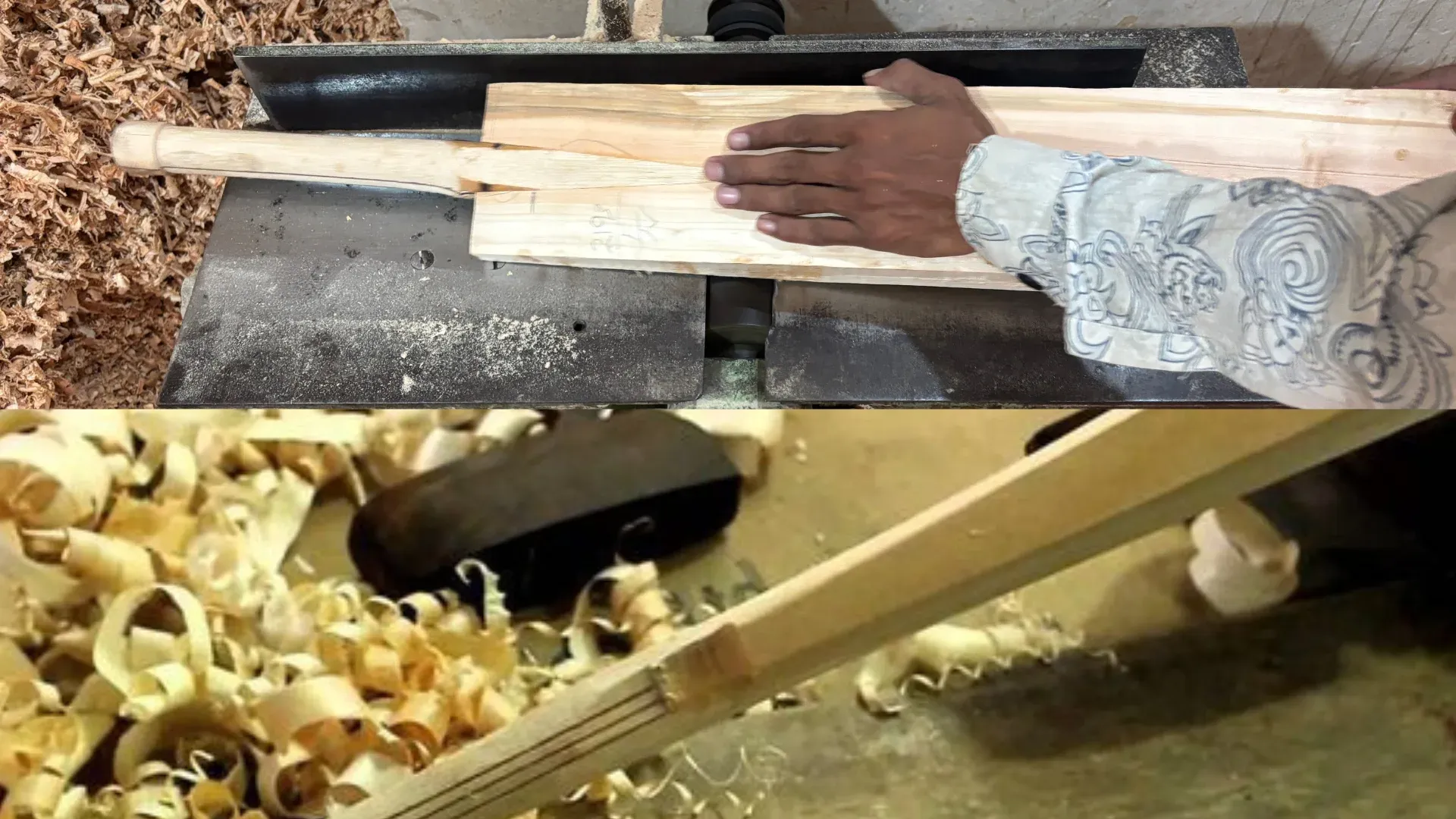
When a perfectly timed cover drive races to the boundary, spectators applaud the batter’s skill. But behind every glorious stroke lies a story of craftsmanship — of precision engineering, expert shaping, and scientific design that transforms a simple piece of willow into a performance masterpiece.
A cricket bat isn’t just a tool; it’s an extension of the player’s body and intent. The science behind its creation blends tradition with technology, giving modern cricketers the edge they need to dominate the game.
In this blog, we’ll take you behind the scenes to explore how bats are engineered for performance — from the careful selection of willow to the fine-tuning of balance, handle, and shape — revealing how each element contributes to the magic of every shot.
The Foundation: Willow Selection and Grading
The performance of a cricket bat begins long before it reaches a player’s hands — it starts in the willow forests of England and Kashmir.
A) English Willow
- Known for its superior grain structure, softness, and rebound ability.
- Offers incredible sweet spot response, making it ideal for professional play.
- Typically graded between Grade 1 to Grade 5, based on grain consistency and blemishes.
B) Kashmir Willow
- Denser and harder, offering durability for long-term use.
- Preferred by amateur or entry-level players.
- Delivers solid performance at an affordable price point.
Each cleft of willow is carefully inspected — its moisture, grain spacing, and fiber direction are assessed to ensure strength and responsiveness.
Fact: A bat’s grain count can influence both power and longevity. 6–8 straight grains are often ideal for the perfect balance between performance and durability.
The Art of Seasoning and Pressing
Once the willow clefts are selected, they undergo a seasoning process — a delicate balance of drying and conditioning that determines the bat’s flexibility and power.
- Natural Air Drying: The clefts are left to season for several months to remove excess moisture.
- Hydration Control: Too much moisture weakens the bat; too little makes it brittle.
Next comes pressing, one of the most crucial stages in bat-making.
- The cleft is pressed under controlled pressure to compact the wood fibers.
- Proper pressing enhances rebound and durability.
- Under-pressed bats may feel lively but crack easily; over-pressed bats lose responsiveness.
This is where the raw willow begins its transformation into a living instrument of performance.
Shaping the Profile: Where Art Meets Science
Every player has a distinct playing style — some rely on timing, others on brute force. Batmakers shape each blade to complement those needs.
A) The Spine
- The central ridge running down the back of the bat.
- A higher spine means more concentrated power and a better sweet spot.
B) The Edges
- Modern bats feature thick edges (up to 40mm or more).
- Provide forgiveness for off-center shots while maintaining balance.
C) The Sweet Spot
- The heart of the bat where maximum energy transfer occurs.
- Its placement (low, mid, or high) depends on the playing conditions and style.
Sweet Spot PositionIdeal ForCondition
Low
Front-foot players
Slow, low pitches
Mid
Balanced players
All-round surfaces
High
Back-foot players
Bouncy, fast tracks
Each contour and curve is sculpted by skilled hands — ensuring the bat feels alive when it meets the ball.
Handle Design: The Hidden Engine of Power
While the blade gets the glory, the handle is where control, comfort, and shock absorption truly live.
Types of Handles:
- Round Handle: Offers better wrist movement; ideal for aggressive play.
- Oval Handle: Ensures a stable grip; great for controlled stroke-making.
Handle Composition:
- Typically made from cane reinforced with rubber or cork strips.
- Some modern designs integrate carbon or fiberglass for added strength.
A well-crafted handle acts as a shock absorber, reducing vibrations during off-center hits and giving players a smoother, more confident feel.
Fun fact: Some professional batmakers customize the handle flex depending on a player’s swing mechanics.
Balance and Pickup: The Feel That Defines Flow
Ask any professional cricketer what makes a great bat, and they’ll likely say, “the pickup.”
What Is Pickup?
Pickup refers to how the bat feels when you lift or swing it — not its actual weight, but its perceived weight and balance.
A perfectly balanced bat:
- Feels lighter than it is.
- Allows quicker reaction time.
- Enhances timing and control.
Factors Affecting Balance:
- Distribution of mass in the blade.
- Handle weight.
- Shape of the spine and edges.
A 2.9 lb bat might feel heavier than a 2.11 lb bat if its weight is poorly distributed. This is why engineering precision in shaping and handle fitting is critical.
The Finishing Touch: Sanding, Polishing, and Branding
After shaping and balancing, the bat enters the finishing stage.
This is where craftsmanship meets aesthetics.
- Sanding: The surface is smoothed to remove imperfections.
- Polishing: Adds shine and seals the wood fibers for protection.
- Branding: Stickers, logos, and laser engravings are applied to give the bat its signature look.
While these seem cosmetic, the finishing process ensures the bat is ready for performance and protection against external elements.
Knocking-In: Activating the Bat’s True Potential
A new bat, no matter how premium, isn’t ready for the field until it’s properly knocked in.
Purpose of Knocking-In:
- Compresses and toughens the surface fibers.
- Prevents cracks and dents.
- Improves rebound effect and sweet spot activation.
Process:
- Start with gentle knocks using a bat mallet or hammer.
- Gradually increase intensity over several hours.
- Finish by hitting soft cricket balls to simulate match use.
This essential step ensures that when the bat meets leather, it sings — not stings.
Customization: Tailoring Performance to the Player
Modern bat engineering goes beyond mass production. Many professionals and enthusiasts now seek custom-fit bats designed for their exact playing needs.
Customization Options Include:
- Handle thickness and shape.
- Blade profile (low, mid, high sweet spot).
- Weight distribution.
- Edge thickness and spine height.
Heega and other premium brands use player profiling to match bats to batting styles — ensuring every stroke feels natural and powerful.
Technology in Bat Engineering: The Modern Revolution
The 21st century has transformed bat-making from traditional art into precision science.
A) 3D Scanning and Modeling
- Used to digitally analyze player swing and grip patterns.
- Helps create bats with ideal weight distribution.
B) Carbon Reinforcement
- Enhances handle strength without adding bulk.
- Improves energy transfer during high-impact shots.
C) Smart Bat Sensors
- Embedded tech that tracks shot speed, impact point, and swing angle.
- Provides real-time data for player improvement.
D) Moisture and Temperature Resistant Coatings
- Preserve bat integrity across weather conditions.
- Essential for international cricketers moving between climates.
These advancements ensure modern bats combine heritage craftsmanship with future-ready innovation.
The Science Behind the Perfect Stroke
So, how does all this engineering translate into performance?
When a cricket ball meets the bat’s sweet spot:
- The willow compresses and rebounds, transferring kinetic energy efficiently.
- The handle flexes slightly, absorbing shock and stabilizing motion.
- The balanced profile ensures maximum control and follow-through.
The synergy of materials, geometry, and craftsmanship results in a harmonic energy transfer — the science behind that satisfying “ping” of a well-timed shot.
Maintenance: Keeping the Engineering Alive
Owning a great bat also means maintaining its engineered excellence.
Tips for Longevity:
- Regular Oiling: Use raw linseed oil to prevent dryness.
- Protective Face Sheet: Shields from cracks and moisture.
- Avoid Overuse in Wet Conditions: Water weakens fibers.
- Re-knock Occasionally: Restores rebound over time.
Proper care ensures the bat remains responsive and durable for seasons to come.
The Human Element: Where Engineering Meets Emotion
A perfectly crafted bat isn’t just about specs and measurements — it’s about connection.
Every player has that one bat that just feels right, like it was made for their hands.
That bond comes from craftsmanship — the maker’s dedication to balance, grain, and feel. It’s what turns wood and glue into something almost spiritual: the soul of a cricketer’s weapon.
Conclusion
Every time a batter connects sweetly with the ball, the sound and feel tell a story — not just of skill, but of engineering perfection. From willow selection to handle design, from balance tuning to finishing touches, the craft behind every stroke is a blend of science, skill, and soul.
The next time you lift your bat, remember — it’s not just a piece of wood. It’s a finely tuned instrument, built for performance, passion, and power.
Experience Precision Craftsmanship with Heega Cricket Bats
Handcrafted for control, engineered for impact — Heega bats bring world-class performance to every game. Feel the difference in every stroke.
Related posts
 English Willow Cricket Bats Explained: How Bat Pressing, Grain Structure and Blade Compression Influence PerformanceLearn how English willow bat pressing, grain structure, and blade compression influence performance, durability, shot response, and bat selection.
 Kashmir Willow Cricket Bats for Power Hitting: How Blade Shape, Sweet Spot and Edge Thickness Work TogetherLearn how Kashmir willow cricket bat blade shape, sweet spot position, and edge thickness work together to support powerful shots, control, and balance.
 English Willow Cricket Bats: How to Identify Quality, Check Bat Balance and Avoid Buying MistakesLearn how to identify a quality English willow cricket bat, check its balance and pickup, understand grain patterns, and avoid common buying mistakes.