What Happens to the Cricket Ball in Extreme Heat? | Heega Sports Guide
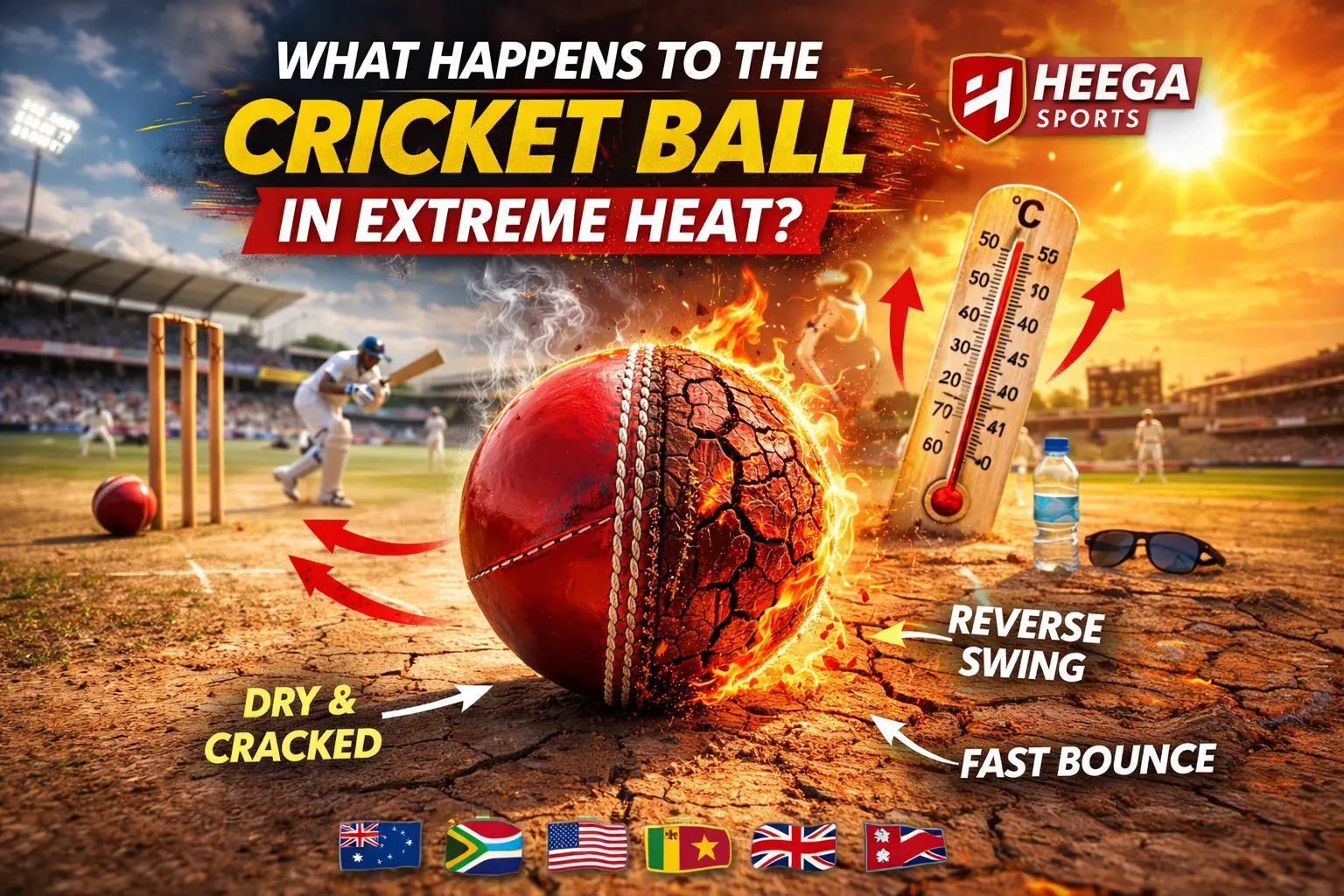
Cricket is a game deeply influenced by conditions — pitch, moisture, wind, and especially temperature. While most players focus on swing, bounce, and seam position, one crucial factor often overlooked is extreme heat.
From the scorching summers of Australia and South Africa to humid conditions in Sri Lanka, rising temperatures in Nepal, and summer leagues in the USA, heat plays a major role in how a cricket ball behaves.
In this detailed guide by Heega Sports, we’ll explore:
- How extreme heat affects a cricket ball
- Changes in swing, seam, shine, and durability
- Differences between red and white balls in hot weather
- How players in the UK (Europe), Australia, South Africa, USA, Sri Lanka, and Nepal adapt
- Tips to protect your cricket ball in hot conditions
Let’s dive deep.
1. The Science: How Heat Affects a Cricket Ball
A standard leather cricket ball is made from:
- Cork core
- Multiple layers of tightly wound string
- High-quality leather cover
- Prominent stitched seam
When exposed to extreme heat (35°C to 45°C and above), several changes occur:
Leather Surface Dries Faster
Heat accelerates moisture evaporation. The leather becomes:
- Harder
- Slightly brittle
- Less elastic
This impacts shine retention and reverse swing potential.
Internal Expansion
High temperatures can slightly expand the cork and string layers inside the ball. While the expansion is minimal, over long exposure it may:
- Affect shape consistency
- Reduce compression strength
- Impact rebound quality
This is especially noticeable in very hot conditions like Australia’s outback grounds or certain parts of South Africa during summer tours.
2. Swing in Extreme Heat – Does It Increase or Decrease?
Swing bowling depends on:
- Seam condition
- Surface shine
- Air density
Hot Air = Less Dense Air
Warm air is less dense than cold air. This means:
- The ball encounters less resistance
- Conventional swing reduces
- Fast bowlers must work harder
This is why in countries like:
- Australia
- South Africa
- Parts of the USA
- Central regions of Nepal
Fast bowlers often rely more on pace and bounce than swing during peak heat.
Reverse Swing Becomes Crucial
Interestingly, extreme heat can help reverse swing — especially once the ball gets rough on one side.
Dry pitches in:
- Sri Lanka
- South Africa
- Australia
often encourage reverse swing after 30–40 overs.
3. What Happens to the Seam?
The seam plays a vital role in grip and deviation.
In extreme heat:
- The thread can dry out faster
- The seam may flatten quicker on hard surfaces
- Abrasion increases on dry, dusty pitches
This is commonly observed in:
- Subcontinental conditions like Sri Lanka and Nepal
- Dry outfields in South Africa
Once the seam flattens:
- Movement off the pitch reduces
- Spinners may get less grip
- Fast bowlers struggle for seam deviation
4. Red Ball vs White Ball in Extreme Heat
Red Ball in Heat
- Loses shine faster
- Becomes darker and rougher
- Encourages reverse swing
- May soften quicker over long spells
Used widely in:
- UK county cricket
- South Africa test matches
- Domestic cricket in Nepal
White Ball in Heat
- Discolors quickly
- Surface scuffs faster
- Can become softer in extreme sun
In hot climates like:
- USA T20 leagues
- Sri Lanka limited overs
- Australian Big Bash conditions
white balls may need replacement earlier.
5. Bounce and Rebound in Hot Conditions
Heat dries out pitches.
Dry pitches =
- Harder surfaces
- More bounce
- Faster outfields
This is why:
- Australia is known for extra bounce
- Certain grounds in South Africa assist pace
- Even in Nepal, dry season matches produce quicker tracks
However, as the ball gets older and softer in extreme heat:
- Bounce reduces
- It grips more
- Spinners enter the game
6. Fielding Challenges in Extreme Heat
Extreme heat doesn’t just affect the ball — it affects players handling it.
- Sweaty hands reduce grip
- Ball becomes slippery
- Shine maintenance becomes harder
- Fielders struggle to polish one side consistently
In humid heat like Sri Lanka, maintaining one shiny side becomes even more difficult compared to dry heat in Australia.
7. Durability Issues in High Temperatures
When exposed to prolonged heat:
- Leather may crack
- Stitching may loosen
- Shape may slightly deform
- Ball may lose hardness faster
Lower-quality balls are affected more severely.
This is why professional leagues in:
- UK (Europe)
- Australia
- South Africa
use premium-grade cricket balls built to withstand varying temperatures.
8. Country-Wise Impact of Extreme Heat
Australia
High summer temperatures and hard pitches:
- Reduce conventional swing
- Increase bounce
- Encourage reverse swing later
South Africa
Dry heat + pace-friendly tracks:
- Ball ages quickly
- Seam flattening is common
- Fast bowlers rely on bounce
USA
Growing cricket scene:
- Artificial wickets sometimes amplify heat
- White balls discolor faster
- Swing often limited in high summer
UK (Europe)
Heatwaves are increasing:
- Traditionally swing-friendly
- But rising temperatures reduce movement
- Reverse swing now more common in late overs
Sri Lanka
Humid and hot:
- Ball softens faster
- Shine difficult to maintain
- Spin becomes dominant
Nepal
High-altitude grounds + heat:
- Ball travels faster
- Air thinner at elevation
- Swing reduces significantly
9. How Players Can Protect the Ball in Extreme Heat
At Heega Sports, we recommend:
Store Properly
- Keep balls in a cool, shaded area
- Avoid direct sun exposure before match
Rotate Practice Balls
Do not use the same ball continuously in extreme heat.
Maintain Shine Carefully
- Use legal polishing methods
- Avoid excessive moisture
Choose Quality Balls
Premium leather lasts longer in hot conditions.
10. Does Extreme Heat Favor Batters or Bowlers?
It depends.
Early Overs:
- Less swing
- Advantage batters
Middle Overs:
- Seam reduces
- Ball travels fast
Later Overs:
- Reverse swing possible
- Spinners dominate
In countries like:
- Australia
- South Africa
- Sri Lanka
heat often shifts the match momentum as the ball ages.
11. Why Quality Cricket Balls Matter More in Hot Countries
In regions like:
- South Africa
- USA
- Australia
- Nepal
- Sri Lanka
cheap leather balls deteriorate quickly.
High-quality balls:
- Retain shape longer
- Maintain seam integrity
- Offer better control
- Provide consistent performance
That’s why choosing the right ball is critical for competitive cricket.
Final Thoughts
Extreme heat significantly impacts a cricket ball’s:
- Swing
- Seam
- Shine
- Durability
- Bounce
From the dry grounds of Australia and South Africa to the humid conditions of Sri Lanka, the rising cricket markets of the USA, the evolving pitches in Nepal, and even heatwaves in the UK (Europe) — temperature is becoming a bigger factor in modern cricket.
Understanding how the ball reacts in extreme heat helps:
- Bowlers adjust strategy
- Captains plan better
- Players choose the right equipment
- Teams maintain ball condition effectively
At Heega Sports, we believe that the right knowledge combined with the right equipment makes all the difference.
Visit us for premium cricket equipment and match-quality balls:
https://heegasports.com
Related posts
 How Kids Learn to Read a Cricket Ball: Understanding Line, Length, Bounce and Shot SelectionLearn how kids can read a cricket ball by understanding line, length, bounce and shot selection to develop better batting skills and confidence.
 Batting Gloves Explained: How Padding Placement and Finger Protection Help Manage Ball ImpactLearn how batting glove padding placement, finger protection, and fit help manage ball impact. Find practical tips for choosing cricket batting gloves.
 Leather Ball Cricket Explained: How Ball Condition, Seam and Swing Influence BowlingLearn how leather ball cricket works and how ball condition, seam position, shine, and swing influence bowling accuracy, movement, and performance.