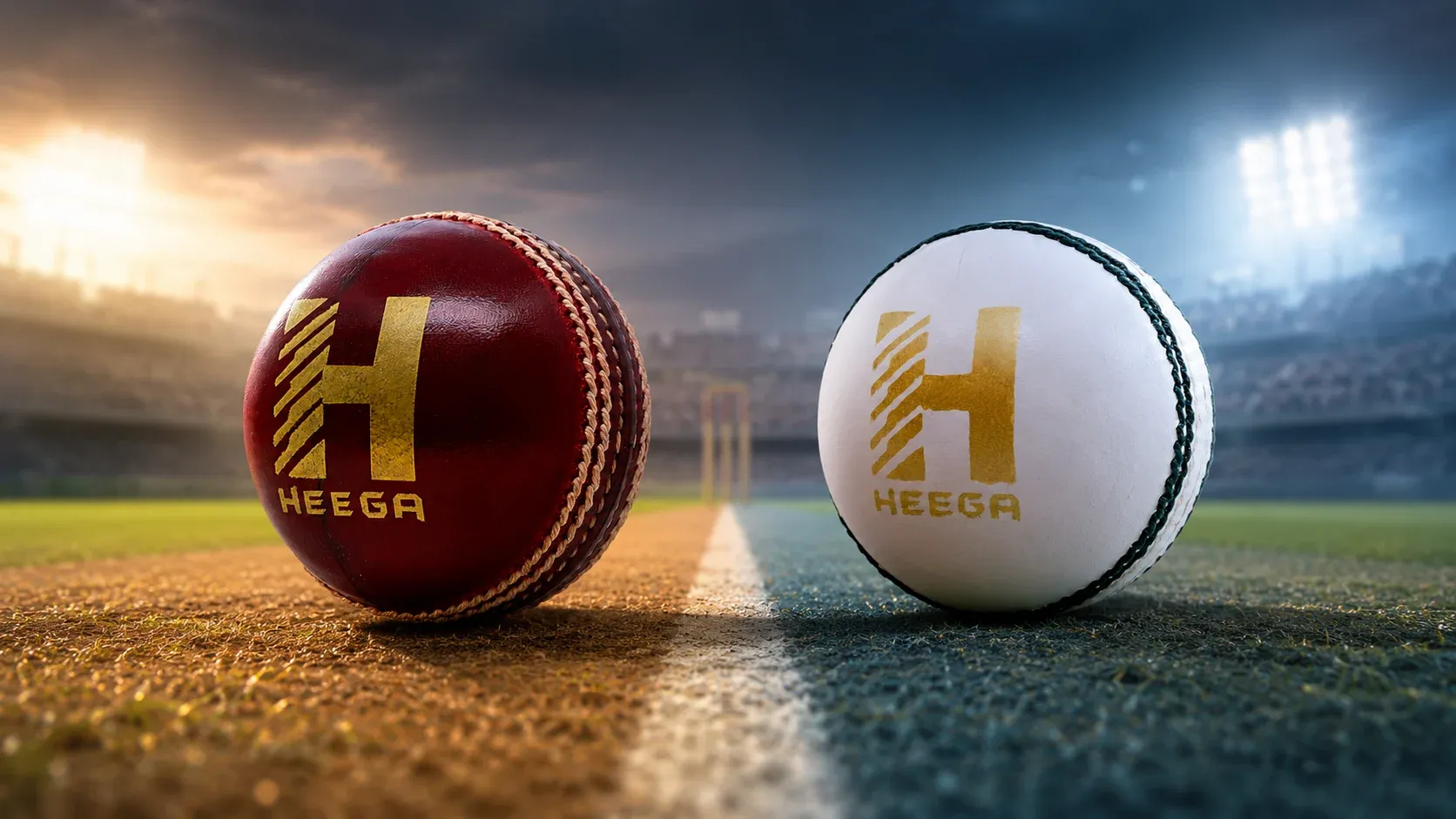
Cricket is a game of precision, technique, and conditions. While players often focus on bats, skills, and fitness, one of the most important elements that shapes the game is the cricket ball itself. The choice between a red leather ball and a white leather ball is not just about color—it directly impacts swing, seam, visibility, and overall performance.
From the fast pitches of Australia and South Africa to the swing-friendly conditions in the UK (Europe) and the spin-dominant tracks of Sri Lanka and Nepal, the type of ball used plays a major role in how the game unfolds. Even in developing cricket markets like the USA, understanding the difference between red and white balls is becoming essential for players.
At Heega Sports, we aim to help cricketers make informed decisions. In this complete guide, we’ll break down how red and white leather balls perform in different conditions and which one is better for your game.
Understanding Red and White Leather Balls
Both red and white balls are made using similar core materials:
- Cork center
- Layered string winding
- High-quality leather outer cover
- Prominent stitched seam
However, the finishing process is what sets them apart.
Red Leather Ball
- Traditional cricket ball
- Used in Test matches and longer formats
- Naturally dyed leather
White Leather Ball
- Used in limited-overs formats (ODIs & T20s)
- Coated with additional layers for brightness
- Designed for visibility under lights
Swing and Seam Performance
Red Ball Performance
The red leather ball is known for its ability to swing for longer durations.
Why?
- Natural leather surface
- Better seam stability
- Slower wear rate
In places like UK (Europe) and South Africa, where atmospheric conditions favor swing, red balls perform exceptionally well.
White Ball Performance
White balls tend to swing more in the initial overs but lose effectiveness quickly.
Why?
- Extra coating wears off faster
- Surface becomes rough sooner
In fast-paced conditions like Australia or shorter formats in the USA, white balls create excitement early but lose consistency later.
Durability and Lifespan
Red Ball
- Lasts longer (up to 80 overs or more)
- Retains shape and hardness
- Suitable for multi-day matches
White Ball
- Wears out faster
- Loses shine quickly
- Often replaced during matches
In humid regions like Sri Lanka and Nepal, white balls degrade even faster due to moisture.
Impact of Weather and Conditions
Red Ball in Different Regions
- South Africa & UK (Europe) → Excellent swing due to cloud cover
- Australia → Maintains bounce and seam
- Sri Lanka & Nepal → Performs steadily on slow pitches
White Ball in Different Regions
- USA & Australia → Great for night matches
- UK (Europe) → Less effective in damp conditions
- Sri Lanka & Nepal → Shine fades quickly in humidity
Visibility Factor
Red Ball
- Best suited for daylight cricket
- Difficult to track under floodlights
White Ball
- Designed for night matches
- Easier to track in high-speed gameplay
This is why white balls dominate limited-overs cricket globally.
Batting Perspective
Facing a Red Ball
- Predictable behavior
- Rewards technique and patience
- Ideal for longer innings
Facing a White Ball
- Faster gameplay
- Early swing challenges
- Requires quick reflexes
Players in Australia and the USA often prefer white balls for aggressive formats.
Bowling Strategy Differences
Red Ball Bowling
- Focus on swing and seam
- Build pressure over time
- Longer spells
White Ball Bowling
- Focus on variations
- Use of yorkers and slower balls
- Short, intense spells
Which Ball Performs Better?
There is no one-size-fits-all answer.
Red Ball is Better For:
- Test cricket
- Swing-friendly conditions (UK, South Africa)
- Long-duration performance
White Ball is Better For:
- Limited overs cricket
- Night matches
- High visibility formats (USA, Australia leagues)
Common Misconceptions
- White ball swings more → Only early overs
- Red ball is outdated → Still essential for skill development
- Both perform the same → Completely different dynamics
How to Choose the Right Ball
Choose based on:
- Match format
- Playing conditions
- Skill level
Why Choose Heega Sports Leather Balls?
At Heega Sports, our cricket balls are designed for:
- Consistent seam performance
- Durable leather quality
- Reliable match performance
Whether you’re playing in South Africa, USA, Australia, UK (Europe), Sri Lanka, or Nepal, our balls are built to perform.
Final Thoughts
The debate between red and white leather balls isn’t about which is better overall—it’s about which is better for your conditions and format.
- Red ball → Consistency, durability, traditional cricket
- White ball → Visibility, speed, modern formats
Understanding this difference can elevate your performance and help you adapt to any playing environment worldwide.