At What Age Should a Child Start Cricket Training? Expert Tips

Introduction: Is There a Perfect Age to Start Cricket?
One of the most common questions parents ask is:
"What is the right age for my child to start cricket training?"
The answer is not as simple as choosing a specific number.
Every child develops differently.
Some children show interest in sports at an early age, while others become enthusiastic later.
The most important factor is not starting as early as possible—it is starting at the right stage with age-appropriate coaching, equipment, and expectations.
Cricket is a technical sport that requires coordination, balance, concentration, and patience. Young children should first learn to enjoy movement and basic athletic skills before focusing on advanced cricket techniques.
When introduced correctly, cricket helps children develop confidence, discipline, teamwork, fitness, and problem-solving abilities that benefit them throughout life.
Across Nepal, Germany, the United States, Canada, the Netherlands, and the United Kingdom, youth cricket programs increasingly follow structured age-based development models that prioritize long-term growth over early specialization.
This guide explains when children should begin cricket, what they should learn at each stage, and how parents can support their journey.
There Is No Single "Perfect" Age
Every child develops at a different pace.
Instead of focusing only on age, parents should consider:
- Interest in the game
- Physical coordination
- Ability to follow simple instructions
- Enjoyment of outdoor activities
Children who enjoy learning are more likely to continue playing.
Ages 4–6: Introduce the Game Through Fun
At this stage, cricket should focus on enjoyment rather than competition.
Activities may include:
- Soft-ball catching
- Throwing games
- Running exercises
- Basic bat-and-ball coordination
Formal technical coaching is usually unnecessary.
The goal is to build confidence and develop basic movement skills.
Ages 6–8: Learn the Fundamentals
Many coaches consider this an excellent age to begin structured cricket training.
Children can start learning:
- Basic batting stance
- Grip
- Throwing technique
- Simple bowling actions
- Safe fielding
Sessions should remain fun and engaging.
Ages 8–10: Build Technical Skills
As coordination improves, children become ready for more structured coaching.
Training may include:
- Batting drills
- Bowling accuracy
- Catching practice
- Running between wickets
- Match awareness
Young players also begin understanding teamwork.
Ages 10–12: Increase Skill Development
Players can gradually introduce:
- Match strategies
- Shot selection
- Bowling variations
- Fitness routines
- Tactical thinking
Coaches begin refining technique while encouraging independent learning.
Ages 12–15: Structured Player Development
During adolescence, players often become more committed.
Training may now include:
- Strength and conditioning
- Match analysis
- Mental preparation
- Position-specific coaching
Consistency becomes increasingly important.
Let Children Explore Multiple Sports
Experts often recommend that younger children participate in more than one sport.
Activities such as:
- Football
- Athletics
- Swimming
- Tennis
help develop overall athletic ability before specializing in cricket.
This balanced approach often reduces injury risk while improving coordination.
Choosing the Right Cricket Bat Size Matters
One of the biggest mistakes parents make is purchasing a bat that is too large.
Using the correct bat size helps children:
- Develop proper technique
- Improve balance
- Swing comfortably
- Build confidence
As children grow, their equipment should grow with them.
General Bat Size Guide
Child HeightRecommended Bat Size
Up to 4'3" (130 cm) - Size 3
4'3"–4'6" (130–137 cm) - Size 4
4'6"–4'9" (137–145 cm) - Size 5
4'9"–5'2" (145–157 cm). - Size 6
5'2"–5'5" (157–165 cm) - Harrow
Above 5'5" (165 cm+) - Short Handle (SH)
Choosing equipment based on height rather than age generally provides the best fit.
Don't Focus Only on Winning
For young children, success should not be measured only by:
- Runs scored
- Wickets taken
- Match results
Instead, celebrate:
- Improvement
- Effort
- Learning
- Enjoyment
Positive experiences encourage long-term participation.
Parents Play an Important Role
Parents can support young cricketers by:
- Encouraging regular practice
- Avoiding unnecessary pressure
- Celebrating progress
- Supporting healthy routines
Children thrive when sport remains enjoyable.
Qualified Coaching Makes a Difference
Experienced coaches understand how to teach children safely while keeping training enjoyable.
Good coaching focuses on:
- Age-appropriate learning
- Proper technique
- Skill progression
- Positive motivation
Nepal: Youth Cricket Continues Growing
Across Nepal, increasing investment in junior coaching programs is helping more children begin cricket through structured grassroots initiatives.
Germany: Introducing Cricket to Young Players
German cricket clubs continue expanding youth development programs that welcome beginners from different sporting backgrounds.
The United States: New Opportunities for Junior Cricket
As cricket grows across America, more schools, academies, and clubs now offer structured coaching for children.
Canada: Building Long-Term Player Pathways
Canadian cricket organizations continue supporting junior participation through community leagues and coaching programs.
The Netherlands: Strong Foundations for Young Cricketers
Dutch cricket emphasizes learning fundamental skills before introducing advanced competition.
The United Kingdom: A Proven Youth Development Model
The UK's long-established club and school cricket systems continue providing structured pathways from beginner to elite levels.
Quality Equipment Helps Children Learn Safely
Young players should always use equipment suited to their size and ability.
Essential junior equipment includes:
- Properly sized cricket bats
- Practice balls
- Batting gloves
- Batting pads
- Protective gear
- Training accessories
Correct equipment improves both safety and technique.
How Heega Sports Supports Young Cricketers
At Heega Sports, we believe every cricket journey should begin with equipment designed specifically for young players.
Our products support:
- Schools
- Cricket academies
- Community clubs
- Parents
- Junior cricketers
Our range includes:
- Junior Kashmir Willow cricket bats (Size 3, 4, 5, 6, Harrow, SH)
- Leather cricket balls
- Practice balls
- Batting gloves
- Batting pads
- Practice nets
- Cricket kit bags
- Training accessories
By offering properly sized equipment, Heega Sports helps young players develop correct techniques while enjoying the game from the very beginning.
Expert Tips for Parents
To help your child enjoy cricket:
- Start with fun rather than competition.
- Choose equipment that matches your child's height.
- Encourage regular practice without pressure.
- Focus on skill development instead of early results.
- Allow children to enjoy multiple sports before specializing.
- Support positive coaching environments.
Small, consistent steps create long-term success.
Final Thoughts
There is no universal age at which every child should begin cricket.
Most experts agree that introducing basic cricket activities between 4–6 years and beginning structured coaching around 6–8 years provides an excellent foundation for long-term development.
More important than starting early is starting correctly—with the right coaching, appropriate equipment, and an environment that encourages learning and enjoyment.
Across Nepal, Germany, the United States, Canada, the Netherlands, and the United Kingdom, cricket continues helping young players develop not only sporting ability but also confidence, discipline, teamwork, and lifelong healthy habits.
Every successful cricket career begins with one simple step: allowing children to fall in love with the game.
🏏 Start Your Child's Cricket Journey with Heega Sports
Explore premium-quality junior cricket bats, leather balls, practice balls, batting gloves, pads, practice nets, cricket kit bags, and training accessories designed to help young cricketers learn safely and confidently.
Shop Now
Heega Sports – Supporting Every Young Cricketer from Their Very First Shot.
Related posts
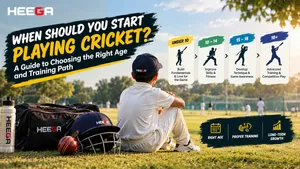 When Should You Start Playing Cricket? A Guide to Choosing the Right Age and Training PathWondering when to start playing cricket? Discover the ideal age to begin training, explore age-by-age development stages, and learn how to choose the right path for beginners and aspiring professionals.
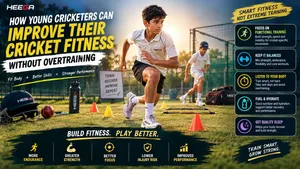 How Young Cricketers Can Improve Their Cricket Fitness Without Overtraining.Learn how young cricketers can improve fitness safely without overtraining through balanced exercise, recovery, nutrition, mobility, and age-appropriate practice.
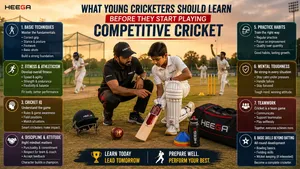 What Young Cricketers Should Learn Before They Start Playing Competitive CricketLearn what young cricketers should know before competitive cricket, including match awareness, rules, teamwork, discipline, preparation, and pressure.