From Local Leagues to World Stages: How Emerging Nations Are Closing the Cricket Gap
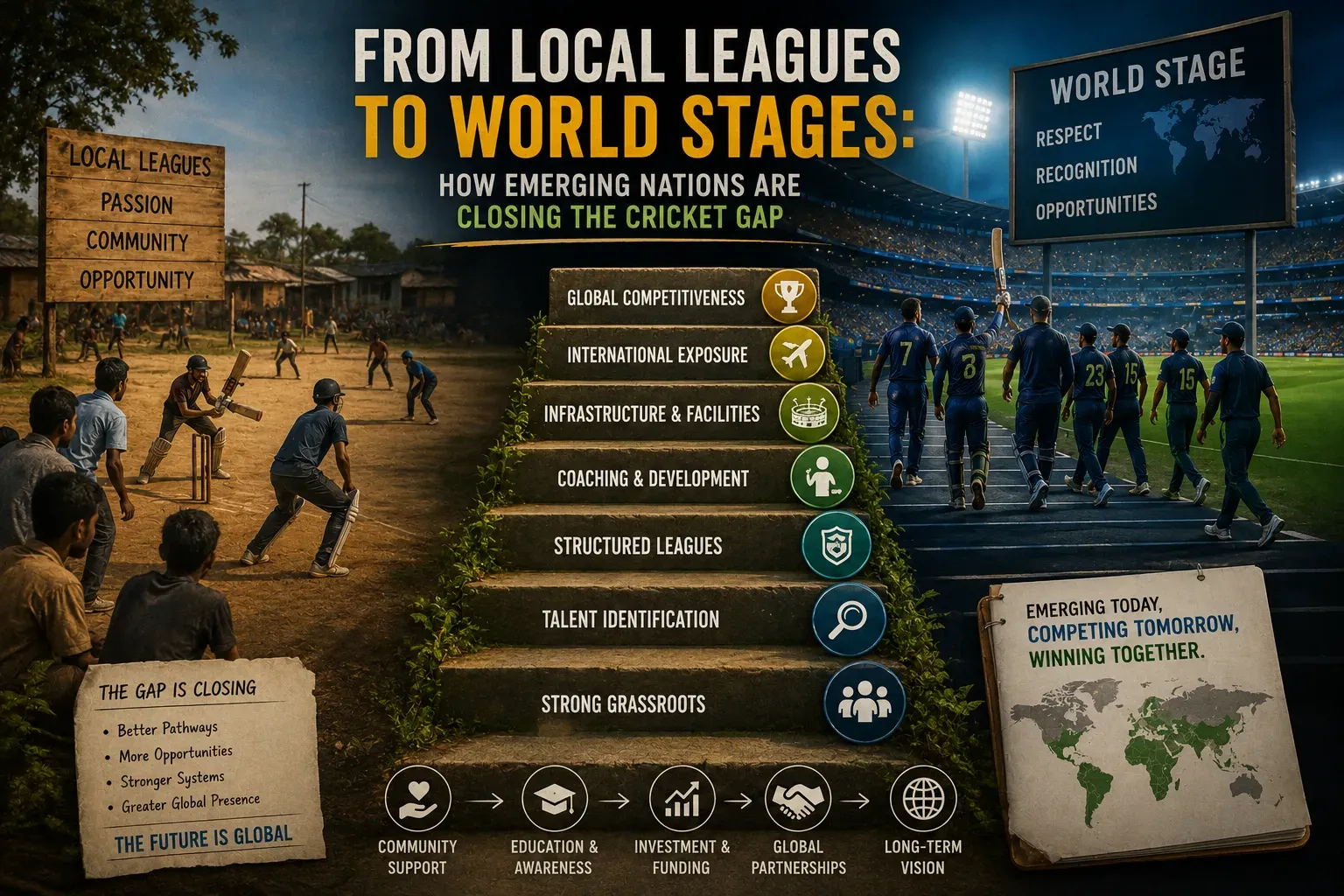
Introduction: The Cricket Gap Is Smaller Than Ever
For many years, international cricket was largely controlled by a small group of established nations.
Countries like India, Australia, England, Pakistan, South Africa, and New Zealand possessed stronger domestic structures, larger talent pools, better facilities, and greater financial resources.
Emerging cricket nations often struggled to compete consistently against these cricket giants.
However, the landscape of world cricket is changing.
Today, nations that were once considered outsiders are making significant progress. Improved coaching systems, domestic leagues, youth academies, professional opportunities, and technological advancements are helping these countries develop stronger cricket ecosystems.
The gap between traditional cricket powers and emerging nations is no longer as wide as it once was.
Across Nepal, Germany, the United States, Canada, and the Netherlands, local leagues are becoming launching pads for future international success.
What begins on community grounds and local club fields is increasingly leading players toward global cricket stages.
Why Domestic Cricket Matters
Every successful cricket nation depends on a strong domestic structure.
International teams cannot thrive without competitive environments where players can develop their skills.
Domestic cricket provides:
- Match experience
- Player development
- Talent identification
- Competitive pressure
- Leadership opportunities
Without domestic competitions, players have limited opportunities to improve.
This is why many emerging nations have prioritized league development as part of their long-term growth strategies.
Nepal: Turning Passion Into Performance
Nepal's rise has been one of cricket's most inspiring stories.
What was once considered a developing cricket nation is now becoming a serious competitor on the international stage.
The Role of Domestic Cricket
The growth of:
- Nepal domestic cricket
- Nepal T20 competitions
- Regional tournaments
- Kathmandu cricket clubs
has helped create more opportunities for young players.
Regular competition allows talent to mature and prepares athletes for higher levels of cricket.
Building Future International Players
Domestic leagues provide valuable exposure to pressure situations, tactical challenges, and match-winning responsibilities.
Many of Nepal's most promising cricketers have developed through these systems.
As league structures continue improving, Nepal's ability to compete internationally will strengthen further.
Germany: Building Competitive Pathways
Germany may be relatively new to organized cricket development, but progress has been impressive.
The country's growing domestic structure is helping create opportunities for aspiring players.
Growth Through Club Cricket
The expansion of:
- German Cricket Federation leagues
- Berlin cricket clubs
- Munich cricket clubs
has created a more competitive cricket environment.
These competitions allow players to gain regular experience and improve their skills.
Why Domestic Competition Is Crucial
Young athletes need opportunities to perform under pressure.
Club cricket provides exactly that.
The more competitive the domestic environment becomes, the stronger Germany's future international teams are likely to be.
USA: Using Professional Leagues to Accelerate Growth
The United States has become one of the most exciting cricket markets in the world.
A major reason for this momentum is the rapid growth of organized competitions.
Major League Cricket's Influence
Professional cricket creates aspirations.
When young players can watch elite competition in their own country, they begin to believe similar opportunities are possible for them.
Major League Cricket has helped increase:
- Participation
- Visibility
- Investment
- Talent development
Its influence extends well beyond the professional level.
Stronger Pathways for Young Players
Academies, local leagues, and regional tournaments now provide clearer progression routes for American cricketers.
This structure is helping close the experience gap with more established cricket nations.
Canada: Strengthening Its Cricket Foundation
Canada's cricket community has quietly continued expanding over the years.
The country's domestic ecosystem is becoming increasingly organized and competitive.
Club Cricket Remains Vital
Community clubs play a major role in player development.
They provide:
- Regular matches
- Coaching opportunities
- Leadership experiences
- Talent identification
Many future national players begin their journeys in local competitions.
Professional Opportunities Add Momentum
The visibility created by tournaments such as GT20 Canada has contributed to increased interest and participation.
Combined with strong grassroots support, domestic cricket is helping Canada build a stronger future.
Netherlands: A Model for Emerging Nations
The Netherlands has consistently demonstrated how effective domestic systems can produce international success.
Despite a relatively small player base, Dutch cricket continues competing at impressive levels.
Why the Dutch Model Works
Key strengths include:
- Organized clubs
- Quality coaching
- Competitive domestic cricket
- Clear development pathways
These factors create environments where talented players can thrive.
Success Through Structure
The Netherlands proves that strong planning can often overcome limitations in population size or financial resources.
Their domestic system remains one of the best examples for other emerging cricket nations.
Local Leagues Are Becoming Global Talent Factories
One of the most significant developments in modern cricket is the growing importance of local leagues.
Many emerging cricket nations now use domestic competitions to:
- Develop players
- Identify talent
- Improve standards
- Build fan engagement
These leagues create opportunities that were previously unavailable.
As standards rise, local competitions become increasingly valuable development platforms.
Technology Is Helping Close the Gap
Technology has become a powerful equalizer in cricket development.
Players can now access:
- Online coaching
- Video analysis
- Tactical education
- Fitness programs
- Performance tracking tools
A player in Germany or Nepal can learn from many of the same resources used by professionals in established cricket nations.
This access helps accelerate improvement.
Exposure to International Cricket Matters
Domestic competition is essential, but international exposure remains important.
Emerging nations are increasingly benefiting from:
- International tournaments
- Development tours
- Franchise cricket opportunities
- Global coaching exchanges
These experiences help players adapt to higher standards and faster competition.
The more international experience players gain, the quicker the gap narrows.
Youth Development Is the Long-Term Solution
Closing the cricket gap requires more than short-term success.
It requires continuous investment in future generations.
Successful youth systems include:
- School cricket
- Academy programs
- Age-group competitions
- Coach education
The nations investing heavily in youth development today are likely to see the greatest rewards tomorrow.
Infrastructure Is Supporting Progress
Facilities play a major role in player development.
Emerging nations are investing in:
- Cricket grounds
- Training centers
- Indoor facilities
- Practice nets
- Stadiums
Improved infrastructure creates better environments for learning and competition.
The quality of facilities often influences the speed of development.
Equipment Supports Every Level of Growth
As participation increases, access to reliable equipment becomes increasingly important.
Players need:
- Cricket bats
- Training balls
- Protective gear
- Practice equipment
At Heega Sports, we support clubs, academies, schools, and players with quality cricket equipment designed to help athletes train effectively and perform confidently.
Strong cricket nations are built through consistent development, and quality equipment plays a small but important role in that process.
What Could the Next Decade Look Like?
The next ten years could transform international cricket.
We may see:
- More competitive Associate Nations
- Greater international balance
- Expanded global tournaments
- Increased player mobility
- New cricket markets emerging
The traditional hierarchy of world cricket may continue evolving as more nations strengthen their development systems.
Final Thoughts
The journey from local leagues to international competition is becoming more achievable for players around the world.
Across Nepal, Germany, USA, Canada, and the Netherlands, stronger domestic competitions are helping athletes gain the experience, confidence, and skills needed to compete at higher levels.
The gap between traditional cricket powers and emerging nations is not disappearing overnight.
But it is becoming smaller.
And as local leagues continue developing future stars, the future of international cricket promises to be more competitive, diverse, and exciting than ever before.
🏏 Support Your Cricket Journey with Heega Sports
Whether you're training at a local club, competing in a domestic league, or preparing for higher levels of cricket, Heega Sports offers quality equipment designed to help players perform at their best.
Shop Now
Heega Sports – Supporting Cricket Growth From Local Grounds to Global Stages.
Related posts
 How Cricket Is Driving Innovation in Sports Infrastructure Across Emerging NationsDiscover how cricket is driving innovation in sports infrastructure across emerging nations. Learn how modern stadiums, indoor academies, smart training centers, sustainable facilities, and technology are transforming cricket in Nepal, Germany, USA, Canada, the Netherlands, and the UK.
 How Grassroots Cricket Programs Are Transforming Emerging Cricket NationsDiscover how grassroots cricket programs are transforming emerging cricket nations. Learn about youth development, community clubs, cricket in USA and Nepal, coaching, participation growth, and the future of global cricket in this Heega Sports 2026 guide.
 How Local Cricket Leagues Help Build Future International PlayersDiscover how local cricket leagues develop future international cricketers. Learn why grassroots competitions, clubs, and domestic leagues are essential for cricket's growth across Nepal, Germany, USA, Canada, the Netherlands, and the UK.