How Cricket Captains Build Field Placements: The Thinking Behind Every Fielder's Position

Introduction: Why Is Every Fielder Standing There?
Watch a cricket match and you may notice that fielders are rarely positioned randomly.
One player might stand close to the batter.
Another may be positioned near the boundary.
Someone else may stand behind square.
A fielder could be placed at slip even when no obvious catch seems likely.
To a casual viewer, these positions can appear ordinary.
To a captain, however, the field is a strategic map.
Every position can serve a purpose.
A captain may be trying to:
- Create a catching opportunity.
- Prevent boundaries.
- Encourage a particular shot.
- Protect a specific scoring area.
- Support a bowler's plan.
- Exploit a batter's weakness.
- Build pressure.
- Control the scoring rate.
Field placement is therefore one of the most important tactical elements in cricket.
The Captain Does Not Build the Field Alone
Although the captain has the final responsibility for field placement, the process is usually collaborative.
A captain may communicate with:
- Bowlers.
- Wicketkeepers.
- Senior players.
- Coaches.
- Analysts.
The wicketkeeper can be particularly valuable because they are positioned directly behind the batter and often have a clear view of the delivery.
The Bowler's Plan Comes First
One of the biggest factors influencing the field is the intended bowling line and length.
A captain cannot create an effective field without understanding what the bowler is trying to do.
For example, a bowler may want to:
- Attack the stumps.
- Bowl outside off stump.
- Target the pads.
- Use short deliveries.
- Encourage drives.
- Bowl into the body.
The field should support that plan.
Why Bowling Line and Field Placement Work Together
Suppose a bowler is consistently targeting the outside edge.
The captain may place:
- Slip fielders.
- A gully.
- A wicketkeeper in an attacking position.
The goal is to create catching opportunities around the expected edge.
What Is an Attacking Field?
An attacking field places more fielders in positions where wickets are likely to occur.
These can include:
- Slips.
- Gully.
- Short leg.
- Silly point.
- Short mid-wicket.
- Close catchers.
The captain accepts some risk of boundaries in exchange for creating wicket opportunities.
What Is a Defensive Field?
A defensive field focuses more on restricting runs.
Fielders may move toward:
- The boundary.
- Deep square leg.
- Long-on.
- Long-off.
- Deep cover.
- Third man.
This can make scoring more difficult.
Field Placement Depends on the Match Situation
The same batter may face completely different fields during one innings.
Why?
Because the match situation changes.
A captain considers:
- Current score.
- Required run rate.
- Number of wickets remaining.
- Overs remaining.
- Batter at the crease.
- Bowler available.
- Ball condition.
Early Overs Often Encourage Attacking Fields
In many formats, the beginning of an innings can offer wicket-taking opportunities.
Captains may place fielders in catching positions while the ball is relatively new.
Why the New Ball Matters
A newer ball can provide opportunities for:
- Swing.
- Seam movement.
- Edges.
- Mistimed shots.
Captains may therefore use more attacking fields when conditions favor the bowlers.
Slip Fielders Have a Specific Purpose
Slip fielders are positioned beside the wicketkeeper.
Their primary purpose is to catch edges from deliveries outside the batter's body.
The position is especially valuable when the ball may move away from the bat.
Why More Than One Slip May Be Used
If the captain believes an outside edge is likely, multiple slips can create a larger catching zone.
However, every additional close catcher also means fewer fielders available elsewhere.
Gully: Another Catching Position
Gully is positioned wider than the slips.
It can be useful against:
- Cut shots.
- Edges.
- Outside-off deliveries.
The captain may use gully when expecting the batter to play or edge the ball into that region.
Point and Cover Protect Different Areas
Point generally covers the square-off-side region.
Cover protects a more forward off-side area.
Captains use these positions based on:
- Batter's preferred shots.
- Bowling line.
- Fielding restrictions.
- Scoring patterns.
Mid-Off and Mid-On
These fielders protect areas directly in front of the batter.
They can also support attacking plans.
A closer mid-off may create pressure and discourage easy singles.
A deeper position may be used to prevent boundaries.
Square Leg Is a Key Position
Square leg becomes particularly important when a batter plays:
- Pull shots.
- Flicks.
- Leg-side strokes.
The captain may position the fielder according to the bowler's intended line.
Fine Leg and Third Man
These positions can protect boundaries behind square.
They are especially relevant when batters are likely to:
- Glance the ball.
- Edge the ball.
- Play late.
- Use the pace of the delivery.
Long-On and Long-Off
These deep positions protect the straight boundary.
They become especially important when batters are looking to hit down the ground.
Deep Mid-Wicket
Deep mid-wicket is often important in limited-overs cricket.
Powerful batters frequently target the leg side.
A captain may place a fielder there to prevent a six or boundary.
Fielding Restrictions Change Everything
Limited-overs cricket includes restrictions on where fielders can be positioned during particular phases.
These rules can significantly influence captaincy.
The captain must build the best possible field within the permitted limits.
Powerplay Fields
During powerplay periods, restrictions can limit the number of fielders allowed outside certain areas.
This creates opportunities for batters.
Captains must therefore think carefully about:
- Which bowler to use.
- Which areas to protect.
- Which shots to encourage.
Why Fielding Restrictions Increase Pressure on Captains
A captain may know exactly where they want a fielder.
But the rules may prevent them from placing that player there.
Good captains adapt their strategy accordingly.
Test Cricket Offers More Freedom
Long-format cricket generally gives captains greater flexibility in field placement.
They can create highly specialized attacking fields.
This makes Test captaincy particularly tactical.
The Batter's Strengths Matter
Captains study how batters score runs.
For example, a batter may be particularly strong:
- Through cover.
- Square on the leg side.
- Straight down the ground.
- Against short bowling.
- Against spin.
The captain can respond by protecting those areas.
A Strong Batter Can Still Be Targeted
A captain does not necessarily try to eliminate every scoring option.
Sometimes the goal is to encourage a batter to play a shot they are less comfortable with.
Creating a False Sense of Safety
Field placement can be psychological.
A captain might leave a particular area apparently open.
The batter sees the gap.
They may attempt to exploit it.
But the bowler's delivery can be designed to make that shot difficult.
The field has effectively become part of the trap.
Bowling to the Field
This phrase is important in cricket strategy.
Instead of simply bowling and reacting to the batter's shot, the bowler attempts to deliver the ball in a way that encourages a predetermined response.
The field is then positioned to capitalize on that response.
An Example of a Catching Trap
Imagine a captain places:
- A deep square leg.
- A short mid-wicket.
- A mid-on.
The bowler may target the batter's pads.
The batter could attempt a leg-side shot.
The captain now has multiple fielders positioned for possible outcomes.
Why Wicketkeepers Are Important Strategically
Wicketkeepers often communicate with bowlers and captains throughout an innings.
They may notice:
- Batter movement.
- Footwork.
- Edges.
- Changes in stance.
- Sweeps against spin.
Their observations can influence field adjustments.
Field Placement Against Right-Handed Batters
A right-handed batter creates certain natural scoring patterns.
Captains may adjust positions according to:
- Bowling angle.
- Batter's technique.
- Shot preferences.
- Match conditions.
Field Placement Against Left-Handed Batters
A left-handed batter changes the angles.
This can require significant field adjustments.
The same bowling plan can produce different fielding requirements.
Why Bowling From Different Angles Matters
A bowler operating around the wicket can change the angle of delivery.
This may alter:
- The batter's scoring options.
- Edge possibilities.
- Leg-side opportunities.
The captain may move fielders accordingly.
Spin Bowling Requires Different Thinking
Spin creates a different set of tactical possibilities.
Captains may use close catchers such as:
- Slip.
- Short leg.
- Silly point.
- Leg slip.
These positions can create pressure against defensive and attacking shots.
Why Short Leg Can Be Dangerous
Short leg is positioned close to the batter on the leg side.
It can target:
- Glances.
- Defensive mistakes.
- Mis-timed shots.
- Bat-pad chances.
The position requires excellent reflexes and bravery.
Silly Point
Silly point is placed extremely close on the off side.
It can be used when the captain expects:
- Defensive shots.
- Bat-pad chances.
- Mistimed pushes.
Field Placement Against Sweep Shots
Batters often use sweeps against spin.
Captains may respond with:
- Deep square leg.
- Short fine leg.
- Leg slip.
- Short mid-wicket.
The exact arrangement depends on the batter and bowling plan.
Field Placement Against Fast Bowlers
Fast bowling fields often focus on:
- Edges.
- Pull shots.
- Drives.
- Glances.
The captain can create different combinations depending on the intended line and length.
Short-Ball Fields
When a bowler uses short deliveries, the captain may protect areas such as:
- Deep square leg.
- Fine leg.
- Deep mid-wicket.
This allows the bowler to attack with pace while reducing boundary opportunities.
Why a Deep Fielder Does Not Always Mean Defensive Captaincy
A deep fielder can serve an attacking purpose.
If the bowler is deliberately encouraging a risky shot, the deep fielder can turn that shot into a catch.
Fielding should therefore be judged by context rather than appearance.
Field Placement Is About Probabilities
Captains rarely know exactly what will happen.
Instead, they estimate probabilities.
They ask:
- Where is this batter most likely to score?
- What shot does this delivery encourage?
- Where is the edge likely to go?
- Which boundary is most dangerous?
- Where can a wicket realistically occur?
Data Has Changed Fielding Strategy
Modern cricket uses extensive performance data.
Teams can analyze:
- Scoring zones.
- Wagon wheels.
- Dismissal patterns.
- Boundary percentages.
- Bowling matchups.
- Batter tendencies.
What Is a Wagon Wheel?
A wagon wheel visually represents where a batter has scored runs around the field.
It can reveal preferred scoring areas.
How Analytics Help Captains
Data can identify patterns that may not be obvious during live play.
For example, a batter might score unusually well through one region.
The captain can use that information to adjust the field.
Analytics Are Not the Entire Strategy
Numbers provide information.
They do not replace observation.
Conditions can change.
A batter can change their approach.
A pitch may behave differently.
A good captain combines data with real-time judgment.
Reading the Batter's Body Language
Captains and fielders may observe:
- Where the batter is standing.
- How they hold the bat.
- Whether they move across the crease.
- Whether they are preparing for a particular shot.
Moving Across the Crease Changes the Field
If a batter moves significantly toward one side, the captain may respond.
The bowler can then adjust the line.
Fielders may also move.
Why Captains Keep Changing the Field
Cricket is dynamic.
A field that works against one batter may not work against another.
A bowler's strategy may also change.
Therefore, field placement evolves continuously.
Field Changes Can Create Pressure
Moving a fielder can send a message to the batter.
It may communicate:
“We know what you are trying to do.”
That can influence decision-making.
Fielders Need to Be More Than Good Catchers
A modern fielder needs:
- Speed.
- Anticipation.
- Throwing accuracy.
- Communication.
- Awareness.
Captains therefore consider individual fielding strengths.
Why the Best Fielders Get Specialized Positions
A captain may position an elite fielder where they are most likely to be involved.
For example, a player with exceptional catching ability might be placed in a high-probability catching area.
A strong thrower may be positioned where run-outs are likely.
Field Placement and Running Between Wickets
Not every field position is about boundaries or catches.
Captains also try to prevent easy singles.
A close fielder can put pressure on batters attempting quick runs.
Singles Can Be More Important Than Boundaries
In some match situations, a captain may accept an occasional boundary if they can prevent consistent singles.
The objective is to make scoring difficult.
Field Placement During a Run Chase
A chasing team changes the strategic equation.
The captain considers:
- Required run rate.
- Wickets remaining.
- Overs remaining.
- Batter quality.
Defending a Small Total
When defending a small total, captains may prioritize wickets.
An attacking field can create pressure.
Defending a Large Total
A captain may focus more on boundary prevention.
The field becomes more spread out.
Death Overs Require Different Fields
At the end of a limited-overs innings, batters usually attack aggressively.
Captains must protect:
- Straight boundaries.
- Leg-side boundaries.
- Off-side gaps.
Why Death-Over Fielding Is Difficult
There are only a limited number of fielders.
The captain cannot protect every boundary simultaneously.
They must predict the batter's most likely scoring options.
Field Placement and the Bowler's Strengths
Captains should not simply create a field based on the batter.
They also need to consider the bowler.
A swing bowler may require an attacking off-side field.
A spinner may require close catchers.
A yorker specialist may need deep boundary protection.
Building a Field Around a Bowler
The captain's goal is to maximize the bowler's strongest weapon.
The field should make that weapon more effective.
Why Communication Matters
Field placements only work if players know what is expected.
Captains communicate with:
- Bowlers.
- Wicketkeepers.
- Fielders.
Sometimes adjustments happen between deliveries.
Silent Communication Is Also Important
Experienced teams can use:
- Hand signals.
- Eye contact.
- Pre-agreed plans.
This allows them to adjust without excessive conversation.
Field Placement Can Influence the Batter's Mind
A batter may see a fielder placed exactly where they normally score.
That can cause hesitation.
The batter may change their shot.
This can create an opportunity for the bowler.
The Captain Is Trying to Control Choices
The best field placements do not necessarily stop every shot.
They reduce the batter's comfortable options.
If a batter has fewer attractive choices, pressure increases.
Why Fielding Is Like a Puzzle
A captain has limited pieces.
Those pieces are the fielders.
Each player has strengths.
The pitch and weather create additional variables.
The captain must arrange everything into a plan.
What Makes a Great Field Placement?
A good field placement usually has three characteristics:
- It supports the bowling plan.
- It protects the most important scoring areas.
- It creates realistic wicket opportunities.
There Is Always a Trade-Off
Moving one fielder creates a gap somewhere else.
Protecting the leg side may leave the off side exposed.
Adding a slip may reduce boundary protection.
This trade-off is at the heart of field strategy.
Why Field Placement Changes After Every Few Balls
The batter may:
- Change stance.
- Hit a boundary.
- Miss a shot.
- Move across the crease.
- Reach a new stage of the innings.
The bowler may also change their plan.
The captain must respond.
Field Placement and Momentum
A wicket can change the entire field.
A new batter may have different strengths.
The captain can immediately redesign the plan.
New Batter, New Field
A newly arrived batter may be tested with an attacking setup.
Once they settle, the captain may become more defensive.
Why Partnerships Matter
Captains may target the weaker batter in a partnership.
They can use field placement to pressure that player while limiting the stronger batter's scoring options.
Field Placement in Different Formats
Test Cricket
Focus often includes:
- Wickets.
- Long-term pressure.
- Close catchers.
- Batting weaknesses.
ODI Cricket
Captains balance:
- Wickets.
- Run prevention.
- Fielding restrictions.
- Match phases.
T20 Cricket
The focus is often:
- Boundary prevention.
- Matchups.
- Risk management.
- Wicket-taking opportunities.
Field Placement Across Different Cricket Conditions
Cricket is played in many countries, including Nepal, Germany, the United States, Canada, the Netherlands, and the United Kingdom.
Conditions can influence field strategy.
Nepal
Different venues and pitch characteristics can influence bowling and fielding plans.
Captains may need to adapt quickly to local conditions.
Germany
Growing cricket competitions may include a mix of outdoor and different playing environments.
Captains need to understand how conditions affect ball movement and scoring.
United States
Different grounds can offer different dimensions and surfaces.
Field placement must account for boundary sizes and local conditions.
Canada
Seasonal conditions can influence how pitches and outfields behave.
Netherlands
Weather and pitch characteristics can affect movement and scoring patterns.
United Kingdom
Traditional cricket grounds often provide varied pitch and boundary characteristics, making field awareness especially important.
Why Boundary Size Matters
A captain needs to know where the boundary is.
A deep fielder may be positioned differently depending on how much ground they need to cover.
Small Boundaries Create Different Risks
A shot that would be a catch on a large ground may become a boundary on a smaller one.
Captains must adjust accordingly.
Field Placement Is Also About Fielder Ability
Not every player has the same speed or throwing range.
A captain must consider individual abilities.
The Importance of Anticipation
Fielders who understand the bowling plan can move earlier.
They can anticipate where the ball is likely to travel.
Why Fielders Talk Between Deliveries
Fielders may discuss:
- Where the ball is likely to go.
- Batter tendencies.
- Bowling plans.
- Running opportunities.
This keeps everyone aligned.
Heega Sports and the Importance of Complete Cricket Preparation
At Heega Sports, we understand that cricket performance involves more than batting and bowling.
Players also need reliable equipment to develop the skills required for modern cricket.
Our cricket range includes:
- Kashmir Willow cricket bats.
- English Willow cricket bats.
- Leather cricket balls.
- Practice balls.
- Batting gloves.
- Batting pads.
- Cricket helmets.
- Cricket shoes.
- Cricket kit bags.
- Practice nets.
- Training accessories.
Quality training equipment helps players develop the technical and tactical skills that eventually become valuable on match day.
Final Thoughts
A cricket field may look simple from a distance.
But once a match begins, every fielder becomes part of a larger tactical plan.
Captains consider:
- The bowler.
- The batter.
- The pitch.
- The weather.
- The ball.
- The match situation.
- Boundary dimensions.
- Fielding strengths.
- Scoring patterns.
They then arrange their players to create the best possible balance between taking wickets and preventing runs.
There is no perfect field.
Every placement involves a compromise.
Move a fielder to protect one area, and another area may become vulnerable.
Bring a fielder closer for a catch, and a boundary may become easier.
Spread the field, and the batter may find singles.
Attack with close catchers, and the captain may risk conceding runs.
That is what makes field placement so fascinating.
The captain is constantly trying to predict what will happen next.
The bowler delivers.
The batter decides.
The ball travels.
And the field is waiting.
Behind every fielder's position is a decision—and behind every decision is an attempt to control the next moment of the game.
🏏 Build Your Cricket Skills With the Right Equipment
Explore quality cricket bats, leather balls, practice balls, batting gloves, pads, helmets, cricket shoes, kit bags, practice nets, and training accessories at Heega Sports.
Shop Now
Heega Sports – Supporting Players From Training Ground to Match Day.
Related posts
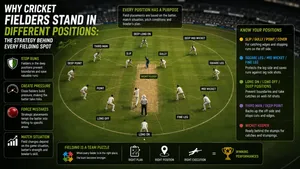 Why Cricket Fielders Stand in Different Positions: The Strategy Behind Every Fielding SpotLearn why cricket fielders stand in different positions and how fielding positions, catching areas, bowlers, and match situations influence field placement.
 Why Cricket Captains Matter: How Leadership Decisions Win Matches.Discover why cricket captains play one of the most important roles in the game. Learn how leadership, strategy, field placements, bowling changes, and decision-making influence matches across Nepal, Germany, USA, Canada, the Netherlands, and the UK.
 Cricket and Leadership: What Every Player Can Learn from Great CaptainsDiscover the leadership lessons cricket teaches through its greatest captains. Learn how communication, decision-making, teamwork, resilience, and responsibility help players grow on and off the field across Nepal, Germany, USA, Canada, the Netherlands, and the UK.