How Cricket Grounds Are Prepared Before a Match: From Pitch Rolling to Boundary Marking

Introduction: A Cricket Match Begins Long Before the First Ball
When players walk onto a cricket field, spectators usually focus on the teams.
Who will win the toss?
How will the batters perform?
Will the bowlers find movement?
But before any of those questions matter, another group of people has already completed hours of important work.
The ground staff.
A cricket match depends heavily on the condition of the playing surface.
The pitch needs to be prepared.
The outfield must be safe.
The crease lines need to be visible.
The boundary needs to be clearly marked.
The grass must be managed.
Equipment and covers may need to be positioned correctly.
None of this happens automatically.
Behind almost every professional cricket match is a team of groundspeople working carefully to create a surface that is safe, consistent, and suitable for play.
The preparation can begin days before a match and continue until just before the players walk onto the field.
Who Prepares a Cricket Ground?
The people responsible for preparing a cricket field are generally known as ground staff or groundspeople.
Their responsibilities can include:
- Pitch preparation.
- Grass management.
- Outfield maintenance.
- Crease marking.
- Boundary setup.
- Pitch covering.
- Moisture management.
- Equipment maintenance.
- Safety inspections.
At major venues, ground staff may work as a specialized team rather than as one individual.
Why Ground Preparation Matters
The playing surface affects almost every part of cricket.
It can influence:
- Ball bounce.
- Ball movement.
- Batting conditions.
- Spin.
- Fielding.
- Running between wickets.
- Player safety.
A poorly prepared surface can create unnecessary risks.
A well-maintained ground gives players a stable environment in which to compete.
The Pitch Is the Most Important Area
The central strip of a cricket ground is the pitch.
It is where:
- The bowler delivers the ball.
- The batter takes position.
- The ball bounces.
- Runs are scored.
- Wickets fall.
Because so much of the match depends on it, pitch preparation receives considerable attention.
Pitch Preparation Can Begin Days Before the Match
Ground staff do not necessarily wait until match morning.
Preparation may begin well in advance.
They monitor:
- Grass growth.
- Moisture.
- Weather.
- Surface hardness.
- Pitch wear.
- Temperature.
The exact process varies according to the venue, climate, soil, grass type, and competition requirements.
Grass Management Is a Major Job
The grass on a cricket pitch needs careful management.
Ground staff may control:
- Grass height.
- Density.
- Moisture.
- Growth patterns.
The objective is to create a playing surface that behaves appropriately and remains safe.
Why Pitch Grass Matters
The amount and condition of grass can influence how a pitch behaves.
A surface with more visible grass may provide different conditions from a very dry, closely prepared surface.
However, pitch behaviour is never determined by grass alone.
Soil composition, moisture, weather, pitch age, and preparation methods all contribute.
Rolling the Pitch
One of the most recognizable pieces of ground equipment is the pitch roller.
Ground staff use rollers to help prepare and maintain the playing surface.
Rolling can influence:
- Surface firmness.
- Flatness.
- Moisture distribution.
- Pitch consistency.
The exact roller and preparation method depend on the venue and conditions.
Why Does the Pitch Need to Be Flat?
A consistent surface helps produce predictable bounce.
Players need to be able to trust the pitch.
If the surface contains dangerous irregularities, the ball may behave unpredictably and create safety concerns.
Pitch preparation therefore aims to provide a stable playing area.
Watering Requires Careful Judgment
Water can dramatically affect soil and grass.
Ground staff may use irrigation as part of routine ground maintenance.
However, too much water can create problems.
Too little water can also affect grass health and surface conditions.
The amount and timing depend on:
- Weather.
- Soil.
- Grass.
- Pitch condition.
- Upcoming match requirements.
Weather Changes the Preparation Plan
Ground staff constantly monitor the weather.
Rain can change everything.
Hot weather can increase moisture loss.
Strong winds can affect drying.
Cloud cover can influence evaporation.
Because of this, ground preparation is not always a fixed routine.
Staff must constantly adapt.
What Happens When Rain Is Expected?
When rain threatens, ground staff may prepare covers.
Covers can protect important areas from excessive moisture.
The pitch is particularly important because water can significantly change the playing surface.
Fast responses can sometimes determine whether a match starts on time after a shower.
Why Pitch Covers Are So Important
Covers help protect the central pitch from rain.
At professional grounds, different types of covers may protect:
- The pitch.
- Bowling areas.
- Surrounding sections.
- Other important playing surfaces.
The exact system varies between venues.
The Outfield Needs Attention Too
The pitch receives most of the attention, but the outfield is equally important for player safety and match quality.
The outfield must allow players to:
- Run.
- Turn.
- Dive.
- Stop boundaries.
- Chase the ball.
An uneven or poorly maintained outfield can increase injury risk.
Cutting the Outfield Grass
Ground staff regularly maintain outfield grass.
Mowing helps create:
- Consistent grass height.
- A smooth playing surface.
- Better visual presentation.
- Safer running conditions.
The exact mowing height depends on the venue and turf management plan.
Why Outfield Speed Matters
The condition of the grass can influence how quickly the ball travels.
A well-maintained outfield may allow the ball to move quickly toward the boundary.
A slower surface can reduce the speed of the ball.
This can influence fielding and batting strategy.
Boundary Marking
The boundary needs to be clearly visible.
Modern grounds commonly use boundary ropes or other approved markers.
The boundary tells everyone where the field of play ends.
It is important for:
- Players.
- Umpires.
- Spectators.
- Television viewers.
- Ground staff.
Why Boundary Placement Matters
The boundary is not simply decoration.
Its position affects scoring.
A shorter boundary may make certain shots more rewarding.
A larger boundary can require batters to generate more power.
Ground dimensions therefore become part of the tactical environment.
Setting Up the Boundary Rope
Ground staff carefully position the boundary marker around the playing area.
They need to make sure it is:
- Clearly visible.
- Secure.
- Consistent with competition requirements.
- Positioned safely away from obstacles.
The exact boundary distance depends on the venue and applicable regulations.
Crease Markings Need to Be Precise
The white lines around the wickets are extremely important.
They help define:
- Batting crease.
- Bowling crease.
- Popping crease.
- Return creases.
These markings help players and umpires judge important events during play.
Why the Popping Crease Matters
The popping crease is particularly important when determining whether a batter is safely inside their ground.
Run-outs and stumpings can depend on the batter's position relative to the crease.
Therefore, the line needs to be clearly marked.
Stumps Are Positioned Carefully
The wickets need to be placed correctly at both ends.
Ground staff ensure that:
- The stumps are aligned.
- The wicket holes are suitable.
- The bails fit properly.
- The playing area is ready for the match.
The wickets are positioned according to the Laws of Cricket.
Checking the Pitch Ends
Both ends of the pitch receive careful attention.
Ground staff inspect:
- Bowling footmarks.
- Crease areas.
- Grass.
- Surface condition.
- Wicket positioning.
This helps ensure that the pitch is ready for both innings.
Footmarks Can Become Important
As a match progresses, bowlers create footmarks around the crease.
These areas can become especially important for spinners.
As the surface wears, the pitch may begin behaving differently.
This is one reason cricket surfaces can change throughout a match.
Pitch Wear Is Part of Cricket
A cricket pitch is not expected to remain exactly the same from the first ball to the last.
Over time, it may experience:
- Footmarks.
- Ball impact.
- Grass wear.
- Drying.
- Surface deterioration.
These changes can influence how the ball behaves.
Ground Staff Monitor Safety
Ground preparation is also about protecting players.
Staff may inspect the field for:
- Holes.
- Uneven areas.
- Loose objects.
- Wet patches.
- Damaged equipment.
- Unsafe boundary areas.
Player safety is one of the most important responsibilities of professional ground management.
Why Wet Patches Are Dangerous
A wet area can become slippery.
This is particularly dangerous when players are sprinting or changing direction.
Ground staff therefore pay close attention to drainage and surface moisture.
Drainage Is Essential
Modern cricket grounds require effective drainage systems.
Good drainage can help remove water after rain.
This can improve the chances of returning to play sooner after weather interruptions.
The quality of drainage can be particularly important in areas that experience frequent rainfall.
Why Drainage Can Affect Match Scheduling
If a ground drains quickly, staff may be able to prepare the field sooner after rain.
A ground with poor drainage may require significantly more time.
This can influence:
- Start times.
- Resumption times.
- Overs lost.
- Match scheduling.
Ground Covers Can Protect More Than the Pitch
Depending on the venue, covers may protect large sections of the playing area.
This can reduce the amount of water that reaches important surfaces.
Ground staff must be able to deploy and remove these covers efficiently.
The Toss Creates a Final Preparation Moment
Even after the main preparation is complete, the ground staff may continue monitoring the surface.
The toss can also influence the final decisions of the teams.
Captains may look at:
- Pitch appearance.
- Moisture.
- Weather.
- Grass.
- Expected changes during the day.
Ground preparation therefore becomes part of the tactical story.
Morning Conditions Can Be Different
A pitch may behave differently in the morning compared with later in the day.
Factors such as:
- Temperature.
- Moisture.
- Sunlight.
- Wind.
can change conditions.
Teams therefore pay attention to the surface throughout the match.
Why Ground Staff Sometimes Work During the Match
Their work does not always stop once the players enter the field.
They may need to:
- Repair damaged areas.
- Manage covers.
- Remove water.
- Maintain equipment.
- Address safety concerns.
In long matches, the field itself continues changing.
Ground Preparation Between Innings
At the end of an innings, ground staff may inspect the field.
They may:
- Check the pitch.
- Repair problem areas.
- Replace or adjust equipment.
- Confirm the field remains safe.
The exact tasks depend on what happened during the previous innings.
Preparing for Multi-Day Cricket
Test cricket presents an even bigger challenge.
A ground needs to remain playable over several days.
Ground staff must consider:
- Weather forecasts.
- Pitch wear.
- Outfield condition.
- Moisture.
- Player safety.
- Daily maintenance.
This requires careful planning.
Preparing a Ground for T20 Cricket
T20 cricket is shorter but can be intense.
The field must be ready for:
- Fast running.
- Boundary hitting.
- Diving catches.
- Powerful throwing.
- Frequent changes in field positions.
A smooth and safe outfield becomes particularly important.
Different Countries Create Different Challenges
Cricket is played in many climates.
A ground in a hot, dry region may require different turf management from a ground in a cool, rainy environment.
Ground staff must understand their local conditions.
Nepal: Managing Cricket Grounds During Growth
As cricket continues developing in Nepal, maintaining quality playing surfaces becomes increasingly important.
Better grounds support:
- Youth cricket.
- Domestic competitions.
- Academy development.
- Professional matches.
Ground preparation can therefore contribute to the growth of the sport.
Germany: Cricket Ground Preparation in a Developing Environment
German cricket can face seasonal weather challenges.
Ground staff and clubs need to manage playing surfaces carefully to provide safe cricket during available playing periods.
United States: Preparing Grounds for a Growing Cricket Audience
As cricket expands across the United States, more venues are being used for organized competitions.
Reliable ground preparation can help create better experiences for players and spectators.
Canada: Seasonal Conditions Require Planning
Canadian cricket grounds face significant seasonal differences.
Ground maintenance and preparation therefore require careful planning around weather and playing schedules.
The Netherlands: Managing Grounds in a Structured Cricket Culture
Dutch cricket has established competitions and clubs that rely on maintained playing surfaces.
Ground preparation supports consistent competition throughout the season.
United Kingdom: Groundsmanship Is Part of Cricket Tradition
Groundsmanship has a particularly deep history in the United Kingdom.
Professional and club grounds rely on skilled turf management to maintain pitches and outfields throughout the cricket season.
Technology Is Changing Ground Preparation
Modern ground staff have access to more information than ever.
Technology can help monitor:
- Weather.
- Soil moisture.
- Grass condition.
- Surface temperature.
- Pitch characteristics.
Data can support better maintenance decisions.
Why Groundspeople Need Cricket Knowledge
Ground preparation is not simply gardening.
A cricket surface needs to meet the requirements of the sport.
Groundspeople need to understand how their decisions can affect:
- Bounce.
- Pace.
- Spin.
- Player safety.
- Ball movement.
Their work directly interacts with cricket strategy.
Ground Staff Are Part of the Cricket Team
They may not appear on the scoreboard.
They may not receive player statistics.
But their work is essential.
Without proper ground preparation, players cannot perform under reliable conditions.
A successful cricket match depends on many people working together.
Ground staff are one of the most important groups behind the scenes.
Equipment Helps Create a Professional Playing Environment
Ground preparation requires specialized tools and equipment.
Depending on the venue, this can include:
- Rollers.
- Mowers.
- Covers.
- Line-marking equipment.
- Irrigation systems.
- Boundary ropes.
- Pitch maintenance tools.
The quality and condition of these tools can influence how efficiently the ground is prepared.
How Heega Sports Supports the Cricket Environment
At Heega Sports, we understand that cricket depends on preparation at every level.
While groundspeople prepare the playing surface, players need dependable equipment to perform on it.
Our cricket range includes:
- Kashmir Willow cricket bats.
- Leather cricket balls.
- Practice cricket balls.
- Batting gloves.
- Batting pads.
- Cricket helmets.
- Cricket shoes.
- Cricket kit bags.
- Practice nets.
- Training accessories.
From academy practice sessions to competitive matches, reliable equipment helps players make the most of every cricket environment.
Final Thoughts
A cricket ground may look ready when spectators arrive.
But the reality is very different.
Before the first delivery, ground staff may have spent hours or even days managing the pitch, cutting grass, checking moisture, preparing covers, marking the creases, positioning the boundary, setting the wickets, and inspecting the field for safety.
Every detail matters.
The pitch influences how the ball behaves.
The outfield affects running and fielding.
The boundary affects scoring.
The crease markings help officials make important decisions.
Drainage can influence whether a match resumes after rain.
And careful maintenance allows players to compete safely.
From Nepal and Germany to the United States, Canada, the Netherlands, and the United Kingdom, cricket grounds may look different, but the principle remains the same:
Great cricket begins with a well-prepared playing surface.
So the next time you watch the players walk onto a perfectly prepared cricket field, remember that the match has already involved another team working quietly behind the scenes.
The ground may be silent.
The scoreboard may still show zero.
But the work has already begun.
🏏 Prepare for Your Next Cricket Session with Heega Sports
Explore Kashmir Willow cricket bats, leather cricket balls, practice balls, batting gloves, batting pads, cricket helmets, cricket shoes, cricket kit bags, practice nets, and training accessories designed for players at every level.
Shop Now
Heega Sports – Helping Players Make the Most of Every Cricket Ground, Every Practice, and Every Match.
Related posts
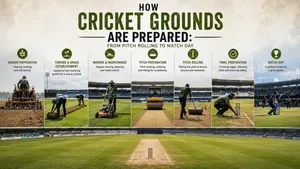 How Cricket Grounds Are Prepared: From Pitch Rolling to Match DayDiscover how cricket grounds are prepared before every match. Learn how pitches are rolled, outfields maintained, boundaries marked, and grounds managed across Nepal, Germany, USA, Canada, the Netherlands, and the UK.
 Cricket Grounds in Canada, USA, Nepal, Sri Lanka and UK.Explore cricket grounds in Canada, USA, Nepal, Sri Lanka and UK, and discover how pitch conditions, weather, facilities and playing surfaces influence cricket.
 Why Some Cricket Grounds Feel Faster Than Others: Understanding Outfield Speed and Ball TravelWhy do some cricket grounds feel faster than others? Discover how grass, moisture, soil, weather, slope, ground maintenance, and ball condition affect outfield speed.