How Cricket Has Changed Since the 1990s: A Look at the Game Then and Now

Introduction: Cricket Has Evolved Without Losing Its Soul
If you watched cricket in the 1990s and compare it with today's game, the differences are impossible to ignore.
Matches are faster.
Players are fitter.
Equipment is more advanced.
Technology assists umpires.
Statistics guide strategy.
Fans follow matches from anywhere in the world.
Despite all these changes, cricket still revolves around the same timeless contest between bat and ball.
The spirit of the game remains intact.
Over the past three decades, cricket has transformed into a modern global sport while preserving the traditions that made it famous.
From the rise of T20 cricket to smart coaching and advanced sports science, the game has experienced remarkable progress.
Across Nepal, Germany, the United States, Canada, the Netherlands, and the United Kingdom, these developments continue helping cricket reach new audiences and inspire future generations.
Cricket in the 1990s
The 1990s represented a very different era.
Most international cricket focused on:
- Test matches.
- One Day Internationals.
- Traditional coaching.
- Limited television coverage.
Technology played almost no role in decision-making.
Players relied mainly on experience and instinct.
Limited Technology
During the 1990s:
- No Decision Review System existed.
- Ball tracking was unavailable.
- UltraEdge did not exist.
- Video analysis was limited.
- Performance data was relatively basic.
Umpires made every decision using only their judgment.
While mistakes occasionally happened, this was accepted as part of the game.
Equipment Was Simpler
Cricket equipment has improved dramatically.
In the 1990s, players generally used:
- Heavier bats.
- Less protective helmets.
- Simpler gloves.
- Basic footwear.
Modern equipment offers:
- Better balance.
- Improved protection.
- Greater durability.
- Enhanced player comfort.
These improvements support both safety and performance.
Fitness Expectations Have Changed
Fitness has become one of cricket's biggest transformations.
Thirty years ago, many players relied primarily on natural ability and match practice.
Today's professionals follow structured programs including:
- Strength training.
- Speed development.
- Mobility exercises.
- Nutrition planning.
- Recovery routines.
Modern cricket demands complete athletes.
Coaching Has Become More Scientific
Traditional coaching emphasized repetition and experience.
Today's coaching combines:
- Video analysis.
- Sports science.
- Mental conditioning.
- Personalized development plans.
- Performance analytics.
Players now train smarter as well as harder.
The Arrival of T20 Cricket
Perhaps the biggest change came with the introduction of Twenty20 cricket.
T20 transformed the sport by encouraging:
- Faster scoring.
- More aggressive batting.
- Creative bowling.
- Athletic fielding.
- New tactical approaches.
It also introduced millions of new fans to cricket worldwide.
Franchise Cricket Changed Opportunities
Professional franchise leagues created new opportunities for players.
These competitions increased:
- International exposure.
- Financial rewards.
- Player movement.
- Global fan engagement.
Many emerging cricket nations have benefited from these professional pathways.
Technology Improved Decision-Making
Modern cricket now uses:
- DRS.
- Hawk-Eye.
- UltraEdge.
- LED stumps.
- High-speed cameras.
These innovations have improved fairness while helping fans better understand the game.
Data Drives Modern Strategy
Captains and coaches increasingly rely on statistics.
They analyze:
- Strike rates.
- Economy rates.
- Wagon wheels.
- Matchups.
- Fielding efficiency.
Strategic planning has become more detailed than ever before.
Broadcasting Has Improved the Fan Experience
Watching cricket today is completely different from the 1990s.
Modern broadcasts include:
- Multiple camera angles.
- Live statistics.
- Slow-motion replays.
- Spidercam.
- Interactive graphics.
Fans now experience the game in greater detail than ever before.
Cricket Has Become More Global
In the 1990s, international cricket was dominated by traditional nations.
Today, the game continues expanding into new regions.
Countries including Nepal, Germany, the United States, Canada, and the Netherlands are strengthening domestic structures while increasing international participation.
Cricket's global footprint continues growing every year.
Nepal: Rapid Growth Through Modern Development
Nepal's cricket journey has accelerated thanks to improved coaching, stronger domestic competitions, and greater international opportunities.
Modern training methods continue supporting young talent.
Germany: Building Cricket from the Ground Up
Germany has embraced structured coaching, community clubs, and youth programs that reflect modern approaches to player development.
The sport continues attracting new participants.
United States: A New Professional Era
The rise of professional leagues has transformed American cricket.
Investment in facilities, coaching, and broadcasting continues helping cricket establish itself in one of the world's largest sports markets.
Canada: Combining Tradition with Innovation
Canadian cricket has adopted modern coaching techniques while maintaining strong community-based participation.
Indoor training facilities also support year-round development.
The Netherlands: Consistent Progress Through Structure
Dutch cricket continues balancing traditional coaching values with modern technology and player development systems.
Its organized approach remains widely respected.
United Kingdom: Tradition Leading Innovation
The UK remains one of cricket's leading innovators.
From county cricket to The Hundred, British cricket continues influencing the global game's future while preserving its rich history.
What Has Not Changed
Although many aspects of cricket have evolved, its core values remain the same.
Success still depends on:
- Skill.
- Patience.
- Teamwork.
- Discipline.
- Respect.
- Determination.
Technology may support performance, but these qualities continue defining great cricketers.
Quality Equipment Supports Modern Cricket
Today's faster game requires dependable equipment.
Essential cricket gear includes:
- Kashmir Willow cricket bats.
- Leather cricket balls.
- Practice balls.
- Cricket helmets.
- Batting gloves.
- Batting pads.
- Cricket shoes.
- Practice nets.
- Cricket kit bags.
Modern equipment helps players meet the demands of today's game.
How Heega Sports Supports the Modern Cricketer
At Heega Sports, we celebrate both cricket's traditions and its future.
Our equipment is designed to support players training in today's modern cricket environment while respecting the timeless foundations of the game.
Our collection includes:
- Kashmir Willow cricket bats.
- Leather cricket balls.
- Practice balls.
- Cricket helmets.
- Batting gloves.
- Batting pads.
- Cricket shoes.
- Practice nets.
- Cricket kit bags.
- Training accessories.
We are proud to support players across every stage of cricket's continuing evolution.
Final Thoughts
Cricket has changed enormously since the 1990s.
The game is faster, more athletic, more scientific, and more connected than ever before.
Technology has improved fairness.
Coaching has become smarter.
Equipment has become safer.
The sport has expanded into exciting new regions.
Yet despite these remarkable changes, cricket remains built on the same principles that have inspired generations of players and fans.
Across Nepal, Germany, the United States, Canada, the Netherlands, and the United Kingdom, cricket continues evolving while staying true to the values that have always made it one of the world's greatest sports.
The future will undoubtedly bring even more innovation.
But the heart of cricket will always remain the same.
🏏 Experience Modern Cricket with Heega Sports
Explore premium-quality Kashmir Willow cricket bats, leather cricket balls, practice balls, cricket helmets, batting gloves, batting pads, cricket shoes, practice nets, cricket kit bags, and training accessories designed for today's generation of cricketers.
Shop Now
Heega Sports – Tradition, Innovation, and Quality for Every Cricketer.
Related posts
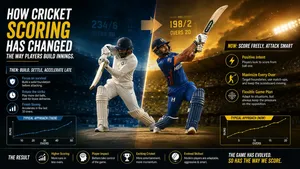 How Cricket Scoring Has Changed the Way Players Build Innings.Discover how modern cricket scoring has changed batting strategy, from strike rotation and boundary hitting to calculated risks across Test, ODI, and T20 cricket.
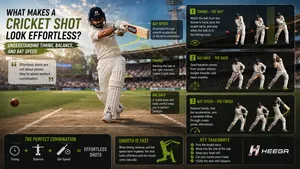 What Makes a Cricket Shot Look Effortless? Understanding Timing, Balance, and Bat SpeedDiscover what makes a cricket shot look effortless and learn how timing, balance, footwork, bat speed, body movement, and technique work together to create clean batting.
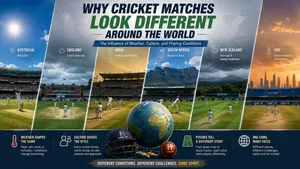 Why Cricket Matches Look Different Around the World: The Influence of Weather, Culture, and Playing ConditionsDiscover why cricket matches can look different around the world. Learn how weather, pitches, grounds, altitude, local cricket culture, and playing conditions influence the modern game.