How Cricket Teaches Kids the Value of Patience and Waiting for the Right Opportunity.

Introduction: Cricket Is a Game of Timing and Patience
Cricket is often associated with action.
Batters hit boundaries.
Bowlers chase wickets.
Fielders dive across the ground.
But behind all of that action is another important skill:
Patience.
A young batter may need to wait for the right ball before playing an attacking shot.
A bowler may need to bowl several deliveries before creating an opportunity.
A fielder may spend a long period waiting before suddenly becoming involved in an important moment.
This makes cricket an excellent sport for teaching children that success does not always come from acting immediately.
Sometimes the best decision is to wait.
Sometimes the right opportunity takes time.
And sometimes patience creates the opportunity itself.
What Does Patience Mean in Cricket?
For a young cricketer, patience does not simply mean standing still.
It means learning to:
- Wait for the right moment.
- Observe what is happening.
- Avoid unnecessary risks.
- Stay focused.
- Trust preparation.
- Make decisions carefully.
These skills can be useful far beyond cricket.
Why Patience Matters for Young Players
Children naturally want immediate results.
They may want to hit every ball for a boundary.
They may want to bowl a wicket-taking delivery every time.
They may want to win every match.
But cricket does not always work that way.
A player may perform well even when nothing dramatic happens.
A defensive shot can be valuable.
A dot ball can be valuable.
A single run can be valuable.
Waiting for the right opportunity can be a major part of good cricket.
Batting Is One of the Best Lessons in Patience
Batting provides countless opportunities for children to learn patience.
A batter does not need to attack every delivery.
Some balls should be defended.
Some should be left alone.
Some can be rotated for singles.
Others may provide an opportunity to score boundaries.
Learning to recognize the difference is an important cricket skill.
Not Every Ball Is a Boundary Ball
Young players often want to hit every delivery hard.
This is understandable.
Boundaries are exciting.
But attacking every ball can lead to unnecessary dismissals.
A good batter learns that scoring opportunities come in different forms.
Sometimes the best decision is simply to wait for a better delivery.
Waiting Does Not Mean Being Passive
There is an important difference between patience and inactivity.
A patient batter is still watching.
They are still analyzing.
They are still preparing.
They are simply refusing to rush into a poor decision.
This is an active form of patience.
Learning to Watch the Bowler
A young batter can learn a lot by observing the bowler.
They may notice:
- Run-up rhythm.
- Bowling speed.
- Preferred line.
- Typical length.
- Variations.
- Field placement.
The more carefully they observe, the better prepared they may become when an opportunity appears.
The First Few Balls Can Be About Understanding
At the beginning of an innings, a batter may need time to understand the conditions.
They may assess:
- Pitch bounce.
- Ball movement.
- Bowling pace.
- Outfield speed.
- Field positions.
This teaches children that they do not always need to achieve everything immediately.
Building an Innings Takes Time
A successful innings can develop gradually.
A batter may begin with a few defensive shots.
Then they find singles.
Then they become more comfortable.
Eventually, scoring opportunities may become easier to identify.
This process teaches an important lesson:
Progress does not always happen instantly.
Patience Helps Reduce Unnecessary Risk
Every attacking shot carries some level of risk.
Young players can learn to ask:
"Is this the right ball to attack?"
That question encourages decision-making rather than impulse.
Bowlers Also Need Patience
Patience is not only a batting skill.
Bowling provides some of the strongest lessons in waiting for an opportunity.
A bowler may deliver several accurate balls without taking a wicket.
That does not mean the spell is unsuccessful.
Consistent pressure can eventually create an opportunity.
The Importance of Line and Length
A young bowler may want to bowl a spectacular delivery every time.
But good bowling often begins with consistency.
Repeatedly bowling in a difficult area can make batting uncomfortable.
Eventually, the batter may make a mistake.
The bowler has created the opportunity through patience.
A Wicket May Be the Result of Several Deliveries
Imagine a bowler delivers:
- Ball 1: Good length.
- Ball 2: Good length.
- Ball 3: Slightly wider.
- Ball 4: Good length.
- Ball 5: Good length.
- Ball 6: Batter attempts an attacking shot and gets out.
The wicket came from the final ball.
But the pressure may have been created by the entire over.
This is a valuable lesson for children.
Success is sometimes the result of several small actions rather than one spectacular moment.
Fielders Learn Patience Too
Fielding can involve long periods of waiting.
A child may stand in the same position for several deliveries without touching the ball.
Then suddenly, the ball comes directly toward them.
They need to be ready.
This teaches:
Stay prepared even when nothing appears to be happening.
Staying Alert Is Part of Patience
Patience without concentration is not useful.
A fielder who becomes distracted while waiting may miss the one opportunity that arrives.
Young players therefore learn that waiting requires attention.
Patience and Concentration Work Together
A player can be patient while remaining mentally active.
They can watch:
- The ball.
- The batter.
- The bowler.
- The field.
- The match situation.
This helps develop concentration.
Cricket Teaches Children to Think Before Acting
Many situations in cricket require a decision.
Should the batter attack?
Should the fielder throw immediately?
Should the bowler change the delivery?
Should the runner attempt a second run?
These decisions encourage children to pause and evaluate before acting.
The Value of the Second Run
Running between wickets is a good example.
A young player may automatically want to run two whenever possible.
But the second run may not always be safe.
They need to consider:
- Where the ball is.
- How quickly the fielder can return it.
- Where the partner is.
- How much time remains.
This teaches calculated decision-making.
Patience Can Improve Shot Selection
Good shot selection is not about hitting the ball harder.
It is about choosing the appropriate response.
A batter who waits for the right ball may score more effectively than one who attacks everything.
Learning to Leave the Ball
Leaving a delivery can be surprisingly difficult for young batters.
They may feel that every ball should be hit.
Learning when not to play a shot teaches self-control.
It also demonstrates that doing less can sometimes be the smarter decision.
Cricket Teaches Delayed Gratification
Delayed gratification means accepting that you may need to wait for a better result.
For a young cricketer, this could mean:
"I won't attack this ball because I may get a better opportunity later."
That mindset can become valuable in many areas of life.
Patience During Difficult Matches
Cricket does not always go according to plan.
A team may lose early wickets.
A bowler may concede runs.
A batter may struggle to score.
Young players can learn that difficult situations do not always require panic.
Sometimes the best response is to remain calm and continue following the plan.
Staying Calm After a Mistake
A child may play a poor shot and immediately become frustrated.
Instead of allowing one mistake to control the next delivery, they can learn to reset.
This creates another form of patience:
Patience with yourself.
Children Need Time to Develop Skills
Patience is also important outside individual matches.
Young cricketers do not master batting, bowling, or fielding overnight.
Some skills may take weeks.
Others may take months or even years.
Development Is Not Always Fast
A child might practice a skill repeatedly without seeing immediate improvement.
Then suddenly, something clicks.
This is normal learning.
Parents and coaches should help children understand that slow progress is still progress.
Parents Should Avoid Expecting Instant Results
Parents naturally want their children to succeed.
But constantly asking:
"Why didn't you score more?"
can create unnecessary pressure.
Instead, parents can ask:
- What did you learn?
- What did you enjoy?
- What are you working on?
- What would you like to improve?
These questions encourage long-term thinking.
Patience Helps Children Handle Competition
Competitive cricket can make children compare themselves with teammates.
One child may score more runs.
Another may take more wickets.
A third may be selected for a stronger team.
These differences can change over time.
A young player should understand that development has its own timeline.
Every Player Develops Differently
Some children develop coordination quickly.
Others develop confidence first.
Some understand tactics early.
Others need more match experience.
Patience allows children to develop without constantly feeling behind.
Cricket Teaches the Difference Between Opportunity and Impulse
An opportunity is not the same as an impulse.
An impulse says:
"Hit it because I want to score."
An opportunity says:
"This is the right ball to attack."
Teaching children to recognize this difference can improve their cricket decisions.
Patience Creates Better Decision-Makers
The ability to wait and evaluate gives players more information.
More information can lead to better decisions.
This can apply to:
- Batting.
- Bowling.
- Fielding.
- Running.
- Captaincy.
Young Captains Learn Patience
Captains may need to wait before making tactical changes.
For example, a bowler may need several deliveries before the captain can judge whether a particular plan is working.
Making changes too quickly may create unnecessary disruption.
Patience allows the captain to gather information.
Cricket Teaches Children That Not Every Moment Needs Action
Modern life can encourage constant activity.
Cricket provides a different lesson.
Sometimes the best thing to do is:
Watch. Wait. Think.
Then act when the moment arrives.
Patience Can Improve Communication
A child who learns to listen before responding can become a better teammate.
During cricket, players need to hear:
- Captain's instructions.
- Coach feedback.
- Teammate calls.
- Match information.
Waiting and listening can prevent mistakes.
Patience and Teamwork
Cricket is not only about individual performance.
A batter may need to support a partner.
A senior player may need to guide a younger teammate.
A fielder may need to stay in position even if they want to move elsewhere.
Patience helps players understand their role within the team.
Patience Builds Responsibility
When children learn that their actions affect teammates, they become more thoughtful.
For example, a risky shot may not only affect the batter.
It can also affect the team's position in the match.
Understanding consequences encourages maturity.
Cricket Helps Kids Understand Long-Term Goals
A young player may dream of becoming a professional cricketer.
But that goal cannot be achieved in one practice session.
It requires:
- Regular training.
- Skill development.
- Fitness.
- Match experience.
- Learning.
- Patience.
Big goals are achieved through smaller steps.
Small Improvements Require Patience
A player may spend weeks improving their footwork.
The improvement may initially be difficult to notice.
But small technical changes can eventually produce significant results.
This teaches children to value gradual progress.
How Coaches Can Teach Patience
Coaches can create drills that reward decision-making rather than constant attacking.
For example:
Challenge: Score ten runs using controlled shots rather than attempting boundaries.
This encourages players to think about how they score rather than simply how much they score.
Use Scenario-Based Training
Coaches can create realistic situations:
"You need eight runs from twelve balls with two wickets remaining."
Now the child has to think.
Should they attack?
Should they rotate the strike?
Should they wait?
These exercises teach patience through experience.
Reward Good Decisions
A child should not only be praised when they score.
A coach can also praise a batter for leaving a dangerous delivery or a bowler for maintaining discipline.
This teaches children that good decisions matter even when they do not produce immediate results.
Keep Patience Fun
Teaching patience does not mean making cricket boring.
Games can reward:
- Accurate bowling.
- Controlled batting.
- Smart running.
- Good field positioning.
Children can learn patience while still enjoying themselves.
Equipment Can Support Confident Learning
Suitable equipment can help children focus on learning rather than struggling with equipment that is too heavy or difficult to control.
For young players, appropriately sized bats, gloves, pads, helmets, and shoes can make practice more comfortable.
Choosing the Right Bat for a Child
A child's cricket bat should generally be selected according to their height, strength, and development.
An oversized or excessively heavy bat can make controlled batting more difficult.
The goal is not to buy the biggest bat.
It is to provide equipment the child can use confidently.
Kashmir Willow for Developing Players
Kashmir Willow bats can be a practical choice for many young and developing cricketers because they can offer durability and value for regular practice.
The most important consideration remains appropriate size, weight, and suitability for the player's level.
Patience Beyond Cricket
The lessons children learn through cricket can transfer into everyday life.
Patience can help them:
- Complete schoolwork.
- Learn new skills.
- Handle disagreements.
- Build friendships.
- Practice hobbies.
- Work toward long-term goals.
The sport becomes a practical environment for learning self-control.
Patience in Education
A child may not understand a difficult subject immediately.
Cricket can help them understand that improvement often requires repetition.
The same principle applies:
Practice → Feedback → Adjustment → Improvement
Patience in Friendships
Children also need patience when working with others.
Teammates make mistakes.
People have different personalities.
Learning to communicate calmly can improve relationships.
Patience With Failure
Perhaps the most valuable lesson is learning that failure is not the end.
A child may get out for zero today.
That does not mean they will fail tomorrow.
They can return to practice, learn from the experience, and try again.
Nepal, Germany, USA, Canada, Netherlands, and UK
Young cricket communities are developing across Nepal, Germany, the United States, Canada, and the Netherlands, while the United Kingdom continues to have a deeply established junior and club cricket culture.
Children in each country may experience different facilities, coaching environments, and competitive opportunities.
But patience is universal.
Whether a child is learning cricket in Kathmandu, Berlin, Toronto, Amsterdam, London, or elsewhere, the same basic lesson applies:
Good players do not need to force every opportunity. They learn to recognize the right one.
A Simple Patience Exercise for Young Cricketers
Parents and coaches can try a simple exercise.
Give the batter a set number of balls.
Instead of asking them to score as many runs as possible, create a different target:
"Only attack when you believe the ball is in your scoring area."
After the drill, ask:
- Which balls did you attack?
- Why?
- Which balls did you leave?
- What did you notice?
This turns patience into a practical skill.
What Parents Can Say After Practice
Instead of asking:
"How many runs did you score?"
try:
"Did you wait for the right opportunities today?"
Other useful questions include:
- Did you make any smart decisions?
- Did you stay calm after a mistake?
- Did you notice anything about the bowler?
- What would you try differently next time?
These conversations reinforce the lesson.
A Simple Patience Checklist for Kids
Young players can remember five simple ideas:
- Watch carefully.
- Don't rush.
- Think about the situation.
- Wait for the right opportunity.
- Trust your preparation.
These principles can become useful habits over time.
How Heega Sports Supports Young Players
At Heega Sports, we believe good equipment should help children enjoy learning the game.
Our cricket range includes:
- Junior cricket bats.
- Kashmir Willow bats.
- Leather cricket balls.
- Practice balls.
- Batting gloves.
- Batting pads.
- Cricket helmets.
- Cricket shoes.
- Cricket kit bags.
- Practice nets.
- Training accessories.
Comfortable and appropriately sized equipment can help young players focus on learning, experimenting, and enjoying cricket.
Final Thoughts
Cricket teaches children many skills that are difficult to learn from a textbook.
Patience is one of them.
A batter learns that not every ball needs to be attacked.
A bowler learns that a wicket may come after several disciplined deliveries.
A fielder learns to stay ready even when the ball has not come their way for several minutes.
A captain learns to observe before changing the plan.
A young player learns that improvement itself takes time.
These lessons can shape the way children approach challenges outside cricket too.
They learn that waiting does not mean giving up.
It means preparing.
It means observing.
It means understanding the situation.
And when the right opportunity finally arrives, they are ready to take it.
That may be one of cricket's greatest lessons for young players:
You do not have to force every opportunity. Sometimes, the smartest thing you can do is wait until the right one appears.
🏏 Help Your Child Learn, Practice, and Enjoy Cricket With Heega Sports
Explore junior cricket bats, Kashmir Willow bats, leather balls, practice balls, batting gloves, pads, helmets, cricket shoes, kit bags, practice nets, and training accessories designed for young players.
Shop Now
Heega Sports – Helping Young Cricketers Learn Patience, Build Confidence, and Enjoy Every Opportunity.
Related posts
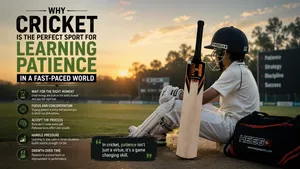 Why Cricket Is the Perfect Sport for Learning Patience in a Fast-Paced WorldDiscover why cricket is one of the best sports for teaching patience. Learn how batting, bowling, teamwork, and long-term thinking help players develop discipline and focus across Nepal, Germany, USA, Canada, the Netherlands, and the UK.
 Why Cricket Is Becoming a Global Platform for Innovation, Leadership, and OpportunityDiscover why cricket is becoming a global platform for innovation, leadership, and opportunity. Learn about cricket in USA and Nepal, sports science, entrepreneurship, youth development, technology, sportswear, and the future of cricket in this Heega Sports 2026 guide.
 How Cricket Is Transforming Communities Through Sport, Education, and OpportunityDiscover how cricket is transforming communities through sport, education, and opportunity. Learn about cricket in USA and Nepal, youth development, leadership, community growth, healthy lifestyles, and social impact in this Heega Sports 2026 guide.