What Protects a Batsman's Legs?

What protects a batsman's legs?
Batting pads, also called leg guards, protect the lower leg: shin, knee and ankle. Above the knee, a thigh guard covers the front leg and an inner thigh pad covers the inside of the back leg. Batting gloves protect the hands, and an abdominal guard covers a sensitive area. All of these are worn together.
A cricket ball travels fast, and even an experienced batter misjudges one now and then. The pads put a barrier between the ball and the leg, and just as importantly they let the batter stop thinking about it and watch the ball.
What is inside a batting pad?
Start from the front. The face of the pad is the part that takes the ball. On our pads that face is high-density foam over cane or moulded rods; the moulded pads use layered dual-density foam underneath. Cane is the traditional build, chosen for shock absorption; the moulded build is the lightweight, wrap-around style.
Then the sections:
- Shin. The front section absorbs the impact and spreads it.
- Knee roll. The padded roll around the knee cushions the joint and affects how the pad fits around the leg. Ours are filled with high-density foam, or cotton on the traditional cane model.
- Side wings. Foam-filled wings along the side of the pad.
- Ankle. Some pads add padding here for the ball that keeps low.
- Straps. Adjustable straps hold the pad in place without pinching. A good strap system stops the pad sliding or rotating when you run.
Weight varies between pads. Our Armour pad weighs 750 grams for the pair; our moulded pad is 850 grams for both legs. Heavier is not safer; the right pad is the one you can run and pivot in.
What is the difference between left- and right-handed cricket pads?
The shape. We make batting pads in left- and right-hand fits because the shaping is not the same. The front knee padding on our Phantom pad, for instance, is asymmetrical, which is why it is made in a left-hand and a right-hand version. Thigh pads are handed the same way: the shaping and the strap layout differ for a left-hand and a right-hand batter.
So order for your batting hand, not your writing hand. We make batting pads in boys', youth and men's sizes. One exception: our traditional cane Off Cut pad is made to be used by batters on either side.
What protects a batsman's hands?
Batting gloves. Ours pair high-density foam and moulded finger protection with a soft, breathable palm. A good glove is snug without pinching, with full coverage across the fingers and thumb and joints that flex so you can grip and rotate the bat freely. If you are between sizes, go up. Gloves and pads work as a pair: a secure grip and protected legs let the batter focus on the ball.
What covers the thigh and the abdomen?
The thigh guard covers the front leg, where most blows land when you are beaten on the inside. The inner thigh pad covers the inside of the back leg, which is where a ball that jags back finds you. For hard-ball cricket you want both; a single pad is fine for tennis-ball cricket and juniors. A thigh guard should sit high on the thigh and stay there when you run. If it slides down between overs, it is a size too large or the straps are loose.
The abdominal guard is a rigid, contoured shell that spreads the impact of a hard ball. It only works if it is held in place, so wear it inside a jockstrap or briefs with a guard pocket, snug against the body with no gap at the top. Every batter facing a hard ball needs one, from the first junior net session onwards, and keepers wear one too.
How do I get the pad size right?
Measure from the top of your instep to the middle of your knee. That gives the pad length. A pad the right length puts the knee inside the knee section; too long and the knee does not line up with it, too short and areas are left exposed. Then check:
- The knee lines up with the knee protection.
- The straps hold the pad firm without pressure.
- You can bend both knees, step forward, step back and run a short distance with the pad staying put.
Do not buy oversized pads for a child to grow into. A pad that is too long puts the knee in the wrong place and leaves the areas it should cover poorly protected. Fit the player as they are now.
For the full set, start with our batting pads, handcrafted in Meerut in junior to men's sizes, then add thigh guards, batting gloves and an abdominal guard.
Related posts
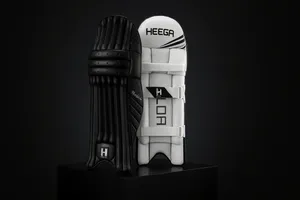 Secure Fit, Superior Defense — The Heega Leg Guard PromiseDiscover the unmatched protection, comfort, and fit of Heega Leg Guards. Designed for cricketers who demand durability, flexibility, and confidence at the crease, these pads deliver secure fit and superior defense with every inning.
 Move Freely, Play Fearlessly — The Heega Leg Guard AdvantageDiscover how Heega Leg Guards redefine protection, comfort, and mobility — allowing cricketers to move freely and play fearlessly every inning. 🏏 Gear up with Heega today — Shop Now!
-300x200.webp) Comfort Meets Protection: Inside the Design of Heega Leg GuardsDiscover how Heega Leg Guards combine cutting-edge design, comfort, and unmatched protection to help every cricketer perform confidently. Explore the innovation behind their build and why players trust Heega for safety and style.
Comfort Meets Protection: Inside the Design of Heega Leg GuardsDiscover how Heega Leg Guards combine cutting-edge design, comfort, and unmatched protection to help every cricketer perform confidently. Explore the innovation behind their build and why players trust Heega for safety and style.