Badminton Graphite Racket vs Carbon and Aluminum: How to Choose the Right Racket Material
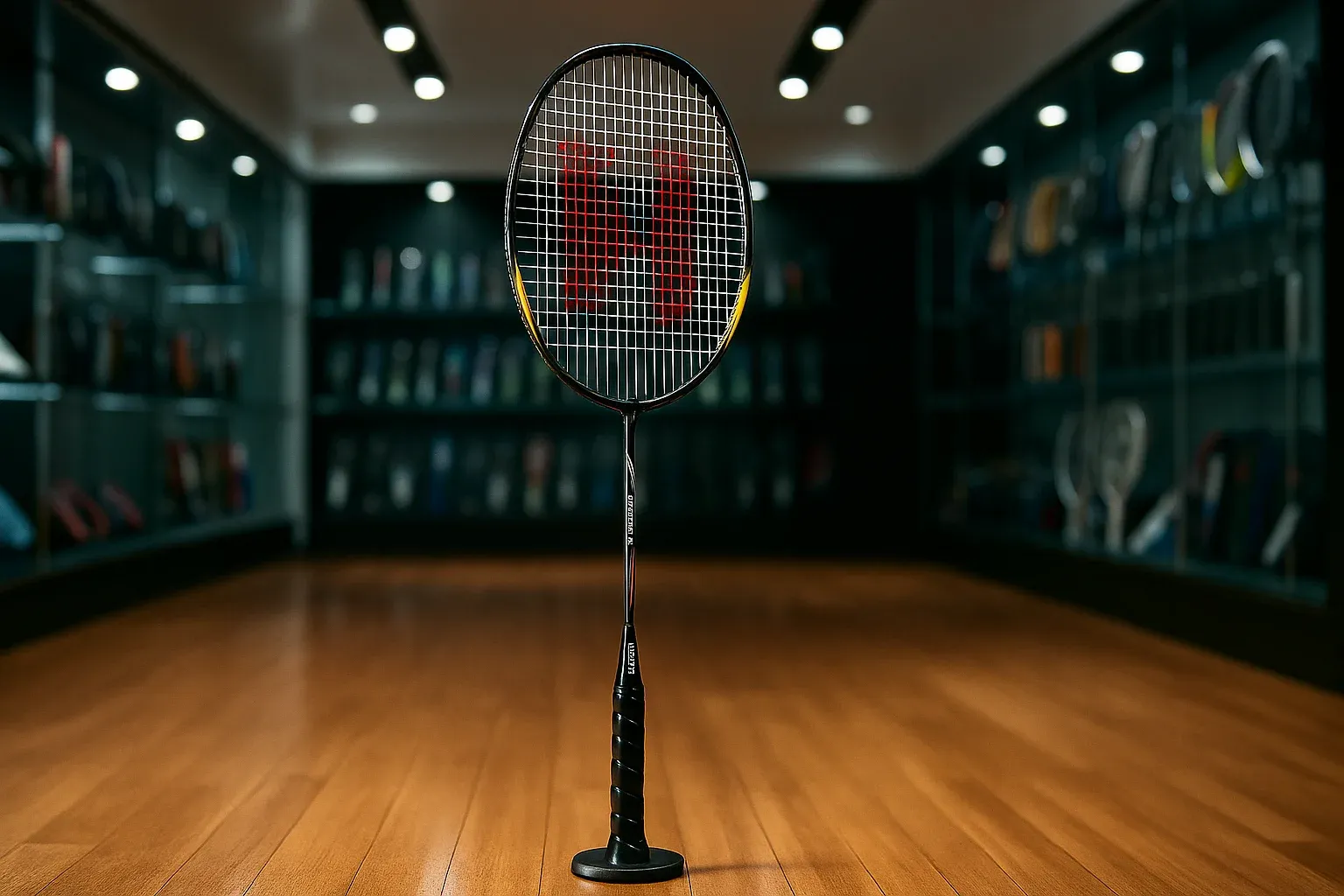
Introduction: Why Racket Material Matters in Badminton
Choosing a badminton racket is not only about its appearance, brand, or price.
The material used to make the racket can affect how it feels during a game.
It can influence:
- Racket weight
- Swing speed
- Flexibility
- Power
- Control
- Durability
- Comfort
- Handling
Today, badminton rackets are commonly made using materials such as graphite, carbon fiber, aluminum, or combinations of different materials.
For players looking for a lightweight and responsive option, a badminton graphite racket can be an excellent choice.
However, graphite is not automatically the right material for everyone.
Beginners may prefer the durability and affordability of aluminum.
Intermediate players may want a balance between weight, control, and power.
Advanced players may prefer lightweight carbon-based construction that allows faster racket movement.
The best material depends on your playing level, technique, physical strength, and personal preference.
This guide explains the differences between graphite, carbon, and aluminum badminton rackets so you can make a more informed decision.
What Is a Badminton Racket Made Of?
A badminton racket is made from several components.
The main frame and shaft are usually manufactured using materials designed to provide a combination of:
- Strength
- Flexibility
- Lightweight performance
- Stability
Common materials include:
Graphite
Graphite is lightweight and commonly used in performance-oriented rackets.
Carbon Fiber
Carbon fiber is known for its high strength-to-weight ratio.
It is widely used in modern badminton racket construction.
Aluminum
Aluminum rackets are generally more affordable and can be suitable for beginners and casual players.
Some rackets also combine different materials to achieve specific performance characteristics.
What Is a Badminton Graphite Racket?
A badminton graphite racket is a racket constructed using graphite as a major frame or shaft material.
Graphite is valued because it can provide strength without adding excessive weight.
This makes it useful for players who want a racket that feels quick in the hand.
A lightweight graphite racket can help players move the racket quickly during:
- Drives
- Defensive shots
- Net play
- Smashes
- Blocks
- Quick exchanges
Graphite rackets are available in different weights, flex levels, and balance points.
Therefore, two graphite rackets can feel very different.
Why Graphite Is Popular in Badminton
Badminton is a fast sport.
Players often have very little time to react to an opponent's shot.
Racket speed can therefore be important.
Graphite construction can help manufacturers create lightweight rackets without sacrificing too much strength.
This can give players a combination of:
Light weight + Fast handling + Good control + Strong construction
For many intermediate and advanced players, this combination makes graphite an attractive choice.
What Is a Carbon Fiber Badminton Racket?
Carbon fiber is another popular material used in badminton rackets.
Carbon fibers are extremely thin but strong.
When these fibers are combined into a composite structure, they can create a lightweight and rigid racket frame.
Carbon fiber construction allows manufacturers to fine-tune the racket's:
- Stiffness
- Weight
- Balance
- Stability
- Responsiveness
Many modern performance rackets use carbon-based composite materials.
Graphite vs Carbon Fiber: Are They the Same?
The terms can sometimes be confusing.
Graphite and carbon fiber are closely related materials, and manufacturers may use the terms differently when describing racket construction.
In product descriptions, you may see terms such as:
- Graphite
- Carbon graphite
- High-modulus graphite
- Carbon fiber
- Carbon composite
The exact construction depends on the manufacturer.
For this reason, players should not choose a racket based only on the material name.
Look at the complete specification.
Weight, balance, flexibility, shaft construction, and recommended string tension can all affect performance.
What Is an Aluminum Badminton Racket?
Aluminum has been used in badminton rackets for many years.
It is generally more affordable than advanced carbon-based materials.
Aluminum rackets can be suitable for:
- Beginners
- Casual players
- Recreational games
- School players
- Occasional use
They can also be useful when durability and affordability are more important than advanced performance.
Advantages of Aluminum Rackets
Aluminum rackets can offer several benefits.
Affordable Price
They are often less expensive than performance-oriented graphite or carbon rackets.
Beginner-Friendly
New players may not need an advanced racket immediately.
Reasonable Durability
Aluminum can provide a practical option for casual play.
Easy Availability
Aluminum rackets are widely available in different shapes and price ranges.
Limitations of Aluminum Rackets
Aluminum also has limitations.
Compared with many modern graphite or carbon rackets, an aluminum model may feel:
- Heavier
- Less responsive
- Less refined
- Slower during quick exchanges
This does not mean aluminum rackets are bad.
They simply serve a different purpose.
For someone playing badminton occasionally, an aluminum racket may provide everything they need.
Graphite vs Aluminum: The Main Differences
The biggest difference is often the balance between weight, performance, and price.
FeatureGraphiteAluminum
Weight
Usually lighter
Often heavier
Swing speed
Faster
Moderate
Control
Excellent potential
Good for beginners
Power
Good to excellent
Moderate
Comfort
Generally better
Depends on design
Price
Usually higher
Usually lower
Best for
Intermediate/advanced players
Beginners/casual players
These are general characteristics.
Actual performance depends on the specific racket design.
Why Racket Weight Matters
Weight is one of the first specifications players should check.
A racket that is too heavy can make fast movements more difficult.
A very light racket can feel quick but may not provide the level of stability or power some players prefer.
Common badminton racket weight categories are often represented using labels such as:
- 2U
- 3U
- 4U
- 5U
- F
The exact weight ranges can vary by manufacturer.
Instead of choosing only by the label, players should check the actual specification where available.
Lightweight Rackets and Fast Reactions
A lightweight racket can be useful during fast rallies.
It may help players move the racket quickly when responding to:
- Smashes
- Drives
- Net kills
- Fast drops
- Flat exchanges
This can be particularly useful for defensive players.
However, lighter does not always mean better.
Players who rely heavily on powerful smashes may prefer a slightly heavier setup.
How Racket Balance Affects Performance
Weight is only one part of racket feel.
Balance is equally important.
A racket can be:
Head Heavy
More weight is positioned toward the racket head.
This can provide additional momentum during attacking shots.
Even Balance
Weight is distributed more evenly.
This can provide a versatile combination of control and power.
Head Light
More weight is positioned toward the handle.
This can make the racket feel quicker during defensive and net play.
Head-Heavy Rackets for Attacking Players
Players who enjoy aggressive badminton may prefer head-heavy rackets.
The additional head weight can help generate momentum during:
- Smashes
- Clears
- Powerful attacking shots
However, a head-heavy racket can feel slower during rapid defensive exchanges.
Players should therefore consider their overall playing style.
Head-Light Rackets for Speed and Defense
Head-light rackets can feel quick in the hand.
They can be useful for players who frequently use:
- Fast drives
- Blocks
- Net shots
- Defensive returns
- Quick racket exchanges
Doubles players may particularly appreciate fast handling during rapid rallies.
Even-Balance Rackets for Versatility
If you are not sure what type of player you are, an even-balance racket can be a sensible option.
It can provide a middle ground between:
Power + Control + Speed
This makes even-balance rackets useful for players who enjoy both attacking and defensive badminton.
Shaft Flexibility Also Matters
Racket material is important, but shaft flexibility can change how the racket feels.
Badminton rackets may be described as:
- Flexible
- Medium flexible
- Stiff
- Extra stiff
A flexible shaft can help players who need more assistance generating power.
A stiff shaft can provide a more direct and controlled response for players with strong technique and fast swings.
Flexible Rackets for Beginners
Beginners may not have developed a fast and consistent swing.
A flexible racket can help generate useful repulsion without requiring advanced technique.
It may therefore be easier for some new players to handle.
However, the ideal flexibility is personal.
Stiff Rackets for Advanced Players
Advanced players often have better timing and faster swing speeds.
A stiff racket can provide a more direct connection between the player's movement and the shuttle.
This can improve precision for players who already have strong technique.
A stiff racket can feel demanding for beginners.
Racket String Tension Matters Too
Players sometimes focus heavily on racket material and forget about string tension.
String tension can influence:
- Feel
- Control
- Repulsion
- Sweet spot
- Comfort
Higher tension can provide precise feedback but usually requires better technique.
Lower tension can provide a larger forgiving area and may be more comfortable for beginners.
The correct tension should also stay within the racket's recommended limits.
The Sweet Spot and Racket Material
Every badminton racket has an area where shots feel cleaner when contact is centered.
Players who frequently miss the center of the string bed may benefit from a more forgiving setup.
A lightweight graphite racket can offer excellent handling, but players should still focus on technique and consistent contact.
Equipment can support good technique.
It cannot replace it.
Which Racket Material Is Best for Beginners?
For a beginner, the most important factors are:
- Comfortable weight
- Easy handling
- Suitable flexibility
- Good durability
- Affordable price
A beginner does not necessarily need a premium carbon racket.
An aluminum racket can be a practical starting point.
A basic graphite racket can also be an excellent option if the player wants to invest in better long-term equipment.
Which Material Is Best for Intermediate Players?
Intermediate players often benefit from a more responsive racket.
At this stage, players usually have a better understanding of their:
- Playing style
- Swing speed
- Preferred balance
- Racket weight
- String tension
A badminton graphite racket can be a strong choice for intermediate players who want lightweight handling and improved responsiveness.
Carbon composite rackets are another option.
Which Material Is Best for Advanced Players?
Advanced players usually have specific requirements.
They may care about:
- Exact racket weight
- Balance point
- Shaft stiffness
- Frame stability
- String tension
- Grip size
- Swing speed
For these players, graphite and advanced carbon construction are often more attractive than basic aluminum designs.
But there is no universal "best" racket.
The right choice depends on the player's technique and preferences.
Singles vs Doubles: Does Material Matter?
Playing format can also influence racket selection.
Singles
Singles players often cover more court area.
They may appreciate:
- Stability
- Power
- Balanced handling
- Strong clears
- Powerful attacking shots
Doubles
Doubles involves faster exchanges.
Players may prefer:
- Quick racket movement
- Fast drives
- Rapid defensive reactions
- Easy handling
A lightweight racket can be particularly useful in these situations.
Choosing a Racket for Defensive Players
Defensive players often prioritize speed and control.
A lighter racket with a head-light or even balance can be useful.
It can make rapid defensive movements easier.
Players should still make sure the racket provides enough stability for their playing style.
Choosing a Racket for Aggressive Players
Aggressive players often prioritize power.
A head-heavy graphite or carbon racket may be suitable.
The added head weight can help generate momentum.
However, players should not choose excessive weight simply because they want more power.
A racket that slows down the swing can reduce overall effectiveness.
Choosing a Racket for Casual Players
Casual players usually do not need professional-level specifications.
The priority should be:
- Comfort
- Durability
- Easy handling
- Reasonable price
An aluminum racket can be perfectly suitable.
A basic graphite racket is also an option for players who want a lighter feel.
Choosing a Racket for Junior Players
Young players need equipment that matches their physical development.
A racket should not be too heavy.
Children may benefit from:
- Lightweight construction
- Comfortable grip size
- Easy swing speed
- Suitable shaft flexibility
Buying an oversized or excessively heavy racket can make learning more difficult.
Comfort should come before advanced specifications.
Why Grip Size Should Not Be Ignored
A racket can have excellent material and balance but still feel uncomfortable if the grip is wrong.
A grip that is too large can make quick wrist movements difficult.
A grip that is too small may reduce stability.
Players should select a comfortable grip based on their hand size and playing preference.
How Material Influences Racket Feel
Different materials can produce different sensations.
An aluminum racket may feel solid and straightforward.
A graphite racket may feel lighter and more responsive.
A carbon composite racket may feel rigid, stable, and quick.
But material alone does not determine racket feel.
The frame shape, shaft, balance, weight, string tension, and construction all work together.
Why Lightweight Construction Is Useful
Badminton involves continuous movement.
Players repeatedly accelerate the racket and change direction.
Reducing unnecessary weight can help reduce the effort required for these movements.
This is one reason lightweight materials are so popular in modern badminton equipment.
A lightweight racket can make it easier to react quickly.
Does a More Expensive Racket Mean Better Performance?
Not necessarily.
Price can reflect:
- Materials
- Manufacturing
- Technology
- Brand
- Construction
- Design
But an expensive racket may not suit your playing style.
A beginner using an advanced stiff racket may perform worse than they would with a simpler and more forgiving model.
Choose based on your needs rather than price alone.
Common Mistakes When Choosing Racket Material
Players often make similar mistakes.
Choosing Only by Appearance
A stylish racket is not automatically a suitable racket.
Buying the Lightest Racket Available
Very light equipment is not ideal for every player.
Choosing Maximum String Tension
Higher tension is not automatically better.
Ignoring Shaft Flexibility
Flexibility can significantly affect racket feel.
Buying a Professional Racket Too Early
Beginners should prioritize comfort and control.
Focusing Only on Material
Graphite, carbon, and aluminum are only part of the overall design.
How to Maintain Your Badminton Racket
Proper care can help extend the useful life of your equipment.
Keep It Dry
Avoid leaving the racket in damp environments.
Protect the Frame
Avoid hitting walls, floors, or other hard objects.
Check the Strings
Inspect the string bed regularly for signs of damage.
Store It Properly
Use a racket cover or suitable badminton bag.
Avoid Excessive Heat
Do not leave the racket in a hot vehicle for long periods.
Check the Grip
Replace the grip when it becomes worn or slippery.
Graphite vs Carbon vs Aluminum: Quick Comparison
FeatureGraphiteCarbon FiberAluminum
Lightweight performance
Excellent
Excellent
Moderate
Swing speed
Fast
Fast
Moderate
Control
Excellent potential
Excellent potential
Good
Power potential
High
High
Moderate
Durability
Good
Good to excellent
Good
Beginner suitability
Good
Depends on model
Excellent
Advanced player suitability
Excellent
Excellent
Limited
Price
Moderate to high
Moderate to high
Low to moderate
These are general comparisons.
Individual racket models can perform differently.
Which Badminton Racket Material Should You Choose?
Use your playing level as a starting point.
Beginner
Consider:
Aluminum or entry-level graphite
Prioritize comfort, durability, and easy handling.
Intermediate
Consider:
Graphite or carbon composite
Prioritize weight, balance, flexibility, and control.
Advanced
Consider:
High-quality graphite or advanced carbon construction
Focus on detailed specifications and your personal playing style.
Casual Player
Consider:
Aluminum or affordable graphite
Choose something comfortable and durable without overspending.
A Simple Racket-Buying Checklist
Before purchasing a racket, check:
This simple checklist can make the buying process much easier.
How Heega Sports Supports Players
At Heega Sports, we understand that choosing sports equipment should be simple.
Players should be able to compare important specifications and select products according to their needs.
Our sports collection includes equipment designed for different playing levels and activities.
Whether you are looking for badminton equipment, cricket equipment, or other sports products, choosing the right combination of material, size, weight, and design can improve your overall experience.
For badminton players, the right racket can help make practice more comfortable and enjoyable.
Final Thoughts
The material of a badminton racket can influence how it feels and performs.
Aluminum remains a practical choice for beginners and casual players who want affordability and durability.
Graphite offers a lightweight and responsive option for players who want faster handling and better control.
Carbon-based construction can provide excellent strength and performance for players looking for more advanced equipment.
However, the material should never be considered in isolation.
Weight, balance, shaft flexibility, grip size, string tension, and playing style all influence how a racket performs.
A badminton graphite racket can be an excellent choice for players who value lightweight handling and responsiveness.
But the best racket is not necessarily the most expensive or technologically advanced model.
It is the racket that feels comfortable, matches your technique, and supports the way you play.
Before buying, think about your skill level, playing format, physical strength, and preferred style.
Make those factors the foundation of your decision.
With the right racket in your hand, you can focus less on your equipment and more on the game itself.
🏸 Find the Right Badminton Equipment at Heega Sports
Explore quality badminton rackets and sports equipment designed for beginners, recreational players, and competitive athletes.
Shop Now
Heega Sports – Equipment Designed to Keep You Moving, Training, and Improving.
Related posts
 Material Matters: Choosing Between Graphite, Carbon, and Composite PaddlesNot all pickleball paddles are created equal. Learn how graphite, carbon fiber, and composite materials impact your power, control, and playstyle — and find the perfect paddle for your game.
 Batting Gloves for Cricket: How Finger Design, Palm Materials and Grip Texture Affect Bat ControlDiscover how cricket batting gloves, finger design, palm materials and grip texture influence bat control, comfort, protection and batting performance.
 No Blisters, No Limits: Why Sock Material Makes All the DifferenceDiscover why your choice of cricket socks can make or break your game. From moisture control to blister prevention, explore how the right sock material enhances comfort, grip, and performance — every time you step onto the field.