Batting Gloves for Cricket: How Finger Design, Palm Materials and Grip Texture Affect Bat Control
Introduction: Why Batting Gloves Matter More Than You Think
When choosing cricket equipment, players often spend considerable time comparing bats. They examine the willow, weight, balance, profile and sweet spot before making a decision. However, another important part of batting equipment deserves the same attention: cricket batting gloves.
Batting gloves create the connection between a player's hands and the bat handle. They help protect the fingers and palms from impact, reduce friction during repeated shots and provide a comfortable surface for maintaining a secure grip.
But not all batting gloves feel the same.
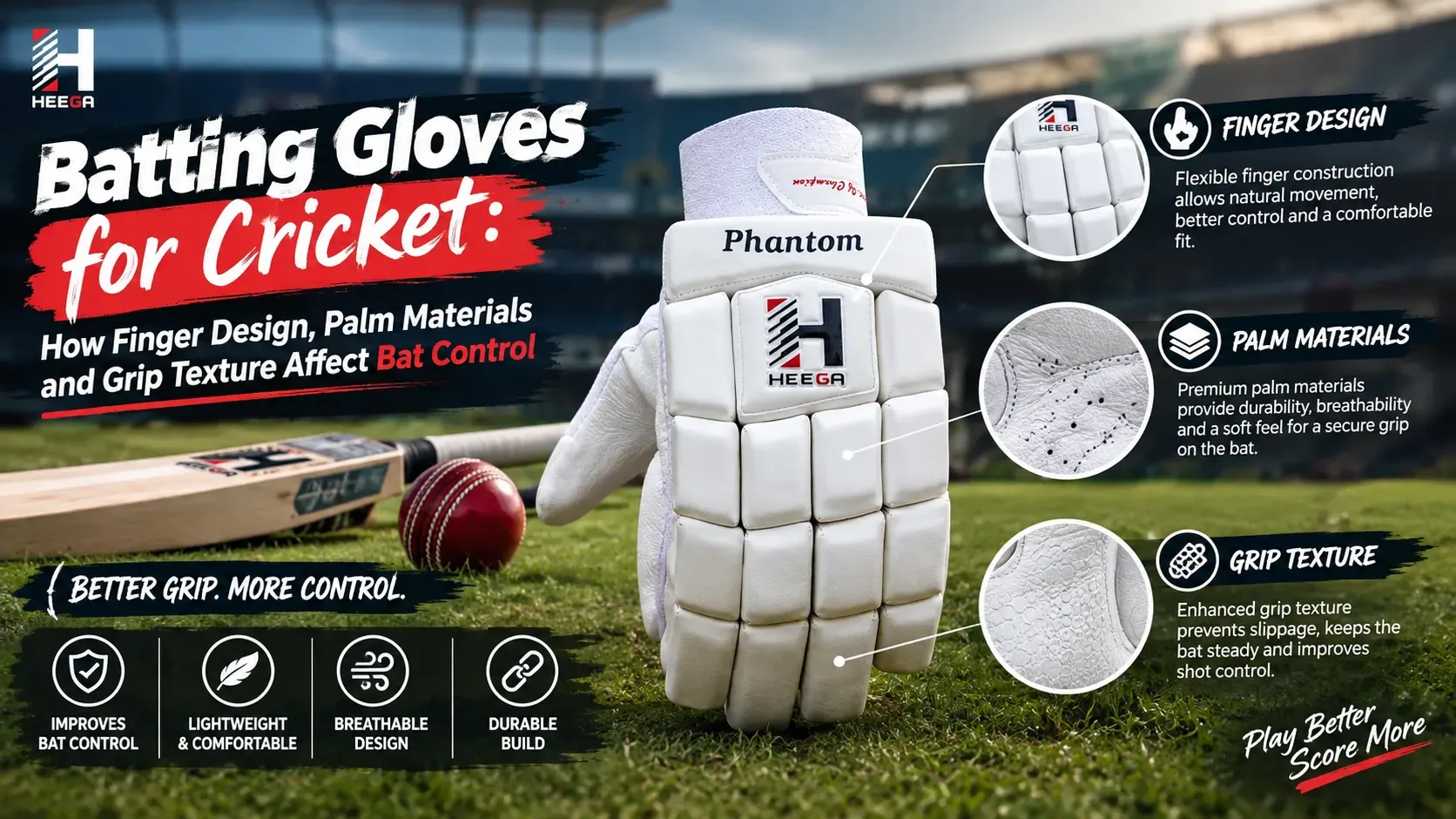
Some have flexible finger construction that supports natural hand movement. Others feature additional padding for impact protection. Palm materials can influence comfort and durability, while grip textures can affect how securely the handle sits in the hands.
These details become particularly important when a batter faces fast bowling, plays long innings or trains regularly in cricket nets.
The right pair of batting gloves should allow a player to hold the bat comfortably, move their fingers naturally and maintain control without unnecessary tension. Understanding the design behind cricket batting gloves can therefore help players make more informed equipment decisions.
In this guide, we explore how finger design, palm materials and grip texture influence bat control, what to look for when buying batting gloves and how to maintain them for longer-lasting use.
1. Understanding the Main Components of Cricket Batting Gloves
Before exploring individual design features, it helps to understand how batting gloves are constructed.
Although designs vary between manufacturers and models, most cricket batting gloves combine several components that work together.
Finger Protection
The fingers are among the most exposed parts of a batter's hands when holding the bat. A delivery that strikes the glove can create painful impact, particularly when facing faster bowling.
Batting gloves typically include protective padding across the fingers. Depending on the design, the protection may use layered foam, reinforced sections or segmented padding that allows the fingers to bend more naturally.
The objective is to help absorb and distribute impact while preserving enough flexibility for batting movements.
Palm Construction
The palm is the part of the glove that contacts the bat handle most directly.
Palm materials influence how the glove feels against the handle, how well it manages moisture and how comfortably the batter can hold the bat during extended practice sessions.
Some gloves use leather in selected palm areas, while others incorporate synthetic materials or combinations of different fabrics.
The quality and placement of these materials can affect both durability and feel.
Grip Surface
The palm may also include textured areas, raised patterns or other grip-enhancing features.
These surfaces help create friction between the glove and bat handle. Their effectiveness depends on the material, the texture, the handle's grip and the condition of the gloves.
A suitable grip surface can help the batter maintain a secure hold without squeezing the handle excessively.
Wrist Closure and Cuff
The wrist closure helps keep the glove positioned correctly during batting.
A well-adjusted closure can prevent excessive movement inside the glove, while an uncomfortable or overly tight cuff may restrict wrist movement.
Together, these components determine how the glove fits, feels and performs during batting.
2. How Finger Design Influences Bat Control
Finger design is one of the most important differences between batting glove models.
The fingers must provide protection while allowing the hands to move naturally through the batting action. If the construction is too restrictive, the player may find it difficult to hold and manoeuvre the bat comfortably.
Segmented Finger Padding
Some batting gloves use segmented padding, with protective sections separated by flexible areas.
This construction allows individual fingers to bend more naturally than a rigid, continuous structure might permit.
It can be useful when a batter needs to:
- Adjust the grip before facing a delivery.
- Move the wrists during different shots.
- Maintain control during defensive strokes.
- Change the pressure applied by each hand.
- Reposition the bat quickly between deliveries.
The quality of the design matters. Segmentation should allow useful movement without leaving important areas inadequately protected.
Pre-Curved Finger Construction
Certain gloves are shaped with a slight curve that follows the natural position of the fingers around a bat handle.
This can make the glove feel more comfortable when gripping the bat because the fingers do not have to work as hard to achieve their usual position.
A comfortable pre-curved design may help reduce unnecessary tension in the hands.
However, the ideal shape varies by player. A glove that feels natural to one batter may feel restrictive to another, so trying the gloves while holding a bat is helpful.
Finger Length and Fit
Finger length is another important consideration.
If the glove fingers are too short, the batter may feel pressure at the fingertips or find that parts of the fingers are insufficiently covered. If they are too long, excess material may fold or bunch up during the grip.
Both situations can affect comfort and control.
A properly fitted glove should allow the fingers to reach the ends naturally without excessive pressure. The protective sections should remain in the intended position as the player grips and releases the handle.
Flexibility Around the Knuckles
The knuckles bend repeatedly during batting.
If protective padding is poorly positioned, it may press against the joints and restrict movement. This can make the glove uncomfortable during longer practice sessions.
Flexible sections around the knuckles can support natural finger movement while maintaining protection.
For players who practise frequently, this balance between flexibility and cushioning can make a noticeable difference to comfort.
Thumb Design and Protection
The thumb plays an important role in maintaining a secure grip on the bat.
It also needs appropriate protection because it can be exposed to impact during batting.
Glove designs vary in how they protect the thumb. Some provide additional padding or reinforced sections, while others emphasize flexibility and a closer fit.
When evaluating a pair, players should check that the thumb can move comfortably around the handle and that the protective section does not create uncomfortable pressure.
The key takeaway: finger design should support natural movement without compromising the protection needed for the player's level of cricket.
3. Why Palm Materials Matter
The palm is one of the hardest-working areas of a batting glove.
During a training session, a batter may grip the handle through hundreds of deliveries. Repeated contact creates friction, while sweat and movement place additional demands on the material.
The palm therefore needs to offer a practical balance of grip, comfort, flexibility and durability.
Leather Palms
Leather is used in many cricket batting gloves, particularly in areas where durability and a natural feel are important.
Depending on the type and quality of leather, it can provide a comfortable contact surface and withstand repeated gripping.
Potential advantages include:
- A natural feel against the handle.
- Good durability when properly maintained.
- A comfortable surface for repeated use.
- A familiar grip feel for many players.
However, leather quality varies, and leather palms still require appropriate care. Excessive moisture, poor drying and repeated abrasion can affect their condition.
A leather palm is not automatically superior in every situation. Its performance depends on construction, fit and how well the player maintains it.
Synthetic Palm Materials
Some gloves use synthetic materials across all or part of the palm.
These materials can be selected for their flexibility, cost, abrasion resistance or ease of maintenance.
Depending on the specific construction, synthetic palms may offer:
- A consistent surface texture.
- Flexible movement.
- Practical durability for regular training.
- A lighter or different feel compared with leather.
The performance of synthetic materials differs considerably between products. Players should assess the actual feel and construction rather than assuming all synthetic palms offer the same level of grip.
Combination Palm Construction
Some batting gloves combine materials, using different fabrics or reinforced sections in areas with different requirements.
For example, a glove may use one material for the main palm surface and another in areas that experience more abrasion.
This approach allows manufacturers to balance flexibility, durability and comfort.
For players, the most important question is whether the palm remains comfortable and provides a reliable hold throughout the session.
Moisture Management and Sweat
Sweat can affect the way batting gloves feel during play.
When the palms become damp, the grip may feel different, and the batter may begin squeezing the handle more tightly to compensate.
That extra tension can make the hands feel tired and may interfere with relaxed bat movement.
Some glove designs use breathable fabrics or moisture-managing materials to improve comfort. Their effectiveness depends on the overall construction and playing conditions.
Players can also help manage moisture by allowing gloves to dry properly between sessions and avoiding storage in damp kit bags.
Palm Durability and Wear
The palm experiences repeated friction against the handle.
Over time, the material may become smoother, thinner or damaged. Seams can also loosen, especially when gloves are used frequently.
Worn palm material may change the feel of the grip and reduce comfort.
Regularly inspecting the palm helps players identify when gloves need maintenance or replacement.
4. How Grip Texture Affects Bat Control
Grip texture is another feature that can influence the way a batter holds the bat.
A secure grip helps the hands maintain contact with the handle through the backlift, downswing and follow-through. However, grip performance depends on more than the glove's surface alone.
The handle grip, glove material, moisture, fit and individual gripping technique all contribute.
Textured Palm Surfaces
Some batting gloves include textured patterns or raised surfaces designed to improve friction.
These features can help the palm maintain contact with the handle during movement.
The texture should provide a secure feel without becoming uncomfortable or interfering with the natural position of the hands.
A surface that feels too rough may cause irritation during long sessions, while a smooth or worn surface may feel less secure for some players.
There is no single texture that suits every batter. Comfort and control should be assessed together.
The Relationship Between Gloves and Bat Grips
Batting gloves and bat grips work as a system.
A glove may feel secure on one handle but different on another because bat grips vary in material, thickness and surface pattern.
A thick handle grip combined with a bulky glove may make it harder for a player to wrap their fingers around the handle. A thinner handle may feel more comfortable for another batter, depending on hand size and preference.
When selecting gloves, test them with the bat you regularly use if possible.
The objective is to find a combination that feels secure without forcing the hands into an uncomfortable position.
Why Excessive Grip Pressure Can Be a Problem
A secure grip does not require the batter to squeeze the handle as hard as possible.
Excessive tension in the hands and forearms can make the batting action feel stiff. It may also make it harder to adjust the bat quickly between different shots.
Suitable gloves can support a confident hold, but they cannot replace proper technique.
Players should work with their coach to develop a grip that offers control while allowing the hands and wrists to move naturally.
Grip During Different Batting Shots
Different shots create different demands on the hands.
During a defensive stroke, the batter generally needs a controlled grip and a stable bat face.
During a drive, the hands and wrists coordinate to guide the bat through the ball.
During a pull or cut, the batter may need to adjust the bat angle and manage the movement of the hands more dynamically.
In all these situations, gloves should remain comfortable and secure without restricting movement.
The purpose of grip texture is to support this connection, not to make the bat feel locked into the hands.
5. Finding the Right Balance Between Padding and Flexibility
Protection is essential, but more padding does not automatically mean better batting gloves.
The design needs to suit the player's requirements and the level of cricket they play.
When Additional Padding May Help
Players who regularly face hard leather-ball bowling may prioritize well-positioned finger and thumb protection.
Additional cushioning can help manage impact, depending on the quality and placement of the protective materials.
However, padding should not create so much bulk that the batter struggles to close their fingers around the handle.
When Flexibility Becomes Important
Players who value a close feel of the bat may prefer gloves that allow more natural finger and wrist movement.
This can be particularly relevant when playing shots that require frequent adjustments to the bat angle.
Flexible gloves should still provide suitable protection for the conditions in which they are used.
A Practical Fit Test
Before buying batting gloves, hold a cricket bat and check the following:
- Close both hands around the handle naturally.
- Move the wrists through a comfortable batting motion.
- Check whether the fingers bend without pinching.
- Make sure the palm sits securely against the handle.
- Confirm that the thumb padding does not press awkwardly.
- Check that the wrist closure feels secure but not restrictive.
If possible, repeat the test while wearing any batting equipment that you normally use.
The glove should feel secure, comfortable and ready for movement rather than distracting you from the bat.
6. Choosing Batting Gloves for Different Types of Players
The ideal batting glove depends on the player's age, level, playing environment and personal preferences.
Beginners and Developing Players
Beginners should prioritize fit, comfort, appropriate protection and ease of movement.
They do not necessarily need the most expensive gloves available. Instead, they should choose a pair that fits correctly and suits the type of cricket they play.
Coaches can help younger players identify suitable protective equipment and learn how to wear it properly.
Club and Academy Players
Players who train several times each week may place greater importance on durability, breathability and long-term comfort.
Frequent practice exposes gloves to more sweat and friction, so construction quality and maintenance become particularly important.
A pair that remains comfortable over repeated sessions can be a practical choice for regular training.
Competitive and Advanced Players
Experienced players may have more specific preferences regarding palm feel, finger flexibility, grip texture and overall fit.
Some prefer a close-fitting design that provides a direct feel of the handle. Others prefer additional cushioning or a different palm construction.
At this level, personal comfort and consistency are important considerations.
Even so, a higher price or more elaborate design does not guarantee that a glove will suit every player.
Players Who Bat for Long Periods
Batters who regularly play longer innings may appreciate gloves that manage moisture well and remain comfortable over time.
Seams, finger padding and wrist closures should not create pressure points.
Trying the gloves for a few minutes before purchasing can help identify obvious fit issues, although extended use may reveal other comfort concerns.
7. Common Mistakes to Avoid When Buying Batting Gloves
Even players who understand cricket equipment can overlook important details when buying gloves.
Avoiding a few common mistakes can help you choose more confidently.
Choosing Gloves Based Only on Appearance
Colours and styling can make a pair look attractive, but appearance tells you little about fit or performance.
Check the finger construction, palm material, padding and overall comfort before making a decision.
Buying the Wrong Size
Gloves that are too large may shift during batting, while gloves that are too small may restrict finger movement.
Both can affect comfort and make it harder to maintain a natural grip.
Always check the manufacturer's sizing guidance and try the gloves on when possible.
Assuming More Padding Is Always Better
Excessive bulk can make it difficult to wrap the fingers around the handle.
The goal is suitable protection combined with comfortable movement—not simply the maximum amount of padding.
Ignoring the Palm
Players sometimes focus on finger protection while overlooking the palm material.
However, the palm is in repeated contact with the bat handle. Its texture, flexibility and durability can strongly influence how the glove feels during use.
Overlooking Sweat and Ventilation
Gloves that remain damp may become uncomfortable and develop unpleasant odours.
Consider the playing conditions and how easily the gloves can be dried between sessions.
Waiting Until the Gloves Are Severely Damaged
Worn palms, loose seams and displaced padding can affect comfort and protection.
Inspect your gloves regularly rather than waiting until a problem becomes obvious during a match.
8. How to Maintain Cricket Batting Gloves
Good maintenance helps preserve the condition of batting gloves and can extend their useful life.
Allow Gloves to Dry After Use
After training or a match, remove the gloves from your kit bag and allow them to air-dry in a well-ventilated area.
Avoid leaving damp gloves compressed inside a closed bag for long periods.
Avoid Excessive Heat
Do not place gloves directly on a heater or use intense heat to dry them quickly. Excessive heat may affect leather, adhesives, padding and other materials.
Natural airflow is generally a safer option.
Keep the Palm Clean
Dirt and residue can accumulate on the palm through repeated use.
Follow the manufacturer's care instructions for the specific materials. Avoid soaking the gloves or applying cleaning products that may damage the surface.
Check Seams and Padding
Inspect the finger sections, thumb, palm and wrist closure regularly.
If seams begin to open or protective padding becomes displaced, assess whether the gloves remain suitable for use.
Store Gloves Properly
Keep gloves in a dry, ventilated location away from unnecessary moisture.
Storing them carefully helps preserve their shape and reduces the chance of persistent dampness.
Know When to Replace Them
Consider replacing batting gloves when:
- The palm material has worn significantly.
- Finger or thumb padding is damaged.
- Seams have opened.
- The fit has changed.
- The wrist closure no longer holds securely.
- The gloves no longer provide comfortable, reliable protection.
Maintenance can help preserve equipment, but it cannot restore severely damaged protective materials.
9. Do Batting Gloves Really Improve Batting Performance?
Batting gloves can support a batter's comfort, protection and control, but they are not a substitute for skill.
A well-fitting pair may help the player maintain a comfortable grip, reduce distracting pressure points and move the hands naturally through the shot.
These benefits can support more consistent practice.
However, batting performance also depends on technique, timing, footwork, decision-making, experience and the ability to read the bowler.
A player with excellent gloves can still struggle if their grip technique is poor. Similarly, a technically sound batter may find that unsuitable gloves create unnecessary discomfort.
The best approach is to combine appropriate equipment with regular coaching and purposeful practice.
10. Simple Practice Habits for Better Bat Control
Once you have suitable gloves, use training sessions to become familiar with how they feel on the handle.
Practice Your Natural Grip
Hold the bat in your normal stance and check that both hands feel comfortable.
Avoid gripping excessively tightly simply because the gloves are new.
Rehearse Different Shots
Use shadow batting to practise defensive strokes, drives, cuts and pulls.
Pay attention to whether the gloves remain comfortable as your wrists and fingers move through each shot.
Test Your Equipment During Nets
During supervised net practice, notice whether the gloves shift, bunch up or create uncomfortable pressure.
Address any fit issues before relying on the gloves in an important match.
Inspect Your Gloves After Training
Check for excessive wear, loose stitching or damage to protective sections.
Small maintenance habits can help you identify problems before your next session.
11. Why Suitable Batting Gloves Matter for Growing Cricket Communities
Cricket continues to attract players across different countries and playing environments.
In Nepal, Germany, the United States, Canada, the Netherlands and the United Kingdom, players participate in school cricket, club competitions, academies and recreational matches.
Although facilities and playing conditions vary, the basic requirements of batting equipment remain similar: appropriate protection, a comfortable fit and dependable performance.
For beginners, learning how to select batting gloves can be an important part of understanding cricket equipment.
For experienced players, evaluating the finer details of palm construction, finger flexibility and grip texture can help them make more informed choices.
Whatever the level, equipment selection should reflect the player's needs rather than relying only on appearance or price.
12. How Heega Sports Supports Your Cricket Equipment Needs
At Heega Sports, we understand that choosing cricket equipment involves more than selecting a product that looks good.
Players need equipment suited to their training routines, playing level and comfort preferences.
Our cricket equipment range includes batting gloves, wicketkeeping gloves, cricket bats, Kashmir Willow bats, junior cricket bats, batting pads, protective guards, helmets, leather cricket balls, practice balls, cricket shoes, kit bags, practice nets and training accessories.
Whether you are beginning your cricket journey, training with an academy or preparing for competitive matches, it is worth taking time to select equipment that fits properly and supports your playing requirements.
When choosing batting gloves, pay particular attention to finger protection, palm construction, grip feel and overall comfort. These practical details matter more than appearance alone.
Explore the available cricket equipment at Heega Sports to find products suited to your needs.
Final Thoughts: Better Bat Control Begins With the Right Fit
Cricket batting gloves play an important role in connecting a batter's hands to the bat.
Finger design influences flexibility and protection. Palm materials affect comfort, durability and the feel of the handle. Grip texture contributes to the friction between the glove and the bat, helping the player maintain a secure hold.
These features work together, but none should be considered in isolation.
The best batting gloves are not necessarily the most expensive or the most heavily padded. They are the ones that fit correctly, provide appropriate protection and allow the player to move naturally while maintaining a comfortable grip.
Before buying your next pair, check the finger construction, examine the palm material, assess the grip texture and test the gloves with a bat whenever possible.
Then look after them properly by drying them after use, storing them carefully and checking for wear.
Most importantly, remember that equipment supports performance rather than replacing practice. Combine suitable batting gloves with good coaching, consistent training and sound technique to build greater confidence at the crease.
🏏 Find Your Cricket Essentials at Heega Sports
Explore cricket batting gloves, wicketkeeping gloves, cricket bats, Kashmir Willow bats, batting pads, protective equipment, leather balls, practice balls, cricket shoes, kit bags, practice nets and training accessories.
Shop Now: https://heegasports.com
Heega Sports – Supporting Better Equipment Choices for Every Stage of Your Cricket Journey.
Related posts
 Cricket Batting Pads Explained: How Knee Protection, Shin Coverage and Strap Placement Affect Comfort and MobilityLearn how cricket batting pads, knee protection, shin coverage and strap placement affect comfort, mobility, impact protection and batting performance.
 Batting Gloves Explained: How Padding Placement and Finger Protection Help Manage Ball ImpactLearn how batting glove padding placement, finger protection, and fit help manage ball impact. Find practical tips for choosing cricket batting gloves.
 How to Choose the Right Cricket Bat Weight: Understanding Bat Speed, Power & ControlLearn how to choose the right cricket bat weight based on strength, playing style, bat speed, control, balance, and experience for better batting performance.