Cricket Batting Pads Explained: How Knee Protection, Shin Coverage and Strap Placement Affect Comfort and Mobility
Introduction: Why Cricket Batting Pads Deserve More Attention
When players prepare for a cricket match, they often spend considerable time choosing their bat, gloves and shoes. However, another essential piece of equipment can have a major influence on their comfort and confidence: cricket batting pads.
Batting pads protect the lower legs from impact when a cricket ball strikes the front or side of the leg. This protection is especially important when facing hard leather-ball bowling, where deliveries can travel at considerable speed.
Yet protection is only one part of choosing the right pads.
A pair of batting pads may provide substantial cushioning but still feel uncomfortable if the knee section does not sit correctly. Pads that extend too far down the leg may interfere with foot movement, while poorly positioned straps can cause pressure, slipping or restricted circulation.
These details matter because batting involves constant movement. Players move forward to drive the ball, shift backward against shorter deliveries, rotate their bodies during shots and run between the wickets. Their equipment needs to accommodate these actions while remaining securely positioned.
The right batting pads should provide appropriate impact protection while allowing the player to move naturally.
In this guide, we explain how knee protection, shin coverage, strap placement, padding materials and overall fit influence batting comfort and mobility. We also explore how to select, maintain and assess cricket batting pads for training and competitive play.
1. What Are Cricket Batting Pads?
Cricket batting pads, also known as batting leg guards, are protective items worn over the lower legs when batting.
They are designed to reduce the impact experienced when the ball strikes the protected areas. Modern batting pads generally combine lightweight outer materials, protective cushioning, a shaped knee section and adjustable straps.
Although designs differ between manufacturers, most batting pads include several key components.
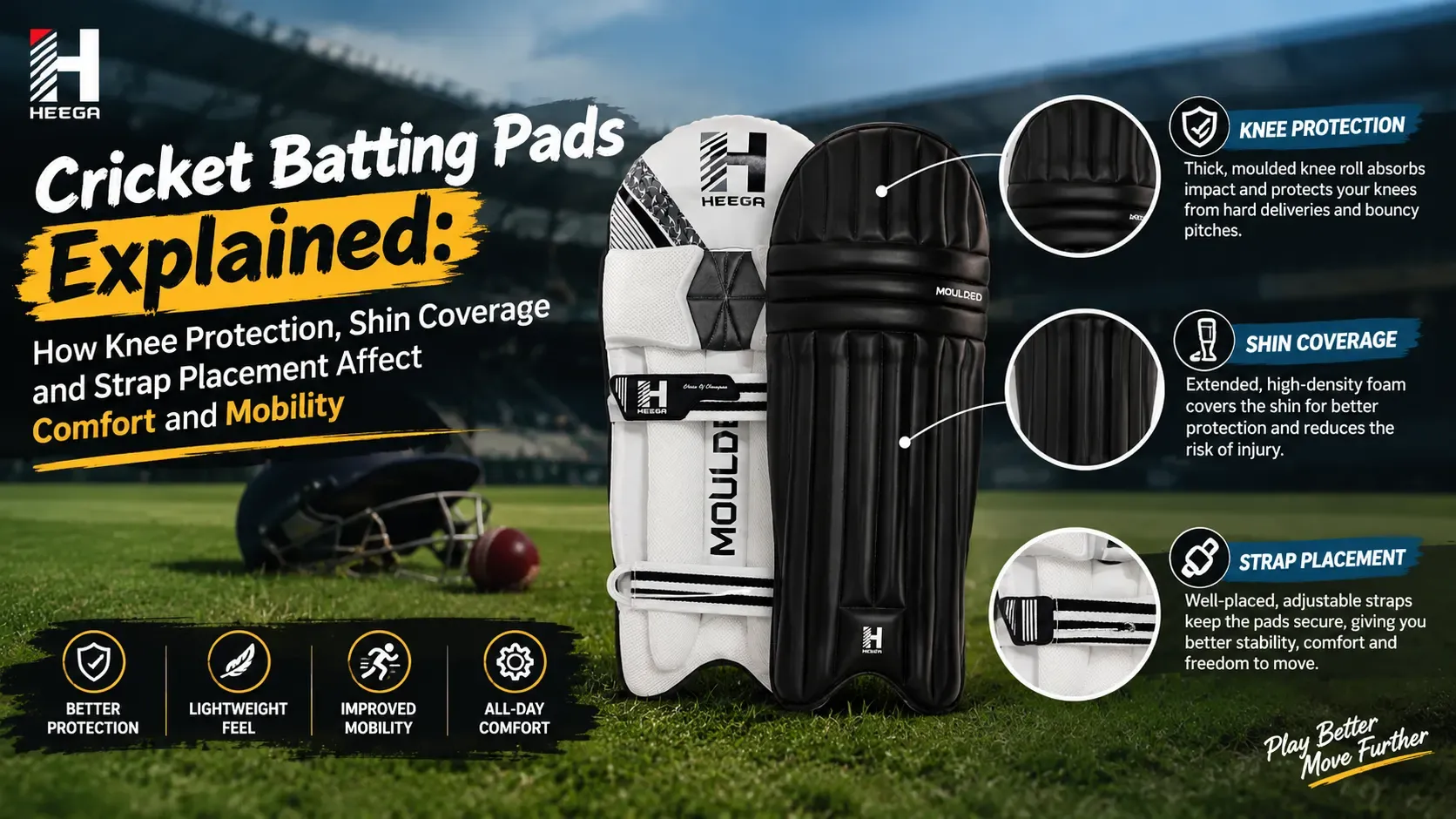
The Knee Section
The knee section protects the area around the kneecap and helps the pad remain aligned when the player bends their legs.
Its shape is important because the knee moves repeatedly throughout the batting action.
Shin Protection
The shin section covers the front of the lower leg. It usually contains protective padding designed to absorb and distribute impact.
The length, width and shape of this section affect how much of the lower leg is covered and how easily the player can move.
Side Protection
Some pads include additional cushioning around the sides of the leg.
This can provide protection beyond the central shin area, depending on the design and fit.
Straps and Fastenings
Straps secure the pad around the leg and help prevent it from shifting during movement.
Their position, adjustability and fastening quality affect both comfort and stability.
Inner Lining
The lining is the surface that contacts the player's clothing or leg.
A comfortable lining can help reduce friction, improve the feel of the pads and make them more pleasant to wear during extended innings.
All these elements need to work together. A well-padded guard may still be unsuitable if it does not fit securely or allows the knee section to move out of position.
2. Why Knee Protection Is So Important
The knee is one of the most important areas to consider when selecting batting pads.
During batting, players bend their knees to establish a balanced stance, transfer weight and adjust to different deliveries. The knee also moves when a batter takes a step forward, moves backward or changes direction while running.
This repeated movement makes the design of the knee section particularly important.
A Well-Shaped Knee Roll
Many traditional batting pads feature a raised, padded knee roll that sits over the kneecap area.
Its shape helps provide cushioning where the knee needs protection.
The knee roll should sit in the intended position without pressing uncomfortably against the kneecap or leaving a large gap between the pad and the leg.
If the knee section sits too high or too low, it may not provide the intended coverage during movement.
Knee Flexibility and Batting Stance
A batter rarely stands with completely straight legs throughout an innings.
Instead, the knees bend naturally to support balance, readiness and movement.
If the knee section is excessively rigid or poorly shaped, the batter may feel resistance when bending the legs.
This can make the batting stance feel awkward and may encourage unnecessary adjustments.
A well-designed pad should accommodate normal knee movement while retaining its protective structure.
Avoiding Pressure Around the Kneecap
Pressure around the kneecap can become distracting during long practice sessions.
This may happen when the pads are too small, the knee roll is poorly aligned or the straps are tightened excessively.
When trying on batting pads, bend the knees into a comfortable batting stance. The knee section should remain properly positioned without digging into the joint.
Knee Protection During Different Shots
Different batting shots require different body positions.
During a front-foot drive, the batter may bend the front knee and move forward. When playing a pull shot, the player may shift weight backward and rotate the body. Defensive strokes may also involve small adjustments in knee position.
Batting pads should support these movements without creating excessive pressure or restricting the player's range of motion.
The key principle is simple: knee protection should remain secure and comfortable while allowing natural movement.
3. Understanding Shin Coverage
The shin is directly exposed when a batter faces a delivery, making coverage an important consideration.
However, choosing the longest or widest pad is not always the best solution. The pad needs to match the player's leg length and shape while remaining comfortable during movement.
Why Shin Coverage Matters
A well-fitted pad covers the intended area along the front of the lower leg.
If the pad is too short, it may leave part of the shin inadequately protected. If it is too long, it may interfere with the ankle, footwear or movement of the lower leg.
The aim is to provide suitable coverage without creating unnecessary bulk.
Finding the Correct Length
Batting pads are available in different sizes to accommodate different players.
The correct size depends on leg length, body proportions and the manufacturer's sizing system rather than age alone.
When checking the length, consider the position of the knee section and the lower edge of the pad together.
The guard should cover the intended area while allowing the ankle to move comfortably.
Width and Side Coverage
The width of a batting pad influences how much of the front and sides of the lower leg it covers.
Some players prefer a broader design that provides more coverage, while others find a more compact shape easier to move in.
The correct choice depends on the player's leg shape, playing level and comfort preferences.
A pad should not rotate excessively around the leg or leave large gaps when the player moves.
Shin Padding and Impact Distribution
The shin section generally contains protective materials designed to manage impact.
The amount and arrangement of padding vary between models.
Well-positioned cushioning can help distribute the force of an impact across the protected area. However, the overall level of protection depends on the complete construction, material quality, fit and condition of the pad.
Thicker padding does not automatically guarantee better protection. A poorly fitted pad may shift away from the area it is intended to protect.
Lower-Leg Movement
The shin section needs to remain secure without making the lower leg feel excessively restricted.
When the batter walks, bends the knees or moves into a running position, the pads should not catch on the shoes or collide uncomfortably with the ankles.
This is particularly important for players who move quickly between the wickets.
4. How Strap Placement Affects Comfort and Mobility
Straps may appear to be a minor part of batting pads, but they have a major role in maintaining a secure fit.
Even well-designed padding can become uncomfortable if the straps are poorly adjusted.
The Purpose of Batting Pad Straps
Straps hold the pad against the leg and help prevent it from slipping or rotating.
Their number, width and position vary by model.
When adjusted correctly, the straps should keep the guard stable without creating excessive pressure.
Upper Straps
Upper straps help secure the pad around the upper part of the lower leg, depending on the design.
If they are too loose, the pad may shift during movement. If they are too tight, they can create uncomfortable pressure.
The goal is a stable fit that does not interfere with natural leg movement.
Lower Straps
Lower straps help maintain the position of the shin section.
Correct adjustment can reduce unnecessary movement around the lower leg.
However, excessive tightness near the ankle may create discomfort, particularly when walking or running.
Straps Around the Knee Area
Some designs include fastening arrangements that help stabilize the area near the knee.
The exact placement depends on the pad's construction.
The straps should not pull the knee roll out of position or create pressure when the leg bends.
Why Strap Tension Matters
A common mistake is tightening every strap as much as possible in the belief that this will improve protection.
In reality, excessive tension can make the pads uncomfortable and restrict movement.
Straps should be secure enough to prevent excessive shifting but comfortable enough to allow normal bending and walking.
A good fit does not require the leg to feel squeezed.
What Happens When Straps Are Too Loose?
Loose straps may allow the pads to:
- Slide down the leg.
- Rotate during movement.
- Leave gaps in coverage.
- Shift during running.
- Require repeated adjustment between deliveries.
These problems can distract the batter and reduce confidence in the equipment.
What Happens When Straps Are Too Tight?
Overtightened straps may cause:
- Pressure points.
- Discomfort behind or around the leg.
- Restricted movement.
- Difficulty adjusting the pads.
- Unnecessary distraction during an innings.
The best adjustment is the one that keeps the pads properly positioned without creating these problems.
5. Batting Pad Materials: Protection Without Unnecessary Weight
Materials influence the weight, flexibility, durability and comfort of cricket batting pads.
Different models use different combinations of foam, reinforced protective components, fabric coverings and inner linings.
Understanding these materials can help players compare products more effectively.
Lightweight Foam Padding
Many batting pads use lightweight cushioning materials to help absorb and distribute impact.
The type, density and arrangement of the foam influence how the pad feels.
A lightweight design may be easier to wear for extended periods, especially for younger players or batters who prefer greater freedom of movement.
However, weight should never be the only consideration. The pad must still provide suitable protection for the intended playing conditions.
Reinforced Protective Sections
Some pads incorporate firmer or reinforced sections in areas that require additional structural support.
These components help the guard maintain its shape and contribute to its overall protective design.
The effectiveness of the complete pad depends on how these sections work with the surrounding cushioning and fit.
Outer Covering
The outer covering protects the internal padding from everyday wear.
It may also influence how easily the pads can be cleaned and how well they withstand repeated use.
Look for well-finished seams, secure construction and materials appropriate for regular cricket practice.
Inner Lining and Comfort
The lining affects how the pads feel against the leg.
A smooth, comfortable lining can reduce distracting friction, while a poorly finished or damaged lining may cause irritation.
Players should check the lining for rough seams, loose material and signs of wear.
Weight Distribution
Two pairs of batting pads can have similar overall weights but feel different when worn.
Their shape, padding distribution and strap arrangement influence how the weight is positioned on the leg.
A well-balanced pair should feel secure rather than pulling noticeably on one area.
This can be particularly important for batters who spend long periods at the crease.
6. How Batting Pads Influence Running Between the Wickets
Batting does not end when the ball leaves the bat.
Players must also accelerate, turn, stop and run between the wickets.
Poorly fitted batting pads can become distracting during these movements.
Freedom to Accelerate
When a batter starts running, the knees and ankles move through a wider range of positions than they do in a stationary stance.
Pads that are excessively long or bulky may interfere with the shoes or lower legs.
A suitable fit allows the batter to accelerate without repeatedly feeling the equipment shift.
Turning and Changing Direction
Running between the wickets involves quick changes of direction.
During a turn, the batter must maintain balance while moving the body and legs efficiently.
If the pads rotate or slide, the player may need to adjust them after the run.
Secure straps and suitable sizing help minimize unnecessary movement.
Comfort During Long Innings
A batter may need to run repeatedly throughout a long innings.
Pads that initially feel acceptable may become distracting if they create pressure points or rub against the leg.
Trying them on while walking and bending the knees can reveal some obvious fit problems before match day.
Lightweight Design Versus Protection
Lightweight batting pads can appeal to players who prioritize mobility.
However, the lightest available model is not necessarily the most suitable.
Players should balance weight, coverage, construction and comfort according to the speed and type of bowling they face.
For hard leather-ball cricket, appropriate protective performance should remain a priority.
7. Choosing the Right Batting Pads for Your Playing Level
Different players have different equipment needs.
The best batting pads are those that fit correctly and provide suitable protection for the conditions in which they will be used.
Beginner and Junior Cricketers
Young players should prioritize correct sizing, comfortable knee positioning and manageable weight.
Oversized pads may interfere with movement, while undersized pads can leave areas inadequately covered.
Parents and coaches should check the player's leg length and ensure that the straps can be adjusted properly.
Junior equipment should be selected according to fit and development rather than purchased solely for future growth.
School and Academy Players
Players attending regular coaching sessions may benefit from pads that combine dependable protection with durability and comfort.
Repeated net sessions can place considerable wear on the outer covering, straps and stitching.
A pair that remains secure and comfortable across training sessions can make practice more enjoyable.
Club Cricketers
Club players may face different bowling speeds and playing conditions throughout the season.
They should assess the protective requirements of their level of cricket and choose pads that remain stable during batting and running.
Fit, coverage and construction are more important than simply choosing the most expensive option.
Advanced and Competitive Players
Experienced players may have specific preferences concerning pad weight, knee shape, shin coverage and strap placement.
Some prioritize a close fit and low bulk, while others prefer more substantial coverage.
These preferences should be considered alongside appropriate protection and comfort.
Even at advanced levels, a familiar brand or professional-looking design is not a substitute for checking the fit.
8. How to Check Whether Batting Pads Fit Correctly
Trying on batting pads before buying them is one of the most useful ways to assess comfort.
A pad may look appropriate on a shelf but feel different when secured around the leg.
Follow these steps when checking the fit.
Step 1: Position the Knee Section
Place the pad against the leg and position the knee section over the kneecap area as intended by the design.
Check that the padding does not sit excessively high or low.
Step 2: Adjust the Straps
Secure the straps evenly.
They should hold the pad in place without squeezing the leg or creating uncomfortable pressure.
Step 3: Bend the Knees
Move into a comfortable batting stance.
Check whether the knee section follows the movement naturally and whether the pad presses against the joint.
Step 4: Walk Normally
Walk a short distance while wearing the pads.
Notice whether the lower edge catches on the shoes or whether the guards slide down the legs.
Step 5: Test a Running Position
If space permits, practise a few controlled movements that resemble starting and stopping while running between the wickets.
The pads should remain secure without restricting normal movement.
Step 6: Check the Coverage
Confirm that the knee and shin sections cover the intended areas.
The pads should not leave obvious gaps because they are too short, too narrow or incorrectly positioned.
Step 7: Reassess Comfort
After moving, check whether any straps have created pressure points or whether the padding has shifted.
A correctly fitted pair should feel stable, comfortable and suitable for the player's cricket activities.
9. Common Batting Pad Buying Mistakes
Even experienced players can overlook important details when choosing protective equipment.
Avoid these common mistakes to make a better-informed purchase.
Buying Pads That Are Too Large
Some players choose larger pads in the hope of obtaining more protection.
However, excessive length or bulk can interfere with the ankle, shoes and running movements.
Select a size that provides appropriate coverage without restricting mobility.
Choosing Only by Weight
Lightweight pads can feel comfortable, but weight alone does not indicate overall quality or protective suitability.
Consider the fit, padding construction, knee design, coverage and intended use together.
Ignoring Strap Adjustment
A pad with a good design can still feel uncomfortable if the straps are poorly adjusted.
Check how the straps sit against the leg and whether they remain secure during movement.
Focusing Only on the Knee Roll
The knee is important, but the entire pad needs to fit properly.
Shin coverage, side protection, ankle clearance and strap placement also influence comfort and stability.
Buying Based Only on Price
An expensive pair is not automatically the best choice for every player.
Similarly, the lowest-priced option may not meet the player's needs.
Compare construction, sizing, comfort, durability and intended use before making a decision.
Failing to Test Movement
Standing still does not reveal every fit issue.
Always bend the knees and walk in the pads before committing to a purchase, when possible.
Ignoring Damage
Worn straps, damaged padding and loose stitching can affect how securely the pads fit and how well they protect.
Inspect protective equipment regularly and replace it when its condition is no longer suitable for safe use.
10. How to Maintain Cricket Batting Pads
Proper care helps preserve the condition of batting pads and can extend their useful life.
Air-Dry After Use
After practice or a match, remove the pads from the kit bag and allow them to air-dry in a ventilated place.
Sweat and moisture trapped inside a closed bag can contribute to unpleasant odours and material deterioration.
Clean the Outer Surface
Use a soft cloth to remove dust and dirt from the outer covering.
Follow the manufacturer's cleaning instructions, particularly if the pads contain materials that should not be soaked or treated with strong cleaning products.
Check the Straps
Inspect the straps, fastening surfaces and stitching regularly.
If a strap becomes loose, frayed or unable to secure the pad properly, repair or replace the affected component where possible.
Inspect the Knee and Shin Padding
Check for cracks, significant compression, displaced padding or other damage.
Protective equipment should remain in suitable condition for the level of cricket being played.
Store Pads Correctly
Store the pads in a dry location where they can retain their shape.
Avoid leaving heavy objects on top of them for long periods, as this may deform the padding.
Replace Damaged Equipment
Batting pads are protective equipment, not simply accessories.
If the padding has deteriorated, the structure is damaged or the guards no longer remain securely positioned, consider replacing them before further use.
11. Batting Pads and Other Protective Equipment
Batting pads are one part of a complete protective setup.
Players should also consider the fit and condition of their other equipment.
Batting Gloves
Gloves protect the hands and fingers while supporting a comfortable grip on the bat.
Their fit should allow natural finger movement without compromising appropriate protection.
Cricket Helmet
A properly fitted cricket helmet provides essential head and facial protection when required by the playing conditions and competition rules.
Players should follow the manufacturer's fitting guidance and applicable safety requirements.
Thigh and Other Guards
Additional protective equipment may include thigh guards, abdominal guards and other items appropriate to the player's needs and level of cricket.
These should fit securely without unnecessarily restricting movement.
Cricket Shoes
Footwear affects traction, balance and movement on the playing surface.
Shoes should suit the pitch or ground conditions and fit comfortably with the player's protective equipment.
All protective items should work together. Equipment that fits individually but interferes with other items may become uncomfortable during batting.
12. Do Better Batting Pads Improve Batting Performance?
Batting pads do not directly improve batting technique, timing or shot selection.
However, suitable pads can help create a more comfortable and confident batting experience.
When protective equipment fits properly, the player can focus more easily on the bowler, the ball and the intended shot rather than repeatedly adjusting uncomfortable equipment.
A secure knee section, appropriate shin coverage and correctly adjusted straps can reduce unnecessary distractions.
Nevertheless, batting performance still depends on skill, preparation, concentration, physical conditioning and decision-making.
The role of batting pads is to provide suitable protection while allowing the player to perform their skills comfortably.
Good equipment supports good preparation; it does not replace it.
13. Cricket Batting Pads Across Different Cricket Environments
Cricket is played in many environments, from school grounds and local clubs to indoor facilities and competitive stadiums.
Players in Nepal, Germany, the United States, Canada, the Netherlands and the United Kingdom may encounter different facilities, seasons and training arrangements.
Despite these differences, the basic principles of selecting batting pads remain consistent.
Players need appropriate protection, reliable fit and enough freedom of movement to bat comfortably.
For beginners, learning how to adjust straps and identify the correct size can be just as important as choosing a particular model.
For experienced players, comparing knee construction, shin coverage, weight and fit can help them select equipment that matches their playing requirements.
Whatever the environment, batting pads should be chosen for the player's actual needs rather than appearance alone.
14. How Heega Sports Supports Your Cricket Equipment Needs
At Heega Sports, we understand that suitable cricket equipment plays an important role in training, comfort and preparation.
Whether a player is learning the fundamentals of batting or participating in competitive cricket, choosing appropriately fitted protective equipment is essential.
Our cricket equipment range includes:
- Cricket batting pads.
- Batting gloves.
- Wicketkeeping gloves.
- Junior cricket bats.
- Kashmir Willow cricket bats.
- Leather cricket balls.
- Practice balls.
- Cricket helmets.
- Protective guards.
- Cricket shoes.
- Cricket kit bags.
- Practice nets.
- Training accessories.
When choosing batting pads, consider your leg measurements, knee positioning, shin coverage, strap adjustment and the type of cricket you play.
The objective is to find equipment that provides suitable protection while remaining comfortable during batting and running.
Explore the available cricket equipment at Heega Sports and choose products that suit your playing requirements.
Final Thoughts: Protection Should Never Come at the Cost of Comfort
Cricket batting pads are essential protective equipment, but their effectiveness is not determined by padding alone.
Knee protection helps safeguard an important joint while supporting the bent-knee positions used in batting. Shin coverage determines how well the front of the lower leg is covered. Strap placement helps keep the pads stable, while materials and overall construction influence weight, durability and comfort.
These features work together to determine how the pads feel during practice and matches.
A pad that is too long, too tight or poorly positioned may interfere with natural movement. A pad that fits correctly can provide appropriate coverage without becoming an unnecessary distraction.
Before buying batting pads, check the knee alignment, assess the shin coverage, adjust the straps and test your movement. Remember to inspect and maintain the equipment regularly so that it remains in suitable condition.
Most importantly, select batting pads according to your body, playing level and protective requirements—not simply their appearance, weight or price.
With the right fit and proper care, batting pads can help players feel better prepared to concentrate on their technique, make confident movements and enjoy their time at the crease.
🏏 Choose Your Cricket Essentials with Heega Sports
Explore cricket batting pads, batting gloves, Kashmir Willow cricket bats, junior bats, leather cricket balls, helmets, protective guards, cricket shoes, kit bags, practice nets and training accessories.
Shop Now: https://heegasports.com
Heega Sports – Supporting Comfort, Protection and Confidence on the Cricket Field.
Related posts
 Batting Gloves Explained: How Padding Placement and Finger Protection Help Manage Ball ImpactLearn how batting glove padding placement, finger protection, and fit help manage ball impact. Find practical tips for choosing cricket batting gloves.
 Wicket Keeping Leg Guards Explained: Fit, Flexibility and Protection for Faster Movement Behind the StumpsDiscover how to choose wicketkeeping leg guards with the right fit, flexibility, and protection for quicker movement, comfortable crouching, and confident keeping.
-300x169.webp) Cricket Bat Toe Protection: How to Prevent Damage and Extend Your Bat’s LifespanLearn how cricket bat toe protection helps prevent moisture damage, reduce wear, protect willow, and extend your bat’s lifespan with proper care.
Cricket Bat Toe Protection: How to Prevent Damage and Extend Your Bat’s LifespanLearn how cricket bat toe protection helps prevent moisture damage, reduce wear, protect willow, and extend your bat’s lifespan with proper care.