Wicket Keeping Leg Guards Explained: Fit, Flexibility and Protection for Faster Movement Behind the Stumps
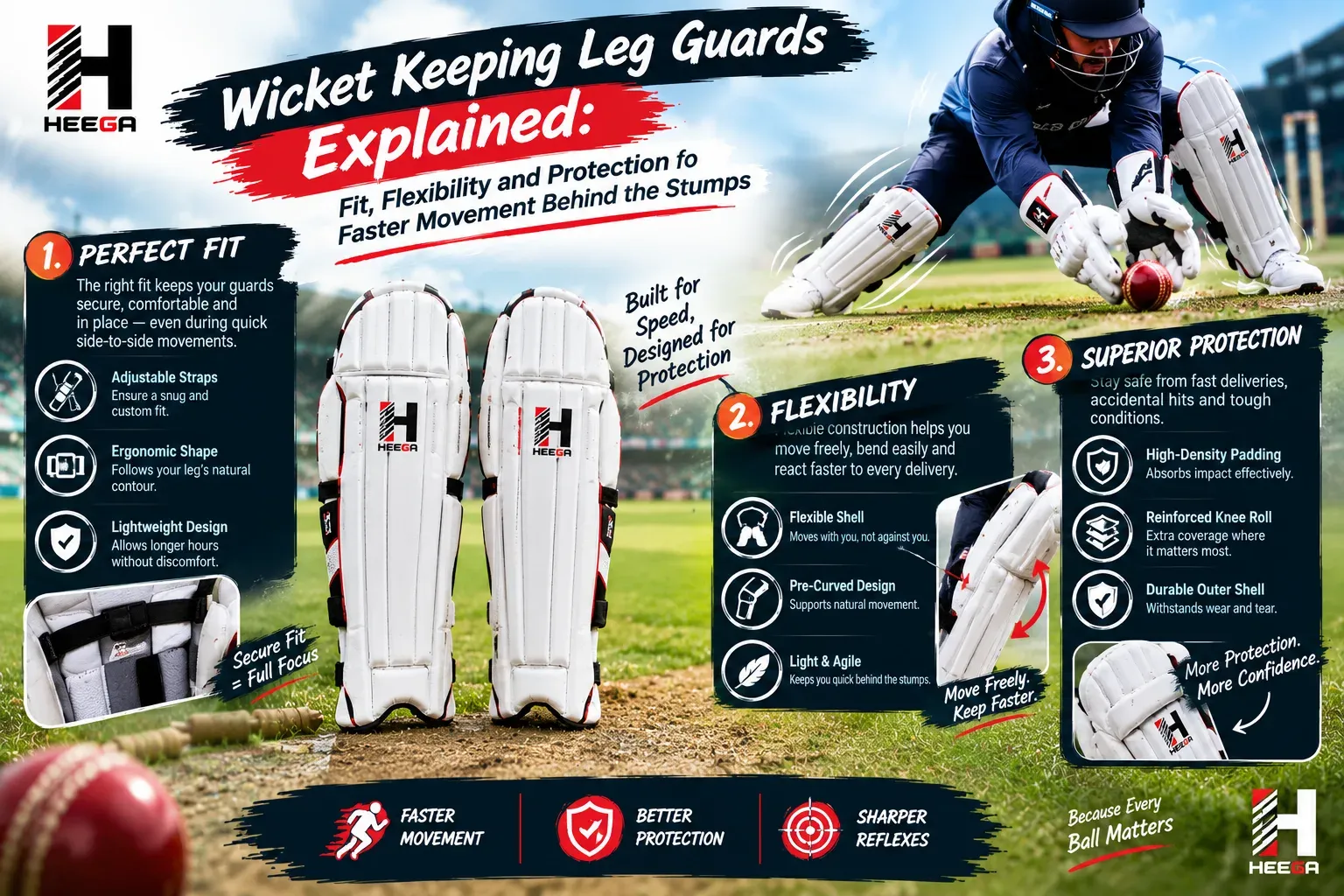
A wicketkeeper's job is much more demanding than simply catching the ball. Every delivery requires quick reactions, sharp footwork, a stable crouch, and the ability to move in either direction without losing balance. Whether standing close to the stumps against a spinner or keeping back to a fast bowler, a wicketkeeper needs equipment that supports movement while providing dependable protection.
Wicketkeeping leg guards play an important role in this balance. Unlike batting pads, which are designed primarily to protect a batter while facing deliveries, wicketkeeping pads are generally smaller, lighter, and shaped to accommodate frequent crouching and lateral movement. Their design allows keepers to move their knees and lower legs more freely while staying protected from unexpected impacts.
However, choosing the right pair involves more than finding the lightest option or selecting a size based on age. Guards that are too large can restrict movement, while poorly fitted or insufficiently protective guards may leave vulnerable areas exposed. Even a small amount of discomfort can become distracting during a long spell behind the stumps.
In this guide, we will explain how wicketkeeping leg guards work, what to look for in their fit and flexibility, how different designs affect movement, and how to choose a pair suited to your level of cricket.
What Are Wicketkeeping Leg Guards?
Wicketkeeping leg guards, often called wicketkeeping pads, are protective pads worn over the lower legs while keeping wicket. They help protect the shins and surrounding areas from impact while allowing the keeper to maintain a low stance, move laterally, and rise quickly after collecting the ball.
Their design differs from traditional batting pads. Batting pads typically offer broader coverage because batters face repeated deliveries that may strike the front or sides of their legs. Wicketkeeping pads are usually more compact to accommodate the keeper's frequent changes in position.
A well-designed pair should offer three essential qualities:
- Protection: Adequate padding over vulnerable areas of the lower legs.
- Flexibility: Freedom to bend the knees, crouch deeply, and move sideways.
- Secure fit: A stable position that does not slip, twist, or create pressure points during play.
The goal is not to wear the most heavily padded guards available. It is to find protection that suits the demands of wicketkeeping without interfering with technique.
Why Wicketkeeping Leg Guards Matter for Performance
Wicketkeepers make hundreds of small movements during a match. They adjust their stance, shift their weight, follow the ball across the pitch, and repeatedly move from a crouch to a standing position.
Leg guards that fit poorly can make these actions more difficult.
1. Faster lateral movement
When a batter plays a shot or edges the ball, the keeper may need to move quickly to either side. Bulky guards can rub against the knees or interfere with the natural movement of the legs.
Compact, properly fitted wicketkeeping pads help reduce unnecessary bulk and allow the keeper to adjust position more comfortably.
2. A more comfortable crouch
Keeping close to the stumps often involves holding a low crouching position for extended periods. The knee area must bend naturally without the pad digging into the leg or pushing against the knee.
A suitable design should accommodate this movement rather than force the keeper to change their stance to avoid discomfort.
3. Better balance and recovery
A wicketkeeper needs to remain balanced while moving forward, backward, and sideways. If the guards shift around the legs, the keeper may need to make additional adjustments to restore a comfortable position.
Secure straps and a suitable shape help keep the guards stable, supporting smoother movement and quicker recovery after a dive or awkward collection.
4. Confidence when receiving the ball
Unexpected deflections can strike the lower legs. Appropriate protection helps reduce the risk of painful impacts and allows the keeper to concentrate on watching the ball, positioning the hands, and completing the collection.
Protection does not eliminate injury risk, but the right equipment can make regular practice and match play more comfortable.
Wicketkeeping Pads vs Batting Pads: What's the Difference?
Although both types of pads protect the legs, their construction reflects different roles on the cricket field.
FeatureWicketkeeping Leg GuardsBatting Pads
Main purpose
Protection during wicketkeeping
Protection while batting
Overall design
Generally compact and lightweight
Usually larger with broader coverage
Movement priority
Crouching, lateral movement, and quick recovery
Running, stance changes, and protection while facing the ball
Knee flexibility
Designed around frequent bending and crouching
Designed to protect the knee and shin while batting
Coverage
Focused on the areas required for keeping
Broader coverage of the lower leg
Typical fastening
Straps or other secure fastening systems
Usually several straps for a stable batting fit
Important: Batting pads are not automatically suitable substitutes for wicketkeeping pads. Their extra bulk may interfere with crouching and footwork. Choose equipment designed for the role you intend to perform.
How to Choose the Right Fit for Wicketkeeping Leg Guards
Fit should be one of your first considerations when buying wicketkeeping pads. Even a well-made pair may become uncomfortable if the length, width, or fastening system does not suit your legs.
1. Check the overall length
The guards should cover the intended protective area without extending so far that they interfere with knee movement or contact your footwear awkwardly.
Pads that are too short may leave areas insufficiently protected. Pads that are too long can bunch up or restrict movement when you crouch.
When comparing sizes, follow the manufacturer's sizing chart rather than relying only on labels such as junior, youth, or senior.
2. Make sure the knee area moves naturally
The knee is central to wicketkeeping technique. You need to bend it repeatedly, settle into a low position, and rise without resistance from the equipment.
During a fitting, bend your knees slowly and hold a wicketkeeping crouch. Check whether the guard stays in place and whether the padding presses uncomfortably against the knee.
The pad should accommodate your movement, not dictate it.
3. Check the fit around your lower legs
A guard should sit securely without being excessively tight. If it is too loose, it may rotate or slide during quick movement. If it is too tight, it may create pressure points or feel restrictive.
Fastening systems should hold the guard in its intended position without requiring you to overtighten the straps.
4. Consider your footwear and socks
Wicketkeeping equipment should be assessed as a complete setup. Wear the cricket socks and shoes you normally use when trying on your guards, where possible.
This helps you identify potential rubbing around the ankles and check that the lower edge does not interfere with your footwear.
5. Test both legs
Do not assume that both guards will feel equally comfortable simply because they belong to the same set. Fasten each pad correctly and move through a few keeping positions.
Check for uneven pressure, shifting, or discomfort on either side.
Flexibility: The Key to Moving Quickly Behind the Stumps
A wicketkeeper's movement is continuous. The legs must support a stable crouch, quick adjustments, and explosive recovery without unnecessary resistance.
That makes flexibility an important feature when selecting leg guards.
Look for a design that accommodates knee bending
The padding and shape around the knee should allow the leg to flex without creating a hard edge or uncomfortable fold. Some designs use shaped sections or flexible construction to improve movement.
The exact design varies by model, so judge the actual fit rather than assuming that a particular construction will work for everyone.
Avoid unnecessary bulk
Extra material can make a guard feel substantial without necessarily improving its suitability for wicketkeeping. Excessive bulk may make it harder to settle into a low stance or move the legs independently.
Choose a design that provides adequate protective coverage while remaining manageable during repeated movements.
Check lateral movement
Wicketkeepers frequently shift to the left or right to follow the ball. A suitable pair should allow these movements without the pads catching against each other or twisting around the legs.
Try moving sideways in a controlled crouch. Pay attention to rubbing around the knees, restriction at the ankles, and any tendency for the pads to move out of position.
Make sure the guards return to position
Flexibility is not only about bending comfortably. The guards should also remain stable as you straighten your legs and return to your stance.
If a pad repeatedly twists or needs adjustment after each movement, reconsider its fit or fastening system.
Protection: What Should You Look For?
Lightweight construction is useful, but it should not come at the expense of appropriate protection. The best pair balances mobility with enough padding for the conditions in which you keep wicket.
1. Adequate padding over vulnerable areas
Check that the pad provides suitable coverage across the intended protective areas, especially the front of the lower leg and around the knee region according to the product's design.
Padding should be evenly constructed, without obvious gaps, damaged sections, or areas that have become excessively compressed.
2. Comfortable padding density
Padding that is too stiff may feel awkward when crouching. Padding that is too soft, thin, or compressed may provide less cushioning than you need.
There is no single padding density that suits every player. Look for a design that feels protective during movement and is appropriate for the level and conditions of cricket you play.
3. Secure straps and fastening points
Straps help keep the pads in place as you move. Inspect the stitching, fastening surfaces, and attachment points for signs of weak construction.
The straps should be easy to adjust and should hold securely without cutting into the leg. If the guard shifts even after correct fastening, the size or shape may not be right for you.
4. Durable outer material
The outer surface should be able to handle regular use, friction, and normal wear. Look for tidy stitching, a well-finished surface, and construction that feels consistent across the pair.
Material choice alone does not guarantee durability. Construction quality, fit, frequency of use, and maintenance also affect how long the pads remain serviceable.
5. Protection suited to your playing level
A recreational player may have different requirements from someone keeping wicket several times a week in competitive cricket. Consider the type of bowling you face, the duration of your keeping spells, and the conditions in which you play.
Always use equipment designed for cricket and appropriate to the intended role. If a league or competition has specific equipment requirements, check those rules before purchasing.
How to Test Wicketkeeping Leg Guards Before Buying
A quick fitting in a shop or at home can reveal problems that are difficult to spot by looking at the product alone.
Use this simple checklist before making your decision.
TestWhat to doWhat to look for
Standing fit
Fasten both guards correctly
Even, comfortable positioning
Deep crouch
Lower into your normal keeping stance
No painful pressure or major restriction
Side-to-side movement
Shift in both directions while crouching
Smooth movement without pad collision
Rise and reset
Stand up and return to your stance
Guards remain secure
Short movement sequence
Take a few controlled steps and squat again
No twisting, slipping, or repeated adjustment
Footwear check
Move with your usual cricket shoes
No awkward interference around the ankles
If possible, repeat these checks after wearing the guards for several minutes. Some pressure points only become noticeable after the equipment has been worn for a short period.
Do not judge a pair only by how comfortable it feels while standing still. Wicketkeeping pads need to work when your knees are bent and your legs are moving.
Choosing Wicketkeeping Leg Guards for Different Players
The right choice depends on how often you play, your physical build, and the demands of your role.
For beginners
Beginners should prioritise a secure fit, comfortable padding, and freedom to practise basic keeping movements.
There is no need to choose the most expensive model automatically. A well-fitting pair with suitable protection and reliable fastening is a sensible starting point.
For school and junior players
Correct sizing is particularly important for young wicketkeepers. Avoid buying pads that are much too large simply because the player may grow into them.
Oversized guards can shift, interfere with movement, and make it harder to develop good technique. Recheck the fit as the player grows and replace the equipment when it no longer provides suitable coverage.
For club and competitive players
Players who keep wicket regularly may benefit from paying closer attention to padding construction, strap durability, weight, and flexibility.
If you spend long periods in a crouch, even minor rubbing can become distracting. Prioritise a pair that remains comfortable over extended sessions and allows you to move confidently.
For players keeping to spin
Keeping close to the stumps against spin often requires a deep crouch, quick movement forward, and rapid lateral adjustments. Flexibility around the knees and a secure fit are particularly important.
For players keeping to pace
When standing farther back to fast bowling, keepers still need mobility and suitable protection against deflections. Consider the quality of the padding and the security of the fastening system alongside overall comfort.
In either situation, the pads should support your normal technique rather than force you to change it.
Common Mistakes to Avoid When Buying Wicketkeeping Pads
Even experienced players can choose unsuitable equipment if they focus on only one feature.
Mistake 1: Choosing the wrong size
A size that looks correct may still be too long, too narrow, or uncomfortable around the knee. Always test the pads in a crouched position and consult the manufacturer's sizing guide.
Mistake 2: Prioritising weight over protection
Lightweight guards can be comfortable, but the lowest weight should not be the only deciding factor. Check the protective coverage, padding condition, and suitability for your level of cricket.
Mistake 3: Buying batting pads instead
Batting pads often have a different shape and greater coverage. That design may be useful for batting but can be cumbersome for keeping. Choose wicketkeeping-specific equipment where possible.
Mistake 4: Ignoring strap quality
A pad that fits well initially may become frustrating if its straps loosen or its fastening points fail. Inspect the straps and stitching before buying.
Mistake 5: Testing only while standing
A comfortable standing fit does not guarantee a comfortable crouch. Test the guards through the movements you actually perform behind the stumps.
Mistake 6: Continuing to use worn-out guards
Flattened padding, torn outer material, damaged stitching, and unreliable straps can affect fit and protection. Inspect your pads regularly and replace them when their condition no longer meets your needs.
How to Maintain Wicketkeeping Leg Guards
Good maintenance helps preserve comfort, construction, and usable life.
- Air them after every session: Remove the guards from your kit bag so moisture can escape.
- Clean the outer surface: Follow the manufacturer's instructions and use suitable cleaning methods for the materials.
- Avoid storing them while damp: Prolonged damp storage can encourage unpleasant odours and may affect some materials.
- Inspect the padding: Check for uneven compression, cracks, or damage after regular use.
- Check straps and stitching: Repair or replace equipment when fastening components no longer hold securely.
- Store them properly: Keep the pads in a dry place away from excessive heat and avoid placing heavy equipment on top of them.
Do not assume every pad is suitable for machine washing or soaking. Check the care instructions first, especially if the guards contain foam or other materials that may be damaged by unsuitable cleaning.
A Quick Buying Checklist
Before purchasing wicketkeeping leg guards, ask yourself these questions:
- Do the guards fit the length and shape of my legs?
- Can I bend my knees and hold a deep crouch comfortably?
- Can I move sideways without the pads catching or twisting?
- Does the padding provide suitable coverage for my needs?
- Do the straps stay secure without being overtightened?
- Are the outer material, stitching, and fastening points well made?
- Have I tested the guards with my usual cricket socks and shoes?
- Does the product match my age group, playing level, and intended use?
If the answer to these questions is yes, you are in a much stronger position to choose equipment that supports your keeping technique.
How to Build a Comfortable Wicketkeeping Setup
Leg guards work best as part of a complete wicketkeeping setup. Gloves, inner gloves if used, footwear, and other protective equipment should all fit properly and allow you to move naturally.
When trying new guards, wear the equipment you normally use during practice. This makes it easier to spot interference between the pads, shoes, and other gear.
Also, practise with the new guards before relying on them in a competitive match. Start with simple crouching, lateral movement, and collection drills. Gradually increase the pace as you become comfortable with their fit.
If the pads continue to rub, shift, or restrict your stance, reassess their size and adjustment. Do not assume you must simply tolerate discomfort to get used to new equipment.
Why the Right Leg Guards Matter for Long-Term Development
Good wicketkeeping is built on repetition. Players develop their technique through regular practice, learning to stay balanced, follow the ball, and move efficiently in different situations.
Equipment that fits well makes it easier to focus on those skills. When leg guards stay secure and allow natural movement, you can concentrate on footwork and collection rather than repeatedly adjusting your pads.
The right equipment will not replace coaching, fitness, or practice, but it can remove an avoidable distraction. For beginners, it helps create a comfortable foundation for learning. For experienced players, it can make long keeping sessions more manageable.
The best pair is therefore not necessarily the most expensive or the lightest. It is the pair that provides suitable protection, fits securely, and allows you to move confidently throughout your keeping spell.
Explore Cricket Equipment at Heega Sports
At Heega Sports, we understand that every piece of cricket equipment should support the player's needs on the field. Whether you are building your first cricket kit or upgrading equipment for regular club matches, choosing gear that balances comfort, protection, and practical performance matters.
When selecting wicketkeeping equipment, pay attention to fit, construction, and suitability for your playing level. Take the time to compare options and test how they feel during real wicketkeeping movements.
Explore the available cricket equipment at Heega Sports and find gear that suits your training and match-day requirements.
Frequently Asked Questions (FAQs)
1. What is the difference between wicketkeeping pads and batting pads?
Wicketkeeping pads are generally more compact and designed to allow frequent crouching and lateral movement. Batting pads usually offer broader coverage and may feel bulkier when used behind the stumps.
2. How tight should wicketkeeping leg guards be?
They should fit securely without creating uncomfortable pressure. The guards should not slide or rotate during movement, and the straps should not need to be overtightened to keep them in position.
3. How do I know if my wicketkeeping pads are the right size?
Check the manufacturer's sizing guide, then test the pads while standing, crouching, moving sideways, and returning to your stance. They should provide suitable coverage without interfering with your knees, ankles, or footwear.
4. Are lightweight wicketkeeping pads better?
Not automatically. Lightweight pads can make movement more comfortable, but protection, fit, durability, and flexibility are equally important. Choose a balanced design that suits your playing conditions.
5. Can beginners use professional wicketkeeping pads?
Yes, provided the pads fit correctly and suit the player's needs. Beginners do not necessarily need the most advanced or expensive model; proper sizing and comfortable protection are more important.
6. How often should I replace wicketkeeping leg guards?
There is no fixed replacement schedule. Inspect them regularly and replace them when the padding becomes significantly compressed or damaged, the material deteriorates, or the straps can no longer secure the guards properly.
7. How can I stop wicketkeeping pads from slipping?
Check that you have the correct size and that the straps are adjusted according to the manufacturer's instructions. If the guards continue to twist or slide despite correct fastening, the shape or size may not suit your legs.
8. Do wicketkeeping leg guards affect movement?
They can if they are too bulky, poorly fitted, or incorrectly secured. Properly selected guards should allow you to crouch, shift sideways, and rise without unnecessary restriction.
9. Should junior wicketkeepers buy larger pads to allow for growth?
It is better to choose pads that fit properly now. Oversized guards can move around, interfere with technique, and provide unsuitable coverage. Reassess the size as the player grows.
10. How should I store wicketkeeping pads after a match?
Air them out, clean them according to the manufacturer's instructions, and store them in a dry place. Check the padding, straps, and stitching before the next session.
Final Thoughts
Wicketkeeping leg guards are a small but important part of a keeper's equipment. The right pair should protect vulnerable areas while allowing the knees to bend naturally and the legs to move quickly in either direction.
When comparing options, focus on three essentials: fit, flexibility, and protection. Make sure the pads stay secure, feel comfortable in a deep crouch, and provide appropriate padding without unnecessary bulk. Test them with your usual footwear and cricket socks, and inspect their construction before buying.
Most importantly, do not choose wicketkeeping pads based on appearance, price, or weight alone. Equipment that works with your movement will help you concentrate on reading the ball, staying balanced, and completing each collection with confidence.
Whether you are a beginner learning the basics or an experienced keeper preparing for competitive cricket, the right equipment can make every practice session more comfortable and productive.
Explore cricket equipment for your next training session or match at Heega Sports.
Related posts
 Why Batting Gloves Matter: Understanding Protection, Grip, Flexibility & Hand ComfortLearn why batting gloves matter for protection, grip, flexibility and comfort, plus how to choose the right cricket batting gloves for your playing level.
 Wicketkeeping Gloves Explained: How Size, Palm Design & Flexibility Affect KeepingLearn how wicketkeeping glove size, palm design, flexibility, grip, and fit affect keeping performance, comfort, catching control, and confidence.
 Cricket Batting Gloves: Protection, Fit & Flexibility ExplainedLearn how cricket batting gloves protect your hands and improve comfort, grip, flexibility, and bat control for training and match-day performance.