Cricket Batting Gloves: Protection, Fit & Flexibility Explained
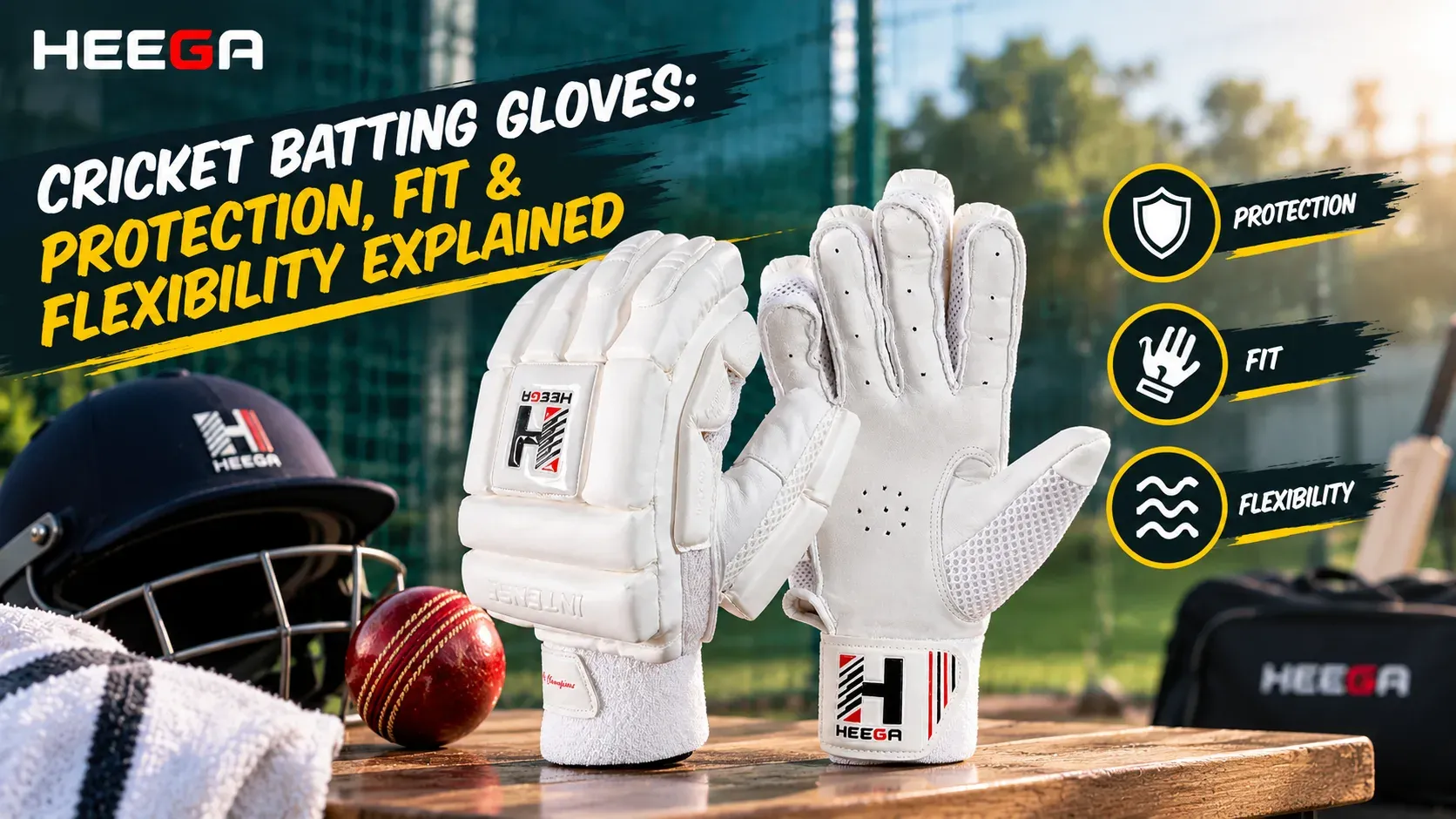
Introduction: Why Batting Gloves Matter More Than You Think
When players choose cricket equipment, the bat usually gets most of the attention.
They compare willow, weight, profile, edges, spine, pickup, and balance.
But there is another piece of equipment that directly connects the player to the bat:
Batting gloves.
Your hands control the bat throughout every shot.
They help guide the backlift, control the downswing, absorb vibration, and maintain the grip when the ball arrives at speed.
At the same time, the hands are among the most vulnerable parts of the body when facing a hard cricket ball.
A properly fitted pair of cricket batting gloves therefore needs to perform several jobs at once.
They should provide suitable protection without feeling excessively bulky.
They should fit securely without restricting natural hand movement.
They should provide a comfortable grip without creating unnecessary pressure.
And they should allow the batter to remain focused on the ball rather than thinking about their equipment.
This is why choosing batting gloves should involve more than simply selecting a size or picking the most expensive pair.
The right gloves should match the player's hand size, playing level, comfort preferences, protection requirements, and style of cricket.
What Are Cricket Batting Gloves?
Cricket batting gloves are protective gloves designed to reduce the impact experienced by a batter's hands when playing cricket.
Unlike ordinary sports gloves, cricket batting gloves include protective components around vulnerable areas of the fingers, hands, and thumbs.
Depending on the design, they may include:
- Finger protection.
- Thumb protection.
- Palm padding.
- Knuckle protection.
- Flexible sections.
- Grip-enhancing materials.
- Ventilation panels.
- Wrist straps.
The exact construction varies between gloves and manufacturers.
The important point is that batting gloves need to balance two competing requirements:
Protection and freedom of movement.
Why Do Batters Need Protective Gloves?
A cricket ball can travel at considerable speed.
Even when a batter successfully plays a shot, the ball can occasionally strike the hand or glove unexpectedly.
This can happen through:
- Inside edges.
- Top edges.
- Mistimed shots.
- Short deliveries.
- Deflections.
- Missed pulls.
- Close catches around the bat.
Protective gloves provide a layer between the player's hands and the ball.
They do not eliminate injury risk, but they are an important part of standard cricket protective equipment.
Protection Should Match the Player's Level
Not every player needs exactly the same glove design.
A beginner may prioritize:
- Comfort.
- Basic protection.
- Easy movement.
- Affordable equipment.
A competitive player facing faster bowling may pay more attention to:
- Finger protection.
- Thumb protection.
- Knuckle coverage.
- Palm padding.
- Glove construction.
- Secure fit.
The right choice depends on the player's circumstances.
Understanding Finger Protection
The fingers are particularly vulnerable because they are positioned around the handle.
Modern batting gloves commonly use protective elements around the fingers.
These may be made from materials designed to absorb or distribute impact.
Different glove designs provide different levels of protection and flexibility.
Why Finger Protection Matters
An unexpected impact to the finger can be painful and may affect a player's ability to continue batting.
Protective inserts can help reduce the direct force reaching the fingers.
However, players should always inspect protective equipment regularly and replace gloves when they are damaged or no longer provide reliable protection.
Thumb Protection Is Often Overlooked
The thumb is another important area.
It plays a major role in controlling the bat and maintaining a secure grip.
A good batting glove should provide appropriate protection around the thumb while still allowing enough movement for comfortable bat control.
Palm Padding Adds Comfort
The palm experiences pressure throughout an innings.
Repeated gripping, vibration, and bat movement can create discomfort, particularly during long sessions.
Palm padding can help improve comfort by cushioning the hand.
However, excessive padding can sometimes change how the handle feels.
This is why players should consider both protection and feel.
Protection Does Not Mean Maximum Bulk
A common mistake is assuming that more padding automatically means better gloves.
That is not necessarily true.
A glove that is excessively bulky may affect:
- Grip.
- Bat feel.
- Finger movement.
- Wrist movement.
- Comfort.
- Shot control.
The objective is suitable protection rather than unnecessary bulk.
Fit Is One of the Most Important Factors
Even a high-quality batting glove may perform poorly if it does not fit correctly.
The glove should feel secure without being painfully tight.
The fingers should sit comfortably inside the finger sections.
There should not be excessive empty space around the fingertips.
The wrist should also feel properly supported.
What Happens When Gloves Are Too Large?
Oversized gloves can create several problems.
They may:
- Move during the shot.
- Reduce grip security.
- Create extra material around the fingers.
- Affect bat feel.
- Make the player feel less connected to the handle.
A glove that shifts during batting can become distracting.
What Happens When Gloves Are Too Small?
Gloves that are too tight can be equally uncomfortable.
They may:
- Restrict finger movement.
- Create pressure points.
- Reduce comfort.
- Cause premature material wear.
- Make longer innings uncomfortable.
The goal is a secure but natural fit.
How Should Batting Gloves Feel?
When trying on batting gloves, the player should be able to:
- Close the hand naturally.
- Grip a bat comfortably.
- Move the fingers freely.
- Bend the wrist.
- Adjust the grip without excessive resistance.
The gloves should feel like part of the equipment rather than something the player constantly notices.
Flexibility Matters for Bat Control
Batting is a dynamic movement.
The hands need to adjust continuously during the swing.
A batter may change pressure between the top and bottom hand.
They may loosen the grip during certain shots.
They may rotate the wrists during horizontal-bat strokes.
Flexible gloves allow these movements to happen naturally.
The Relationship Between Gloves and Bat Feel
A batter develops a relationship with their bat through their hands.
They can feel:
- The handle.
- The grip.
- The weight.
- The vibration.
- The movement of the bat.
If gloves are too thick or restrictive, this connection can feel different.
This does not mean thinner gloves are always better.
It means the player needs to find the right balance between protection and feel.
Grip Material Matters
The palm material plays an important role in batting gloves.
Many gloves use materials designed to provide grip between the hand and bat handle.
A secure palm can help reduce unwanted movement inside the glove.
This becomes particularly important when:
- Hands become sweaty.
- The player bats for a long time.
- The weather is hot.
- The player plays aggressive shots.
Sweat and Ventilation
Batting gloves can become warm during long innings.
Players may sweat more during hot or humid conditions.
Ventilation features can help improve comfort by allowing greater airflow.
Look for glove designs with suitable ventilation around areas such as:
- Back of the hand.
- Fingers.
- Wrist.
- Palm.
Comfort becomes increasingly important during long training sessions and matches.
Wrist Straps Help Secure the Glove
Many batting gloves feature adjustable wrist straps.
These help secure the glove around the wrist.
A properly adjusted strap can prevent excessive movement while allowing the player to maintain comfortable wrist mobility.
The strap should feel secure without creating unnecessary pressure.
Batting Gloves and Different Playing Styles
Players with different batting styles may have different preferences.
An aggressive batter may prioritize:
- Strong protection.
- Secure grip.
- Durable construction.
A batter focused on timing may place greater importance on:
- Lightweight feel.
- Flexibility.
- Finger movement.
- Bat feedback.
Neither approach is automatically correct.
The right glove depends on the individual player.
Gloves for Fast Bowling
Facing fast bowling increases the importance of reliable hand protection.
Batters may prefer gloves with stronger finger and thumb protection when regularly facing high-speed bowling.
The glove should still allow the player to grip and control the bat naturally.
Gloves for Spin Bowling
Spin bowling may create a different set of demands.
Players may use their hands differently while playing:
- Drives.
- Sweeps.
- Cuts.
- Flicks.
- Lofted shots.
Comfort and flexibility remain important.
Gloves for T20 Cricket
T20 cricket often involves aggressive shot-making.
Players may want gloves that combine:
- Strong protection.
- Secure grip.
- Lightweight construction.
- Good flexibility.
Since T20 innings can involve rapid changes in shot selection, comfortable hand movement is valuable.
Gloves for Longer Formats
Longer innings can place greater emphasis on comfort.
A batter may spend significant time wearing the same gloves.
Features such as:
- Breathability.
- Padding.
- Grip.
- Fit.
- Wrist comfort.
can become particularly important.
Junior Cricket Batting Gloves
Young players need appropriately sized protective equipment.
Junior gloves should not simply be smaller versions chosen without checking fit.
The glove should suit the player's hand size and allow natural movement.
Parents and coaches should regularly reassess equipment as young players grow.
Academy Players Need Reliable Equipment
Academy players often train several times per week.
Frequent practice can increase glove wear.
For these players, durability and comfort can become just as important as protection.
A glove that remains comfortable through repeated training can make practice more enjoyable.
Club Cricketers and Regular Match Use
Club players may use their gloves for both training and matches.
A durable pair can be useful for players who regularly participate in competitive cricket.
It can also be practical to keep a spare pair available.
Why Professional Players Can Be Particular About Gloves
Experienced players often develop strong preferences.
They may care about:
- Finger protection.
- Thumb shape.
- Palm material.
- Grip texture.
- Glove weight.
- Flexibility.
- Wrist strap design.
- Internal fit.
After years of batting, players often know exactly what feels comfortable in their hands.
Batting Gloves and Confidence
Equipment can also influence confidence.
A player who feels their hands are properly protected may approach the crease more comfortably.
Confidence comes primarily from preparation and skill.
But comfortable protective equipment can remove one unnecessary distraction.
Gloves Should Never Replace Good Technique
Batting gloves are protective equipment.
They cannot compensate for poor batting technique.
Players should still focus on:
- Watching the ball.
- Proper footwork.
- Balanced movement.
- Shot selection.
- Head position.
- Controlled bat swing.
Good equipment should support good technique.
How to Test Batting Gloves Before Buying
Whenever possible, players should try gloves before purchasing.
Hold a cricket bat while wearing them.
Check whether you can:
- Grip the handle naturally.
- Move the fingers.
- Bend the wrist.
- Adjust the grip.
- Practice a backlift.
- Simulate a few shots.
If the gloves feel restrictive during these movements, consider another design or size.
Common Batting Glove Buying Mistakes
Choosing the Wrong Size
Size should be based on hand fit rather than appearance.
Buying Only for Looks
A stylish glove is not automatically the right glove.
Choosing Maximum Padding Without Considering Feel
Extra protection can sometimes affect flexibility and bat control.
Ignoring Thumb Protection
The thumb deserves the same attention as the fingers.
Forgetting Ventilation
Hot hands can become uncomfortable during long sessions.
Using Damaged Gloves
Protective equipment should be replaced when it becomes significantly damaged.
When Should You Replace Batting Gloves?
Gloves should be inspected regularly.
Replacement may be appropriate when:
- Finger protection is damaged.
- Padding has significantly compressed.
- Palm material is worn through.
- Grip material has deteriorated.
- Stitching is coming apart.
- Wrist straps no longer secure properly.
- The glove no longer fits comfortably.
Do not wait for complete failure before replacing important protective equipment.
How to Care for Batting Gloves
Good care can help extend the useful life of gloves.
After use:
- Allow them to dry naturally.
- Remove excess dirt.
- Do not leave them wet inside a closed kit bag.
- Store them in a ventilated location.
- Avoid unnecessary exposure to direct heat.
Why You Should Not Leave Wet Gloves in Your Kit Bag
Sweat and moisture can build up inside batting gloves.
If they remain trapped inside a closed kit bag, unpleasant odors and material deterioration can develop.
Allowing gloves to dry properly after training is a simple but useful habit.
Avoid Direct Heat
Do not place batting gloves directly against heaters or other intense heat sources.
Excessive heat can affect synthetic materials, leather components, adhesives, and stitching.
Natural drying is generally safer.
One Pair or Two?
Players who train frequently may benefit from having more than one pair.
For example:
Training Pair: Used during regular practice.
Match Pair: Kept in better condition for competitive matches.
This is not necessary for everyone, but it can be practical for serious players.
Batting Gloves and Weather Conditions
Playing conditions can influence glove preferences.
In hot and humid environments, ventilation and sweat management become more important.
In cooler conditions, players may prioritize comfort and flexibility.
The best choice can therefore depend on where and how often you play.
Nepal, Germany, USA, Canada, Netherlands, and UK
Cricket continues to grow across different playing environments.
Players in Nepal, Germany, the United States, Canada, and the Netherlands are increasingly participating in structured cricket through clubs, academies, schools, and competitive programs.
The United Kingdom has a long-established cricket system covering grassroots, club, academy, county, and professional pathways.
Although playing environments differ, one requirement remains universal:
Batting gloves need to protect the hands while allowing the batter to control the bat naturally.
How Heega Sports Supports Better Batting Preparation
At Heega Sports, we understand that batting equipment should provide a combination of protection, comfort, and practical performance.
Our cricket equipment range includes:
- Batting gloves.
- Robaro cotton batting gloves.
- Junior cricket equipment.
- Cricket bats.
- Kashmir Willow bats.
- English Willow bats.
- Batting pads.
- Leg guards.
- Thigh guards.
- Abdominal guards.
- Cricket helmets.
- Leather cricket balls.
- Practice balls.
- Cricket kit bags.
- Practice nets.
- Training accessories.
Whether you are learning the basics, training at an academy, playing club cricket, or preparing for competitive matches, choosing suitable protective equipment can make your cricket sessions more comfortable.
A Simple Batting Glove Checklist
Before buying a pair, consider:
- Protection: Are the fingers, thumb, and knuckles appropriately protected?
- Fit: Does the glove stay securely in place?
- Flexibility: Can the fingers and wrist move naturally?
- Grip: Does the palm provide a secure connection with the bat?
- Comfort: Can you wear the gloves for an extended session?
- Ventilation: Can your hands remain reasonably comfortable in warm conditions?
- Durability: Are the materials and stitching suitable for your level of use?
- Playing level: Does the glove match your training and competition requirements?
Final Thoughts
Cricket batting gloves may look like a relatively small part of a player's equipment.
But they perform an important job.
They protect the hands while helping the batter maintain a secure and comfortable connection with the bat.
The best batting gloves are not necessarily the ones with the most padding or the highest price.
They are the ones that provide the right combination of protection, fit, flexibility, grip, and comfort for the individual player.
A beginner may need simple, comfortable protection.
A junior player needs the correct size.
An academy or club cricketer may require greater durability for frequent training.
A serious competitive batter may have very specific preferences regarding protection and bat feel.
The key is to choose gloves based on how they perform in your hands—not simply how they look.
When your gloves fit properly, protect the vulnerable areas, allow natural movement, and provide a secure grip, you can spend less time thinking about your equipment and more time focusing on the ball.
Because in cricket, the hands connect you to the bat.
And the right batting gloves help make that connection safer, more comfortable, and more controlled.
🏏 Find the Right Batting Gloves With Heega Sports
Explore batting gloves, Robaro cotton batting gloves, cricket bats, batting pads, helmets, leg guards, leather balls, practice balls, kit bags, nets, and training accessories designed for players at every level.
Shop Now
Heega Sports – Supporting Better Protection, Better Control, and Better Cricket.
Related posts
 Why Batting Gloves Matter: Understanding Protection, Grip, Flexibility & Hand ComfortLearn why batting gloves matter for protection, grip, flexibility and comfort, plus how to choose the right cricket batting gloves for your playing level.
 Batting Gloves Explained: How Padding Placement and Finger Protection Help Manage Ball ImpactLearn how batting glove padding placement, finger protection, and fit help manage ball impact. Find practical tips for choosing cricket batting gloves.
 Cricket Batting Pads Explained: How Knee Protection, Shin Coverage and Strap Placement Affect Comfort and MobilityLearn how cricket batting pads, knee protection, shin coverage and strap placement affect comfort, mobility, impact protection and batting performance.