Batting Gloves Explained: How Padding Placement and Finger Protection Help Manage Ball Impact
Introduction
A cricket bat may be the first piece of equipment a batter thinks about, but batting gloves deserve just as much attention. Every time a batter faces a delivery, the hands absorb vibration from the bat, maintain control of the handle, and remain exposed to potential impact from mishits or unexpected contact with the ball.
A well-chosen pair of batting gloves helps manage these demands by combining protective padding, a secure fit, flexible construction, and a reliable grip. However, not all gloves offer the same level of protection in every area. The placement of padding across the fingers, thumb, back of the hand, and palm can influence how comfortable and protected a batter feels at the crease.
This is where understanding glove construction becomes useful. Thick padding alone does not automatically make a glove better. If the padding restricts finger movement, interferes with the grip, or creates uncomfortable pressure points, it may affect bat control. On the other hand, gloves that are too thin or poorly fitted may not provide the protection a player needs.
Whether you are a beginner learning the basics, a club cricketer facing regular competitive bowling, or an experienced batter looking to upgrade your equipment, knowing how batting gloves are designed can help you make a more informed choice.
In this guide, we will explain how padding placement affects protection, why finger guards matter, what to look for in the palm and wrist areas, and how to choose batting gloves that balance comfort, mobility, and impact management.
What Are Cricket Batting Gloves Designed to Do?
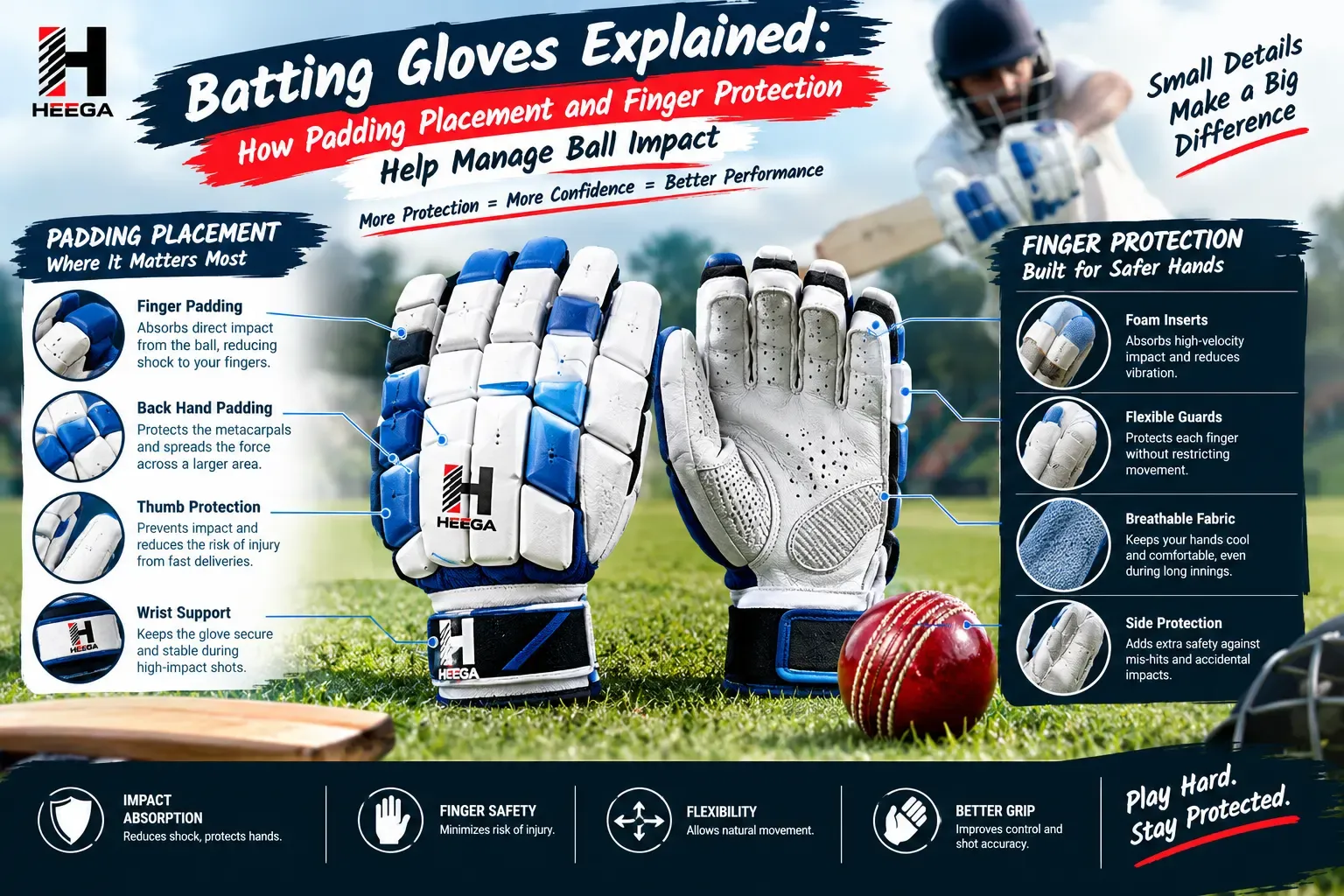
Batting gloves are protective equipment worn on both hands while batting. They help cushion the hands against certain impacts, reduce discomfort from bat vibration, support grip, and provide a more comfortable interface between the hands and the bat handle.
A typical pair may include several important components:
- Finger padding: Helps cushion the fingers against impact.
- Thumb protection: Provides padding around an area that can be vulnerable to contact.
- Back-of-hand padding: Covers parts of the hand that are exposed during batting.
- Palm material: Supports grip, comfort, and control of the bat handle.
- Wrist cuff and fastening: Help keep the glove securely positioned.
- Flexible sections: Allow the fingers and hand to move naturally while gripping the bat.
The materials and protective layout vary between models. Some gloves use segmented foam padding, while others include additional protective inserts in selected areas. The design should suit the batter's level, preferences, and playing conditions.
It is also important to understand that batting gloves reduce some impact and abrasion risks but cannot eliminate the possibility of injury. They should be used alongside other appropriate protective equipment, including a correctly fitted helmet and other guards suited to the conditions.
Why Padding Placement Matters More Than Padding Thickness Alone
When comparing batting gloves, it is tempting to focus on how thick the padding looks. However, the location, shape, and construction of that padding can be just as important.
The hand is made up of several moving parts. Fingers bend independently, the thumb helps control the bat, and the palm maintains contact with the handle. Each area has different movement and protection requirements.
1. Protection across the fingers
The fingers are directly involved in holding the bat and can be exposed to impact from a ball striking the bat or hand. Padding across the fingers helps cushion contact, depending on the design and the severity and location of the impact.
Some gloves use separate padded sections along individual fingers. This construction can help accommodate bending while maintaining protective coverage.
When trying on gloves, check that the padding covers the intended areas without creating large gaps or uncomfortable ridges.
2. Padding around the thumb
The thumb plays an important role in controlling the bat. Its position changes according to grip and batting technique, so the protective design needs to allow movement while providing suitable coverage.
Check whether the thumb padding feels secure when you wrap your hands around the bat handle. It should not dig into the joint, force the thumb into an awkward position, or prevent a comfortable grip.
3. Protection across the back of the hand
The back of the hand may be exposed to impact during a mistimed shot or an awkward contact. Batting gloves often use layered or segmented padding in this area to balance coverage with flexibility.
A good fit matters here. Padding that shifts away from its intended position may leave areas less protected than expected.
4. Palm construction
The palm serves a different purpose from the padded back of the glove. It needs to maintain contact with the handle and provide enough grip to control the bat.
Palm materials may include leather or synthetic alternatives, sometimes with reinforced sections in high-wear areas. The best choice depends on comfort, grip preference, durability, and how frequently you play.
The key point: Padding should be positioned where it is useful, remain secure during movement, and allow the hand to grip the bat naturally. Simply choosing the bulkiest glove is not a reliable way to judge protection.
Understanding Finger Protection in Batting Gloves
Finger protection is one of the most important considerations when selecting batting gloves. The fingers are essential for controlling the bat, but their small joints and exposed position mean that a poorly fitted glove can quickly become uncomfortable.
What types of finger protection are available?
Batting gloves use different protective constructions depending on the model. These may include shaped foam sections, layered padding, and reinforced inserts in selected areas.
Some designs focus on flexible, segmented padding, while others offer more substantial protection around particular fingers. Product features differ, so it is important to check the manufacturer's description rather than assuming every glove uses the same technology.
Why segmented padding can be useful
Fingers need to bend around the handle. If padding behaves like one rigid piece, it may restrict this movement or bunch up when the hand closes.
Segmented padding can allow individual sections to flex more naturally. This may improve comfort when gripping, adjusting the hands, and playing different shots.
However, the quality of the fit and the construction still matter. Segmentation alone does not guarantee better protection.
Do all fingers need the same level of padding?
Not necessarily. Glove designs may vary the amount and shape of padding across different fingers and sections of the hand.
The goal is to provide appropriate coverage without making the glove so bulky that it interferes with grip or movement. Players should evaluate the whole glove rather than focusing on a single protective feature.
How should finger protection feel?
When trying on batting gloves:
- The fingers should fit securely without being squeezed.
- Padding should remain aligned when you close your hand.
- You should be able to wrap your fingers around the bat handle naturally.
- The glove should not create painful pressure around the joints.
- Your fingertips should not feel excessively cramped or move around inside the glove.
Do not assume that a glove is unsuitable simply because its padding feels firm. Some protective materials have a more structured feel. What matters is whether the glove fits correctly, allows natural movement, and is designed for the level of protection you require.
How Batting Glove Padding Helps Manage Ball Impact
Batting gloves use cushioning materials to help reduce the force transmitted to the hand during certain impacts. The way the padding performs depends on its material, thickness, shape, construction, and position.
Cushioning and impact distribution
When a ball strikes a protected area, the padding can deform and help spread the contact over a broader area. This may reduce the concentration of force at the point of contact.
The level of protection varies by glove design and impact conditions. A glove should never be treated as a guarantee against finger fractures, bruising, or other injuries.
Padding density and feel
Different materials can feel soft, firm, or springy. A softer feel does not automatically mean better protection, and firmer padding is not necessarily superior.
The important considerations include how the material responds to impact, whether it maintains its shape, and whether the protective sections remain in the correct position.
When buying gloves, use product specifications and manufacturer guidance to understand the intended level of protection. Avoid judging performance entirely by squeezing the padding with your fingers.
The difference between impact protection and vibration control
Batting gloves also provide cushioning between the hands and the bat handle. This can improve comfort when the bat makes contact with the ball, especially on mishits.
However, the vibration felt through the handle is not the same as a direct ball impact on the hand. Gloves may help with comfort, but they cannot remove every vibration or compensate for an unsuitable bat, poor grip, or technical problems.
How Palm Grip Affects Bat Control
Protection is only one part of batting glove design. The palm must also help the batter hold the bat securely throughout the innings.
If the palm slips, bunches up, or becomes uncomfortable, the batter may struggle to maintain a consistent grip.
1. Palm material
Different glove models use different palm materials. Leather is valued in many designs for its feel and durability, while synthetic materials may offer particular advantages in cost, maintenance, or construction.
Material quality and finish vary, so the label alone does not determine performance.
2. Grip texture
Some gloves feature textured surfaces or additional grip elements to improve contact with the handle. The ideal amount of grip depends on the player's preference and how the glove feels during actual batting movements.
The palm should not feel excessively slippery, but it should also allow you to adjust your hands comfortably.
3. Reinforcement in high-wear areas
The palm and areas around the fingers can experience repeated friction. Reinforced sections may help improve durability, particularly for players who train frequently.
Inspect the stitching and material around common wear points before buying.
4. Sweat management
Hands can become damp during long innings or practice sessions. Moisture may affect comfort and grip, so breathable materials and suitable glove care can be useful.
If you regularly experience sweaty hands, consider how the glove feels after a period of use rather than assessing it only when it is new and dry.
Finding the Right Fit: Protection Without Losing Flexibility
Even gloves with good protective construction may perform poorly if the fit is wrong. Fit influences how well the padding stays in position and how naturally the hand moves around the bat.
Check the finger length
The fingers should reach the ends of the glove comfortably without being crushed against the tips. Excess material can fold or bunch up, while gloves that are too short may place pressure on the fingertips.
Follow the manufacturer's sizing chart, as sizes can vary between brands and models.
Check the width of the hand
The glove should fit securely across the palm and back of the hand. Excessive looseness can cause padding to shift, while a glove that is too tight may restrict movement.
Try both gloves rather than assuming they will feel identical.
Test the wrist fastening
The wrist closure should keep the glove secure without cutting into the wrist or limiting comfortable movement. Make sure it remains in place when you move your hands and grip the bat.
Grip the bat before deciding
This is one of the most useful tests you can perform. Put on both gloves, hold your usual bat, and make a few controlled movements.
Check whether you can:
- Close your hands comfortably around the handle.
- Adjust your grip without the padding bunching up.
- Move your fingers naturally.
- Keep the bat secure without excessive squeezing.
- Maintain a comfortable wrist position.
If the gloves feel restrictive while gripping the bat, try a different size or design rather than assuming they will automatically become comfortable after a few sessions.
Different Batting Gloves for Different Players
The ideal level of protection and construction depends on the player's needs. Age, hand size, playing frequency, and the pace of bowling faced should all influence the decision.
For beginners
Beginners should prioritise correct sizing, comfortable padding, a secure grip, and ease of movement. A well-fitted pair with suitable protection is more useful than an expensive model that feels awkward.
New players should also learn to wear gloves correctly and check that the padding stays in place during practice.
For junior players
Correct sizing is especially important for young batters. Avoid buying oversized gloves simply because the player is still growing.
Excess material can bunch up around the fingers, while misplaced padding may not cover the intended areas properly. Recheck the fit as the player grows.
For club cricketers
Players who face regular bowling and spend long hours at the nets may benefit from durable palm materials, secure padding, and a construction that remains comfortable over extended sessions.
Pay attention to stitching, wear resistance, and whether the protective sections stay in place during repeated use.
For experienced and competitive batters
Experienced players may have specific preferences for finger segmentation, palm feel, grip texture, and overall glove weight.
At this level, even small differences in fit can affect comfort. Test the gloves with your own bat and consider how they feel during the shots and grip adjustments you make most often.
For batters facing faster bowling
Players regularly facing high pace should pay particular attention to the quality and coverage of finger and thumb protection. Choose gloves intended for the demands of your playing level and follow the manufacturer's guidance.
No glove removes all risk from facing fast bowling. Correct batting technique, a suitable helmet, and other required protective equipment remain essential.
Common Mistakes to Avoid When Buying Batting Gloves
A few simple mistakes can lead to gloves that feel uncomfortable or fail to meet your needs.
Mistake 1: Choosing the thickest padding available
More bulk does not automatically mean better protection. Thick padding may restrict movement if it is poorly shaped or does not suit your hand.
Look for suitable protective coverage combined with a comfortable grip.
Mistake 2: Ignoring the thumb
The thumb is involved in controlling the bat and needs room to move. Check that its padding does not create pressure or force the joint into an awkward position.
Mistake 3: Buying the wrong size
Oversized gloves can shift, and undersized gloves can compress the fingers. Always consult the size chart and test the fit with a bat.
Mistake 4: Focusing only on the back of the hand
A glove may have substantial back-of-hand padding but still feel unsuitable around the fingers or thumb. Check the complete protective layout.
Mistake 5: Overlooking palm wear
A worn palm may lose grip or become uncomfortable. Inspect high-friction areas, seams, and reinforced sections, especially if you practise regularly.
Mistake 6: Assuming all gloves offer equal protection
Protective designs and materials vary. Check the product specifications, intended use, and manufacturer guidance instead of relying only on appearance or price.
Mistake 7: Continuing to use damaged gloves
Torn material, exposed padding, loose stitching, or severely compressed protective sections can affect how the glove fits and functions. Inspect your gloves regularly and replace them when they no longer provide suitable coverage.
How to Maintain Batting Gloves for Longer Use
Good maintenance helps preserve the fit, comfort, and condition of your gloves.
- Air them after every session: Remove them from your kit bag so moisture can escape.
- Avoid storing them while damp: Prolonged damp storage can encourage unpleasant odours and damage some materials.
- Clean according to the care instructions: Avoid soaking or machine-washing gloves unless the manufacturer specifically permits it.
- Inspect the fingers and thumb: Check for compressed padding, torn sections, or exposed protective inserts.
- Check the palm: Look for worn material, loose seams, or areas where grip has deteriorated.
- Examine the wrist fastening: Make sure the closure still secures the glove comfortably.
- Store them in a dry place: Keep them away from excessive heat and avoid crushing the padding under heavy equipment.
If you use your gloves frequently, inspect them more often. Replacing worn equipment before it becomes unsuitable is an important part of maintaining a reliable cricket kit.
A Practical Batting Glove Buying Checklist
Before purchasing a pair, use the following checklist to compare the options.
FeatureWhat to Check
Finger protection
Suitable padding coverage that stays aligned
Thumb design
Comfortable movement and secure protective coverage
Back-of-hand padding
Appropriate coverage without excessive bulk
Finger flexibility
Natural bending and grip adjustment
Palm material
Comfortable feel and suitable durability
Grip
Secure contact with the bat handle
Fit
Correct finger length and hand width
Wrist closure
Secure fastening without uncomfortable pressure
Construction
Consistent stitching and well-finished materials
Intended use
Suitable for your playing level and bowling conditions
Whenever possible, try the gloves on with your regular bat and cricket socks or other equipment you normally wear. A few minutes of practical testing can reveal fit issues that may not be obvious when examining the gloves on a shelf.
Do Better Batting Gloves Improve Batting Performance?
Batting gloves cannot replace technique, timing, or practice, but suitable gloves can help create a more comfortable and controlled batting experience.
When the fingers fit correctly, the padding stays in place, and the palm grips the handle comfortably, the batter can focus more easily on watching the ball and executing shots.
Gloves that are too bulky or too loose may become distracting. A secure fit can help reduce these avoidable problems.
The difference is not that a particular glove automatically produces more runs. Rather, suitable equipment helps the batter perform without unnecessary discomfort or concern about the fit.
For beginners, the priority should be learning to grip the bat correctly while wearing suitable protection. Experienced batters may have more specific preferences, but the same principles apply: fit, appropriate protection, and control come first.
Explore Cricket Equipment at Heega Sports
At Heega Sports, we understand that cricket equipment should support both protection and performance. Batting gloves are an essential part of a batter's kit, and choosing the right pair means considering more than just appearance or padding thickness.
Look for gloves that suit your hand size, provide appropriate finger and thumb coverage, and allow you to grip the bat comfortably. Pay attention to the quality of the palm, stitching, fastening, and overall construction.
Whether you are preparing for your first cricket season or upgrading your equipment for regular club matches, taking time to compare your options can help you build a kit that suits your needs.
Explore cricket equipment at Heega Sports and get ready for your next training session or match.
Frequently Asked Questions (FAQs)
1. Why is padding placement important in batting gloves?
Padding placement determines which areas of the hand receive cushioning and how the glove accommodates movement. Well-positioned padding can help manage impact while allowing the fingers and thumb to grip the bat naturally.
2. Which part of batting gloves needs the most protection?
Finger and thumb protection deserve particular attention because these areas help control the bat and can be exposed to impact. The appropriate protective layout depends on the glove's design and the batter's needs.
3. Does thicker padding provide better protection?
Not necessarily. Protection depends on the materials, construction, coverage, and fit as well as thickness. Excessively bulky padding can restrict movement without necessarily providing a better overall fit.
4. How tight should batting gloves be?
They should fit securely without squeezing the fingers or restricting the wrist. The padding should remain in position when you close your hand around the bat handle.
5. Why does finger flexibility matter in batting gloves?
Flexible fingers help the batter grip the handle, adjust hand position, and control the bat comfortably. Padding that bunches up or restricts bending may interfere with grip and become distracting.
6. Are leather palm batting gloves better than synthetic ones?
Neither material is automatically better for every player. Performance depends on material quality, grip, durability, comfort, and construction. Compare the actual product specifications and how the glove feels in your hands.
7. How often should I replace batting gloves?
There is no universal replacement schedule. Replace them when the padding is damaged or significantly compressed, the palm has worn through, the stitching has failed, or the glove no longer fits securely.
8. Can batting gloves prevent finger injuries?
Batting gloves help provide cushioning and protection, but they cannot prevent every injury. Their effectiveness depends on the design and the nature of the impact. Always use appropriate protective equipment and follow safe batting practices.
9. Should beginners buy professional batting gloves?
Beginners can use advanced gloves if they fit correctly, but expensive models are not essential. A comfortable pair with suitable protection, flexibility, and grip is a sensible starting point.
10. How can I tell if my batting gloves are too big?
Signs include excess material at the fingertips, padding that shifts when you grip the bat, bunching around the palm, or difficulty maintaining a secure hold. Try a different size or model if these problems persist.
Final Thoughts
Batting gloves do more than cover the hands. Their padding placement, finger protection, palm construction, and overall fit all contribute to how comfortably a batter can hold and control the bat.
When choosing your next pair, look beyond thickness and appearance. Check that the fingers and thumb have suitable protective coverage, the padding remains in position, and the palm provides a secure, comfortable grip. The gloves should allow natural hand movement without creating pressure points or unnecessary bulk.
Remember that protective equipment reduces certain risks but cannot eliminate the possibility of injury. Choose gloves suited to your playing level, inspect them regularly, and replace them when their protective condition deteriorates.
Whether you are a beginner learning the basics or an experienced batter facing competitive bowling, the right pair should balance protection, flexibility, grip, and comfort.
Explore cricket equipment at Heega Sports and prepare for your next innings with gear suited to your game.
Related posts
 Cricket Batting Pads Explained: How Knee Protection, Shin Coverage and Strap Placement Affect Comfort and MobilityLearn how cricket batting pads, knee protection, shin coverage and strap placement affect comfort, mobility, impact protection and batting performance.
 Why Batting Gloves Matter: Understanding Protection, Grip, Flexibility & Hand ComfortLearn why batting gloves matter for protection, grip, flexibility and comfort, plus how to choose the right cricket batting gloves for your playing level.
 Batting Gloves Explained: How Padding, Grip & Fit Affect Your Batting PerformanceLearn how cricket batting gloves affect grip, protection, comfort and control. Understand padding, fit, materials and how to choose the right batting gloves.