Batting Gloves Explained: How Padding, Grip & Fit Affect Your Batting Performance
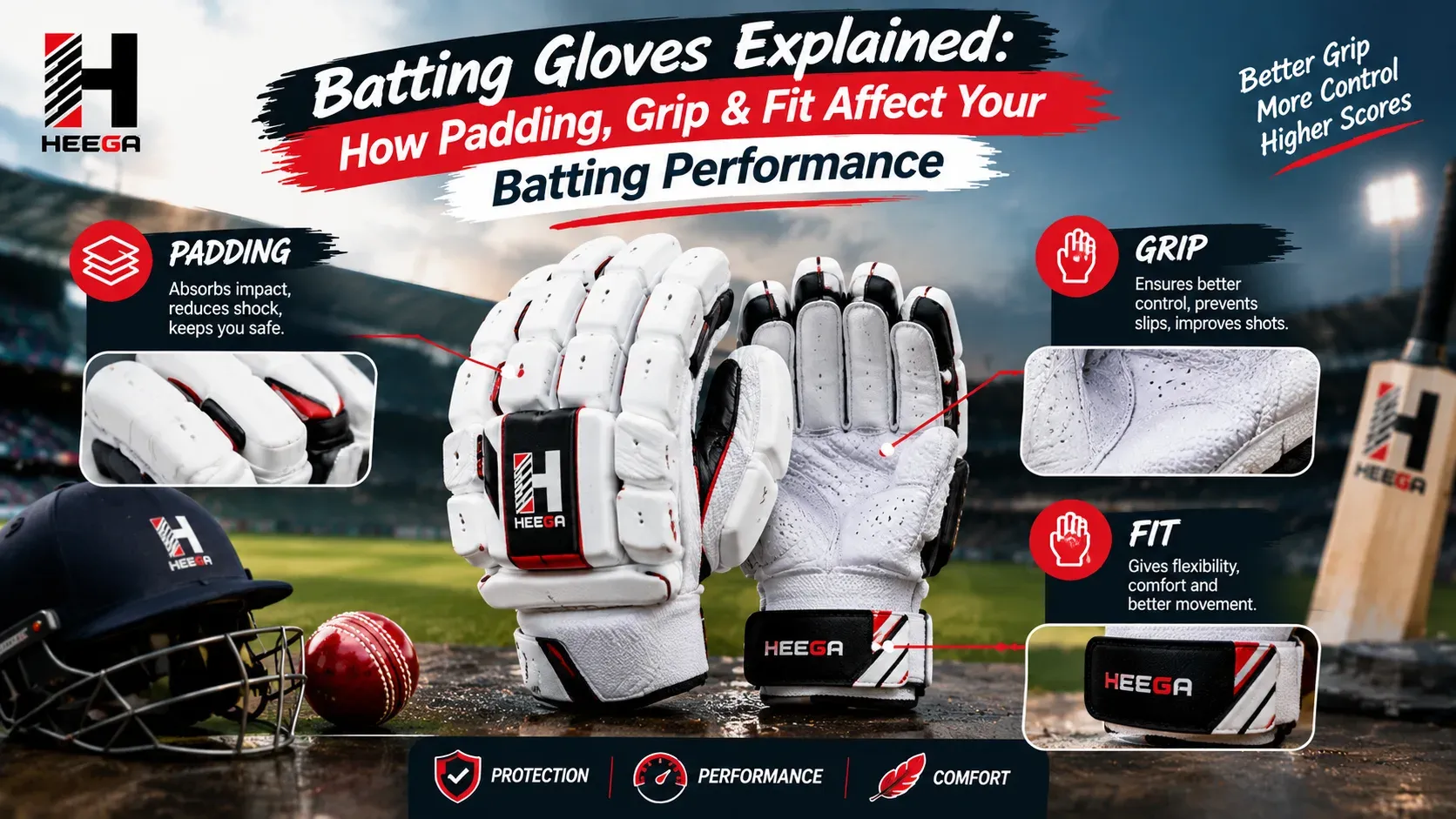
Introduction: Why Batting Gloves Matter More Than You Think
A cricket bat is probably the first piece of equipment a batter thinks about.
But your hands are just as important.
Every shot you play depends on your hands controlling the bat through the grip, backlift, downswing, impact, and follow-through.
That is why a good pair of cricket batting gloves is much more than protective equipment.
The right gloves can help you:
- Protect your fingers and hands
- Maintain a consistent grip
- Control the bat
- Reduce discomfort during long innings
- Absorb some impact from the ball
- Improve confidence against faster bowling
- Keep your hands comfortable during extended practice
On the other hand, poorly fitted or unsuitable gloves can become a distraction.
They may feel too tight.
They may move around inside your hands.
The padding may interfere with your grip.
The palm may become slippery.
Or the gloves may simply feel uncomfortable after an hour in the nets.
For beginners, club cricketers, and advanced players, choosing the right batting gloves therefore deserves more attention than simply picking a popular brand or attractive design.
In this guide, we will explain how padding, grip, fit, materials, finger protection, ventilation, and glove construction affect your batting performance and how to choose gloves that suit your game.
What Are Cricket Batting Gloves?
Cricket batting gloves are protective gloves designed to protect a batter's hands while allowing them to maintain control of the cricket bat.
They are usually constructed using several different materials and protective components.
A typical batting glove may include:
- Finger protection
- Foam or cushioning
- Palm material
- Inner lining
- Wrist strap
- Thumb protection
- Ventilation areas
- Reinforced sections
- Grip-enhancing surfaces
The exact design varies between gloves.
Some are built for lightweight movement and flexibility.
Others provide more substantial protection for players who regularly face fast bowling.
The objective is to find a balance between protection and control.
Too little protection can leave the hands vulnerable.
Too much bulky padding can make the gloves feel restrictive.
Why Batting Gloves Are Important for Every Batter
A cricket ball can travel at high speed.
Even when a batter makes a mistake and the ball strikes the glove rather than the middle of the bat, the impact can be uncomfortable or potentially harmful.
Batting gloves create a protective barrier between the hands and the ball.
But protection is only one part of their purpose.
A batter also needs to hold the bat securely.
During a powerful shot, the hands must remain stable while the bat accelerates through the hitting zone.
The glove therefore needs to provide:
- Secure grip
- Comfortable fit
- Reliable protection
- Flexibility
- Breathability
- Consistent feel
This combination becomes particularly important during long innings.
A glove that feels comfortable for ten minutes may not feel comfortable after two hours.
Anatomy of a Cricket Batting Glove
Before choosing gloves, it helps to understand their main components.
Fingers
The fingers contain protective padding designed to reduce the impact of a ball.
Different gloves use different finger protection systems.
Some provide segmented protection that allows the fingers to move naturally.
Others use more substantial protective sections.
Thumb
The thumb is especially important because it helps maintain control of the bat.
Good thumb protection should provide security without restricting movement.
A poorly designed thumb section can make the glove feel awkward when gripping the bat.
Palm
The palm is one of the most important areas for grip and comfort.
It comes into direct contact with the bat handle.
Common palm materials include:
- Leather
- Synthetic leather
- Other performance materials
The palm should provide enough grip while remaining comfortable during extended use.
Wrist
The wrist area usually includes a strap or fastening system.
This helps secure the glove around your hand.
A good wrist closure should feel secure without being unnecessarily tight.
Backhand Protection
The back of the glove contains much of the protective padding.
It can include multiple sections designed to protect the fingers and hand while allowing movement.
The amount and arrangement of padding can vary considerably between glove designs.
How Padding Affects Batting Performance
Padding is one of the most obvious differences between batting gloves.
But more padding does not automatically mean better gloves.
The purpose of padding is to provide protection while allowing the batter to maintain control.
More Padding
More substantial padding can provide additional protection.
This may be particularly attractive to:
- Beginners
- Junior players
- Players facing fast bowling
- Batters who want additional confidence
However, excessive padding can make gloves feel bulky.
Less Padding
Lighter gloves can offer a more natural feel and greater freedom of movement.
Advanced players may prefer this type of construction when they prioritise:
- Bat control
- Flexibility
- Lightweight feel
- Finger movement
The correct amount of padding depends on the player's needs.
Finger Protection: Why It Matters
Fingers are among the most vulnerable areas of a batter's hands.
A ball that strikes the glove can produce significant impact.
This is why quality batting gloves include protective elements around the fingers.
Different designs may use:
- Foam protection
- Reinforced sections
- Multi-piece protection
- Segmented inserts
- Additional finger guards
The design should protect the finger without making it difficult to bend naturally.
A batter needs to grip the bat properly.
If the protective sections prevent natural movement, the gloves may become uncomfortable and affect control.
Protection vs. Flexibility
This is one of the most important compromises when choosing batting gloves.
Imagine two gloves.
The first has very thick protective padding but feels stiff.
The second is lightweight and flexible but offers less substantial protection.
Neither is automatically better.
The right option depends on the player.
A young batter who is still developing confidence may prefer more protection.
An experienced player who regularly faces fast bowling may want a glove that combines strong protection with excellent flexibility.
The ideal glove should allow you to move your fingers naturally while keeping the vulnerable areas protected.
How Grip Affects Bat Control
Grip is critical to batting.
Your hands control the bat throughout the stroke.
If the glove palm becomes slippery, the bat can move unexpectedly.
This can affect:
- Shot timing
- Bat-face control
- Defensive strokes
- Drives
- Pull shots
- Cut shots
- Wrist work
A good batting glove should maintain a reliable connection between your hand and the bat handle.
This is particularly important when your hands become sweaty during a long innings.
Why Palm Material Matters
The palm is the main contact point between your hand and the bat.
A quality palm should feel comfortable and provide dependable grip.
Different materials have different characteristics.
Leather Palms
Leather can provide a comfortable and natural feel.
It is often valued for durability and grip when properly maintained.
Synthetic Palms
Synthetic materials can provide useful durability and consistent performance while allowing manufacturers to control cost and construction.
The important point is not simply whether a palm is leather or synthetic.
Consider how the material feels in your hand and how well it performs during actual batting.
Sweaty Hands and Batting Gloves
Sweat can become a serious issue during cricket.
As your hands become wet, grip can change.
The glove may also become uncomfortable.
This is why ventilation and moisture management matter.
Look for features such as:
- Breathable materials
- Ventilation zones
- Moisture-absorbing inner lining
- Airflow around the fingers
- Suitable wrist construction
A glove that manages moisture well can remain more comfortable during long training sessions and matches.
How Glove Fit Affects Batting Performance
Fit is one of the most overlooked aspects of batting gloves.
A glove should fit your hand securely.
It should not be so loose that it moves around.
It should not be so tight that your fingers feel restricted.
A good fit should allow:
- Natural finger movement
- Secure grip
- Comfortable wrist movement
- Proper protection
- Minimal internal movement
The glove should feel like part of your hand rather than an extra object attached to it.
What Happens If Batting Gloves Are Too Large?
Oversized gloves can cause several problems.
They may:
- Move during shots
- Reduce control
- Feel loose around the fingers
- Create uncomfortable folds
- Reduce confidence
- Affect grip consistency
Protection can also be compromised if the protective sections are not positioned correctly over the fingers.
A glove that is too large is therefore not necessarily safer.
What Happens If Batting Gloves Are Too Small?
Gloves that are too small can be equally problematic.
They may:
- Restrict finger movement
- Create pressure points
- Feel uncomfortable
- Cause hand fatigue
- Reduce flexibility
- Put unnecessary pressure on the fingers
A glove should provide a secure fit without squeezing the hand.
How to Check Your Batting Glove Size
Sizing varies between manufacturers, so always check the manufacturer's size guide when available.
As a general approach, measure your hand according to the sizing method recommended by the glove manufacturer.
Then check:
- Finger length
- Palm width
- Overall hand size
- Wrist fit
Do not choose gloves only because they are labelled "medium" or "large."
Different brands and models can fit differently.
How to Test the Fit Before Playing
If you can try the gloves before purchasing them, do a simple test.
Put the gloves on.
Then:
- Close your fingers naturally.
- Grip a cricket bat.
- Move your fingers.
- Check the thumb.
- Tighten the wrist strap.
- Make a few normal batting movements.
- Check for pressure points.
- Make sure the glove does not move excessively.
The glove should feel secure but natural.
Why Wrist Fit Matters
The wrist strap plays a surprisingly important role.
It helps keep the glove in position while you move your hands.
A good wrist closure should:
- Hold the glove securely
- Allow comfortable movement
- Avoid excessive pressure
- Be easy to adjust
- Stay secure during batting
If the wrist strap is too loose, the glove may move.
If it is too tight, it can become uncomfortable during a long innings.
Batting Gloves and Bat Grip: How They Work Together
Your batting gloves and bat grip work as a system.
A good glove cannot completely compensate for a poor bat grip.
Likewise, a quality bat grip cannot fix a glove that has become slippery or uncomfortable.
The combination should provide:
Hand → Glove → Bat Grip → Bat
Each part contributes to control.
If the glove palm has excellent grip but the bat handle is worn out, control can still suffer.
If the bat grip is excellent but the glove is loose, the connection may still feel unstable.
This is why serious players should inspect both regularly.
Do Thicker Gloves Improve Batting?
Not necessarily.
Thicker gloves can provide greater protection, but thickness alone does not determine quality.
The design of the padding matters.
A well-designed glove can provide substantial protection without feeling excessively bulky.
When comparing gloves, consider:
- Padding location
- Finger protection
- Flexibility
- Weight
- Palm construction
- Fit
Instead of asking, "Which glove has the most padding?"
Ask:
"Which glove gives me enough protection without affecting my control?"
Lightweight Batting Gloves for Advanced Players
Advanced players often have more specific preferences.
Some prefer lightweight gloves because they want maximum freedom of movement.
A lighter glove can feel less noticeable during batting.
This can be particularly appealing to players who rely heavily on:
- Wrist work
- Quick hands
- Late cuts
- Fast bat speed
- Controlled placement
However, lightweight should never mean poorly protected.
Protection remains essential.
Batting Gloves for Beginners
Beginners usually need a different balance.
They may not yet have developed consistent grip or batting technique.
They may also feel nervous when facing faster deliveries.
Comfort and protection can therefore be particularly important.
A beginner-friendly batting glove should ideally offer:
- Good finger protection
- Comfortable padding
- Secure fit
- Reliable grip
- Reasonable flexibility
- Good ventilation
There is no need for a beginner to buy the most expensive gloves available.
The priority should be getting the fundamentals right.
Batting Gloves for Club Cricketers
Club cricket can involve long matches, frequent practice, and changing conditions.
A club cricketer may spend several hours wearing the same gloves.
This makes durability and comfort especially important.
Look for:
- Strong palm material
- Secure wrist closure
- Reliable finger protection
- Breathability
- Comfortable fit
- Durable stitching
- Good grip
If you train multiple times a week, durability should be considered alongside initial price.
Batting Gloves for Professional and Advanced Players
At higher levels, small differences can become more noticeable.
Advanced players often know exactly what they want from a glove.
They may prioritise:
- Lightweight construction
- High-quality palm
- Precise fit
- Flexible finger protection
- Excellent grip
- Strong ventilation
- Comfortable wrist closure
At this level, personal preference becomes extremely important.
A glove that feels perfect to one professional player may not suit another.
Traditional vs. Modern Batting Glove Designs
Cricket batting gloves have changed significantly over time.
Traditional designs tended to prioritise straightforward protection and leather construction.
Modern gloves often combine different materials and protective technologies.
Manufacturers can use:
- Multi-section padding
- Lightweight foams
- Synthetic materials
- Flexible protective inserts
- Breathable fabrics
- Ergonomic designs
The goal is to improve the balance between protection and movement.
Modern does not automatically mean better, though.
The best design is the one that works for the player.
Why Glove Flexibility Matters
A batter's hands are constantly moving.
During a stroke, the fingers and wrists change position.
Rigid gloves can interfere with this movement.
Flexible gloves allow the hand to work more naturally.
This can be particularly important for shots involving wrist movement.
Good flexibility should not come at the expense of essential protection.
The ideal glove combines both.
How Batting Gloves Affect Confidence
This is an often-overlooked benefit.
When players trust their protective equipment, they can focus more on batting.
A batter who is constantly worried about finger impact may hesitate when facing fast bowling.
Good gloves can provide a feeling of security.
That does not make a batter technically better by itself.
But confidence can help players commit to their shots and concentrate on the delivery.
How to Choose Batting Gloves for Fast Bowling
Fast bowling places greater demands on protective equipment.
When facing higher pace, pay particular attention to:
- Finger protection
- Thumb protection
- Backhand padding
- Fit
- Wrist security
- Padding quality
Protection should be a major priority.
At the same time, you still need enough flexibility to control the bat.
This is why high-quality protective construction matters more than simply choosing the thickest glove available.
How to Choose Gloves for Spin Bowling
Spin bowling generally creates different demands.
The batter may use more wrist movement and may need a particularly natural grip.
Comfort and flexibility can therefore be important.
However, proper protection should never be ignored.
Remember that even slower deliveries can cause injury if the ball strikes an unprotected finger or thumb.
How Climate Affects Batting Gloves
Your playing environment can influence glove choice.
Hot and humid conditions can lead to:
- Sweaty hands
- Damp glove interiors
- Reduced grip
- Faster material wear
- Discomfort
In these conditions, ventilation and moisture management become more important.
Players in cooler conditions may have different priorities.
This is another reason why there is no single perfect glove for every cricketer.
How to Look After Your Batting Gloves
Good maintenance can extend the life of your gloves.
Keep Them Dry
Do not leave wet gloves inside your kit bag for long periods.
Allow them to air out properly after use.
Avoid Excessive Heat
Do not place gloves directly against strong heat sources to dry them quickly.
Excessive heat can affect materials and adhesives.
Keep Them Clean
Follow the manufacturer's care instructions.
Avoid harsh cleaning methods unless specifically recommended.
Store Them Properly
Do not crush gloves under heavy equipment.
Keep them in a position where the padding can retain its shape.
Why You Should Not Leave Gloves Inside a Closed Kit Bag
After a long training session, gloves can contain sweat and moisture.
If they remain trapped inside a closed kit bag, unpleasant odours can develop.
The materials can also remain damp for longer.
A better routine is:
- Remove the gloves from the bag.
- Open them fully.
- Allow them to air dry.
- Check the palm and fingers.
- Store them once they are properly dry.
This simple habit can make a noticeable difference over time.
When Should You Replace Batting Gloves?
There is no fixed replacement schedule.
Replace gloves when they no longer provide reliable protection or comfort.
Look for:
- Cracked padding
- Damaged finger protection
- Torn palm
- Loose stitching
- Broken wrist strap
- Excessive material wear
- Padding that has lost its structure
- Poor grip
- Gloves that no longer fit correctly
If protective components are damaged, do not continue using the gloves simply because they still look acceptable from the outside.
Common Mistakes When Buying Batting Gloves
Choosing Only by Appearance
A stylish glove is not necessarily a good glove.
Buying the Wrong Size
Poor fit can affect both comfort and protection.
Assuming More Padding Is Always Better
Protection must be balanced with flexibility and control.
Ignoring the Palm
The palm is directly involved in bat control.
Forgetting About Sweat
Ventilation becomes important during long sessions, especially in warm conditions.
Buying Without Testing the Grip
If possible, hold a bat while wearing the gloves.
This gives you a much better idea of how they actually feel.
Using Damaged Gloves
Protective equipment should be replaced when its protective function has been compromised.
Batting Gloves: A Practical Comparison
FeatureLightweight GlovesHeavily Padded Gloves
Protection
Moderate to high depending on design
Generally high
Flexibility
Usually higher
Can be lower
Weight
Lower
Higher
Bat feel
More natural
More protected feel
Best suited for
Advanced players and players who value movement
Beginners, juniors, and players prioritising protection
Fast bowling
Depends on protection design
Often preferred for added protection
Wrist movement
Generally easier
Depends on construction
Comfort
Highly personal
Highly personal
This is only a general comparison.
Modern gloves can combine lightweight construction with substantial protection, so the actual design matters more than the category name.
How to Choose the Right Batting Gloves
Before buying, ask yourself these questions:
What Level Do You Play?
Beginner, academy, club, or professional?
How Often Do You Train?
Occasional use and daily use create different durability requirements.
What Bowling Do You Face?
Fast bowling may require greater protective attention.
Do Your Hands Sweat?
If yes, prioritise ventilation and moisture management.
What Type of Batting Do You Play?
Wrist-heavy players may value flexibility.
What Fit Do You Prefer?
The glove should feel secure without restricting movement.
What Is Your Budget?
Buy the best-quality glove that fits your actual requirements rather than paying only for branding.
A Simple Batting Glove Checklist
Before buying, check:
- Correct size
- Secure wrist closure
- Comfortable finger fit
- Adequate finger protection
- Thumb protection
- Suitable palm material
- Reliable grip
- Good flexibility
- Breathable construction
- Strong stitching
- Appropriate padding
- Comfortable when holding the bat
If a glove performs well in all of these areas, it is much more likely to be suitable for regular cricket.
How Heega Sports Helps You Choose the Right Batting Gloves
At Heega Sports, we understand that batting gloves are not simply another item in a cricket kit.
Different players need different levels of protection, comfort, grip, and flexibility.
A beginner may want comfortable gloves with dependable protection.
A club cricketer may prioritise durability and grip for regular matches and training.
An advanced player may want lightweight construction, precise fit, and maximum freedom of movement.
The right choice should always match the player's level and requirements.
Heega Sports offers cricket equipment for players across different levels, including:
- Cricket batting gloves
- Cricket batting pads
- Kashmir Willow cricket bats
- English Willow cricket bats
- Cricket helmets
- Cricket balls
- Cricket shoes
- Cricket kit bags
- Practice nets
- Cricket training accessories
Whether you are preparing for your first academy session or a competitive club match, having properly fitted protective equipment can help you train and play with greater confidence.
Frequently Asked Questions
What are the most important features of cricket batting gloves?
Protection, fit, grip, comfort, flexibility, and durability are among the most important features. The right combination depends on the player's level and playing conditions.
Should batting gloves fit tightly?
They should fit securely but should not squeeze your fingers or restrict movement. A loose glove can move during batting, while an excessively tight glove can become uncomfortable.
Are thicker batting gloves safer?
Not necessarily. More padding can provide additional protection, but the design and placement of the protective material are equally important.
Which palm material is best for batting gloves?
Leather and synthetic materials can both work well. The best option depends on grip, comfort, durability, maintenance, and personal preference.
How often should I replace batting gloves?
Replace them when the protection, grip, fit, or structural condition has deteriorated. There is no universal replacement period.
Are expensive batting gloves worth it?
They can be, particularly if you play frequently and need better materials, protection, comfort, or durability. However, price alone does not guarantee that a glove will suit you.
Can I wash cricket batting gloves?
Care instructions vary by product. Follow the manufacturer's instructions rather than soaking or washing gloves in a way that could damage their materials.
How do I stop batting gloves from smelling?
Air them out after use and avoid leaving damp gloves inside a closed kit bag. Allow them to dry properly before storing them.
What batting gloves are best for fast bowling?
Choose gloves with reliable finger, thumb, and backhand protection while still allowing enough flexibility for proper bat control.
Do batting gloves improve batting performance?
They do not replace batting technique, but properly fitted gloves can improve comfort, grip, protection, and confidence, allowing the batter to focus more effectively on their game.
Final Thoughts
Batting gloves may look like a small part of your cricket kit, but they have a direct relationship with how you hold and control the bat.
The right pair should protect your hands without making them feel restricted.
Padding provides protection.
Grip helps maintain control.
Fit keeps everything secure.
Flexibility allows natural hand movement.
Ventilation improves comfort.
And good construction helps the gloves survive regular cricket use.
Instead of choosing gloves simply because they look good or have the highest price tag, think about how they actually feel when you hold your bat.
Try them if possible.
Check the finger protection.
Test the grip.
Move your hands.
Make sure the wrist feels secure.
Then choose the gloves that give you the best balance of protection, control, comfort, and confidence.
For a batter, your hands are part of your technique.
Protect them properly.
Choose Your Cricket Batting Gloves with Heega Sports
Looking for reliable batting gloves for practice, academy cricket, club matches, or competitive cricket?
Explore cricket equipment from Heega Sports and choose batting gloves designed around the protection, grip, fit, and comfort you need.
Related posts
 Batting Gloves for Cricket: How Finger Design, Palm Materials and Grip Texture Affect Bat ControlDiscover how cricket batting gloves, finger design, palm materials and grip texture influence bat control, comfort, protection and batting performance.
 Batting Gloves Explained: How Padding Placement and Finger Protection Help Manage Ball ImpactLearn how batting glove padding placement, finger protection, and fit help manage ball impact. Find practical tips for choosing cricket batting gloves.
 Why Batting Gloves Matter: Understanding Protection, Grip, Flexibility & Hand ComfortLearn why batting gloves matter for protection, grip, flexibility and comfort, plus how to choose the right cricket batting gloves for your playing level.