Built to Win: The Daily Decisions That Separate Great Cricketers

The small decisions great cricketers make every day—and how those choices can build better habits, stronger performances, and a winning edge
Great cricketers aren't built only during matches.
They're built in ordinary moments.
When nobody is watching.
When training feels difficult.
When motivation is low.
When a weakness needs attention.
When recovery seems easier to ignore.
When there is no crowd, scoreboard, or trophy involved.
The difference between a good player and a great player is often found in the decisions they make repeatedly.
Do they train with purpose?
Do they prepare properly?
Do they learn from mistakes?
Do they take recovery seriously?
Do they choose discipline when motivation disappears?
Do they focus on becoming better rather than simply looking better?
These decisions may seem small individually.
But repeated over months and years, they can create a significant competitive advantage.
At Heega Sports, we believe great cricket performance is built through a combination of purposeful training, mental strength, physical preparation, recovery, match awareness, discipline, and equipment that supports the player's game.
Here are the daily decisions that help build better cricketers.
1. Choose Purpose Over Routine
There's a major difference between training and training with purpose.
A player can spend two hours in the nets without meaningfully improving.
Another player can spend 60 focused minutes working on a specific weakness and make real progress.
Before every session, ask:
"What do I want to improve today?"
Your answer might be:
- Footwork
- Shot selection
- Bowling accuracy
- Spin control
- Fielding reactions
- Running between wickets
- Concentration
A clear purpose makes practice more valuable.
2. Choose Your Weakness Over Your Comfort Zone
It's tempting to practice what you're already good at.
It feels rewarding.
But improvement often comes from the areas that make you uncomfortable.
If short bowling causes problems, practice it.
If swing bowling troubles you, face more of it.
If you struggle under pressure, create pressure-based drills.
Your weaknesses shouldn't be something you hide from.
They should become training targets.
3. Choose Discipline When Motivation Disappears
Motivation is unpredictable.
Some mornings you will feel ready to train.
Other days, you won't.
Great players don't rely entirely on motivation.
They build routines.
They understand that consistency is more powerful than occasional bursts of enthusiasm.
You don't have to feel excited every day.
You simply need to keep doing the work that matters.
4. Choose the Next Ball
Cricket can create emotional highs and lows very quickly.
A batter hits a boundary.
Then gets out.
A bowler takes a wicket.
Then concedes a six.
A fielder drops a catch.
Then gets another opportunity.
Great players learn to reset.
Use a simple process:
Accept → Breathe → Refocus → Next ball
You can't change the previous delivery.
You can influence the next one.
5. Choose Preparation Over Hope
Don't hope your equipment works.
Don't hope you're fit enough.
Don't hope you can handle pressure.
Prepare.
Before a match:
- Check your bat
- Check your gloves
- Check your pads
- Check your helmet
- Check your shoes
- Prepare your bag
- Review your role
Mental preparation matters too.
Know what the match situation may demand.
Preparation creates confidence because it gives you something to trust.
6. Choose Match Awareness Over Automatic Play
Cricket isn't simply about executing skills.
It's about making the right decision at the right time.
A batter should know:
- The required run rate
- Field placement
- Bowler's plan
- Match situation
A bowler should understand:
- The batter's strengths
- The field
- Pitch conditions
- Required result
A fielder should anticipate:
- Likely scoring areas
- Throwing options
- Match priorities
Great players don't just play the ball.
They play the situation.
7. Choose Pressure Practice Over Comfortable Practice
If your training never feels difficult, matches may expose you.
Introduce pressure.
Batting
20 runs needed from 12 balls.
Bowling
Defend 7 runs in the final over.
Fielding
Take the catch that wins the session.
Pressure practice helps make difficult situations familiar.
The objective isn't to eliminate nerves.
It's to learn how to function while nervous.
8. Choose Feedback Over Ego
Nobody likes hearing that they're doing something wrong.
But useful feedback can accelerate development.
Ask your coach or experienced teammate:
"What's the biggest weakness in my game?"
Then listen.
Don't immediately explain why they are wrong.
Consider the feedback.
Test it.
Measure the result.
Keep what helps.
A player who protects their ego can protect their weaknesses.
A player who accepts feedback can improve them.
9. Choose Learning Over Excuses
Bad performance can always be explained.
The pitch was difficult.
The umpire made a mistake.
The opposition bowled well.
The weather was bad.
Sometimes those things are genuinely relevant.
But ask another question:
"What could I have controlled?"
That question brings your attention back to improvement.
Focus on what you can change.
10. Choose Recovery Over Burnout
Training harder isn't always training better.
Your body needs time to recover.
Prioritize:
- Sleep
- Hydration
- Nutrition
- Mobility
- Rest
A player who can train consistently throughout the season may gain an advantage over one who repeatedly pushes too hard and breaks down.
Recovery is part of performance.
11. Choose Role-Specific Fitness
Great cricketers don't necessarily train like athletes from another sport.
They train for their role.
Batters
Focus on speed, endurance, mobility, and core strength.
Fast Bowlers
Develop strength, explosive power, conditioning, mobility, and recovery.
Spin Bowlers
Build stability, mobility, strength, and repeat-effort conditioning.
Fielders
Prioritize acceleration, agility, reactions, and coordination.
Wicketkeepers
Focus on lower-body strength, mobility, reactions, and repeated movement.
Your fitness should make your cricket better.
12. Choose One Improvement at a Time
Trying to fix everything at once can create confusion.
Instead, identify one priority.
For example:
This month: improve shot selection.
Or:
This month: improve bowling accuracy.
Or:
This month: improve fitness.
Focused improvement creates clearer feedback.
Once the habit becomes stronger, move to the next priority.
13. Choose to Study the Game
Great players don't only practice.
They observe.
Watch high-level cricket.
Study:
- Batting decisions
- Bowling plans
- Field placements
- Running between wickets
- Pressure management
- Match situations
Don't just ask:
"Who won?"
Ask:
"Why did that decision work?"
Understanding the game can make your own decision-making sharper.
14. Choose to Review Your Performances
After every match, take a few minutes.
Ask:
What worked?
Keep doing it.
What failed?
Understand why.
What will I change?
Choose one action.
This creates a simple improvement cycle:
Perform → Review → Learn → Adjust → Train → Perform Again
Great players don't waste poor performances.
They extract lessons from them.
15. Choose Equipment That Supports Your Game
Equipment doesn't replace skill.
But unsuitable equipment can become a distraction.
Your cricket kit should be:
- Comfortable
- Properly fitted
- Suitable for your role
- Appropriate for your level
- Reliable for regular use
At Heega Sports, players can find cricket bats, helmets, gloves, pads, cricket shoes, bags, accessories, and sportswear for training and competitive cricket.
You don't need to buy every product available.
Choose equipment based on what your game actually requires.
A smart player invests in useful gear rather than unnecessary upgrades.
16. Choose Consistency Over Occasional Brilliance
One incredible training session doesn't create a great player.
One massive score doesn't define a career.
Consistency matters.
Ask yourself:
Can I repeat this performance?
Can you train well next week?
Can you maintain your fitness next month?
Can you stay disciplined through an entire season?
Sustainable habits create sustainable performance.
17. Choose Team Value Over Personal Statistics
Great cricket isn't always about individual numbers.
Sometimes your most important contribution is:
- Building a partnership
- Taking a key wicket
- Saving runs
- Supporting a teammate
- Following the bowling plan
- Holding a pressure catch
Ask:
"What does my team need from me?"
Then make your skills serve that requirement.
18. Choose Adaptability
The same strategy won't work against every opponent.
Conditions change.
Pitches change.
Formats change.
Your role may change.
Opponents will study you.
Great cricketers adapt.
If something isn't working, don't panic.
Assess.
Adjust.
Try again.
Adaptability is one of the strongest long-term advantages in cricket.
19. Choose Confidence Built on Evidence
Real confidence doesn't require pretending you can't fail.
It comes from knowing you've prepared.
Think:
I've practiced this situation.
I've worked on this weakness.
I know my role.
I trust my routine.
I'm ready for the challenge.
That's a stronger foundation than empty confidence.
20. Choose the Long Game
Perhaps the most important decision is to stop thinking only about today's result.
A young cricketer can become frustrated when improvement isn't immediate.
But development takes time.
Your goal isn't to become the best player in one week.
It's to become better over months and seasons.
Small improvements compound.
One better habit.
Then another.
Then another.
Eventually, the player changes.
The Great Cricketer Decision Cycle
A simple framework is:
Prepare → Train → Challenge → Perform → Review → Recover → Adapt
Then repeat.
This cycle keeps development moving.
A Daily Routine for Better Cricket
Morning
Ask:
What is today's priority?
Training
Work deliberately on that priority.
Match
Focus on your role and the next ball.
After Training or Match
Record one lesson.
Evening
Recover properly.
Before the Next Session
Prepare your equipment and plan.
It sounds simple.
That's exactly why it works.
The 30-Day "Built to Win" Challenge
Week 1: Discipline
Show up consistently.
Week 2: Weakness
Spend extra time on one limitation.
Week 3: Pressure
Add realistic match scenarios.
Week 4: Reflection
Review your progress and choose the next target.
The objective isn't perfection.
It's consistency.
Decisions That Can Quietly Change Your Career
Some of the most important cricket decisions happen away from the scoreboard.
Choosing to:
Train when nobody is watching.
Ask for honest feedback.
Practice what you avoid.
Recover instead of overtraining.
Prepare your kit before match day.
Stay calm after mistakes.
Study your opponents.
Review your own performances.
Keep learning after success.
These decisions may seem ordinary.
Repeated over years, they aren't.
What Great Cricketers Don't Do
They don't:
❌ Depend entirely on talent.
❌ Avoid difficult training.
❌ Blame every poor performance on external factors.
❌ Change technique after every failure.
❌ Ignore recovery.
❌ Let one mistake ruin an entire innings or spell.
❌ Focus only on personal statistics.
❌ Stop learning after success.
The best players understand that development never really ends.
Signs You're Building a Winning Game
You'll know you're progressing when:
✅ Training becomes more purposeful.
✅ You recover faster after mistakes.
✅ Difficult situations feel more familiar.
✅ Your decisions become calmer.
✅ Your fitness supports your skills.
✅ You understand your role better.
✅ You accept feedback more easily.
✅ Your teammates trust you in important situations.
These changes can matter just as much as statistics.
Final Thoughts
Great cricketers aren't built by one decision.
They're built by thousands of them.
The decision to wake up and train.
The decision to practice a weakness.
The decision to accept feedback.
The decision to reset after failure.
The decision to recover.
The decision to prepare.
The decision to stay focused.
The decision to adapt.
And the decision to keep improving after you've already achieved something.
That's the real meaning of built to win.
Winning starts with the way you approach the work long before anyone sees the result.
At Heega Sports, we're proud to support ambitious cricketers with cricket bats, helmets, gloves, pads, shoes, bags, accessories, and sportswear for serious training and competitive cricket.
Great performances may happen on match day, but great cricketers are built by the decisions they make every day.
Shop Now
Heega Sports – Helping Young Cricketers Build Skills, Confidence, Responsibility, and a Love for the Game.
Related posts
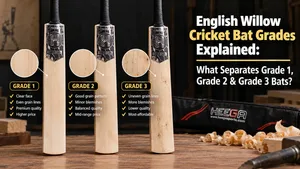 English Willow Cricket Bat Grades Explained: What Separates Grade 1, Grade 2 & Grade 3 Bats?Learn the differences between Grade 1, Grade 2, and Grade 3 English Willow cricket bats, including grains, appearance, performance, durability, and value.
 Built for the Big Moment: The Habits Behind Consistent Cricket PerformanceLearn the habits behind consistent cricket performance under pressure. Discover how preparation, pressure training, mental routines, fitness, recovery, match awareness, decision-making, and equipment preparation can help cricketers perform better in big moments.
 Built for Big Moments: How to Become a Cricketer Who Performs Under PressureLearn how to become a cricketer who performs under pressure. Discover practical strategies for pressure training, mental preparation, decision-making, fitness, match awareness, recovery, and big-match confidence.