Cricket Development in Canada, USA, Nepal, Sri Lanka and UK
Introduction
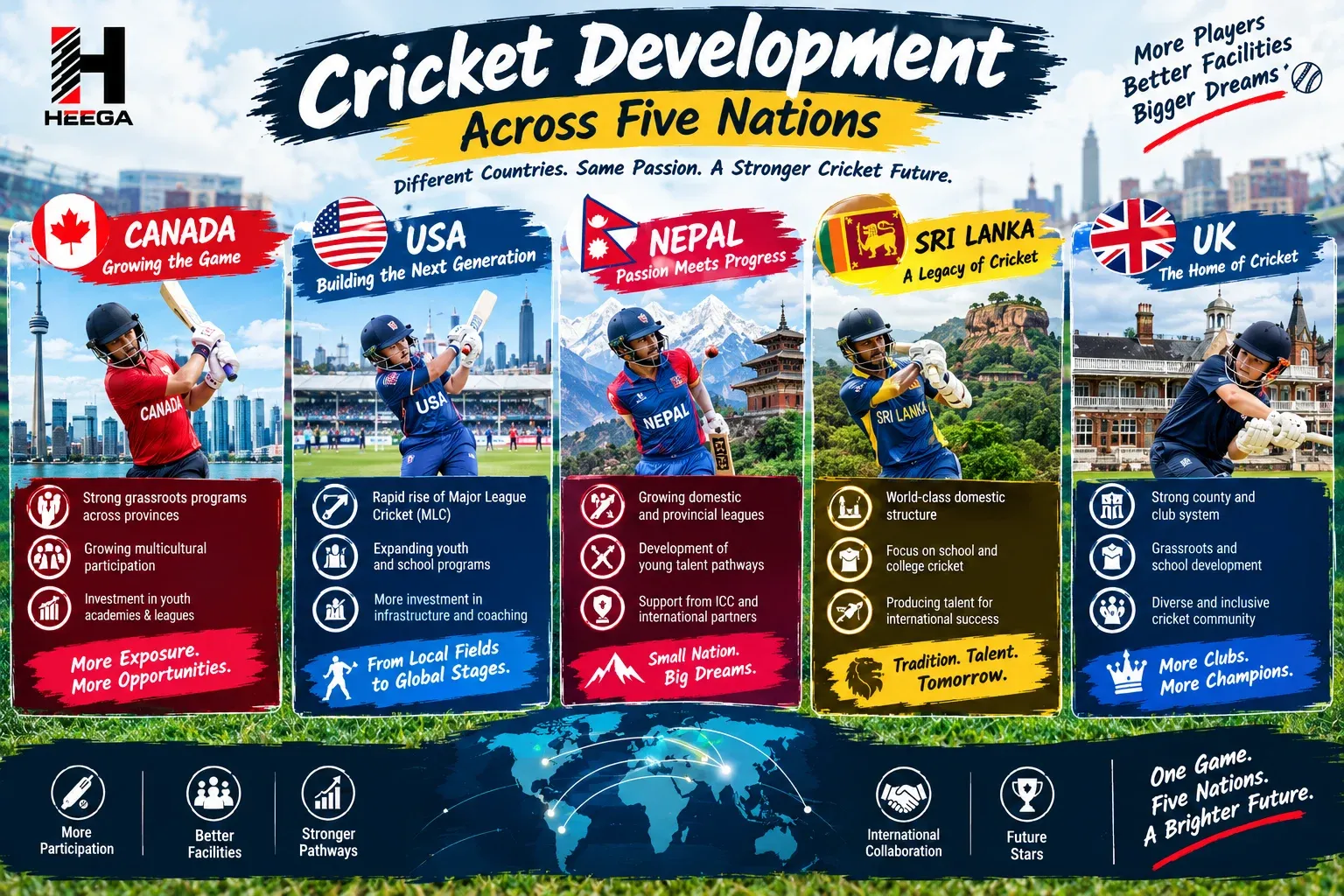
Cricket has a long history in some countries, while in others it is experiencing a new wave of popularity. From established club competitions in the United Kingdom and school cricket in Sri Lanka to the growing cricket communities of Canada and the USA, the sport continues to develop in different ways around the world. Nepal has also built a passionate cricket following, with its national team's progress helping inspire a new generation of players.
Although these countries have different sporting cultures, facilities, resources, and levels of international experience, they share a common goal: making cricket more accessible and creating better opportunities for players to improve.
Cricket development involves much more than winning international matches. It includes introducing children to the game, training coaches, building suitable grounds, supporting women's cricket, organizing local competitions, and helping talented players progress to higher levels.
This article explores how cricket is developing in Canada, the United States, Nepal, Sri Lanka, and the United Kingdom, what makes each country's journey different, and what these developments could mean for the future of the sport.
1. Understanding Cricket Development Around the World
Cricket development is the process of building a sustainable environment in which people can learn, play, enjoy, and compete in the sport.
A country's cricket ecosystem generally includes several connected areas:
- Grassroots cricket: Introducing beginners to batting, bowling, fielding, and teamwork.
- School and youth cricket: Providing regular practice, coaching, and age-group competitions.
- Club cricket: Giving players opportunities to compete consistently and improve their skills.
- High-performance pathways: Identifying talented players and preparing them for representative or professional cricket.
- Women's and girls' cricket: Creating accessible opportunities for female players.
- Infrastructure: Developing pitches, practice nets, indoor centres, equipment access, and playing facilities.
- Coaching and officiating: Training coaches, umpires, scorers, and other people who support the game.
- Professional and international cricket: Creating visible role models and stronger competitive opportunities.
The balance between these areas differs from country to country. A nation with an established club network may focus on expanding participation and improving facilities, while an emerging cricket nation may first need more qualified coaches, affordable equipment, and regular competitive matches.
The International Cricket Council supports the development of cricket beyond its Full Member nations through work that includes grassroots growth, governance, high-performance programmes, and organizational support.
2. Cricket Development in Canada
Cricket in Canada has a history that goes back much further than many people realize. The country was involved in the first recognized international cricket match against the United States in 1844. Today, the game continues to develop through community clubs, regional competitions, youth programmes, and growing interest in shorter formats.
Canada's cricket landscape is particularly influenced by its multicultural communities. People with connections to cricket-playing countries have helped maintain local leagues, introduce younger generations to the sport, and support the growth of clubs in different provinces.
Growth of grassroots and community cricket
Community cricket is an important foundation for development in Canada. Local clubs and leagues provide opportunities for beginners, recreational players, and experienced cricketers to compete.
Cricket Canada identifies several areas within its development work, including school and community programmes, youth cricket, coach development, officials' education, infrastructure, and high-performance pathways.
These areas matter because participation alone does not automatically create a strong player pathway. Young cricketers need consistent coaching, suitable practice facilities, competitive matches, and opportunities to progress beyond informal games.
Schools and community organizations can play an important role by introducing cricket to children who may not otherwise have access to a club.
The influence of T20 cricket
Shorter formats have helped give cricket a more visible profile in North America. T20 competitions offer concentrated entertainment and create opportunities for local and international players to compete in front of new audiences.
Professional-style tournaments can also help young Canadian cricketers see a possible future in the sport. However, their long-term value depends on whether the wider cricket system can connect elite competitions with youth development and local clubs.
Challenges facing Canadian cricket
Canada has considerable potential, but development requires investment beyond major tournaments.
Some important priorities include:
- Expanding access to quality pitches and practice nets.
- Making junior cricket more accessible across different regions.
- Increasing coaching opportunities and development support.
- Creating sustainable pathways from local clubs to representative cricket.
- Supporting women's cricket and encouraging more girls to participate.
- Managing seasonal limitations caused by cold weather.
The Canadian climate makes indoor training and well-planned outdoor seasons particularly important in many parts of the country.
Future outlook: Canada's cricket development will depend on how effectively it connects its existing community base with better facilities, stronger youth programmes, and regular competitive opportunities.
3. Cricket Development in the USA
The United States offers a different development story. Cricket has historical roots in the country, but it has not traditionally occupied the same mainstream sporting position as baseball, American football, or basketball.
In recent years, greater visibility for international cricket, expanding local competitions, and investment in professional T20 cricket have created new opportunities to introduce the sport to wider audiences.
The USA's role as co-host of the 2024 Men's T20 World Cup also brought international cricket to American venues and increased the sport's exposure among local spectators.
The importance of youth cricket
Youth development is essential if cricket is to become more firmly established in the United States.
Children need opportunities to learn the game through schools, clubs, academies, recreation programmes, and age-group competitions. These environments can help beginners develop basic skills before moving into more demanding formats.
A sustainable pathway should allow young players to progress through stages such as:
- Introductory cricket sessions.
- Junior coaching and regular practice.
- Local club and age-group competitions.
- Regional representative cricket.
- Higher-performance and national-team opportunities.
The availability of these steps varies by location, so access to a suitable club or programme can make a significant difference.
Professional cricket and new audiences
Major League Cricket has added a professional T20 competition to the American cricket landscape. Alongside other competitions and local leagues, it gives supporters teams and players to follow while providing a more visible platform for the sport.
Cricket's return to the Olympic programme at Los Angeles 2028 also creates an opportunity to introduce the game to audiences who may be unfamiliar with it. Olympic exposure alone will not build a complete cricket ecosystem, but it can help generate interest if supported by accessible local programmes.
What does American cricket need next?
The biggest challenge is turning growing attention into regular participation.
A major tournament may attract new viewers, but sustainable development requires people to have somewhere to play after watching a match. This means creating more school and community programmes, strengthening coaching networks, improving facilities, and building competitions that continue throughout the year.
Other priorities include:
- Increasing awareness among people unfamiliar with cricket.
- Expanding junior and women's participation.
- Making equipment and coaching more accessible.
- Developing stable local leagues in more regions.
- Building connections between recreational cricket and elite competitions.
Future outlook: The USA has an opportunity to expand cricket beyond established cricket-playing communities. Its long-term progress will depend on whether new interest can translate into participation, local clubs, and a reliable pathway for American-developed talent.
4. Cricket Development in Nepal
Nepal's cricket journey is strongly connected to public enthusiasm, national pride, and the growing ambition of its players. Cricket has developed into an important sport for many communities, and performances by the national team have helped inspire younger generations.
Unlike countries with extensive professional domestic systems, Nepal continues to work on strengthening the structures that allow talent to develop consistently across the country.
Grassroots cricket and school programmes
Schools and community initiatives can introduce cricket to children who have limited access to organized sport.
The Cricket Association of Nepal provides information for schools interested in participating in cricket programmes and national school competitions. It also outlines opportunities related to coaching education, umpiring, club development, and women's cricket.
These pathways are important because a strong national team depends on more than a small group of exceptional players. The country needs a broad base of young cricketers who can train regularly, play competitive matches, and receive appropriate guidance.
Development programmes can also help identify players outside established cricket centres, giving talented children more opportunities to progress.
The role of national-team success
International performances can have a powerful effect on cricket development in Nepal. When players from Nepal compete on major stages, young fans gain examples of what dedication and structured training can achieve.
This visibility can encourage more children to join clubs and academies, while creating stronger interest among sponsors, schools, families, and local communities.
However, international success must be supported by a reliable domestic structure. Young players need more than inspiration: they need coaches, equipment, competitive fixtures, fitness programmes, and opportunities to learn from mistakes.
Infrastructure and resource challenges
Access to quality cricket facilities remains an important development issue. Suitable grounds, practice nets, equipment, and qualified coaches can be unevenly distributed.
Initiatives such as the MCC Foundation's Cricket Unites work in Nepal aim to support young people through school cricket, facilities, equipment, coach development, and competitions. Its programmes also include efforts to increase girls' participation.
The wider priorities for Nepal include:
- Improving access to training facilities outside major centres.
- Increasing the number of qualified coaches.
- Strengthening school and age-group competitions.
- Expanding opportunities for girls and women.
- Developing sustainable domestic competitions.
- Providing players with regular exposure to different playing conditions.
Future outlook: Nepal's cricket future depends on converting its strong public interest into deeper development structures. Better grassroots access and consistent competition can help turn promising young players into experienced international cricketers.
5. Cricket Development in Sri Lanka
Sri Lanka has an established cricket culture supported by school competitions, domestic clubs, regional associations, and international cricket. School cricket has historically played an important role in introducing young players to competitive cricket and helping talented individuals progress.
The country's development challenge is not simply to make cricket popular. It is to maintain a strong pathway for young players while ensuring that opportunities and facilities reach communities across the island.
School cricket as a development foundation
School cricket gives young players opportunities to develop technical skills, tactical awareness, discipline, and match experience.
Regular competitions help batters learn how to build innings, bowlers understand how to manage spells, and fielders develop concentration. Longer-format school matches can also teach patience and decision-making that shorter games may not fully test.
Sri Lanka Cricket has taken steps to strengthen school cricket. In 2025, it announced financial support for 56 schools to help selected traditional school matches move from two-day to three-day fixtures, with the aim of giving young players more match exposure.
Developing coaches and young talent
Good coaching is central to the development of young cricketers. Players need technically sound instruction, but they also benefit from coaches who understand age-appropriate training, confidence building, fitness, and long-term improvement.
Sri Lanka Cricket's coaching pathway includes introductory education and more advanced training for people involved in schools, clubs, and academies. In May 2026, the organization also launched a programme to improve school cricket coaching standards.
This kind of investment helps build a stronger connection between grassroots cricket and high-performance programmes.
Reaching players beyond established centres
A successful development system needs to identify talent throughout the country, not just in the best-resourced schools or most prominent cricket regions.
Sri Lanka Cricket's national development plan includes district and provincial structures, age-group competitions, coach development, and support for facilities and equipment.
Expanding access is important for several reasons:
- Talented players in less-resourced communities need opportunities to be identified.
- Schools require suitable equipment and practice facilities.
- Coaches need continuing education and support.
- Girls need accessible programmes and competitive pathways.
- Young players need a clear route from school cricket to clubs and representative teams.
Future outlook: Sri Lanka can build on its strong cricketing tradition by protecting school cricket, developing coaches, supporting regional programmes, and ensuring that talent identification reaches beyond the most established cricket centres.
6. Cricket Development in the UK
The United Kingdom has a long-established cricket culture, particularly in England and Wales, where professional cricket operates alongside an extensive network of recreational clubs and leagues.
The development model relies heavily on clubs, volunteers, schools, county structures, and organized youth programmes. These networks give players opportunities to participate socially, compete seriously, and develop over many years.
The strength of recreational cricket
According to the England and Wales Cricket Board (ECB), recreational cricket is supported by approximately 5,700 clubs and more than 70,000 volunteers. Programmes such as All Stars Cricket and Dynamos Cricket introduce younger children to the sport, while club and league cricket provide opportunities for continued participation.
These community structures are important because not every child wants to become a professional cricketer. A healthy development system should also support recreational players, families, volunteers, and people who enjoy cricket as a lifelong activity.
Youth development and progression
Young players can begin with introductory programmes before progressing into junior club teams, school cricket, county age-group pathways, and higher levels of competition.
Not every player follows the same route, but a connected system helps talented cricketers access better coaching and stronger opposition as their skills improve.
Club cricket also provides an important environment for learning. Players experience different pitch conditions, face a variety of bowling styles, and develop the tactical understanding required to perform consistently.
Expanding access and participation
Despite its established cricket structure, the UK still faces development challenges. Ground availability, facility costs, travel, volunteer workload, and access to coaching can influence whether people continue playing.
The ECB's recent development priorities include strengthening clubs and improving access for women and girls, disabled participants, and communities that have historically faced barriers to participation. In February 2026, the ECB announced plans for investment in grassroots facilities, with a focus on improving access and supporting a wider range of community needs.
Important priorities include:
- Keeping club cricket financially and practically accessible.
- Supporting volunteers and community coaches.
- Increasing participation among girls and women.
- Improving facilities for disabled players.
- Encouraging participation in state schools.
- Helping clubs maintain pitches, nets, and indoor training facilities.
Future outlook: The UK's challenge is to protect its established club network while making cricket accessible to more people. A strong recreational foundation can support both the next generation of elite players and a wider community of lifelong cricketers.
7. Comparing Cricket Development Across the Five Countries
Each country has a different starting point. The UK and Sri Lanka have established structures that support regular cricket, while Canada and the USA are working to connect growing interest with more extensive development systems. Nepal combines strong enthusiasm for the game with the need to widen access to facilities and structured competition.
CountryMajor development strengthImportant priorityLong-term opportunity
Canada
Community cricket and multicultural participation
Facilities, season length, and youth pathways
Stronger connections between clubs and representative cricket
USA
Growing visibility and professional T20 opportunities
Converting interest into regular participation
Wider school, youth, and domestic cricket networks
Nepal
Passionate supporters and national-team inspiration
Access to facilities, coaches, and competition
Broader talent development across regions
Sri Lanka
School cricket and established player pathways
Equitable access and continued coaching development
Sustaining talent identification throughout the island
UK
Extensive club and recreational cricket structures
Inclusion, facility access, and club sustainability
More opportunities for diverse communities and future generations
The comparison shows that there is no single formula for cricket development. Each country needs to build on its existing strengths while addressing the barriers that prevent people from participating and progressing.
8. What Can These Countries Learn From One Another?
Although cricket systems differ, several development principles apply across all five countries.
Invest in grassroots cricket first
Elite competitions generate excitement, but grassroots programmes create the players, coaches, volunteers, and supporters who sustain the game.
Affordable beginner sessions and regular local matches can help turn initial interest into long-term participation.
Build clear pathways for young players
A child who starts cricket at school should be able to find out where to train next, how to join a club, and what opportunities are available at higher levels.
Clear pathways help families understand the sport and allow talented players to progress without relying entirely on personal connections.
Support coaches and volunteers
Facilities and equipment are important, but knowledgeable coaches make those resources more effective. Training and supporting local coaches can improve the quality of cricket across entire communities.
Volunteers also need practical support, particularly in clubs that rely on a small group of people to organize matches and maintain facilities.
Make cricket more inclusive
The future of cricket depends on reaching more people. Girls, women, disabled participants, newcomers, and children from communities with fewer sporting resources should have meaningful opportunities to play.
Inclusive development means addressing practical barriers such as cost, transport, equipment, facilities, and access to coaching.
Connect professional cricket with local participation
International matches and professional T20 leagues can attract new fans. Their impact becomes more sustainable when spectators can find a nearby club, youth programme, or beginner session.
A visible professional game is most valuable when it inspires people to participate at community level.
9. How Cricket Equipment Supports Player Development
Access to suitable equipment is an essential part of learning cricket. Players need gear that fits their age, experience, role, and playing conditions.
Beginners may require basic equipment that helps them learn safely and confidently. More experienced players may need specialized bats, protective equipment, footwear, and training gear suited to the demands of regular competition.
Important considerations include:
Bat selection: A bat should have a suitable weight, pickup, and grip. A young player should not be forced to use a bat that is too heavy to control comfortably.
Protective equipment: Helmets, batting pads, gloves, and other appropriate protection help players manage the risks associated with hard-ball cricket.
Footwear: Suitable cricket shoes can support traction, comfort, and movement on the surfaces where players train and compete.
Training equipment: Stumps, balls, cones, nets, and other practice tools help coaches create useful sessions for different skill levels.
Maintenance: Looking after equipment can extend its useful life and help families and clubs manage costs.
Equipment alone does not produce a good cricketer. Consistent practice, good coaching, fitness, tactical awareness, and match experience remain essential. However, the right equipment can help players train more comfortably and focus on improving their skills.
10. The Future of Global Cricket Development
The next stage of cricket's growth will depend on how well countries combine participation, infrastructure, coaching, and competitive opportunities.
Canada and the USA have opportunities to broaden cricket's reach through schools, community clubs, and greater visibility for professional competitions. Nepal can build on public enthusiasm by expanding access to structured training and regular matches. Sri Lanka can continue strengthening its school and regional pathways, while the UK can build on its established club network by making the sport more inclusive and sustainable.
Technology may also support development through video analysis, online coaching resources, fitness monitoring, and easier access to match information. These tools can help players learn, but they work best when combined with practical coaching and regular competition.
Ultimately, the strongest cricket systems are not defined only by international trophies. They are built through accessible programmes, well-trained coaches, reliable facilities, fair opportunities, and communities that encourage people to keep playing.
Frequently Asked Questions
1. Which countries are included in this cricket development comparison?
This article examines Canada, the United States, Nepal, Sri Lanka, and the United Kingdom, focusing on their development structures, opportunities, challenges, and future potential.
2. Why is grassroots cricket important?
Grassroots cricket introduces beginners to the sport and creates a foundation for future participation. It helps develop basic skills, teamwork, confidence, and pathways into clubs and competitive cricket.
3. How is cricket developing in Canada?
Canadian cricket development includes community clubs, youth programmes, coaching initiatives, regional competitions, and efforts to strengthen facilities and player pathways.
4. What is helping cricket grow in the USA?
Professional T20 competitions, international events, community leagues, and youth cricket programmes are helping increase visibility and create new opportunities. Sustained growth also requires accessible local facilities and regular competitions.
5. Why is Nepal important to the future of cricket?
Nepal demonstrates how public enthusiasm and national-team performances can inspire wider participation. Continued investment in coaching, facilities, school cricket, and domestic competitions can help strengthen its future player pathway.
6. What role does school cricket play in Sri Lanka?
School cricket provides young players with regular competition, match experience, and opportunities to develop technical and tactical skills. It also helps identify talent for higher levels of cricket.
7. How does the UK support recreational cricket?
In England and Wales, recreational cricket is supported by clubs, volunteers, organized leagues, and introductory programmes for children. Continued work on inclusion and facilities is important to maintaining participation.
8. What is the biggest challenge for emerging cricket nations?
Common challenges include limited facilities, uneven access to coaching, equipment costs, and a lack of regular competitive opportunities. The specific challenges vary by country and region.
9. How can young players begin developing their cricket skills?
Young players can start with school programmes, local clubs, beginner coaching sessions, or community cricket initiatives. Regular practice, suitable equipment, match experience, and constructive coaching help them improve over time.
10. How can cricket equipment brands contribute to the sport's growth?
Equipment brands can support development by offering suitable gear for different budgets and skill levels, sharing educational resources, working with clubs and coaches, and helping beginners understand how to choose and maintain their equipment.
Final Thoughts
Cricket development in Canada, the USA, Nepal, Sri Lanka, and the UK reflects the many ways the sport can grow. Some countries are building stronger connections between new audiences and local cricket, while others are strengthening established school, club, and regional systems.
Despite these differences, the foundations of progress remain similar: accessible coaching, suitable facilities, affordable equipment, regular competition, and opportunities for players of every background.
The future of cricket will depend on more than international performances or professional leagues. It will be shaped by the children learning their first batting stance, the coaches giving up their time, the clubs maintaining local grounds, and the communities making the sport welcoming to new players.
Supporting Your Cricket Journey with Heega Sports
At Heega Sports, we believe that every cricketer deserves equipment suited to their needs, whether they are learning the basics, representing a local club, or preparing for competitive cricket.
Choosing the right bat, protective gear, gloves, and other essentials can help players train with confidence and focus on improving their performance.
Explore cricket equipment and resources at www.Heegasports.com and take the next step in your cricket journey.
Related posts
 The Growth of Cricket in Canada, USA, Nepal, Sri Lanka and UKExplore cricket's growth in Canada, USA, Nepal, Sri Lanka and UK, from grassroots clubs and youth development to professional leagues and global competitions.
 Cricket Grounds in Canada, USA, Nepal, Sri Lanka and UK.Explore cricket grounds in Canada, USA, Nepal, Sri Lanka and UK, and discover how pitch conditions, weather, facilities and playing surfaces influence cricket.
 How Climate Affects Cricket: Playing the Game in Nepal, Germany, USA, Canada, the Netherlands, and the UKLearn how climate affects cricket in Nepal, Germany, USA, Canada, the Netherlands, and the UK. Discover how weather, temperature, humidity, altitude, and seasonal changes influence pitches, equipment, training, and match performance.