Cricket Helmet Fit Explained: Small Details That Make a Big Difference

Why the right cricket helmet fit matters for protection, comfort, visibility, and confidence—and what every cricketer should check before stepping onto the field
A cricket helmet is one of the most important pieces of protective equipment a batter can wear.
But simply wearing a helmet isn't enough.
Fit matters.
A helmet that is too loose can move when you don't want it to.
A helmet that is too tight can become uncomfortable and distracting.
A poorly positioned grille can affect visibility.
An incorrectly adjusted chin strap can reduce stability.
Small details can make a significant difference.
At Heega Sports, we believe cricket equipment should support performance while providing appropriate protection. Whether you're a junior player, club cricketer, or competitive batter, understanding helmet fit can help you make a more informed equipment choice.
Here's what you need to know.
1. Why Helmet Fit Matters
A cricket helmet is designed to help protect the head and face from impacts.
For that protection to work as intended, the helmet needs to sit securely and correctly.
A properly fitted helmet should:
- Feel secure
- Stay stable during movement
- Allow comfortable head movement
- Provide clear vision
- Keep the grille correctly positioned
- Allow appropriate ventilation
- Avoid unnecessary pressure points
The goal is simple:
Secure protection without distracting you from batting.
2. Don't Choose a Helmet Based Only on Size Labels
Helmet sizes can vary between manufacturers and models.
A "medium" from one brand may not feel exactly like a "medium" from another.
That's why size labels should be treated as a starting point—not the final decision.
Always follow the manufacturer's sizing guidance and, where possible, try the helmet before purchasing.
3. Measure Your Head Correctly
If you're buying online, measuring your head can help you select an appropriate size.
Use a flexible measuring tape around the widest part of your head, generally above the eyebrows and around the back of the skull.
Keep the tape:
- Level
- Snug
- Comfortable
- Not excessively tight
Compare your measurement with the manufacturer's sizing chart.
Don't guess.
4. The Helmet Should Sit Securely
Once worn, the helmet should remain stable when you move your head.
Try:
- Looking left and right
- Looking up and down
- Moving naturally
- Simulating batting movements
If the helmet shifts excessively, the fit or adjustment may not be right.
However, don't overtighten it simply to stop movement.
The helmet should remain comfortable as well as secure.
5. Check the Forehead Position
The helmet should sit in the correct position rather than being pushed too far back.
The exact positioning can vary by helmet design, so follow the manufacturer's instructions.
The key is ensuring that the helmet provides the intended coverage while maintaining clear vision.
If the helmet constantly moves backward during movement, reassess the fit and adjustment.
6. The Chin Strap Is More Important Than It Looks
A chin strap helps keep the helmet in position.
It should be adjusted so the helmet stays secure without creating uncomfortable pressure.
Check that:
- The strap is properly fastened
- It sits comfortably
- It doesn't hang excessively loose
- It isn't painfully tight
A helmet that isn't properly secured can become distracting during batting.
7. Check the Grille Position
The grille protects the face while allowing visibility.
Its position matters.
You should have:
- Clear vision
- Appropriate face coverage
- Enough room for comfortable movement
- No unnecessary obstruction
The grille should not be positioned in a way that interferes with your normal batting stance or vision.
8. Don't Ignore Peripheral Vision
Batting requires awareness beyond the ball itself.
You may need to see:
- Fielders
- Bowler movement
- Ball release
- Running opportunities
- Teammates
A helmet that unnecessarily restricts your field of view can become distracting.
When trying a helmet, look around naturally.
Can you see comfortably?
If not, investigate whether the issue is positioning, grille design, or helmet fit.
9. Make Sure the Helmet Doesn't Rock Excessively
A useful practical check is gentle movement.
Put the helmet on correctly.
Secure the chin strap.
Then move your head naturally.
If the helmet rocks significantly or shifts from side to side, it may not be properly fitted.
If it feels painfully tight, it may be too small or incorrectly adjusted.
You're looking for a stable middle ground.
10. Comfort Matters During Long Innings
A batter may spend a long time wearing a helmet.
Even a small pressure point can become irritating over time.
Pay attention to:
- Forehead pressure
- Side pressure
- Back-of-head pressure
- Chin strap discomfort
- Heat buildup
A comfortable helmet allows you to concentrate on batting rather than equipment.
11. Ventilation Can Make a Difference
Cricket can be physically demanding, especially in hot weather.
Good ventilation can help improve comfort.
When choosing a helmet, consider whether the design allows suitable airflow while maintaining appropriate protective construction.
Comfort becomes particularly important during:
- Long innings
- Hot conditions
- Training sessions
- Multi-day competitions
12. Don't Confuse Tight With Secure
This is a common mistake.
Some players tighten their helmet excessively because they think tighter automatically means safer.
That's not the right approach.
A helmet should be secure and correctly fitted, not painfully tight.
If you experience excessive pressure or discomfort, reassess the size and adjustment.
13. Try the Helmet With Your Actual Batting Gear
If possible, test the helmet in a realistic setup.
Wear:
- Your normal batting clothing
- Your usual gloves
- Your normal stance
Then hold the bat and move naturally.
Check:
Does the helmet stay in place?
Can I see clearly?
Does anything feel uncomfortable?
This gives you a much better idea of whether the helmet suits you.
14. Check the Helmet From Different Angles
Don't only look straight ahead.
Move your head:
- Left
- Right
- Up
- Down
Make sure the helmet remains comfortable and the grille remains appropriately positioned.
Your head doesn't stay still during batting.
Your helmet shouldn't create unnecessary movement or distraction.
15. Junior Players Need Extra Attention
Young players can grow quickly.
A helmet that fits today may not fit correctly later.
Parents and coaches should regularly check:
- Head size
- Helmet position
- Chin strap adjustment
- Grille position
- Overall comfort
- Signs of excessive movement
Never assume that a helmet remains correctly fitted indefinitely.
16. Don't Buy a Helmet Just Because a Professional Uses It
Professional players can be useful sources of inspiration.
But their helmet isn't automatically right for you.
Head shape, size, preferences, playing level, and fit requirements differ.
Instead of asking:
"Which helmet does my favorite player wear?"
Ask:
"Which helmet fits me correctly and meets the appropriate safety requirements?"
That's a much better question.
17. Check Safety Standards
When buying a cricket helmet, don't focus only on appearance and price.
Look for appropriate safety certification or standards information relevant to your market and the helmet model.
Follow the manufacturer's guidance regarding:
- Intended use
- Safety standards
- Replacement
- Maintenance
- Compatibility
Safety information should always be taken seriously.
18. Inspect Your Helmet Regularly
A helmet can experience wear over time.
Check for:
- Cracks
- Damaged padding
- Loose components
- Damaged grille
- Broken straps
- Signs of impact
If the helmet has suffered a significant impact, follow the manufacturer's recommendations about whether it should be replaced.
Don't assume that visible damage is the only reason a helmet may need replacing.
19. Don't Modify the Helmet Yourself
Avoid drilling holes, cutting components, changing protective structures, or making other unauthorized modifications.
Even a small modification can affect how the helmet performs.
If something doesn't fit correctly, look for an appropriate adjustment or a different model rather than attempting a DIY alteration.
20. Your Helmet Should Disappear From Your Mind
This is one of the best ways to think about helmet fit.
Once you're batting, you shouldn't constantly be thinking:
"Is my helmet moving?"
"Why is the strap uncomfortable?"
"Why can't I see properly?"
You should be thinking about:
The bowler.
The ball.
The field.
Your next shot.
Good equipment should reduce distractions.
Cricket Helmet Fit Checklist
Before playing, check:
☑ Correct size according to manufacturer guidance
☑ Secure fit
☑ Stable positioning
☑ Comfortable chin strap
☑ Clear vision
☑ Appropriate grille position
☑ No excessive movement
☑ No painful pressure points
☑ Good ventilation
☑ No visible damage
☑ Appropriate safety certification/standards information
☑ Suitable for your level and playing conditions
Common Cricket Helmet Mistakes
Avoid:
❌ Buying only based on appearance.
❌ Choosing a helmet that is too loose.
❌ Assuming tighter always means safer.
❌ Ignoring the manufacturer's sizing chart.
❌ Forgetting to check the chin strap.
❌ Ignoring restricted vision.
❌ Continuing to use a damaged helmet.
❌ Modifying the helmet yourself.
❌ Buying without checking safety information.
These mistakes are avoidable with a few minutes of careful checking.
How to Test Your Helmet Before a Match
Try this simple routine.
Step 1 — Put It On
Position the helmet according to the manufacturer's instructions.
Step 2 — Secure the Strap
Make sure the chin strap is properly adjusted.
Step 3 — Move Your Head
Look left, right, up, and down.
Step 4 — Check Your Vision
Make sure the grille doesn't create unnecessary obstruction.
Step 5 — Simulate Your Stance
Hold your bat and take your normal batting position.
Step 6 — Recheck Comfort
Make sure there are no painful pressure points.
If everything feels secure and comfortable, you're ready to focus on cricket.
The Right Helmet Is About More Than Protection
Think about the complete experience:
Correct Size → Stable Fit → Clear Vision → Comfortable Movement → Fewer Distractions
That's why helmet fit deserves attention.
A helmet is not simply something you put on before walking to the crease.
It's part of your preparation.
Choosing a Helmet at Different Levels
Beginner Players
Prioritize:
- Correct fit
- Appropriate protection
- Comfort
- Safety information
Club Players
Also consider:
- Durability
- Ventilation
- Grille design
- Long-innings comfort
Competitive Players
Pay close attention to:
- Precise fit
- Protection
- Visibility
- Weight and comfort
- Construction
- Safety standards
- Long-term usability
The more seriously you play, the more carefully you should evaluate your protective equipment.
Final Thoughts
A cricket helmet can look excellent on the outside and still be the wrong helmet for you.
The difference often comes down to small details:
Fit.
Position.
Chin strap adjustment.
Grille placement.
Visibility.
Comfort.
Safety standards.
These details may not appear on the scoreboard, but they can influence how confidently and comfortably you approach the crease.
At Heega Sports, we help cricketers prepare for serious training and competitive matches with cricket helmets alongside bats, batting gloves, pads, cricket shoes, bags, accessories, and sportswear.
Don't choose a cricket helmet simply because it looks professional.
Choose one that fits properly, provides appropriate protection, gives you clear vision, and allows you to concentrate on your game.
Because when the bowler starts running in, the last thing you should be thinking about is your helmet.
Shop Now
Heega Sports – Helping Players Stay Ready From Daylight to Floodlights.
Related posts
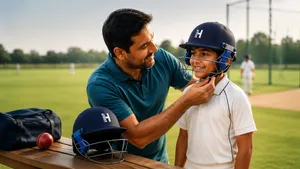 How to Choose the Right Cricket Helmet for Your Child: A Parent's Safety GuideLearn how to choose the right cricket helmet for your child. Discover expert tips on helmet size, fit, safety, comfort, age, and when young cricketers should start wearing one.
 Cricket Helmet Buying Guide: How to Choose the Right Helmet for Maximum SafetyLearn how to choose the right cricket helmet with this complete buying guide. Discover helmet safety standards, sizing tips, steel vs titanium grills, junior helmets, maintenance advice, and expert recommendations for maximum protection. Shop premium cricket helmets and protective gear at Heega Sports.
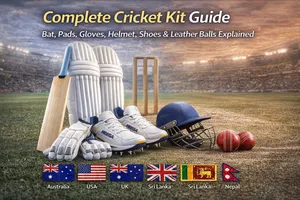 Complete Cricket Kit Guide – Bat, Pads, Gloves, Helmet, Shoes & Leather Balls ExplainedComplete cricket kit guide by Heega Sports covering bat, pads, gloves, helmet, shoes, and leather balls. Perfect for players in Australia, USA, UK, Sri Lanka, and Nepal. Learn how to choose the right cricket gear.