Cricket Shoes for Fast Bowlers: How Ankle Support, Heel Stability and Traction Affect the Bowling Action
Introduction
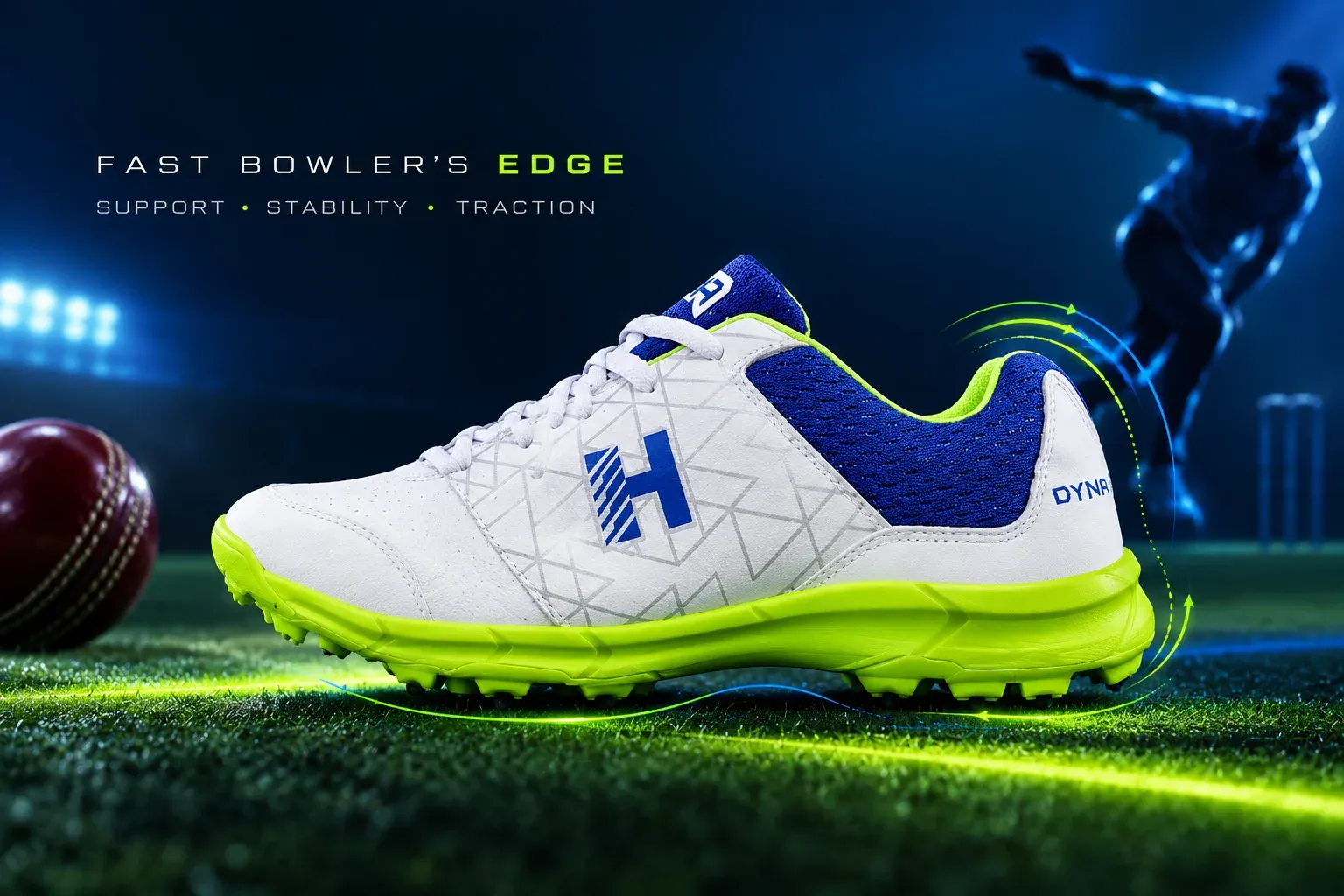
Fast bowling puts considerable demands on a cricketer’s body. Every delivery begins with a run-up, builds through a coordinated sequence of movements, and finishes with a powerful front-foot landing and follow-through. Throughout this process, the feet interact with the playing surface, helping the bowler maintain balance, transfer force, and control movement.
This is why cricket shoes deserve more attention than simply choosing a comfortable pair with a good-looking design. For fast bowlers, the right footwear should provide suitable traction, a stable heel, a secure fit, and support that matches the bowler’s movement and playing conditions.
Poorly suited shoes can create practical problems. Too little grip may make the run-up feel uncertain, while excessive or inappropriate traction can interfere with the foot’s natural movement during a change of direction or landing. A loose heel can reduce the feeling of stability, and an uncomfortable fit may become distracting during long training sessions.
However, no single cricket shoe design is perfect for every fast bowler. Bowling technique, body build, playing surface, training frequency, and personal comfort all influence the right choice.
In this guide, we will explore how ankle support, heel stability, and traction affect a fast bowler’s movement, what to look for when buying cricket shoes, and how to choose footwear that suits your bowling action.
Why Cricket Shoes Matter for Fast Bowlers
A fast bowler’s action involves repeated acceleration, controlled foot placement, and forceful contact with the ground. Unlike a batter who may spend much of an innings moving within a relatively small area, a fast bowler repeatedly sprints, plants a foot, rotates through the delivery action, and moves into the follow-through.
The shoes must accommodate these changing demands.
Three features deserve particular attention:
- Ankle support: How securely the shoe fits around the foot and ankle, and whether its design suits the bowler’s movement.
- Heel stability: How well the heel is held in place and how stable the shoe feels during running and landing.
- Traction: How effectively the outsole grips the particular surface without creating an unsuitable level of resistance.
These features work together. A shoe may have excellent grip but still feel unstable if the heel slips. Another may hold the foot securely but lack suitable traction for a damp or soft outfield.
The aim is to find footwear that works consistently throughout the run-up, delivery stride, landing, and follow-through.
1. Ankle Support: Helping Maintain Control During the Bowling Action
Ankle support is a common consideration for fast bowlers because the bowling action involves rapid movement, foot placement, and changes in direction. The right shoe should hold the foot securely without making natural movement unnecessarily difficult.
How ankle support affects a fast bowler
During the run-up, the feet need to land comfortably and repeatedly as the bowler accelerates. As the delivery stride begins, the bowler prepares for a more demanding landing and rotation through the action.
Footwear that fits poorly may allow the foot to move excessively inside the shoe. This can affect comfort and the bowler’s sense of control, particularly during repeated sessions.
A secure fit helps the shoe move with the foot rather than shifting around it.
Does a high-top cricket shoe provide better ankle support?
Not necessarily. A higher collar may provide a more enclosed feel around the ankle, but collar height alone does not determine how stable or supportive a shoe will be.
The shape of the heel counter, overall fit, upper construction, lacing system, and the way the shoe matches your foot all matter. A well-fitted lower-cut shoe may feel more secure than a poorly fitted high-top design.
Choose footwear based on how it fits and performs, not simply on how high the material extends around the ankle.
What should fast bowlers look for?
When trying on cricket shoes, check that:
- Your heel remains securely positioned when walking and jogging.
- The shoe does not feel excessively loose around the midfoot.
- Your toes have enough room to spread naturally without sliding forward.
- The upper holds the foot comfortably without creating pressure points.
- You can move through your normal warm-up movements without rubbing or pinching.
Ankle support should not mean restricting all ankle movement. Bowling requires coordinated movement through the foot and lower leg, so footwear should feel secure while allowing the movement needed for your technique.
Practical tip: If you regularly experience ankle pain, instability, or repeated sprains, shoe choice alone may not solve the problem. Seek advice from a qualified healthcare professional or sports physiotherapist about appropriate footwear and rehabilitation.
2. Heel Stability: Why a Secure Landing Matters
Heel stability is particularly important when a fast bowler’s foot contacts the ground during the delivery stride. The shoe should hold the heel comfortably and provide a consistent platform for movement.
What is heel stability?
Heel stability refers to how securely the rear of the foot sits inside the shoe and how the shoe behaves under load. It depends on several factors, including heel-counter construction, fit, midsole design, and the shoe’s overall structure.
A shoe with a well-fitting heel should not allow excessive slipping or feel as though the rear of the foot is rolling around inside it.
How heel stability affects the bowling action
During the run-up, the heel needs to remain comfortably positioned as the bowler accelerates. During landing, the shoe should provide a predictable feel under the foot.
If the heel repeatedly slips, the bowler may feel less secure and may need to adjust the way they move. This can become especially distracting during high-volume practice sessions.
A stable heel can help the bowler feel more controlled, but it does not independently determine bowling speed, landing mechanics, or injury risk. Those outcomes depend on technique, conditioning, workload, and many other factors.
What to check before buying
Try these simple checks:
- Lace the shoes as you would for a match.
- Walk briskly and jog gently to check for heel slipping.
- Perform controlled forward and lateral movements.
- Check that the heel feels held in place without being squeezed.
- Make sure the shoe does not create rubbing around the heel or Achilles area.
A heel that feels very rigid is not automatically better. The shoe should offer a suitable balance between structure, cushioning, comfort, and natural movement.
Heel cushioning and stability are different
Cushioning helps manage the feel of impact, while stability concerns how securely and predictably the foot is supported. These qualities overlap, but they are not identical.
A very soft shoe may feel comfortable when standing still but unstable during faster movement. A firmer shoe may feel more controlled but uncomfortable if it does not suit the bowler’s foot or landing preferences.
Look for a shoe that feels secure during movement rather than judging it only by how soft the sole feels in your hand.
3. Traction: Getting the Right Grip on the Pitch
Traction is one of the most important footwear considerations for fast bowlers. The outsole needs to provide suitable grip during acceleration, foot placement, and follow-through.
The challenge is finding the right amount of traction for the playing surface.
Why grip matters during the run-up
A bowler needs confidence in each stride. If the shoes slip on the approach, maintaining a consistent rhythm becomes difficult.
Appropriate traction helps the bowler interact with the surface more predictably. This can make the run-up feel more controlled, particularly when accelerating towards the crease.
However, traction varies depending on the outsole design, surface condition, footwear wear, and the amount of moisture or loose material on the ground.
Traction during front-foot landing
The front-foot landing is a demanding part of fast bowling. The bowler needs to establish a stable contact with the ground while the body continues through the delivery action.
Suitable grip helps reduce unwanted slipping, but more grip is not always better. If the shoe grips excessively on a surface where the foot needs to move or release naturally, the resulting interaction may be unsuitable for the bowler’s movement.
The outsole should be appropriate for the pitch and ground conditions rather than simply having the most aggressive tread.
Spikes versus rubber soles
Different cricket shoes are designed for different surfaces and playing conditions.
FeatureSpiked Cricket ShoesRubber-Soled Cricket Shoes
Typical design
Metal or other purpose-designed studs, depending on the model
Moulded rubber tread
Common use
Often selected for grass pitches and conditions requiring additional penetration and grip
Often suited to nets, hard surfaces, artificial pitches, or training environments, depending on the outsole
Grip characteristics
Studs engage with suitable ground conditions
Grip comes from the outsole pattern and rubber compound
Surface suitability
Depends on stud type, pitch conditions, and competition rules
Depends on tread design and the surface being used
Main consideration
Appropriate stud configuration and secure footing
Adequate grip, comfort, and durability on the intended surface
Neither type is universally better. The correct choice depends on where you play and train.
Always check the manufacturer’s recommendations and any competition rules. Some grounds restrict particular footwear or require specific stud types to protect the playing surface.
How to choose traction for different surfaces
Grass pitches: Select shoes designed for the condition of the ground. Softer or damp surfaces may require a different stud configuration from firm, dry grass.
Artificial pitches: Look for footwear specifically suitable for the surface. Conventional metal spikes may be inappropriate or prohibited.
Indoor nets and hard training surfaces: A suitable rubber outsole is often the practical choice, provided it offers sufficient grip and is permitted at the facility.
Mixed training environments: If you regularly switch between surfaces, consider whether separate pairs are more appropriate than using one pair for every session.
Never assume that a shoe suitable for a grass match will provide the same grip on an artificial pitch or concrete walkway.
4. How Ankle Support, Heel Stability and Traction Work Together
These three features should not be evaluated in isolation. Their combined effect determines how the shoe feels throughout the bowling action.
Shoe FeatureMain RolePotential Problem if UnsuitableWhat to Look For
Ankle and foot support
Helps keep the foot securely positioned
Excessive movement inside the shoe or uncomfortable restriction
Secure fit with natural movement
Heel stability
Holds the heel and supports a predictable feel
Heel slipping, rubbing, or an unstable sensation
A well-fitting heel counter and comfortable hold
Traction
Provides grip suited to the surface
Slipping or an unsuitable level of resistance
Outsole appropriate for the pitch and conditions
Cushioning
Influences comfort and impact feel
Excessive softness, harsh impact feel, or discomfort
Balanced cushioning suited to your preferences
Overall fit
Keeps the shoe working with the foot
Blisters, pressure points, or poor control
Correct length, width, and secure fastening
Imagine a bowler using shoes with excellent outsole grip but a loose heel. The shoe may grip the ground while the foot moves uncomfortably inside it. Similarly, a secure shoe with unsuitable studs may feel unpredictable on the surface.
The best choice is the one that combines secure fit, suitable structure, and surface-appropriate traction.
5. How Cricket Shoes Can Affect Different Phases of Fast Bowling
Understanding the demands of each phase can help you assess footwear more practically.
The run-up
During the run-up, comfort and consistent traction matter most. The shoe should feel secure as the bowler accelerates, without creating pressure points or unnecessary weight.
A shoe that feels awkward during the approach may affect confidence and rhythm. Test it through repeated run-ups during practice before relying on it in a match.
The delivery stride
As the bowler enters the delivery stride, foot placement and body coordination become increasingly important. The shoe should maintain a secure fit and offer a predictable feel underfoot.
The right footwear supports comfortable movement, but it cannot correct a poorly coordinated run-up or delivery technique.
Front-foot contact
The landing phase places substantial demands on the bowler’s body. Suitable traction and a stable shoe can help provide a consistent connection with the surface.
However, shoe design is only one part of landing mechanics. Technique, strength, mobility, fatigue, and workload also contribute to how the bowler manages the forces involved.
Follow-through
After releasing the ball, the bowler must continue moving safely and comfortably. The shoes should allow the feet to move naturally as the body decelerates and changes direction.
Footwear that grips appropriately and fits securely can help the bowler feel in control through this phase.
6. How to Choose Cricket Shoes for Your Bowling Style
Fast bowlers do not all move in the same way. Run-up length, pace, landing position, physical build, and personal preferences can affect which shoe feels most suitable.
For beginner fast bowlers
Beginners should prioritise a comfortable fit, suitable traction for their training surface, and reliable heel hold.
There is no need to buy the most expensive model immediately. A practical pair that fits properly and suits the surface is a better starting point than an advanced shoe that feels uncomfortable.
For club-level fast bowlers
Club players who bowl regularly should consider durability, consistent grip, and comfort over long sessions.
If you train on different surfaces, check whether your current shoes are appropriate for each one. Using unsuitable footwear across every environment may reduce comfort and make traction less predictable.
For high-volume bowlers
Bowlers who complete frequent or long spells should pay attention to cushioning, fit, and the condition of their footwear.
Repeated use can compress cushioning and wear down outsoles. A shoe that once felt stable may gradually become less comfortable or provide less reliable grip.
For seam and swing bowlers
Seam and swing bowling do not automatically require a unique shoe category. Fit, traction, surface conditions, and the bowler’s movement remain the main considerations.
Choose shoes that support a repeatable run-up and feel secure during landing rather than selecting footwear based on bowling style alone.
For pace-focused bowlers
Bowlers who place particular emphasis on speed should resist the temptation to choose shoes solely because they are lightweight or marketed for fast bowling.
Comfort, suitable traction, and secure fit matter more than a single specification. Bowling speed is influenced by technique, physical preparation, coordination, and training—not by shoes alone.
7. Common Mistakes to Avoid When Buying Cricket Shoes
A few avoidable mistakes can lead to uncomfortable footwear or unsuitable grip.
Mistake 1: Buying the wrong size
Shoes that are too tight may cause pressure and discomfort. Shoes that are too loose can allow the foot to slide, reducing confidence and increasing rubbing.
Try shoes with your usual cricket socks and check the fit while standing and moving.
Mistake 2: Choosing shoes by appearance
A stylish design does not guarantee that the shoe suits your foot or playing surface. Focus on fit, construction, traction, and comfort before colour or branding.
Mistake 3: Assuming more spikes mean better grip
Traction depends on the entire outsole and its interaction with the ground. The number and shape of studs alone do not determine whether a shoe is suitable.
Choose an appropriate stud configuration for the surface and follow the manufacturer's guidance.
Mistake 4: Ignoring heel slippage
Even slight heel movement can become irritating during a long session. Check the heel hold during jogging and controlled changes of direction before buying.
Mistake 5: Wearing the same shoes on every surface
A shoe designed for grass may not be appropriate for an indoor net or artificial pitch. Match your footwear to the surface and any facility rules.
Mistake 6: Ignoring worn-out outsoles
Worn tread or damaged studs can change how the shoe interacts with the ground. Inspect the outsole regularly and replace footwear when its condition compromises grip, fit, or comfort.
Mistake 7: Expecting shoes to prevent all injuries
Appropriate footwear can support comfort and traction, but it cannot eliminate injury risk. Bowling workload, technique, conditioning, recovery, and individual health also matter.
8. A Practical Checklist for Testing Cricket Shoes
Before making a purchase, use this checklist to evaluate the fit and feel of the shoes.
- Fit: Is there enough room for your toes without excessive movement inside the shoe?
- Heel hold: Does your heel remain comfortably in place when walking and jogging?
- Midfoot security: Does the shoe feel secure without squeezing your foot?
- Ankle comfort: Can you move naturally without rubbing or uncomfortable pressure?
- Traction: Is the outsole appropriate for the pitch or training surface?
- Landing feel: During controlled practice movements, does the shoe feel stable and predictable?
- Cushioning: Is the shoe comfortable without feeling excessively soft or harsh?
- Durability: Are the stitching, upper, outsole, and fastening system well made?
- Rules: Is the footwear permitted at your club, ground, or training facility?
Where possible, test the shoes during a supervised training session before using them in an important match. Start with warm-up movements and controlled run-ups, then assess comfort during your normal bowling routine.
Do not push through sharp pain, repeated slipping, or significant discomfort simply because the shoes are new.
9. How to Maintain Cricket Shoes for Reliable Performance
Even well-made cricket shoes need regular care. Dirt, moisture, worn tread, and damaged studs can affect their condition over time.
Clean them after use. Remove loose dirt and grass from the upper and outsole. Follow the manufacturer's cleaning instructions.
Dry them properly. Allow wet shoes to air-dry in a ventilated place. Avoid excessive direct heat, which can damage adhesives and materials.
Inspect the studs and outsole. Check for loose, bent, missing, or badly worn studs where applicable. Replace components only as recommended by the manufacturer.
Check the heel and upper. Look for damaged heel counters, torn material, loose stitching, and areas where the foot no longer feels secure.
Rotate footwear when practical. If you train frequently on different surfaces, separate pairs designed for those environments may help preserve their condition and provide more appropriate traction.
Store shoes dry. Do not leave damp shoes sealed inside a kit bag for extended periods. Let them air out before storage.
Replace shoes when their fit, cushioning, or traction has deteriorated enough to affect comfort or reliable movement.
10. Do Cricket Shoes Improve Bowling Speed?
This is a common question among fast bowlers. The short answer is that suitable shoes can help you move with confidence, but they do not directly guarantee higher bowling speed.
A shoe that fits well and offers appropriate traction may help you maintain a consistent run-up and feel more secure during landing. Poorly suited footwear can become a distraction or make movement feel less predictable.
Bowling speed, however, depends on several interacting factors, including:
- Run-up rhythm and acceleration.
- Coordination through the delivery action.
- Strength and physical conditioning.
- Timing and technique.
- Bowling workload and recovery.
- The bowler’s individual movement pattern.
Shoes should support the way you bowl rather than serve as a substitute for technical training or physical preparation.
If you are trying to improve pace, combine appropriate footwear with qualified coaching, a suitable strength and conditioning programme, and careful workload management.
Why the Right Cricket Shoes Matter for Long-Term Development
Fast bowling requires consistency. Players need to repeat their approach, delivery stride, and follow-through while maintaining control over many deliveries.
Footwear that fits properly and suits the playing surface can remove unnecessary distractions. It helps the bowler focus on rhythm, balance, and technique instead of worrying about slipping, heel movement, or discomfort.
For beginners, suitable shoes provide a practical foundation for developing a repeatable run-up. For club and competitive players, the right fit and traction can make regular training more comfortable.
The most effective choice is not necessarily the most expensive shoe or the model with the most aggressive studs. It is the shoe that works with your foot, your bowling action, and the surfaces on which you play.
Explore Cricket Equipment at Heega Sports
At Heega Sports, we understand that the right cricket equipment should support the demands of practice and match day. For fast bowlers, footwear selection is an important part of preparing for consistent movement, comfortable training, and confident performance.
When comparing cricket shoes, consider the fit around your foot and heel, the level of comfort during movement, and whether the outsole suits your playing surface. Taking time to make the right choice can help you build a more reliable equipment setup.
Explore cricket equipment at Heega Sports and prepare for your next training session or match with gear suited to your needs.
Frequently Asked Questions (FAQs)
1. What type of cricket shoes are best for fast bowlers?
The best shoes are those that fit securely, hold the heel comfortably, and provide suitable traction for the playing surface. Cushioning, durability, and personal comfort should also influence your choice.
2. Is ankle support important for fast bowlers?
A secure and comfortable fit around the foot and ankle can help the shoe move with the bowler. However, collar height alone does not determine support, and footwear cannot eliminate the risk of ankle injuries.
3. Are spiked cricket shoes better for fast bowling?
Not in every situation. Spiked shoes may suit grass pitches and particular ground conditions, while rubber-soled shoes may be more appropriate for artificial surfaces or indoor training. Choose according to the surface and applicable rules.
4. How should cricket shoes fit a fast bowler?
They should provide adequate toe room, secure midfoot support, and a heel that does not slip excessively. The shoes should feel comfortable during jogging, controlled changes of direction, and bowling practice.
5. Does heel stability affect the bowling action?
Heel stability influences how securely the rear of the foot sits inside the shoe. A stable, comfortable fit can improve the feeling of control, although it does not independently determine bowling technique or performance.
6. Can cricket shoes increase bowling speed?
Shoes cannot guarantee an increase in pace. Suitable footwear can support comfortable movement and consistent traction, but speed depends on technique, coordination, strength, conditioning, and training.
7. Can I use the same cricket shoes for nets and matches?
That depends on the surfaces involved and the shoe design. A pair suitable for a grass match may not be appropriate for artificial nets or indoor facilities. Check the manufacturer's guidance and facility rules.
8. When should I replace my cricket shoes?
Consider replacement when the outsole or studs are significantly worn or damaged, the cushioning has deteriorated, the heel no longer holds securely, or the shoes cause persistent discomfort.
9. Is softer cushioning always better for fast bowlers?
No. Cushioning is a matter of balance between comfort, stability, and personal preference. A very soft shoe may feel less stable to some bowlers, while a firmer design may not suit everyone either.
10. How can I maintain grip on my cricket shoes?
Clean dirt and grass from the outsole after use, inspect tread or studs regularly, and use the shoes on appropriate surfaces. Replace worn or damaged components according to the manufacturer's recommendations.
Final Thoughts
Cricket shoes play an important role in how a fast bowler feels and moves throughout the bowling action. Ankle and foot support help maintain a secure fit, heel stability contributes to a controlled feel during movement, and suitable traction helps the bowler interact confidently with the playing surface.
When choosing your next pair, look beyond appearance and price. Check how the shoe fits, test the heel hold, assess the outsole for your usual pitch conditions, and make sure the cushioning feels comfortable during movement.
Remember that no shoe can replace good technique, conditioning, or responsible workload management. The goal is to select footwear that supports your bowling action without restricting natural movement.
Whether you are developing your run-up as a beginner or preparing for regular club cricket, the right pair should deliver a practical balance of comfort, stability, traction, and durability.
Explore cricket equipment at Heega Sports and find gear that supports your preparation for the game.
Related posts
 Why Bowlers Mark Their Run-Up Before Every Spell.Why do cricket bowlers mark their run-up? Learn how run-up markers help bowlers maintain rhythm, control their starting position, improve consistency, and prepare for every spell.
 From Bat to Boots: How the Right Cricket Gear Supports Better PerformanceDiscover how the right cricket gear—from bats and batting gloves to helmets, pads, shoes, clothing, bags, and protective accessories—can support better comfort, control, mobility, confidence, and performance.
 Why Cricket Bowlers Change Their Run-Up: How Small Adjustments Can Improve Speed, Swing, and AccuracyWhy do cricket bowlers change their run-up? Discover how run-up length, rhythm, momentum, body alignment, and small adjustments can influence bowling speed, swing, accuracy, and consistency.