From Kathmandu to London: The New Geography of Cricket

For generations, world cricket revolved around a familiar map. Countries like England, Australia, India, and Pakistan dominated headlines, hosted major tournaments, and shaped the global identity of the sport.
But the geography of cricket is changing.
Today, cricket is no longer confined to traditional powerhouses. From the packed stadiums of Kathmandu to franchise leagues in the United States, from community clubs in Germany to youth academies in Canada, the game is expanding into new cultures, cities, and continents.
This transformation represents more than just growth in participation — it signals a complete shift in the global cricket landscape.
The modern story of cricket is now being written not only in London or Mumbai, but also in Toronto, Dallas, Amsterdam, Berlin, and Kathmandu.
In this guide, we’ll explore how the geography of cricket is evolving, why emerging cricket nations matter, the role of franchise leagues, youth development, migration, digital media, and what the future of global cricket may look like.
Cricket’s Traditional Geography
For much of modern history, international cricket was centered around:
- England
- Australia
- India
- Pakistan
- South Africa
- New Zealand
- Sri Lanka
- West Indies
These nations controlled:
- International tournaments
- Broadcasting markets
- Domestic cricket structures
- Talent development systems
Countries outside this circle were often called “associate nations” and received far less attention and investment.
Why Cricket’s Global Geography Is Changing
Several major factors are driving cricket’s expansion beyond traditional regions.
1. Migration and Global Communities
Large South Asian, Caribbean, and African communities helped spread cricket culture across:
- Canada
- United States
- Germany
- Netherlands
- United Kingdom
Local leagues began forming in cities with multicultural populations, creating strong grassroots ecosystems.
Today, cricket clubs can be found in:
- Toronto
- Berlin
- Vancouver
- New York
- Amsterdam
- Birmingham
This migration-driven growth became the foundation for cricket’s modern expansion.
2. T20 Franchise Leagues Changed Everything
The rise of T20 cricket transformed the sport globally.
Leagues such as:
- IPL
- The Hundred
- Major League Cricket
- GT20 Canada
- SA20
made cricket:
- Faster
- More entertaining
- Easier for new audiences to follow
- More attractive to investors
T20 cricket reduced barriers for emerging cricket markets by creating shorter, commercially successful tournaments.
3. Streaming and Social Media
Digital platforms completely changed cricket accessibility.
Fans can now:
- Watch matches on mobile devices
- Follow highlights on social media
- Stream associate cricket games online
- Discover players globally through YouTube and Instagram
This visibility helped smaller cricket nations gain worldwide audiences.
Kathmandu: The Symbol of Cricket Passion
Few cities represent cricket passion like Kathmandu.
Cricket in Nepal
The rise of cricket in Nepal has become one of the most inspiring stories in modern sports.
Despite infrastructure challenges, Nepal offers:
- Massive fan support
- Packed stadiums
- Strong youth participation
- Growing domestic competitions
The atmosphere during Nepal matches often rivals major cricket nations.
Paras Khadka and Sandeep Lamichhane
Players like:
- Paras Khadka
- Sandeep Lamichhane
helped bring international attention to Nepal cricket.
Young Nepali cricketers now believe global opportunities are possible.
London: Cricket’s Historic Heart
While cricket expands globally, London remains one of the sport’s most important centers.
Cricket in the UK
The UK continues influencing global cricket through:
- The County Championship
- The Hundred
- ECB pathway systems
- Historic clubs and academies
London itself remains deeply connected to cricket culture through iconic venues like Lord’s and The Oval.
How The Hundred Modernized Cricket
The Hundred helped modernize British cricket by:
- Attracting younger fans
- Expanding women’s cricket visibility
- Introducing entertainment-focused formats
- Simplifying cricket for new audiences
Its influence is now visible in emerging leagues worldwide.
North America: Cricket’s New Frontier
Perhaps the biggest geographic shift is happening in North America.
Cricket in the USA
The launch of Major League Cricket changed perceptions about cricket in USA.
Cities like:
- Dallas
- New York
- Los Angeles
- San Francisco
are becoming important cricket hubs.
The USA now combines:
- Franchise cricket
- Youth academies
- Minor League Cricket
- International tournaments
This structure is building long-term cricket infrastructure in America.
Cricket in Canada
Cricket in Canada is also growing rapidly.
The success of GT20 Canada helped:
- Increase media visibility
- Inspire young players
- Attract international investment
- Strengthen local cricket culture
Cities like Toronto and Vancouver now host thriving cricket communities.
Europe’s Expanding Cricket Ecosystem
Europe is becoming one of cricket’s most exciting emerging regions.
Cricket in Germany
Cricket in Germany has expanded significantly through:
- Community leagues
- Youth academies
- Immigration-driven participation
- German Cricket Federation development programs
Cities like Berlin and Munich now feature active competitive cricket scenes.
Cricket in the Netherlands
The Netherlands remains Europe’s strongest associate cricket nation.
Topklasse Cricket
The Topklasse cricket structure and clubs like:
- HCC
- HBS
- VRA
continue producing competitive international players.
Dutch cricket proves that smaller nations can compete effectively through strong development systems.
Youth Development Is Reshaping Cricket
One of the biggest reasons cricket geography is changing is youth participation.
Global Youth Pathways
Emerging cricket nations are now investing in:
- School cricket
- Academies
- Indoor facilities
- Provincial leagues
- University competitions
Young players in Toronto or Berlin now have access to coaching systems that barely existed a decade ago.
Women’s Cricket Is Expanding Globally Too
Women’s cricket is also driving global expansion.
Countries outside traditional cricket markets are investing more in:
- Girls’ youth programs
- Women’s leagues
- Academy development
- Professional opportunities
This broader participation helps cricket reach entirely new audiences.
Infrastructure Growth Across Emerging Markets
Modern cricket expansion depends heavily on facilities and infrastructure.
New Investments Include:
- Cricket stadiums
- Indoor practice centers
- Artificial turf wickets
- Academy campuses
- Franchise training facilities
Infrastructure development is especially strong in:
- USA
- Canada
- Nepal
- UAE
- Europe
Challenges Facing Global Cricket Expansion
Despite rapid growth, several challenges remain.
Key Challenges
- Limited funding in associate nations
- Competition from football and basketball
- Infrastructure costs
- Broadcasting access
- Weather conditions in some countries
Still, the overall growth trajectory remains very positive.
The ICC’s Role in Global Expansion
The International Cricket Council (ICC) is increasingly focused on global development.
ICC Development Programs
The ICC supports:
- Associate nations
- Youth tournaments
- Women’s cricket
- Coaching certification
- Infrastructure grants
The goal is to transform cricket into a more globally balanced sport.
Could Cricket Become Truly Global?
Cricket may never replace football globally, but it is clearly becoming far more international than before.
Several signs point toward long-term expansion:
- Olympic cricket discussions
- Franchise league growth
- Digital fan engagement
- Youth participation increases
- Commercial investment outside Asia
The sport’s center of gravity is slowly becoming more global.
The Future Geography of Cricket
The next decade may completely reshape world cricket.
Future possibilities include:
- More international franchise leagues
- Stronger USA cricket markets
- European cricket expansion
- Larger associate nation tournaments
- New cricket stadiums worldwide
- More globally diverse player pathways
The future stars of cricket may come from cities that traditional cricket fans rarely discussed in the past.
Final Thoughts
The story of modern cricket is no longer limited to traditional cricket capitals.
From the emotional crowds of Kathmandu to the historic grounds of London, from emerging leagues in North America to growing clubs across Europe, the geography of cricket is evolving faster than ever before.
What makes this transformation exciting is not just expansion — it’s inclusion. Cricket is becoming more diverse, more accessible, and more global with every passing year.
And as new nations continue investing in players, leagues, infrastructure, and youth development, the next chapter of world cricket may look very different from its past.
The future of cricket is no longer confined to one region of the world. It belongs to a truly global audience.
Related posts
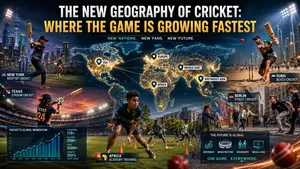 The New Geography of Cricket: Where the Game Is Growing FastestExplore the new geography of cricket and discover how emerging nations like Nepal, USA, Germany, Canada, and the Netherlands are driving the sport’s fastest global growth through leagues, youth pathways, digital audiences, and grassroots cricket.
 From Perth to London: How Australian Heat vs. UK Humidity Changes the GameExplore how weather conditions and pitch styles dramatically alter cricket. From Australian heat to UK humidity, discover tactical changes for players in South Africa, USA, Sri Lanka, and Nepal. Optimize your Heega gear for any environment.
 English Willow Cricket Bat Knocking-In Explained: Preparing the Blade Before Match UseLearn how to knock in an English Willow cricket bat, prepare the blade before match use, avoid common mistakes, and protect your bat from premature damage.