English Willow Cricket Bat Knocking-In Explained: Preparing the Blade Before Match Use
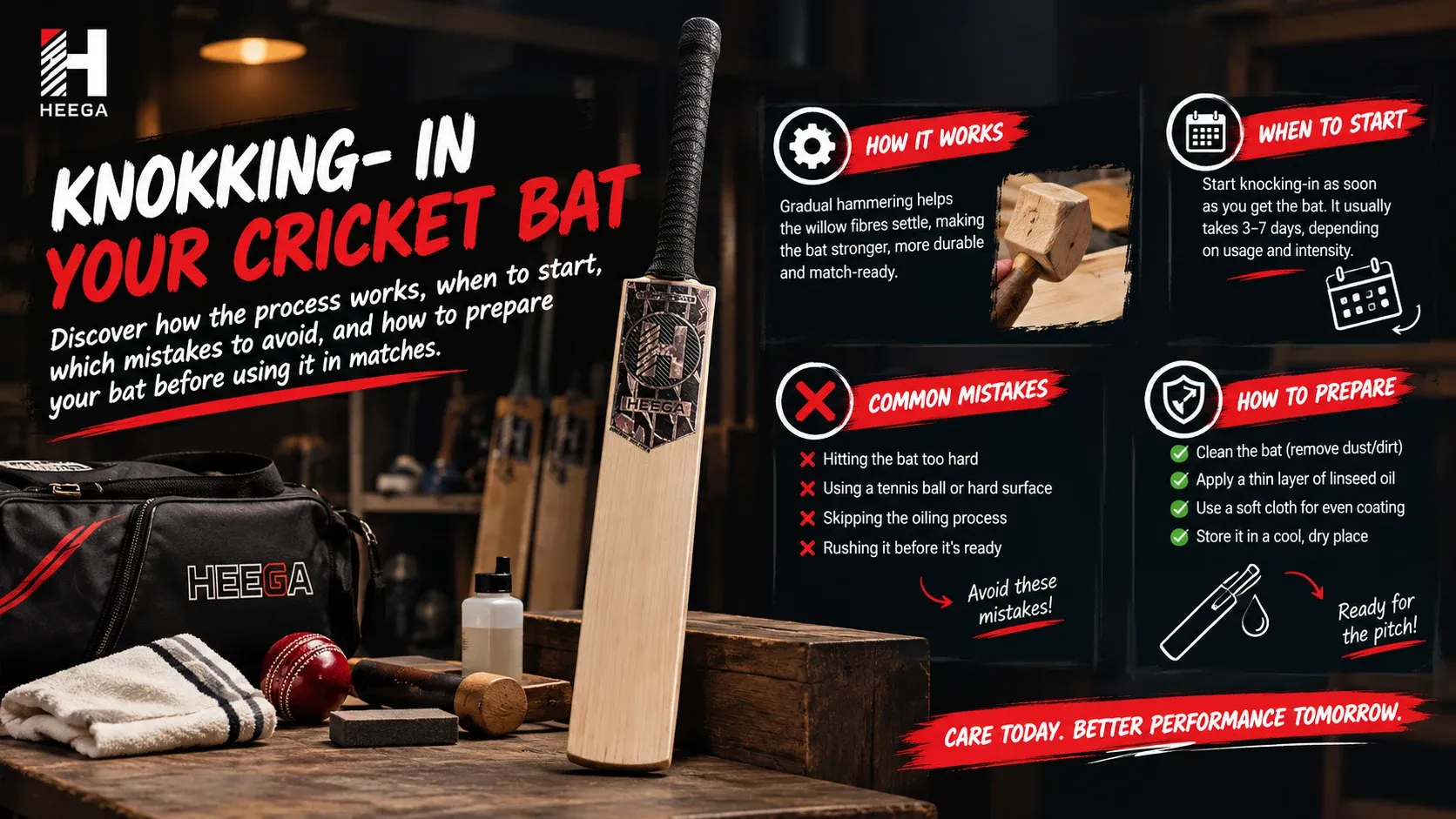
Introduction: Why a New English Willow Bat Needs Preparation
A new English Willow cricket bat can look ready for action straight out of its packaging. Its blade may be beautifully shaped, its edges carefully finished, and its handle comfortable to hold. However, appearance alone does not determine whether the bat is ready to face repeated impacts from a hard leather cricket ball.
Before using many traditional English Willow bats in competitive leather-ball cricket, players need to consider an important preparation process known as knocking-in.
Knocking-in involves gradually conditioning the blade so its surface fibres become better prepared to withstand repeated ball impacts. When performed correctly, this process can help reduce the risk of premature cracking and surface damage.
However, knocking-in is not simply a matter of hitting the blade as hard as possible. It requires patience, controlled preparation, and attention to the bat manufacturer's instructions.
Some English Willow bats are supplied pre-prepared or partially prepared, while others require additional work before regular leather-ball use. Understanding which type you have is the first step.
Whether you are a club cricketer, academy player, or serious batter investing in a new bat, learning about English Willow cricket bat knocking-in can help you prepare your equipment more responsibly.
What Is Knocking-In in Cricket?
Knocking-in is the process of preparing a wooden cricket bat for repeated impact with a cricket ball.
Traditional knocking-in uses a suitable bat mallet to apply controlled impacts across the blade. The objective is to gradually condition the willow rather than expose a new bat to full-speed deliveries immediately.
The process generally focuses on the main hitting area, with appropriate attention to the edges and toe according to the manufacturer's guidance.
Why Is Knocking-In Necessary?
English Willow is a natural wood. Although it is widely valued for cricket bat manufacturing, its surface fibres can be vulnerable to damage when exposed to repeated impacts without suitable preparation.
A new bat may therefore need gradual conditioning before it is used regularly against a hard leather ball.
Knocking-in can help prepare the blade for these impacts, but it does not make the bat indestructible.
The quality of the willow, manufacturing process, existing preparation, ball hardness, impact location, and player's technique all influence how the bat performs.
Does Knocking-In Make a Bat Stronger?
Knocking-in does not turn the wood into a different material or guarantee that the bat will never crack.
Instead, it helps prepare the blade to handle the stresses associated with normal cricket use.
A properly prepared bat can still develop cracks or other damage, particularly when it receives severe impacts or is used outside its intended conditions.
The aim is to reduce avoidable risks, not eliminate every possibility of damage.
Why English Willow Bats Require Careful Preparation
English Willow is a popular material for cricket bats because of its playing characteristics, including its responsiveness and suitability for shaping into a blade designed for batting.
However, it remains a natural material with individual characteristics.
Natural Wood Has Different Properties
Every willow blade has its own grain structure, density, and natural variation.
These characteristics can influence how the bat responds to impact.
Even two bats of similar appearance may behave differently during use. That is why preparation instructions should be based on the particular bat rather than a universal assumption about all English Willow.
Manufacturing Methods Can Affect Preparation Needs
The bat-making process may include shaping, pressing, finishing, and other preparation steps.
Some manufacturers supply bats that have already received substantial preparation. Others expect the player to complete additional knocking-in before regular match use.
Consequently, not every English Willow bat needs the same amount of knocking-in.
Before starting, check the manufacturer's instructions or ask the retailer whether the bat is ready for use or requires further preparation.
Understanding the Different Stages of Bat Preparation
Preparing a new English Willow bat should be a gradual process. The exact method and duration depend on the bat's condition and the manufacturer's recommendations.
Stage 1: Inspect the Bat Before Starting
Begin by examining the blade carefully.
Look at the face, edges, toe, and any visible surface irregularities. Check whether the manufacturer has provided preparation instructions or indicated that the bat is already prepared.
If you notice a significant crack, loose wood, or another structural concern, contact the seller before proceeding.
Knocking-in is intended to prepare a suitable bat, not repair an already damaged one.
Stage 2: Follow the Manufacturer's Preparation Guidance
If the bat requires traditional knocking-in, use an appropriate bat mallet and follow the recommended procedure.
The impacts should be controlled and progressive. Avoid striking the blade with excessive force or concentrating repeatedly on a small area.
The objective is gradual conditioning, not trying to complete the entire process in one short session.
If the manufacturer specifies a particular preparation method, follow that guidance rather than applying a generic routine.
Stage 3: Prepare the Main Hitting Area
The main face of the blade receives much of the ball contact during batting.
When the bat requires knocking-in, the face is prepared progressively according to the manufacturer's instructions.
Use controlled impacts and pay attention to how the surface responds. Do not assume that the bat is ready simply because the blade has received a certain number of strikes.
Stage 4: Give Attention to the Edges and Toe
The edges and toe may experience different stresses from the central hitting area.
However, they should not be treated carelessly or struck aggressively in an attempt to speed up preparation.
Follow the recommended method for these areas, avoiding sharp impacts, excessive force, or actions that could split the wood.
If you are unfamiliar with the process, a qualified cricket bat specialist can help prepare the bat correctly.
Stage 5: Inspect the Blade During Preparation
Preparation should not be treated as a task that must continue regardless of the bat's condition.
Check the surface periodically for signs of cracking, lifting fibres, or other changes.
If you notice a concerning defect, stop and seek advice before continuing.
How Long Does English Willow Bat Knocking-In Take?
There is no single preparation duration that is suitable for every English Willow cricket bat.
The time required depends on several factors:
- Whether the bat is new, pre-prepared, or partially prepared.
- The manufacturer's recommended process.
- The characteristics of the willow.
- The type of preparation being performed.
- The bat's intended use.
- The results of inspection during preparation.
Some bats require substantial additional preparation, while others need less because of work completed during manufacturing.
Avoid relying on a fixed number of hours or mallet strikes as proof that a bat is ready.
The manufacturer's guidance and the condition of the blade are more important than rushing to meet a deadline.
What Is a Bat Mallet, and Why Is It Used?
A cricket bat mallet is a tool designed to apply controlled impacts to the blade during traditional knocking-in.
It allows the player or specialist to prepare the surface more deliberately than by striking the blade with an ordinary hard object.
Choosing a Suitable Mallet
Use a mallet intended for cricket bat preparation.
An unsuitable tool may apply excessive or poorly controlled force, increasing the risk of damage.
Players should also use the mallet carefully and avoid concentrating force on the toe, edges, or a single point on the blade.
Why Technique Matters More Than Force
Knocking-in is about controlled conditioning rather than maximum impact.
Striking too hard can damage the wood, particularly around vulnerable areas.
If you are unsure how much force to use, ask an experienced bat specialist or follow the specific instructions supplied with the bat.
Can You Knock In an English Willow Bat With a Cricket Ball?
Some preparation methods use controlled ball impacts as part of the later preparation process, but a new bat should not automatically be taken straight into full-speed leather-ball practice.
A hard cricket ball can deliver substantial force, particularly when it strikes the edges or toe.
The appropriate progression depends on whether the bat is already prepared and what its manufacturer recommends.
Why Immediate Match Use Can Be Risky
A match provides little opportunity to control the location, speed, or force of each delivery.
The batter may face fast bowling, mistimed shots, or repeated impacts away from the central hitting area.
If the bat requires preparation, going directly into competitive play may expose it to unnecessary risk.
Controlled Practice Is Different From a Match
Preparation and practice should progress according to the bat's condition and the manufacturer's guidance.
Do not assume that facing a particular number of deliveries automatically completes the process.
If the manufacturer recommends specialist preparation or a specific practice progression, follow it.
What Is the Difference Between Knocking-In and Net Practice?
Although both activities involve repeated contact with a cricket ball, they serve different purposes.
Knocking-in is intended to prepare the bat.
Net practice is intended to develop batting skills, including timing, footwork, shot selection, and control.
A player can improve their batting during net sessions, but ordinary practice should not automatically be treated as a substitute for required bat preparation.
Similarly, a bat that has been knocked in still needs sensible use and maintenance.
The two activities support different aspects of a player's cricket journey.
Do Pre-Knocked-In English Willow Bats Need More Preparation?
Some English Willow bats are supplied as pre-knocked-in, pre-prepared, or ready for use according to the manufacturer's stated conditions.
These descriptions can mean different things depending on the manufacturer.
A pre-prepared bat may require little additional work, while another model may still need some preparation before regular hard-ball use.
Check What the Seller Means by Pre-Prepared
Before purchasing, ask:
- What preparation has already been completed?
- Is additional knocking-in recommended?
- Is the bat ready for leather-ball use?
- Are there specific care instructions?
- Does the manufacturer recommend any further preparation before match play?
These questions can help prevent confusion and reduce the chance of using the bat incorrectly.
Avoid Repeating Preparation Unnecessarily
More knocking-in is not automatically better.
Excessive or poorly controlled impacts can damage the blade, even when the bat has already received suitable preparation.
If the manufacturer confirms that the bat is prepared for its intended use, follow its maintenance guidance rather than applying unnecessary additional force.
Does Knocking-In Affect Bat Performance?
Knocking-in is primarily a preparation process, not a technique for increasing the bat's power.
It does not guarantee that the ball will travel farther or that the bat will perform better than another model.
The performance of an English Willow bat also depends on factors such as blade design, weight, balance, pickup, wood characteristics, and the player's technique.
Timing Still Matters
A well-prepared bat cannot compensate for poor timing.
The ability to make clean contact depends on watching the ball, moving into position, selecting the correct shot, and controlling the swing.
Knocking-in supports appropriate preparation, while practice develops the skills required to use the bat effectively.
Preparation Does Not Guarantee a Particular Sound or Feel
Players sometimes judge a bat by the sound it produces when striking a ball.
However, sound alone is not a reliable test of whether a bat has been prepared correctly or is free from internal damage.
Follow the manufacturer's preparation guidance and inspect the blade rather than relying only on sound or subjective feel.
Common Knocking-In Mistakes Players Should Avoid
Incorrect preparation can create problems that careful preparation is intended to help prevent.
Understanding common mistakes can protect both the bat and the player's investment.
Mistake 1: Using Excessive Force
Striking the blade too hard can cause damage instead of gradually conditioning the wood.
Use controlled impacts and follow the recommended process.
Mistake 2: Rushing the Process
Players may want to use a new bat in an upcoming match and try to complete preparation quickly.
However, rushing can increase the risk of mistakes.
Allow enough time to follow the manufacturer's instructions and assess the blade properly.
Mistake 3: Ignoring the Manufacturer's Instructions
Not every bat is manufactured or supplied in the same condition.
Using the same preparation routine for every model may be inappropriate.
Check the specific instructions for your bat before starting.
Mistake 4: Treating Knocking-In as a Repair Method
Knocking-in is not designed to fix cracks, loose wood, or a damaged handle.
If the bat already has a structural defect, seek professional advice rather than attempting to correct it with additional impacts.
Mistake 5: Assuming Preparation Makes the Bat Indestructible
Even a properly prepared bat can crack.
Severe impacts, unsuitable ball types, poor storage, moisture, and normal wear can still affect its condition.
Preparation reduces certain risks but cannot remove them entirely.
Mistake 6: Neglecting the Toe and Edges
The toe and edges can be vulnerable to damage.
Players should inspect these areas regularly and follow suitable care recommendations.
Do not use aggressive impacts or unsuitable protective treatments in an attempt to make them indestructible.
How Ball Type Influences Bat Preparation
The type of ball used is an important consideration when preparing a cricket bat.
A bat intended for leather-ball cricket should be prepared according to the manufacturer's guidance for that application.
Leather Cricket Balls
Leather balls are relatively hard and can place substantial stress on the blade.
If your English Willow bat requires knocking-in, it is particularly important to follow the recommended preparation process before regular competitive use.
Tennis Balls and Soft Practice Balls
Soft practice balls can be useful for introductory cricket and skill development.
However, the appropriate bat depends on the ball's construction, the intensity of play, and the manufacturer's intended-use recommendations.
Do not assume that a bat designed for leather-ball cricket or a bat designed for soft-ball cricket is suitable for every playing condition.
Match the Equipment to Your Playing Needs
Players who use different ball types should consider whether their equipment is appropriate for each setting.
Selecting a suitable bat and following the relevant preparation instructions can help reduce unnecessary wear.
How to Care for an English Willow Bat After Knocking-In
Preparation is only one part of bat maintenance.
Once the bat is ready for use, sensible care can help maintain its condition.
Keep the Bat Dry
Avoid prolonged exposure to rain, wet ground, or damp storage areas.
If the bat becomes wet, wipe away surface moisture and let it dry naturally in a well-ventilated place.
Do not use direct heat or intense sunlight to speed up the process.
Store It Properly
Store the bat in a dry, stable environment.
Avoid leaving it inside a damp kit bag or in a vehicle that becomes excessively hot.
Do not place heavy objects on the blade or leave it where it may be knocked against hard surfaces.
Inspect the Blade Regularly
Check the face, edges, toe, handle, and grip after regular use.
Small surface marks may be normal, but new cracks, splintering, loose wood, or handle movement deserve attention.
If damage appears to be developing, stop using the bat against hard deliveries until it has been assessed.
Follow the Manufacturer's Oiling Advice
Some wooden bats may benefit from suitable maintenance oil, while others may have specific instructions regarding oiling or surface treatment.
Do not assume that every bat needs the same product or quantity.
Use only a suitable product when recommended, and avoid applying excessive oil or allowing it to reach areas where it is not intended.
Use Appropriate Toe Protection
Toe protection may help reduce wear and exposure to moisture.
However, it does not make the bat waterproof, prevent every crack, or replace proper storage and maintenance.
Follow the manufacturer's advice before applying protective materials.
When Should You Seek Professional Help?
Not every issue requires a repair, but some problems should be assessed by a cricket bat specialist.
Seek advice if you notice:
- A deep or growing crack.
- Loose or splintering wood.
- Damage around the toe that appears to be worsening.
- A handle that feels loose or unstable.
- Significant changes after the bat becomes wet.
- Uncertainty about whether the bat is ready for leather-ball use.
A specialist can assess whether the bat needs further preparation, repair, or replacement.
Avoid trying to repair major structural damage with improvised tools or excessive adhesive. An unsuitable repair may make the problem worse.
A Practical Pre-Match Checklist for English Willow Bats
Before using your bat in a match, take a few moments to confirm that it is ready for its intended use.
- Confirm whether the bat requires knocking-in or has already been prepared.
- Follow the manufacturer's preparation and maintenance instructions.
- Check the blade face, edges, and toe for cracks or loose fibres.
- Make sure the handle and grip feel secure.
- Confirm that the bat is suitable for the ball type being used.
- Ensure any required preparation has been completed.
- Do not use a bat with concerning structural damage.
This checklist is not a replacement for the manufacturer's instructions, but it can help players develop sensible equipment habits.
Is English Willow Worth the Extra Preparation?
For many players, English Willow is an attractive choice because of its playing characteristics and the range of blade designs available.
However, whether it is the right choice depends on the player's requirements, budget, and level of cricket.
Some English Willow bats require additional preparation, while others are supplied with preparation already completed.
The important thing is understanding what your particular bat needs.
A more expensive bat does not automatically require more knocking-in, and a bat that has already been prepared should not receive unnecessary additional impacts.
Choose equipment based on suitability and quality rather than assuming that the price or material alone determines the preparation process.
How Heega Sports Supports Your Cricket Journey
At Heega Sports, we understand that selecting a cricket bat involves more than choosing a blade that looks good.
Players should consider the bat's size, weight, balance, construction, intended ball type, and preparation requirements before using it in competitive cricket.
Whether you are a developing batter or a regular club player, understanding how to care for your equipment can help you make more informed decisions.
Heega Sports offers a range of cricket equipment for different playing needs, including Kashmir Willow bats, junior cricket bats, cricket balls, batting gloves, batting pads, helmets, kit bags, practice nets, and training accessories.
When exploring cricket equipment, check the product specifications and care guidance to help ensure that your choice suits your playing conditions.
Visit Heega Sports to explore the available cricket range.
Final Thoughts: Prepare Your Bat Before You Prepare for the Match
Knocking-in is an important consideration for many traditional English Willow cricket bats, particularly before regular use against hard leather cricket balls.
The process helps condition the blade through controlled preparation, but it must be performed according to the specific bat's requirements.
The most important principles are straightforward: inspect the bat, follow the manufacturer's instructions, avoid excessive force, progress patiently, and maintain the blade after preparation.
Remember that not every English Willow bat needs the same amount of knocking-in. Some are supplied pre-prepared, and unnecessary additional impacts can cause harm rather than improve readiness.
A properly prepared bat still needs suitable playing conditions, sensible storage, and regular inspection. No preparation method can guarantee that a bat will never crack.
For players investing in English Willow, understanding the preparation process is part of responsible equipment ownership.
Take the time to prepare your bat correctly, maintain it consistently, and focus on developing the technique that allows you to use it with confidence.
Get Ready for Your Next Innings With Heega Sports
Explore cricket bats, Kashmir Willow bats, junior bats, leather cricket balls, practice balls, batting gloves, pads, helmets, kit bags, practice nets, and training accessories for your cricket journey.
Shop Now: https://heegasports.com
Heega Sports – Helping Players Prepare Better, Practise Smarter, and Play With Confidence.
Related posts
 English Willow Cricket Bats Explained: How Bat Pressing, Grain Structure and Blade Compression Influence PerformanceLearn how English willow bat pressing, grain structure, and blade compression influence performance, durability, shot response, and bat selection.
 English Willow Cricket Bats: How to Identify Quality, Check Bat Balance and Avoid Buying MistakesLearn how to identify a quality English willow cricket bat, check its balance and pickup, understand grain patterns, and avoid common buying mistakes.
 English Willow Cricket Bats: How Bat Shaping and Pressing Influence PerformanceDiscover how English Willow cricket bat shaping and pressing influence blade structure, rebound, balance, durability, and batting performance.