How Cricket Fielding Drills Improve Reaction Speed and Catching.

Introduction: Great Fielding Starts With Practice
When people talk about cricket training, batting and bowling usually get most of the attention.
Players spend hours working on their shots.
Bowlers repeat their run-ups and deliveries.
But there is another part of the game that can change a match just as quickly: cricket fielding.
A brilliant catch can remove a dangerous batter.
A quick pickup and accurate throw can create a run-out.
A sharp stop near the boundary can save four runs.
Sometimes, the difference between winning and losing comes down to a few seconds of reaction time.
The good news is that fielding ability is not simply something a player is born with.
Reaction speed, catching technique, movement, throwing accuracy, and body control can all be developed through regular practice.
That is where fielding drills become important.
A good drill does more than make players catch more balls.
It teaches them how to move before the ball arrives, how to react when the ball changes direction, how to stay balanced, and how to make decisions quickly.
Whether you are a beginner, academy player, school cricketer, club player, or experienced competitor, structured fielding practice can make a noticeable difference to your overall game.
What Is Cricket Fielding?
Cricket fielding is everything a team does defensively while the opposition is batting.
It includes:
- Catching
- Ground fielding
- Throwing
- Stopping boundaries
- Backing up teammates
- Taking run-out opportunities
- Close catching
- Boundary fielding
- Wicketkeeping support
- Quick movement between positions
Fielding is not one single skill.
It is a combination of physical movement, concentration, anticipation, communication, and technique.
A player might have excellent catching ability but struggle to get into the right position.
Another player might move extremely quickly but throw inaccurately.
The best fielders combine several skills together.
Why Reaction Speed Matters in Cricket
Cricket can change incredibly quickly.
A ball may leave the bat at high speed and travel directly toward a fielder.
The player may have only a short amount of time to decide whether to catch, stop, or attack the ball.
That is why reaction speed matters.
Fast reactions can help players:
- Respond to edges
- Catch deflections
- Stop hard-hit shots
- React to sudden changes
- Move toward the ball sooner
- Complete run-outs
- Adjust their body position
Reaction speed is especially important in close fielding positions.
A fielder at slip, short leg, silly point, or another close catching position may have very little time to respond.
A fraction of a second can make the difference.
Reaction Speed Is More Than Moving Fast
A common mistake is assuming that a fast fielder simply needs to run quickly.
That is not enough.
Reaction speed involves several stages:
See → Decide → Move → Execute
A player first needs to notice the ball.
Then they need to understand where it is going.
Next, they need to move their body.
Finally, they need to complete the skill.
A player who runs extremely fast but reacts late may still struggle.
This is why fielding drills should train decision-making as well as physical speed.
Catching Is a Skill That Can Be Developed
Some players naturally feel comfortable catching.
Others become nervous whenever the ball comes toward them.
Regular practice can make catching feel much more natural.
The key is repetition.
The more often players experience different types of catches, the more comfortable they become with them.
Training can include:
- High catches
- Low catches
- Close catches
- One-handed catches
- Reaction catches
- Diving catches
- Deflection catches
Each type presents a different challenge.
Start With Basic Catching Technique
Before attempting difficult catches, players should develop reliable fundamentals.
When preparing for a catch, players should generally:
- Watch the ball carefully.
- Move into a balanced position.
- Keep their eyes on the ball.
- Present their hands correctly.
- Absorb the impact rather than fighting it.
- Secure the ball before moving.
Beginners should not worry about making spectacular catches.
A clean, simple catch is more valuable than a dramatic attempt that is dropped.
The Importance of Soft Hands
One of the most useful concepts in catching is having soft hands.
When the ball reaches the hands, the player should avoid making the hands completely rigid.
Instead, they can allow the hands to give slightly with the ball.
This helps absorb some of the impact.
It is particularly important when catching hard cricket balls.
Good catching technique can become almost automatic with enough repetition.
Simple Reaction Catching Drills
Players can begin with basic reaction exercises.
A coach or teammate can stand a short distance away and throw the ball unexpectedly to either side.
The fielder reacts and attempts the catch.
The throw does not need to be extremely fast.
The objective is to train the player's eyes and body to respond quickly.
The drill can gradually become more difficult by changing:
- Distance
- Throwing angle
- Ball height
- Direction
- Speed
Tennis Ball Reaction Drills
Tennis balls can be useful for reaction training.
They are lighter and generally less intimidating for younger players.
A coach can use a tennis ball to create unpredictable bounces or quick reaction opportunities.
For example, the coach can throw the ball toward a wall and ask the player to catch the rebound.
This introduces an element of unpredictability.
The player has to watch closely and react.
Wall Rebound Drills
Wall drills are simple and inexpensive.
A player can stand several feet away from a suitable wall and throw a ball against it.
The rebound can be caught.
As the player's ability improves, they can increase the pace or change the angle.
Wall drills can help develop:
- Hand-eye coordination
- Reaction speed
- Catching confidence
- Focus
- Coordination
They can also be performed without a large cricket ground.
Two-Ball Reaction Drills
Another useful exercise involves two balls.
A coach holds one ball in each hand.
The player does not know which ball will be released.
The coach drops or throws one ball.
The player reacts and attempts to catch it.
This simple exercise encourages visual attention and quick decision-making.
The goal is not to make the drill unnecessarily difficult.
The goal is to train the player to react instead of guessing.
High Catching Drills
High catches are an important part of fielding.
Players should learn to judge the ball's:
- Height
- Speed
- Direction
- Distance
A common mistake is waiting underneath the ball without adjusting position.
Good fielders move early.
They try to get into a comfortable catching position before the ball arrives.
Regular high-catching practice can improve confidence under pressure.
Moving While Catching
A match rarely gives a fielder a perfectly comfortable catch.
The player may need to move sideways or backward.
Fielding drills should therefore include catches while moving.
A coach can hit or throw the ball slightly away from the player.
The fielder moves into position and completes the catch.
This combines two important skills:
Movement + Catching
Low Catching Drills
Low catches require different body control.
The player needs to lower their center of gravity and get their hands close to the ground.
The ball may travel quickly along the surface.
Players should focus on:
- Getting behind the ball
- Keeping their eyes on it
- Using safe hand positioning
- Staying balanced
Practicing low catches can make players more comfortable when the ball travels quickly along the ground.
Ground Fielding Drills Improve Speed
Not every ball can be caught.
Many deliveries need to be stopped on the ground.
A good ground fielder can prevent runs while also creating opportunities for run-outs.
Simple drills can involve a coach hitting balls to different areas.
The player moves toward the ball, collects it cleanly, and returns it quickly.
The focus should be on efficiency.
There is no benefit in moving wildly if the player cannot gather the ball properly.
The Pick-Up and Throw Drill
One of the most useful fielding exercises combines ground fielding and throwing.
The player:
- Moves toward the ball.
- Gets into a balanced position.
- Picks it up cleanly.
- Transfers it quickly.
- Throws toward the target.
This drill closely resembles match situations.
Players can gradually increase the speed of the exercise.
Why the First Step Matters
A fielder's first step can be more important than their maximum running speed.
Imagine two players reacting to the same shot.
Player A reacts immediately.
Player B waits for another moment before moving.
Even if Player B is faster, Player A may reach the ball first.
That is why reaction drills should focus on the initial movement.
Players need to learn how to stay ready.
Footwork Helps Fielders React Better
Fielding and footwork are closely connected.
A fielder who is standing flat-footed may struggle to move quickly.
A player who stays balanced and ready can push off in different directions more effectively.
Useful footwork drills include:
- Side-to-side shuffles
- Short acceleration drills
- Forward movements
- Backward movements
- Direction changes
- Cone drills
These exercises can help players become more comfortable moving in multiple directions.
Cone Drills for Cricket Fielding
Cones are simple training tools.
Place several cones in different positions.
The player starts in the middle.
A coach calls a cone number or direction.
The player reacts, moves to the cone, and returns.
This develops:
- Acceleration
- Deceleration
- Reaction speed
- Direction changes
- Coordination
To make the drill more cricket-specific, the coach can add a catch or ground ball at the end.
Adding Decision-Making to Fielding Drills
Fielding drills become more realistic when players have to make decisions.
Instead of telling the player exactly where to move, the coach can create different scenarios.
For example:
“Catch.”
“Stop.”
“Throw.”
“Leave.”
The player needs to react to the instruction while also watching the ball.
This adds a mental element to the exercise.
Close Catching Requires Special Practice
Close fielders have very little reaction time.
Positions such as slip, short leg, and silly point can involve extremely fast reactions.
Players practicing in these areas should gradually become comfortable with:
- Hard hands-to-ball contact
- Deflections
- Low catches
- Ball changes of direction
- Short-distance reactions
Protective equipment and appropriate coaching are particularly important for close catching practice.
Slip Fielding Drills
Slip catching is a specialized skill.
The ball often reaches the fielder after an edge from the bat.
That means the direction can be unpredictable.
A coach can create controlled edge simulations.
Players can practice:
- Starting position
- Initial movement
- Hand position
- Catching technique
- Recovery after a missed attempt
Repetition helps players become more confident.
Short-Leg Fielding Drills
Short leg is another position where reaction time can be extremely limited.
Because the fielder is close to the batter, protective equipment should be used appropriately.
Training should begin at manageable speeds.
Players can gradually work toward faster reaction exercises as their confidence and technique improve.
The emphasis should always remain on safe and controlled practice.
Diving Fielding Drills
Diving can save runs and occasionally create spectacular dismissals.
However, players should learn the fundamentals before attempting advanced diving drills.
They need to understand:
- How to approach the ball
- How to lower the body
- How to protect themselves
- How to land safely
- How to secure the ball
Proper coaching is important when introducing diving techniques.
Boundary Fielding Requires Different Skills
Fielders near the boundary need to judge the ball while moving at speed.
They may need to:
- Chase the ball
- Stop it before the rope
- Throw from distance
- Maintain body control
- Avoid stepping over the boundary
Boundary drills can help players understand how quickly the ball travels across the outfield.
Throwing Accuracy Is Part of Fielding
A fielder can reach the ball quickly but still waste the opportunity with a poor throw.
Throwing practice should therefore be included in fielding sessions.
Players can work on:
- Throwing distance
- Accuracy
- Release speed
- Body positioning
- One-handed throws
- Throws from the run
Accuracy should come before trying to throw as hard as possible.
Relay Throwing Drills
Relay throws are useful when the ball is hit deep into the outfield.
The nearest fielder collects the ball and throws it toward a teammate.
The teammate then returns it toward the wicketkeeper or bowler.
This can be practiced with two or three players.
The drill teaches:
- Communication
- Throwing accuracy
- Quick transfers
- Positioning
- Teamwork
Communication Makes Fielding Stronger
Fielding is a team activity.
Players need to communicate constantly.
Simple calls can prevent confusion.
For example:
“Mine!”
“Leave!”
“Keeper!”
“Two!”
“Four!”
Clear communication can help fielders know who is taking responsibility for the ball.
This becomes especially important when two players are moving toward the same catch.
Anticipation Can Make a Fielder Look Faster
Some of the best fielders appear incredibly quick.
But their advantage is not always raw speed.
They often anticipate well.
They read:
- Batter's body position
- Shot direction
- Bowler's plan
- Match situation
- Field placement
A fielder who predicts the likely direction of the ball can begin moving earlier.
This is one reason tactical awareness is an important part of cricket fielding.
Fielding Drills Should Match Match Situations
Training becomes more useful when it resembles actual cricket.
For example, instead of randomly hitting balls, a coach can create scenarios.
Scenario 1: Final Overs
The fielder must stop a boundary and return the ball quickly.
Scenario 2: Close Catching
The player reacts to an edge from a short distance.
Scenario 3: Run-Out Opportunity
The fielder collects and throws toward the stumps.
Scenario 4: Defensive Field
The player moves laterally to stop a ground shot.
These situations teach players how fielding skills work within a match.
Why Repetition Builds Confidence
A player who practices a skill only occasionally may become nervous during a match.
A player who has performed the same movement hundreds of times is more likely to trust their technique.
Repetition helps create familiarity.
That does not mean every drill should be identical.
Players should experience different speeds, angles, distances, and situations.
The goal is to build adaptable skill.
Young Players Should Keep Drills Simple
Children do not need complicated training programs.
Simple exercises can be extremely effective.
For younger players, coaches can focus on:
- Basic catching
- Rolling-ball pickups
- Simple throwing
- Balance
- Reaction games
- Short movement drills
Training should remain enjoyable.
When children enjoy fielding practice, they are more likely to stay engaged and continue developing.
How Parents Can Practice Fielding at Home
Parents do not need a professional cricket ground to help a child improve.
Simple activities can include:
- Throwing a tennis ball gently.
- Playing wall rebound games.
- Rolling a ball for pickup practice.
- Using cones for movement.
- Practicing simple high catches.
The objective is not to create an intense professional session.
It is to make movement and catching familiar.
Fielding Equipment Can Improve Training
Suitable equipment can make fielding practice more effective.
Players and coaches may use:
- Cricket balls
- Tennis balls
- Training balls
- Catching aids
- Cones
- Stumps
- Practice nets
- Fielding equipment
Different equipment can be used for different levels of difficulty.
Beginners may start with softer or lighter balls before progressing to harder cricket balls.
Safety Should Come First
Fielding drills should always be appropriate for the player's age and skill level.
Players should:
- Warm up properly.
- Use suitable equipment.
- Maintain enough space.
- Follow coaching instructions.
- Use protective gear when required.
- Increase intensity gradually.
Close catching and diving exercises deserve particular attention because mistakes can result in injury.
Good training is not about making every drill as difficult as possible.
It is about improving skills safely.
A Simple Weekly Fielding Routine
Players can include fielding in their regular cricket schedule.
Session 1: Catching
Focus on high catches, low catches, and basic reaction catches.
Session 2: Ground Fielding
Practice movement, pickup, and quick transfers.
Session 3: Throwing
Work on accuracy and throwing from different positions.
Session 4: Match Simulation
Combine catching, movement, throwing, and decision-making.
Even short, focused sessions can produce improvement when performed consistently.
How to Measure Fielding Progress
Players can track several simple indicators.
For example:
- Successful catches
- Catching percentage
- Throwing accuracy
- Reaction drill completion
- Time taken to reach the ball
- Successful run-out attempts
- Boundary stops
Tracking progress can make improvement more visible.
However, statistics should support coaching rather than become an obsession.
The ultimate goal is better performance during actual matches.
Common Fielding Mistakes to Avoid
Watching the Bat Instead of the Ball
Players should focus on the ball after it is struck.
Standing Flat-Footed
A balanced ready position allows quicker movement.
Trying to Catch Everything With Hard Hands
Soft hands can help absorb impact.
Throwing Without Balance
Accuracy often suffers when the body is out of control.
Training Only Comfortable Catches
Players need to practice different angles and situations.
Chasing Speed Instead of Technique
Fast movement is useful only when controlled.
Ignoring Communication
Fielders need to communicate clearly.
Why Cricket Fielding Can Change a Player's Career
At junior level, fielding may simply be another part of practice.
As competition becomes stronger, its importance increases.
A player who bats well but fields poorly may become less valuable to a team.
A player who contributes with both bat and fielding can offer greater versatility.
For all-rounders and specialist fielders, excellent defensive skills can become a major part of their identity as cricketers.
Fielding and Overall Athletic Development
Fielding drills can also improve general athletic qualities.
Regular practice can develop:
- Agility
- Coordination
- Balance
- Acceleration
- Deceleration
- Hand-eye coordination
- Spatial awareness
These abilities can support other aspects of cricket as well.
A player who moves efficiently in the field may also become more comfortable running between the wickets or adjusting their position while batting.
Fielding Is a Skill, Not Just Effort
Some players believe fielding simply requires enthusiasm.
Energy certainly helps.
But effective fielding requires technique.
A player needs to know:
- Where to stand
- When to move
- How to approach the ball
- How to collect it
- When to throw
- Where to throw
- How to communicate
Hard work becomes much more effective when it is supported by good technique.
How Heega Sports Supports Better Fielding Practice
At Heega Sports, we understand that quality cricket development requires more than just a bat and ball.
Our cricket range includes equipment that can support regular training, including:
- Cricket bats
- Kashmir Willow bats
- English Willow bats
- Leather cricket balls
- Practice cricket balls
- Training balls
- Batting gloves
- Batting pads
- Cricket helmets
- Cricket shoes
- Cricket kit bags
- Practice nets
- Cricket stumps
- Training accessories
- Fielding equipment
Whether you are a young player learning your first catching drill or an experienced cricketer preparing for competitive matches, suitable equipment can help make practice more structured and enjoyable.
The Future of Cricket Fielding Training
Fielding training is becoming increasingly sophisticated.
Modern academies can use:
- Video analysis
- Reaction tracking
- Performance monitoring
- Ball-launching equipment
- Advanced catching drills
- Match simulation
Technology can help coaches understand where players are improving and where they need more work.
However, technology does not replace the basics.
Players still need repetition.
They still need good technique.
And they still need to learn how to react under pressure.
Final Thoughts
Fielding can sometimes be overlooked because it does not produce the same obvious statistics as batting or bowling.
But ask any captain about the value of a reliable fielder and the answer is usually clear.
One catch can remove a batter.
One quick stop can save important runs.
One accurate throw can change the match.
These moments rarely happen by accident.
They are built through practice.
Regular cricket fielding drills help players develop faster reactions, better catching technique, sharper footwork, improved throwing accuracy, and greater confidence.
The most effective training does not necessarily involve expensive equipment or extremely complicated exercises.
A tennis ball, a wall, a few cones, and a training partner can already create useful practice.
As players improve, the drills can become faster, more unpredictable, and more closely connected to real match situations.
The key is consistency.
Practice catching.
Practice moving.
Practice picking up the ball.
Practice throwing.
Practice communicating.
And most importantly, practice making decisions while moving.
A good fielder is not simply the player who runs fastest.
It is the player who reacts early, moves efficiently, stays balanced, catches confidently, and knows what to do with the ball once it is in their hands.
That is why fielding deserves a regular place in every cricketer's training routine.
Because when the pressure is highest and the ball comes toward you unexpectedly, there is no time to think about what you should do.
Your training has already made the decision for you.
🏏 Train Smarter and Field Better With Heega Sports
Explore cricket bats, leather cricket balls, practice balls, batting gloves, pads, helmets, cricket shoes, kit bags, practice nets, stumps, and training accessories designed to support players at every level.
Shop Now
Heega Sports – Supporting Better Training, Better Fielding, and Better Cricket.
Related posts
 How to Improve Your Child's Cricket Reflexes: Fun Drills for Faster ReactionsWant to improve your child's cricket reflexes? Discover fun, easy drills that build faster reactions, better hand-eye coordination, improved catching, batting, and fielding skills for young cricketers.
 Cricket Rules for Kids Explained: Understanding Runs, Wickets, Overs and Fielding Positions.Learn cricket rules for kids, including runs, wickets, overs, fielding positions, batting, bowling, and basic match rules in a simple beginner's guide.
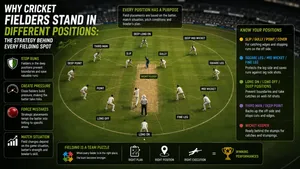 Why Cricket Fielders Stand in Different Positions: The Strategy Behind Every Fielding SpotLearn why cricket fielders stand in different positions and how fielding positions, catching areas, bowlers, and match situations influence field placement.