How Cricket Players Adapt Their Technique When Moving From Nets to Real Matches

Introduction: Why Does Cricket Feel Different in a Real Match?
A player can look outstanding during net practice and still struggle when the match begins.
They may strike the ball cleanly in the nets.
They may bowl accurate deliveries.
They may take excellent catches.
Then the competitive game starts, and suddenly everything feels different.
The reason is simple.
Practice and competition create different demands.
In the nets, players usually know that another delivery is coming.
They can experiment with shots.
They can repeat the same movement.
Mistakes usually have limited consequences.
In a real match, every delivery has context.
The score matters.
The wickets matter.
The opposition matters.
The field matters.
The required run rate matters.
The pressure matters.
This is why successful players learn to transfer their technical skills from practice into actual match situations.
Nets Build Technique, Matches Test Application
Net practice is essential for developing cricket skills.
It allows players to repeat specific movements and work on weaknesses.
However, technical ability is only one part of performance.
A match requires players to combine technique with:
- Decision-making
- Concentration
- Tactical awareness
- Pressure management
- Communication
- Adaptability
Why Players Often Look Better in the Nets
Net sessions are controlled environments.
A batter may know the approximate type of delivery they are going to face.
A bowler may already know the drill's objective.
This reduces uncertainty.
The Ball Does Not Always Have the Same Meaning
A short ball in the nets is simply a short ball.
In a match, its meaning depends on the situation.
It might be:
- A scoring opportunity
- A defensive challenge
- A deliberate tactic
- A setup for another delivery
The batter must interpret the situation before deciding what to do.
Match Batting Requires Decision-Making
A batter cannot play every delivery simply because they can.
They must decide:
- Which balls to attack
- Which balls to defend
- Which balls to leave
- When to rotate the strike
- When to take a risk
Why Shot Selection Changes in Matches
In practice, playing an aggressive shot may be encouraged.
In a match, that same shot could be completely inappropriate.
For example, a batter chasing a small target may not need to take a high-risk shot.
The situation determines the correct response.
Technique Must Become Flexible
Good technique does not mean repeating exactly the same movement every time.
Instead, players need a reliable foundation that can adapt to different deliveries.
Footwork Changes With Match Conditions
A batter's footwork may need to change depending on:
- Pace
- Swing
- Spin
- Bounce
- Pitch condition
- Bowling angle
Why Players Need to Read the Pitch
A pitch may behave differently from the practice surface.
The ball may:
- Bounce higher
- Stay lower
- Turn more
- Move laterally
- Travel faster
Players need to recognize these differences quickly.
The First Few Deliveries Are Important
When a batter arrives at the crease, the early deliveries provide valuable information.
They can help the batter understand:
- Pace of the pitch
- Bounce
- Movement
- Bowler's rhythm
- Outfield speed
This information can influence later decisions.
Why Players Should Not Rush to Prove Themselves
One common mistake is trying to score immediately.
A player may feel pressure to demonstrate their ability.
However, successful match batting often begins with observation.
Building an Innings Takes Time
A batter can gradually develop an understanding of:
- The pitch
- The bowler
- The field
- Their own timing
Once settled, they can expand their scoring options.
The Importance of Leaving the Ball
Leaving the ball is a skill that often receives less attention in net practice.
In matches, knowing which deliveries not to play can be extremely valuable.
Why Discipline Creates Scoring Opportunities
Every ball a batter does not need to attack reduces unnecessary risk.
Patience can force bowlers to make mistakes.
Bowlers Also Need to Adapt
The transition from nets to matches affects bowlers just as much.
In practice, a bowler may focus on a specific technical goal.
In a match, they must consider:
- Batter
- Field
- Score
- Match situation
- Bowling spell
- Required outcome
Line and Length Become Tactical Tools
A bowler cannot simply bowl their favorite delivery repeatedly.
They need to use line and length strategically.
Why Bowling Plans Change
A bowler defending a low total may attack differently from a bowler trying to restrict scoring during the middle overs.
The same technical action can be used for completely different tactical purposes.
Field Placement Influences Technique
A bowler's target should match the field.
If a captain places fielders on the leg side, the bowler may attempt to create shots toward those areas.
Why Communication Matters
Bowling is rarely an individual activity.
The bowler and captain need to communicate.
Fielders also provide information.
Match Bowling Requires Patience
A bowler may deliver several good balls without taking a wicket.
They must continue executing the plan.
Why One Bad Ball Should Not Change Everything
A boundary can create emotional pressure.
The bowler may immediately try something different.
Sometimes this makes the situation worse.
Good bowlers learn to reset quickly.
Fielding Technique Changes Under Pressure
Fielding in practice can feel very different from fielding during a competitive match.
In training, a dropped catch is a mistake.
In a match, it may change the entire game.
Why Anticipation Matters
Fielders need to anticipate:
- Shot direction
- Ball speed
- Batter's tendencies
- Match situation
The Importance of First Movement
A fielder's first movement can determine whether they reach the ball.
This is why reaction and anticipation drills are valuable.
Real Matches Add Psychological Pressure
One of the biggest differences between nets and matches is the mental environment.
Players know that their performance matters.
They may think about:
- Selection
- Team expectations
- Score
- Opponent
- Previous mistakes
- Personal performance
Pressure Can Change Technique
A batter who normally has a smooth swing may become tense.
A bowler with excellent control may rush their delivery.
A fielder may hesitate.
Why Relaxation Matters
Players perform technical movements more naturally when they remain relaxed.
This does not mean ignoring the situation.
It means avoiding unnecessary tension.
Breathing Can Help Players Reset
Simple breathing routines can help players regain focus between deliveries.
The objective is to create a consistent mental routine.
Developing a Pre-Delivery Routine
Many players use a routine before facing a delivery.
It may involve:
- Adjusting gloves
- Taking a breath
- Looking around the field
- Checking the bowler
- Resetting the stance
Why Routines Improve Consistency
A routine gives the player something familiar to focus on.
It can reduce distractions and help maintain concentration.
Nets Can Be Made More Match-Like
Coaches can make training more realistic.
Instead of simply bowling balls, they can create scenarios.
For example:
"You need 30 runs from 24 balls."
Now the batter must think about:
- Risk
- Strike rotation
- Boundaries
- Wickets
This creates a closer connection between practice and competition.
Match Simulation Is Extremely Valuable
Match simulations allow players to experience realistic pressure before an actual game.
They can include:
- Targets
- Field restrictions
- Wickets
- Required run rates
- Specific bowling plans
Why Scoreboards Help
A scoreboard gives context to every delivery.
The player knows what the team needs.
This changes decision-making.
Practice With Consequences
Coaches can introduce consequences into training.
For example:
- Losing a wicket ends the innings.
- A certain number of dot balls creates additional pressure.
- Bowlers receive targets based on economy.
- Fielding errors affect the simulated score.
The objective is not punishment.
It is to create realistic decision-making.
How Batters Adapt Their Grip
Players may make small grip adjustments depending on:
- Pace
- Bounce
- Shot type
- Conditions
But major technical changes should generally be developed carefully rather than invented during a match.
Why Players Should Trust Their Training
A match is not the ideal place to completely rebuild technique.
Players should rely on movements they have practiced repeatedly.
Technical Changes Need Time
If a coach identifies a batting or bowling problem, fixing it usually requires repeated practice.
The player should not expect an instant solution during a competitive game.
Why Confidence Comes From Repetition
Repeated practice creates familiarity.
When a player has successfully performed a movement hundreds of times, they are more likely to trust it under pressure.
Match Awareness Complements Technique
A technically strong player still needs to understand the game.
They should know:
- The score
- Number of wickets
- Overs remaining
- Required rate
- Field restrictions
- Match situation
Why Smart Players Think Ahead
A player should not only react to the current delivery.
They should consider what the opposition may try next.
Batters Plan for the Over
A batter may identify:
- Which bowler to attack
- Which deliveries to respect
- Where singles are available
This creates a broader strategy.
Bowlers Plan in Sequences
Bowlers may use multiple deliveries to create a setup.
For example:
- Attack the outside edge
- Repeat the line
- Change the length
- Introduce a different angle
The wicket may come from the final delivery of the plan.
Why One Ball Should Not Be Viewed Alone
Cricket is a sequence-based sport.
A single delivery can be important, but the previous and next deliveries also matter.
Learning From Mistakes During a Match
Players will make mistakes.
The key is how quickly they recover.
A batter may play a poor shot.
A bowler may concede a boundary.
A fielder may drop a catch.
The next action matters.
Why Resetting Is a Skill
Holding onto the previous mistake can damage future performance.
Good players learn to treat the next delivery as a fresh challenge.
Coaches Can Teach Reset Routines
A player can develop a simple mental process:
- Recognize the mistake.
- Identify what can be learned.
- Let it go.
- Refocus on the next delivery.
The Role of Fitness
Physical fitness becomes especially important during matches.
Players may need to:
- Bat for long periods
- Bowl extended spells
- Sprint in the field
- Concentrate for several hours
Fatigue Can Affect Technique
As players become tired, their technique may change.
They may:
- Lose balance
- React more slowly
- Drop their hands
- Reduce bowling accuracy
Why Fitness Supports Technical Consistency
Better physical conditioning helps players maintain their skills for longer.
Nutrition Also Matters
Players need appropriate nutrition and hydration to support match performance.
Poor fueling can contribute to:
- Fatigue
- Reduced concentration
- Lower energy
- Slower recovery
Recovery Supports Match Adaptation
Players who recover properly between games can maintain better training quality.
Recovery may include:
- Sleep
- Hydration
- Appropriate nutrition
- Light movement
- Rest
Equipment Can Affect Confidence
Players should use equipment they are comfortable with.
This includes:
- Cricket bat
- Batting gloves
- Batting pads
- Helmet
- Cricket shoes
Why Familiar Equipment Helps
Changing equipment immediately before an important match can create unnecessary distractions.
Players should ideally become familiar with their equipment during practice.
Bat Weight Can Influence Technique
A bat that feels too heavy can affect:
- Bat speed
- Footwork
- Timing
- Control
The right equipment should match the player's physical ability and playing style.
Why Cricket Balls Matter in Training
Training with different types of cricket balls can help players prepare for different conditions.
Suitable practice balls can be useful for technical drills.
Practice Nets Create Repetition
A good cricket practice net allows players to repeat skills in a controlled environment.
This repetition helps create confidence before match day.
How Heega Sports Supports Match Preparation
At Heega Sports, we understand that players need reliable equipment both during practice and competition.
Our cricket range includes:
- Kashmir Willow cricket bats
- English Willow cricket bats
- Leather cricket balls
- Practice balls
- Batting gloves
- Batting pads
- Cricket helmets
- Cricket shoes
- Cricket kit bags
- Practice nets
- Cricket stumps
- Training accessories
Using familiar, suitable equipment allows players to focus more on their technique and less on equipment-related distractions.
A Simple Nets-to-Match Training Plan
Players can make the transition easier by following a structured approach.
Stage 1: Build Technique
Focus on:
- Bat swing
- Footwork
- Bowling action
- Fielding basics
Stage 2: Add Decision-Making
Introduce:
- Shot selection
- Bowling plans
- Field awareness
Stage 3: Add Pressure
Use:
- Targets
- Time limits
- Match simulations
Stage 4: Practice Against Uncertainty
Mix different:
- Bowling speeds
- Lengths
- Angles
- Field settings
Stage 5: Review Performance
After each session, identify:
- What worked
- What failed
- What needs improvement
Why Players Should Not Expect Nets and Matches to Feel Identical
The goal of practice is not to recreate every aspect of competition perfectly.
Instead, practice should prepare players to handle the unpredictability of competition.
The Best Players Transfer Skills, Not Exact Movements
A player's technique should provide a foundation.
Match awareness determines how that technique is applied.
Final Thoughts
Moving from cricket nets to a real match is one of the biggest transitions in a player's development.
The player suddenly faces uncertainty, pressure, tactical decisions, changing conditions, and real consequences.
That is why a technically excellent net player may initially struggle in competition.
The solution is not necessarily to change everything.
Instead, players should learn to combine their existing technique with:
- Better decision-making
- Match awareness
- Mental control
- Tactical thinking
- Fitness
- Communication
- Experience
The nets provide repetition.
Matches provide adaptation.
The best players learn to connect the two.
They trust the skills they have practiced while remaining flexible enough to respond to what the game demands.
Great cricket is not about performing the same technique in every situation. It is about knowing when, where, and how to use that technique.
🏏 Prepare Better for Match Day With Heega Sports
Explore quality cricket bats, leather balls, practice balls, batting gloves, pads, helmets, cricket shoes, practice nets, kit bags, stumps, and training accessories at Heega Sports.
Shop Now
Heega Sports – Helping Players Turn Practice Skills Into Match-Day Performance.
Related posts
 How Cricket Pitch Conditions Affect Batting Technique and Shot SelectionLearn how cricket pitch conditions affect batting technique and shot selection, including pace, bounce, spin, grass, moisture, and surface changes.
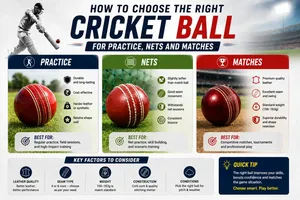 How to Choose the Right Cricket Ball for Practice, Nets and MatchesLearn how to choose the right cricket ball for practice, nets, and matches based on format, material, weight, seam, durability, player level, and use.
 Why Some Cricket Shots Feel Easier Than Others: The Role of Timing, Balance, and TechniqueWhy do some cricket shots feel easier than others? Discover how timing, balance, footwork, bat path, body position, and technique influence batting performance.