How to Choose the Right Cricket Ball for Practice, Nets and Matches

Introduction: Choosing the Right Cricket Ball
Choosing a cricket ball sounds simple until you start looking at the different options available.
Walk into a cricket shop or browse an online store and you may find leather balls, practice balls, training balls, synthetic balls, junior balls, red balls, white balls, and other options designed for specific situations.
So, which one should you buy?
The answer depends on how you plan to use it.
A player preparing for a competitive match will have different requirements from someone practising in the nets. A young beginner may need a softer ball, while an experienced club cricketer may want a match-style leather ball that closely reproduces the conditions they will face on the field.
The right ball can make training more useful because it allows players to practise with equipment that matches their skill level and purpose.
In this guide, we will explain how to choose a cricket ball for practice, nets and matches, what features to check before buying, and how to select the right option for different players.
Why Choosing the Right Cricket Ball Matters
The ball is involved in almost everything that happens during a cricket session.
A batter faces it.
A bowler delivers it.
A wicketkeeper catches it.
Fielders throw it.
Coaches use it for drills.
Because of this, the ball can have a noticeable effect on the quality of a training session.
A very soft ball will behave differently from a hard leather ball.
A tennis ball will not bounce or move in exactly the same way as a regulation cricket ball.
A worn-out ball may behave differently from a new one.
This does not mean one type is always better.
It means you should choose equipment according to what you are trying to practise.
First Decide: Practice, Nets or Match?
Before looking at leather, weight, seam, or colour, ask yourself one simple question:
Where will I use the cricket ball?
There are three common situations.
Practice
General practice can include catching, throwing, batting drills, reaction exercises, and basic bowling.
A training ball may be perfectly suitable for these sessions.
Nets
Net practice is more specific.
Bowlers want to work on line, length, pace, swing, seam, or spin.
Batters want to experience realistic bounce, pace, and movement.
For serious players, a good practice cricket ball can make net sessions more useful.
Matches
Competitive matches require the correct type of ball according to the competition rules.
The ball may need to meet specific requirements for:
- Weight
- Circumference
- Construction
- Colour
- Quality
- Format
Always check the regulations of your competition before selecting a match ball.
Understanding Different Types of Cricket Balls
Cricket balls are not all manufactured for the same purpose.
Some are designed for professional or competitive matches.
Others are intended for regular training.
Common categories include:
- Leather cricket balls
- Practice leather balls
- Synthetic training balls
- Softer training balls
- Junior cricket balls
- Tennis balls used for cricket drills
- Red cricket balls
- White cricket balls
- Pink cricket balls
Each option has a place in the game.
The important thing is knowing where that place is.
Leather Cricket Balls
A traditional leather cricket ball is the closest option to what players normally experience in competitive cricket.
A quality leather ball generally contains:
- Cork-based core
- Wound yarn
- Leather outer panels
- Stitching
- Raised seam
The construction gives the ball its characteristic feel and performance.
Leather cricket balls are commonly used for:
- Club cricket
- Academy training
- Advanced nets
- Match preparation
- Competitive matches
They are generally more expensive than basic training balls, so many players prefer to use them when realistic match practice is important.
Practice Cricket Balls
Practice balls are designed with regular training in mind.
They can be useful for players who spend several hours each week in the nets.
Depending on the product, a practice cricket ball may use leather or synthetic materials.
A good practice ball should provide enough consistency for players to work on their technique without necessarily requiring a premium match ball for every session.
This can be especially useful for:
- Cricket academies
- Schools
- Clubs
- Coaches
- Regular net sessions
Training Balls
Training balls come in a variety of designs.
Some are softer than traditional leather balls.
Others are made from synthetic materials and are designed to withstand repeated practice.
They can be useful for:
- Beginners
- Younger players
- Indoor practice
- Fielding drills
- Catching drills
- Reaction exercises
- Batting practice
The biggest advantage is flexibility.
You can select a training ball based on the drill rather than trying to use the same ball for every activity.
Tennis Balls for Cricket Practice
Tennis balls are commonly used for casual cricket and certain training drills.
They are softer and lighter than traditional leather cricket balls.
This makes them useful for players who are learning basic skills or for drills where a softer impact is preferred.
Tennis-ball cricket can help players work on:
- Hand-eye coordination
- Bat swing
- Timing
- Footwork
- Reaction speed
- Shot placement
However, tennis balls should not be considered a direct replacement for a match cricket ball.
Their bounce, weight, hardness, and movement are different.
Players preparing for competitive cricket should eventually practise with a ball that closely resembles the one they will face in matches.
Red Cricket Ball: When Should You Choose It?
The red ball is traditionally associated with Test cricket and first-class cricket.
It is generally used when players are preparing for long-format cricket.
A red cricket ball can be suitable for:
- Test-style training
- First-class preparation
- Traditional cricket practice
- Longer net sessions
Players who are preparing for Test matches or other red-ball competitions should include red-ball practice in their training.
The feel, seam, surface, and overall behaviour can be different from limited-overs equipment.
White Cricket Ball: When Should You Choose It?
A white cricket ball is widely associated with limited-overs cricket.
It is commonly used in:
- ODI cricket
- T20 cricket
- Other limited-overs competitions
If your goal is to prepare for a T20 or one-day match, practising with a white ball can help create a more realistic environment.
The ball's visibility also suits coloured clothing and floodlit conditions.
Pink Cricket Ball for Day-Night Cricket
Pink balls have become associated with day-night Test cricket.
They are designed for conditions where visibility changes as daylight fades and artificial lighting becomes more important.
If you are preparing for a competition that specifically uses a pink ball, it makes sense to train with the same type of equipment when possible.
Check the Cricket Ball Weight
Weight is one of the most important specifications to consider.
For senior men's cricket under MCC Law 4, the ball weighs between 155.9 g and 163 g.
Other playing categories can have different specifications.
Why does this matter?
Because weight affects how the ball feels during:
- Bowling
- Batting
- Catching
- Throwing
- Fielding
A player who regularly practises with a very different ball may notice the difference when switching to match equipment.
For competitive preparation, consistency is valuable.
Why Ball Weight Matters to Bowlers
Bowlers handle the ball before every delivery.
Even small differences in feel can affect comfort and rhythm.
Fast bowlers may become accustomed to a particular weight and seam profile.
Spinners rely on their fingers and wrist to control the ball.
When the ball feels familiar, players can focus more on technique instead of adjusting to unfamiliar equipment.
This is one reason serious players often prefer consistent training balls.
Check the Cricket Ball Size
For senior men's cricket, MCC Law 4 specifies a circumference of 22.4 cm to 22.9 cm.
However, specifications can vary for different categories.
When buying a cricket ball, make sure it is suitable for the player and competition.
For equipment managers and coaches, a cricket ball gauge can be useful for checking size.
If a ball looks unusually large, small, or misshapen, it is worth inspecting more carefully.
Why Cricket Ball Shape Matters
A cricket ball should be reasonably spherical.
A damaged or deformed ball may not behave consistently.
An uneven ball can affect:
- Bounce
- Bowling
- Batting
- Throwing
- Spin
- Fielding
When purchasing a new ball, look at it from different angles.
Rotate it in your hand and check for obvious flat areas or irregularities.
For accurate measurements, use appropriate equipment rather than relying only on visual inspection.
Look Closely at the Cricket Ball Seam
The seam is one of the most important features of a traditional leather ball.
It is created where the leather panels are stitched together.
A well-defined seam gives bowlers a useful grip and reference point.
Fast bowlers can use the seam while practising:
- Seam movement
- Swing
- Release
- Line and length
- Control
Spinners can also use the seam when positioning their fingers.
When choosing a leather cricket ball, look for secure and consistent stitching.
Why Leather Quality Matters
The leather covering is exposed to almost everything that happens during a match.
It hits the bat.
It strikes the pitch.
It is thrown across the field.
It is caught repeatedly.
It gets exposed to dirt and moisture.
Good leather should therefore be strong enough for the intended use.
When inspecting a cricket ball, check for:
- Even surface
- Proper finishing
- Secure panels
- No major cracks
- No loose leather
- Consistent construction
Small marks are not necessarily a problem, particularly after use.
But major damage can affect the ball's performance.
Match Ball or Training Ball?
One of the biggest decisions is whether you actually need a match ball.
For many players, the answer is: not for every session.
Using a premium match cricket ball for every practice session can become expensive.
A durable training ball can be more practical for everyday nets.
However, match preparation should include match-quality equipment.
For example, a club player might use training balls for regular weekday practice and then use a match-style ball for a dedicated weekend preparation session.
This gives the player realistic practice without unnecessarily wearing out expensive equipment.
Choosing a Cricket Ball for Beginners
Beginners should focus on comfort, control, and safety.
A softer training ball can be a good starting point.
It can help new players learn:
- Bat grip
- Bat swing
- Basic bowling
- Catching
- Throwing
- Footwork
There is no need to immediately use the hardest or most advanced cricket ball.
As confidence and technique improve, players can gradually progress toward more realistic match equipment.
Choosing a Cricket Ball for Junior Players
Younger players may require equipment that is appropriate for their age and physical development.
Coaches and parents should consider:
- Ball weight
- Ball hardness
- Player age
- Skill level
- Training environment
- Type of drill
A junior training ball can make certain activities easier and more comfortable.
The aim is to help young players develop good habits without giving them equipment that is unnecessarily difficult to handle.
Choosing a Cricket Ball for Academy Training
Cricket academies often need several types of balls.
A single group may include beginners, intermediate players, and advanced cricketers.
A practical academy setup might include:
- Softer training balls
- Durable practice balls
- Leather cricket balls
- Match-style balls
This allows coaches to select equipment according to the session.
For advanced bowling practice, a leather ball can provide more realistic seam and bounce.
For fielding drills, a durable training ball may be sufficient.
Choosing a Cricket Ball for Club Cricket
Club cricketers often have a balance between training and competition.
They need equipment that can survive regular use without becoming unnecessarily expensive.
A good approach is to keep separate balls for:
Regular Nets
Use durable practice balls.
Match Preparation
Use a suitable leather cricket ball.
Official Matches
Use the ball specified by the competition.
Fielding Drills
Use training balls where appropriate.
This approach can extend equipment life and make the cricket kit easier to manage.
Choosing a Cricket Ball for Advanced Players
Experienced players often notice details that beginners may overlook.
They may pay attention to:
- Leather feel
- Seam profile
- Ball weight
- Hardness
- Shape
- Surface finish
- Balance
- Durability
For an advanced player, training equipment should ideally reproduce the conditions they expect to face in competition.
If a player is preparing for red-ball cricket, regular red-ball practice makes sense.
If they are preparing for T20 cricket, white-ball practice is more appropriate.
Choosing the Right Ball for Batting Practice
Batting practice does not always require one type of ball.
The choice depends on the skill being developed.
For basic timing drills, a softer training ball may work well.
For realistic pace and bounce, a leather cricket ball is more appropriate.
For reaction drills, tennis balls or other specialised training options can be useful.
The key is to match the ball to the objective.
Choosing the Right Ball for Bowling Practice
Bowlers should think about what they are trying to improve.
Seam Bowling
Use a ball with a clear, well-defined seam.
Swing Bowling
Use a ball that allows you to practise controlling seam position and release.
Spin Bowling
A traditional cricket ball can provide a realistic grip and seam.
Pace Training
A properly weighted ball is important when working on realistic bowling rhythm.
Again, the best cricket ball is not necessarily the same for every drill.
Choosing the Right Ball for Fielding Practice
Fielding drills can involve a lot of throwing and catching.
A durable training ball can often be a sensible choice.
It may allow coaches to repeat drills without wearing out premium match balls.
For advanced fielding sessions, however, players should also practise with match-style equipment.
Catching a leather cricket ball feels different from catching a tennis ball or soft training ball.
What Makes a Good Cricket Ball?
Regardless of whether you choose red, white, leather, or training equipment, several basic qualities matter.
A good cricket ball should have:
- Suitable weight
- Appropriate size
- Consistent shape
- Secure stitching
- Proper seam
- Suitable outer covering
- Good durability
- A purpose-appropriate construction
A top quality cricket ball should also feel consistent from one ball to another.
This is particularly important for coaches and players who want reliable training.
Common Mistakes When Buying a Cricket Ball
Buying Only by Price
A cheaper ball is not automatically better value.
Consider durability and intended use.
Buying Only by Appearance
A shiny finish can look impressive, but construction matters more.
Ignoring the Format
A red ball is not normally the correct choice for a T20 match.
Using the Same Ball for Everything
Different drills may benefit from different equipment.
Ignoring Player Age
Young players may need lighter or softer options.
Not Checking the Seam
The seam is an important part of a leather cricket ball.
Buying Without Checking the Specification
Always check whether the ball is appropriate for your competition or playing category.
How to Make Your Cricket Ball Last Longer
Even a well-made ball needs proper care.
Keep It Dry
Avoid unnecessary exposure to water and moisture.
Store It Properly
Keep the ball in a cool, dry location.
Avoid Excessive Heat
Extreme heat can affect leather and other materials.
Do Not Crush It
Avoid placing heavy equipment on top of cricket balls.
Handle the Seam Carefully
Do not pull loose stitching.
Clean It Sensibly
Use suitable cleaning methods rather than harsh chemicals.
Proper storage and handling can help preserve your cricket equipment.
When Should You Replace a Cricket Ball?
A cricket ball does not necessarily need to be replaced because it has a few scratches.
Wear is normal.
However, replacement may be appropriate when you notice:
- Major leather damage
- Loose stitching
- Severe seam damage
- Significant deformation
- Cracks
- Excessive wear
- Unusual shape
For official matches, always follow the relevant competition rules regarding ball replacement.
How to Build a Practical Cricket Ball Collection
If you train regularly, you do not necessarily need ten identical premium match balls.
A practical collection could include:
For Everyday Practice
Durable training balls.
For Nets
Practice leather balls or suitable match-style balls.
For Match Preparation
High-quality cricket balls that closely resemble competition equipment.
For Fielding Drills
Training balls or other suitable practice options.
For Junior Sessions
Age-appropriate softer balls.
This approach gives players flexibility while helping control equipment costs.
Cricket Ball Buying Checklist
Before you buy, ask yourself these questions:
1. What format do I play?
Test, ODI, T20, school cricket, club cricket, or recreational cricket?
2. Who will use the ball?
A beginner, junior player, academy player, club cricketer, or advanced player?
3. Where will it be used?
Nets, outdoor practice, indoor training, or matches?
4. What material do I need?
Leather, synthetic, or softer training material?
5. What weight is appropriate?
Check the requirements for your playing category.
6. What colour is required?
Red, white, or pink?
7. How frequently will it be used?
Regularly or occasionally?
8. How important is match realism?
If you are preparing for competition, choose equipment that closely matches the match ball.
Why the Right Cricket Ball Can Improve Training
Equipment alone cannot improve a player's technique.
But suitable equipment can make practice more realistic and productive.
When a player repeatedly works with a consistent cricket ball, they can focus on:
- Bowling accuracy
- Batting timing
- Seam awareness
- Spin control
- Catching
- Throwing
- Reaction
- Shot selection
Instead of constantly adjusting to different equipment, the player can concentrate on the skill itself.
That is particularly valuable when preparing for important cricket matches.
How Heega Sports Helps You Choose Cricket Equipment
At Heega Sports, we understand that every player does not need the same cricket equipment.
A beginner may need a softer training ball.
An academy player may need durable practice equipment.
A club cricketer may need a reliable leather cricket ball for match preparation.
A competitive player may want equipment that closely reflects match conditions.
That is why choosing equipment according to your actual requirements is so important.
Along with cricket balls, Heega Sports offers a range of cricket equipment, including:
- Leather cricket balls
- Training balls
- Practice cricket balls
- Kashmir Willow cricket bats
- English Willow cricket bats
- Batting gloves
- Batting pads
- Cricket helmets
- Cricket shoes
- Cricket socks
- Cricket kit bags
- Practice nets
- Cricket stumps
- Training accessories
Whether you are practising in your local nets, training at an academy, preparing for club cricket, or simply enjoying a game with friends, the right equipment can make your session more enjoyable and productive.
Frequently Asked Questions
Which cricket ball is best for practice?
The best practice cricket ball depends on the type of training. Softer training balls can work well for beginners and drills, while leather balls are better for realistic match preparation.
Which cricket ball should I use for nets?
For serious net practice, choose a durable cricket ball that matches the format you are preparing for. Leather balls are useful when realistic bounce, seam, and feel are important.
Should I use a match ball for training?
You can, but you do not necessarily need to use a premium match ball for every session. A good practice ball can be more economical for regular training.
Is a red cricket ball better than a white cricket ball?
Neither is universally better. Red balls are traditionally used for Test and first-class cricket, while white balls are commonly used for ODI and T20 cricket.
Are tennis balls useful for cricket training?
Yes. Tennis balls can be useful for beginners, reaction drills, timing, and recreational cricket. They do not behave exactly like leather cricket balls.
What should I check before buying a leather cricket ball?
Check the leather, seam, stitching, shape, weight, size, construction, and intended use.
How heavy should a cricket ball be?
For senior men's cricket under MCC Law 4, the ball weighs between 155.9 g and 163 g. Other playing categories may have different requirements.
How long does a cricket ball last?
It depends on the ball's construction, quality, frequency of use, playing conditions, and maintenance. A match ball and a training ball can have very different lifespans.
Which cricket ball is best for beginners?
A softer or lighter training ball can be a practical choice for beginners, depending on their age and training environment.
Should academy players practise with leather balls?
For advanced academy players, leather balls can provide more realistic match preparation. However, softer training balls can still be useful for specific drills.
Final Thoughts
Choosing the right cricket ball is really about choosing the right equipment for the job.
There is no single ball that is perfect for every player and every training session.
A beginner may be better served by a softer training ball.
A young player may need an age-appropriate option.
A club cricketer may want durable practice balls for regular nets and a quality leather ball for match preparation.
An advanced player preparing for Test cricket should spend time with a red ball.
A T20 player should become comfortable with the white cricket ball used in limited-overs cricket.
The same principle applies to training drills.
Use tennis balls when they make sense.
Use training balls for repetitive practice.
Use leather cricket balls when realistic match conditions matter.
And always consider the ball's weight, size, shape, seam, leather quality, and durability before making your choice.
The goal is not simply to buy a ball.
The goal is to choose equipment that helps you practise the right skills under the right conditions.
A good cricket ball should feel reliable in your hand, behave consistently on the field, and suit the level of cricket you are playing.
When your equipment is right, you can spend less time worrying about what you are using and more time focusing on the things that actually matter—your technique, your confidence, and your next delivery or shot.
Choose wisely, train consistently, and make every cricket session count.
🏏 Find the Right Cricket Equipment at Heega Sports
Whether you need a leather cricket ball for match preparation, training balls for regular nets, or complete cricket equipment for your next season, Heega Sports has options for different levels of players.
Explore:
- Leather cricket balls
- Training balls
- Practice cricket balls
- English Willow cricket bats
- Kashmir Willow cricket bats
- Batting gloves
- Batting pads
- Cricket helmets
- Cricket shoes
- Cricket kit bags
- Practice nets
- Cricket stumps
- Training accessories
Shop Now
Heega Sports – Quality Cricket Equipment for Training, Matches, and Player Development.
Related posts
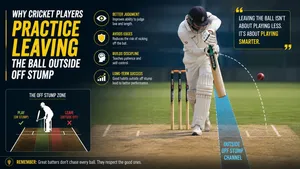 Why Cricket Players Practice Leaving the Ball Outside Off StumpDiscover why cricket players practice leaving the ball outside off stump and how this simple skill improves shot selection, patience, balance, and batting confidence.
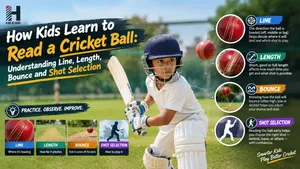 How Kids Learn to Read a Cricket Ball: Understanding Line, Length, Bounce and Shot SelectionLearn how kids can read a cricket ball by understanding line, length, bounce and shot selection to develop better batting skills and confidence.
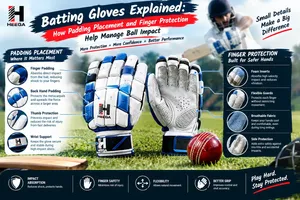 Batting Gloves Explained: How Padding Placement and Finger Protection Help Manage Ball ImpactLearn how batting glove padding placement, finger protection, and fit help manage ball impact. Find practical tips for choosing cricket batting gloves.