Why Cricket Players Practice Leaving the Ball Outside Off Stump

Introduction: Sometimes the Best Shot Is No Shot
There is something slightly strange about cricket.
A batter can spend hours learning how to drive, cut, pull, sweep, and loft the ball.
Then a coach may spend an entire session telling them not to hit it.
For a beginner, this can feel confusing.
If the goal is to score runs, why practice leaving the ball?
The answer is simple: good batting is not about hitting every delivery.
It is about understanding which balls deserve a response and which ones are better left alone.
One of the most important examples is the delivery outside off stump.
It may look tempting.
It may be close enough to reach.
It may even appear to be asking for a cover drive.
But if the ball is in an awkward area, attacking it can create unnecessary risk.
A batter who learns to leave such deliveries can force the bowler to keep searching for a way to get them out.
That can completely change the rhythm of an innings.
Leaving the ball is therefore not passive batting.
It is a decision.
And like any good batting decision, it takes practice.
What Does "Leaving the Ball" Actually Mean?
Leaving the ball means deliberately choosing not to play a shot at a delivery.
The batter watches it pass without attempting to hit it.
Against a delivery outside off stump, this can be particularly useful when the ball is too far away to attack comfortably.
The batter may simply:
- Watch the ball closely.
- Judge its line.
- Decide it is not worth playing.
- Move the bat away.
- Allow the ball to pass safely to the wicketkeeper.
It sounds easy.
In reality, it requires considerable discipline.
A ball traveling past the outside edge can be incredibly tempting.
The batter has to trust their judgment and resist the urge to chase it.
Why Outside Off Stump Is Such an Important Area
The area outside off stump is one of the most productive zones for bowlers.
It creates opportunities for several types of dismissals.
A batter who reaches away from their body can edge the ball.
That edge might travel toward:
- Slip
- Gully
- Wicketkeeper
- Point
The farther the batter reaches, the harder it can become to maintain balance and control.
This is why bowlers often test a batter outside off stump repeatedly.
They are not necessarily trying to get a boundary.
They may simply be waiting for the batter to make one unnecessary mistake.
The Difference Between a Good Ball and a Bad Ball
Not every delivery outside off stump should automatically be left.
This is where batting becomes interesting.
A ball outside off stump can be:
- Too wide to play.
- Close enough for a controlled drive.
- Short enough for a cut.
- Full enough for a scoring shot.
- Moving away late.
- Coming into the batter.
The batter has to judge the delivery before deciding what to do.
That means leaving the ball is not a fixed rule.
It is part of shot selection.
A good batter asks:
Is this ball worth the risk?
That question can be more valuable than simply asking:
Can I hit it?
Why Beginners Chase Outside-Off Deliveries
Young players often want to hit the ball.
That is completely natural.
A batter sees the ball moving outside off stump and thinks about a cover drive.
The hands move toward the ball.
The body follows.
Suddenly, the batter is reaching.
If the ball moves slightly after pitching, the bat may miss it or catch the outside edge.
The problem is not necessarily poor hand-eye coordination.
The problem is decision-making.
The batter tried to hit a ball that did not require a shot.
Learning to leave it can remove that unnecessary risk.
Leaving the Ball Requires Patience
Patience is one of the hardest skills to teach in cricket.
Most players understand the concept.
Actually doing it when a tempting delivery comes along is another matter.
A batter may have faced ten deliveries without scoring.
Then the bowler sends one outside off stump.
The batter thinks:
"That one is there."
They drive.
The edge carries to slip.
In a split second, the innings is over.
Practicing leaves helps players become comfortable with not scoring from every delivery.
That comfort can become extremely valuable during longer innings.
It Helps Batters Understand Their Off Stump
Knowing where your off stump is sounds basic.
But it is a skill that develops with experience.
A batter standing at the crease needs to judge whether a ball is:
- Outside the hitting zone.
- Close to off stump.
- On off stump.
- Moving toward the body.
Leaving balls regularly helps improve this judgment.
Over time, the batter becomes more aware of their personal hitting zone.
That awareness can make shot selection much more reliable.
The Eyes Have a Big Role to Play
Leaving the ball is not simply about keeping the bat still.
The batter must watch the delivery carefully.
They need to judge:
- Release point
- Initial line
- Length
- Movement
- Speed
- Final trajectory
A player who watches the ball closely is in a better position to decide whether to play it.
This is why coaches often emphasize watching the ball all the way through.
Good leaving begins with good observation.
Leaving Helps Batters Read the Bowler
A batter does not need to attack every ball to learn from it.
In fact, watching a few deliveries pass can provide useful information.
The batter can notice:
- How much the ball is swinging.
- Whether it is moving late.
- How consistent the bowler's line is.
- Whether the pitch is helping movement.
- How much bounce the ball is producing.
Once the batter understands these characteristics, they can make better decisions about when to attack.
Sometimes, leaving the ball is also a way of collecting information.
Swing Bowling Makes Leaving Even More Important
Swing bowling can make deliveries outside off stump particularly dangerous.
A ball may initially look playable.
Then it moves slightly away from the bat.
That small movement can turn a comfortable-looking shot into an edge.
This is why leaving becomes especially valuable when the ball is moving.
Instead of testing the outside edge, the batter can allow the delivery to pass.
If the bowler continues bowling too far outside off stump, they may eventually have to change their line.
That creates opportunities later.
Seam Movement Can Create Similar Problems
Swing is not the only concern.
A ball can also move off the pitch after landing.
Seam movement can be difficult to predict.
A batter who reaches for a delivery may discover that the ball has moved away just enough to beat the bat.
Leaving the ball removes that particular risk.
This does not guarantee safety.
But it can reduce the number of situations where the batter is voluntarily putting their wicket in danger.
The Art of Leaving the Ball Against Fast Bowlers
Fast bowlers can make outside-off deliveries uncomfortable because the batter has less time to react.
The ball may travel from the bowler's hand to the batter very quickly.
That means the batter cannot wait until the final moment to decide everything.
They need a good initial setup.
A balanced stance helps.
A controlled trigger movement helps.
Clear judgment helps.
The batter should be prepared to play but equally prepared to leave.
That balance is important.
Why Balance Matters When Leaving
A batter can technically leave the ball while still being poorly balanced.
That is not ideal.
Good batting starts with control of the body.
When leaving a delivery, the batter should remain composed rather than falling toward the ball.
This matters because the next delivery may require immediate movement.
A player who maintains balance can quickly move forward, backward, or across the crease when necessary.
Leaving Is Not the Same as Being Afraid
Some young players worry that leaving balls makes them look defensive.
It should not.
A batter who leaves a dangerous delivery is making a calculated decision.
There is nothing weak about refusing a low-percentage scoring opportunity.
In fact, experienced batters often appear selective because they understand risk.
They know that scoring runs is only one part of staying at the crease.
The first job is often to avoid giving the bowler an easy chance.
Leaving Can Frustrate Bowlers
Bowlers want batters to make mistakes.
If a batter repeatedly leaves deliveries outside off stump, the bowler may become frustrated.
They may start searching for a different line.
They might bowl:
- Straighter.
- Fuller.
- Shorter.
- Closer to the body.
That can create new scoring opportunities.
In this way, a good leaving game can influence the bowler's behavior.
The batter is not just reacting to the bowler.
They are gradually influencing the contest.
The Bowler's Perspective
Imagine a fast bowler delivering a good-length ball just outside off stump.
The batter leaves it.
Another similar ball.
The batter leaves again.
The bowler tries slightly closer to off stump.
Still no shot.
Eventually, the bowler may decide to attack the stumps.
Now the batter may have a more comfortable scoring opportunity.
This is one of the strategic benefits of patience.
The batter forces the bowler to earn the wicket rather than giving them an opportunity through impatience.
Leaving Helps Build Longer Innings
Long innings are rarely built entirely from boundaries.
They are often built through a combination of:
- Good defense
- Singles
- Rotation of strike
- Controlled attacking shots
- Patience
- Smart shot selection
Leaving the ball fits naturally into this approach.
By reducing unnecessary risks, the batter gives themselves more time at the crease.
More time can mean more opportunities to score later.
Why Test Cricket Highlights This Skill
The value of leaving the ball is particularly obvious in Test cricket.
A batter may face dozens of deliveries before finding a scoring opportunity.
The goal is not to attack everything.
It is to survive difficult periods and capitalize when the bowler offers something easier.
During a spell of high-quality fast bowling, leaving deliveries outside off stump can be a major part of the batter's strategy.
This is one reason the skill is so closely associated with traditional long-format batting.
But It Matters in Limited-Overs Cricket Too
Leaving the ball is not limited to Test matches.
It also has value in shorter formats.
In limited-overs cricket, batters have less time to score.
That does not mean every delivery should be attacked.
A batter who repeatedly edges balls outside off stump can lose their wicket before they have an opportunity to accelerate.
Sometimes, one carefully selected leave can be enough to reset the contest.
The exact balance between patience and aggression depends on the match situation.
Leaving the Ball During T20 Cricket
T20 cricket is naturally aggressive.
Batters are expected to score quickly.
But even in T20 cricket, not every delivery is a scoring opportunity.
A ball well outside the batter's reach may be better left alone.
Trying to hit everything can result in:
- Edges
- Missed shots
- Dot-ball pressure
- Unnecessary dismissals
Smart T20 batting is not mindless aggression.
It is controlled aggression.
Knowing which balls to ignore can help preserve the wicket for the deliveries that can actually be attacked.
The Match Situation Changes the Decision
The same ball can require different decisions depending on the situation.
Imagine a batter has just arrived at the crease.
The ball is outside off stump and moving away.
Leaving it may be sensible.
Now imagine the same delivery with a small target required and only a few balls remaining.
The batter may decide the risk is worth taking.
This is why batting cannot be reduced to a list of fixed rules.
Context matters.
Field Placement Also Influences the Risk
A batter should understand where the fielders are positioned.
If several fielders are waiting in catching positions on the off side, chasing a wide delivery may be especially risky.
If the field is spread out, a controlled shot may offer a scoring opportunity.
The ability to leave the ball gives the batter another option.
Instead of hitting into a strong catching field, they can wait for a better delivery.
Practicing the Leave in Nets
Leaving the ball should be practiced just like a drive or defensive shot.
A coach can create a simple drill.
The batter faces a sequence of deliveries outside off stump.
The instruction is:
Only play the ball if it is genuinely in your scoring area.
Otherwise, leave it.
This forces the batter to make a decision on every delivery.
The coach can gradually vary:
- Length
- Width
- Speed
- Swing
- Bounce
The drill becomes more challenging as the batter improves.
Use a Bowling Machine Carefully
A bowling machine can be useful for this type of practice because it can repeat similar deliveries.
A coach can set a sequence of balls around the off-stump channel.
The batter practices deciding:
- Play
- Defend
- Leave
This creates consistency in training.
However, real bowlers should eventually be included because their release points, actions, and variations are less predictable.
Partner Throwdowns Can Help
Throwdowns are another simple option.
A coach or teammate can deliver balls from a shorter distance.
The batter focuses on judging the line rather than trying to hit every delivery.
This is especially useful for younger players.
The goal is to develop the habit of watching first and deciding second.
Shadow Practice Can Build Awareness
Players can also practice leaving without a ball.
Stand in batting position.
Imagine the bowler approaching.
Visualize a delivery outside off stump.
Move into the position you would naturally use to leave it.
Then reset.
This type of shadow practice can help players become familiar with the movement.
It should not replace actual practice, but it can be useful between sessions.
A Simple "Play or Leave" Drill
A coach can call out a mixture of deliveries.
For example:
- Full on off stump — play.
- Good length outside off — leave.
- Short outside off — assess.
- Full and wide — leave.
- Straight delivery — defend or score.
- Ball moving away — leave if outside the safe zone.
The exact decisions should depend on the player's ability and coaching goals.
The important part is making the batter think.
Why Random Practice Is Better Than Predictable Practice
If a player knows every ball will be outside off stump, they do not really need to read the delivery.
They simply wait for the expected ball.
Real cricket is different.
The bowler can change the line at any moment.
A better training session mixes playable and unplayable deliveries.
That forces the batter to watch and decide.
The objective is to recreate the uncertainty of a real innings.
How Coaches Can Correct Common Mistakes
A batter may leave the ball incorrectly in several ways.
Chasing the Delivery
The batter moves too far toward the ball.
Taking the Bat Away Too Late
The bat is close to the delivery and risks an accidental edge.
Losing Balance
The batter leans excessively while leaving.
Looking Away
The batter stops watching the ball too early.
Moving Too Much
The batter makes an unnecessary movement instead of simply allowing the ball to pass.
Coaches can identify which issue is occurring and work on it individually.
Don't Leave Every Ball Automatically
This point is worth repeating.
The lesson is not:
"Never play outside off stump."
The lesson is:
"Don't play at a delivery simply because it is there."
A good ball outside off stump may be a scoring opportunity.
A wide ball may not be.
A short ball may invite a cut.
A fuller ball may invite a drive.
The batter needs to judge the combination of line, length, movement, pace, and match situation.
Developing a Personal Batting Zone
Every batter eventually develops an understanding of their preferred scoring areas.
Some players are excellent square of the wicket.
Others are particularly strong through cover.
Some are comfortable driving straight.
Others prefer working the ball into gaps.
Knowing your strengths makes leaving easier.
If a delivery is outside your comfortable scoring zone and carries significant risk, there may be little reason to attack it.
Leaving Can Improve Shot Selection
Shot selection is one of the biggest differences between inexperienced and experienced batters.
An inexperienced player often thinks:
"Can I hit this?"
An experienced player may think:
"Is this the right ball to hit?"
That small change in thinking can make a huge difference.
Leaving the ball is one of the simplest ways to practice that mindset.
Why Patience Creates Scoring Opportunities
It may seem strange that not scoring can eventually help you score more.
But consider what happens when a batter stays at the crease.
The bowler has to continue bowling.
The fielding side has to continue working.
Eventually, something changes.
The bowler misses their length.
The ball stops swinging.
A gap appears in the field.
A loose delivery arrives.
The batter who protected their wicket now has the opportunity to take advantage.
Patience creates time.
Time creates opportunities.
Leaving Can Protect Confidence
Getting out repeatedly to balls outside off stump can affect a player's confidence.
They may begin worrying about the next delivery.
They may start reaching for balls they would normally leave.
This can create a cycle of poor decisions.
Developing confidence in the leave can break that cycle.
The player learns:
"I don't have to hit this."
That simple thought can make the crease feel much less stressful.
Young Players Should Learn the Skill Early
Children do not need to spend entire training sessions leaving balls.
But introducing the concept early can be valuable.
Young players should understand that:
- Not every ball is a scoring opportunity.
- Good batting requires judgment.
- Patience is useful.
- Balance matters.
- Watching the ball matters.
These ideas can stay with them as they progress through school, academy, club, and competitive cricket.
The Role of the Front Foot
When a batter plays a front-foot shot, the front foot moves toward the delivery.
But against a ball that should be left, the batter does not need to commit forward.
Recognizing this difference is important.
If the player starts moving toward a ball and then decides to leave too late, they can end up in an awkward position.
Early judgment helps.
The Role of the Back Foot
Back-foot movement can also affect decision-making.
A shorter delivery outside off stump may be playable with a cut or other controlled shot.
But if the ball is too wide or moving away sharply, leaving it may still be the better choice.
The batter needs to judge the ball rather than automatically moving backward because it is short.
How Good Batting Looks From the Outside
One interesting thing about experienced batting is how little movement sometimes appears to happen.
A player watches the ball.
Makes a small adjustment.
Leaves it.
Resets.
Nothing dramatic happens.
But that quiet decision may have prevented a dismissal.
Good batting is not always about visible action.
Sometimes, the most valuable movement is the decision not to move the bat at all.
Cricket Bat Equipment Should Support Good Technique
The right equipment can also make batting practice more comfortable.
A properly sized cricket bat should allow the player to control the blade without unnecessary effort.
A bat that is too heavy can make it harder to maintain control.
Similarly, comfortable batting gloves and properly fitted protective equipment can allow players to focus on the ball and their decisions.
Equipment cannot teach shot selection.
But suitable equipment can remove unnecessary distractions during practice.
How Heega Sports Supports Better Batting Practice
At Heega Sports, we understand that developing a reliable batting game takes time, repetition, and suitable equipment.
Our cricket range includes:
- Kashmir Willow cricket bats
- English Willow cricket bats
- Junior cricket bats
- Leather cricket balls
- Practice cricket balls
- Batting gloves
- Batting pads
- Cricket helmets
- Cricket shoes
- Cricket kit bags
- Practice nets
- Cricket training accessories
Whether a player is learning the basics or preparing for competitive cricket, having suitable equipment can help create a more comfortable and consistent training environment.
A Simple Practice Routine for Learning the Leave
Players can add a short leaving exercise to regular batting practice.
10 Deliveries: Watch Only
The batter focuses on judging the line and length.
10 Deliveries: Play or Leave
The batter decides whether each delivery deserves a shot.
10 Deliveries: Add Movement
The bowler introduces swing, bounce, or changes in line.
10 Deliveries: Match Situation
The coach gives the batter a scenario and asks them to make decisions accordingly.
This does not need to take a large part of the session.
Even a few focused minutes can help build awareness.
Questions Players Can Ask Themselves
After a practice session, a batter can reflect:
- Did I chase balls outside off stump?
- Did I watch the ball closely?
- Did I know where my off stump was?
- Did I stay balanced?
- Did I play at balls I didn't need to hit?
- Did I wait for my scoring opportunities?
- Did I change my approach according to the match situation?
These questions can help players understand their decision-making.
Final Thoughts
Practicing the leave outside off stump may not look as exciting as practicing a cover drive or a powerful pull shot.
There is no big sound.
No boundary.
No celebration.
Just the ball passing safely through to the wicketkeeper.
Yet that simple action can be one of the most useful habits a batter develops.
It teaches patience.
It improves judgment.
It helps players understand their off stump.
It encourages better shot selection.
It can reduce unnecessary edges.
And perhaps most importantly, it teaches a valuable lesson about batting:
You do not have to play every ball.
Good batters understand that every delivery presents a decision.
Some should be attacked.
Some should be defended.
Some should be worked into gaps.
And some should simply be left alone.
Against high-quality bowling, especially when the ball is moving outside off stump, knowing when not to use the bat can protect an innings.
As a player becomes more experienced, this decision becomes less conscious.
They begin to recognize the delivery naturally.
The bat stays close to the body.
The eyes follow the ball.
The delivery passes.
The batter resets.
Then they wait for the next opportunity.
That is not negative cricket.
It is intelligent batting.
And sometimes, the difference between a short innings and a memorable one is simply knowing which balls to leave behind.
🏏 Build Better Batting Habits With Heega Sports
Explore cricket bats, Kashmir Willow bats, English Willow bats, junior cricket bats, leather cricket balls, practice balls, batting gloves, pads, helmets, cricket shoes, kit bags, practice nets, and training accessories designed for players at every stage.
Shop Now
Heega Sports – Supporting Better Decisions, Better Training, and Better Cricket.
Related posts
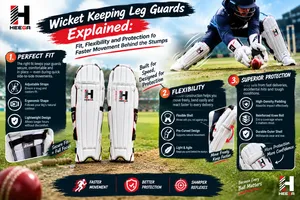 Wicket Keeping Leg Guards Explained: Fit, Flexibility and Protection for Faster Movement Behind the StumpsDiscover how to choose wicketkeeping leg guards with the right fit, flexibility, and protection for quicker movement, comfortable crouching, and confident keeping.
 Cricket Kit Essentials Explained: What Every Player Needs for Practice and Match DayDiscover essential cricket kit items for practice and match day, including bats, protective gear, clothing, footwear, and accessories for every player.
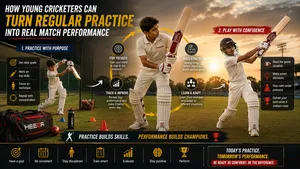 How Young Cricketers Can Turn Regular Practice Into Real Match Performance.Learn how young cricketers can turn regular practice into match performance through realistic drills, match simulations, decision-making, pressure training, and consistency.