Cricket Kit Essentials Explained: What Every Player Needs for Practice and Match Day
Introduction: Why Every Cricketer Needs the Right Kit
Cricket requires more than skill, stamina, and practice. The equipment a player uses can affect comfort, confidence, safety, and preparation throughout the game.
Whether you are picking up a cricket bat for the first time, attending regular academy sessions, playing club cricket, or competing at a higher level, having the right cricket kit makes a difference. You need equipment that suits your role, fits properly, and can handle the demands of your playing conditions.
However, building a cricket kit can feel confusing, especially for beginners. There are bats, pads, gloves, helmets, shoes, clothing, and plenty of smaller accessories to consider. Some items are essential for almost every player, while others depend on whether you bat, bowl, keep wickets, or play more than one role.
The goal is not to buy everything at once. It is to understand what you need, choose suitable equipment, and make sure your kit is ready for both practice and match day.
In this guide, we will explain the essential cricket kit items, what each one does, how to choose the right options, and how to organize your gear so you can focus on playing your best cricket.
What Is a Cricket Kit?
A cricket kit is the collection of equipment, clothing, and accessories a player uses for training and matches.
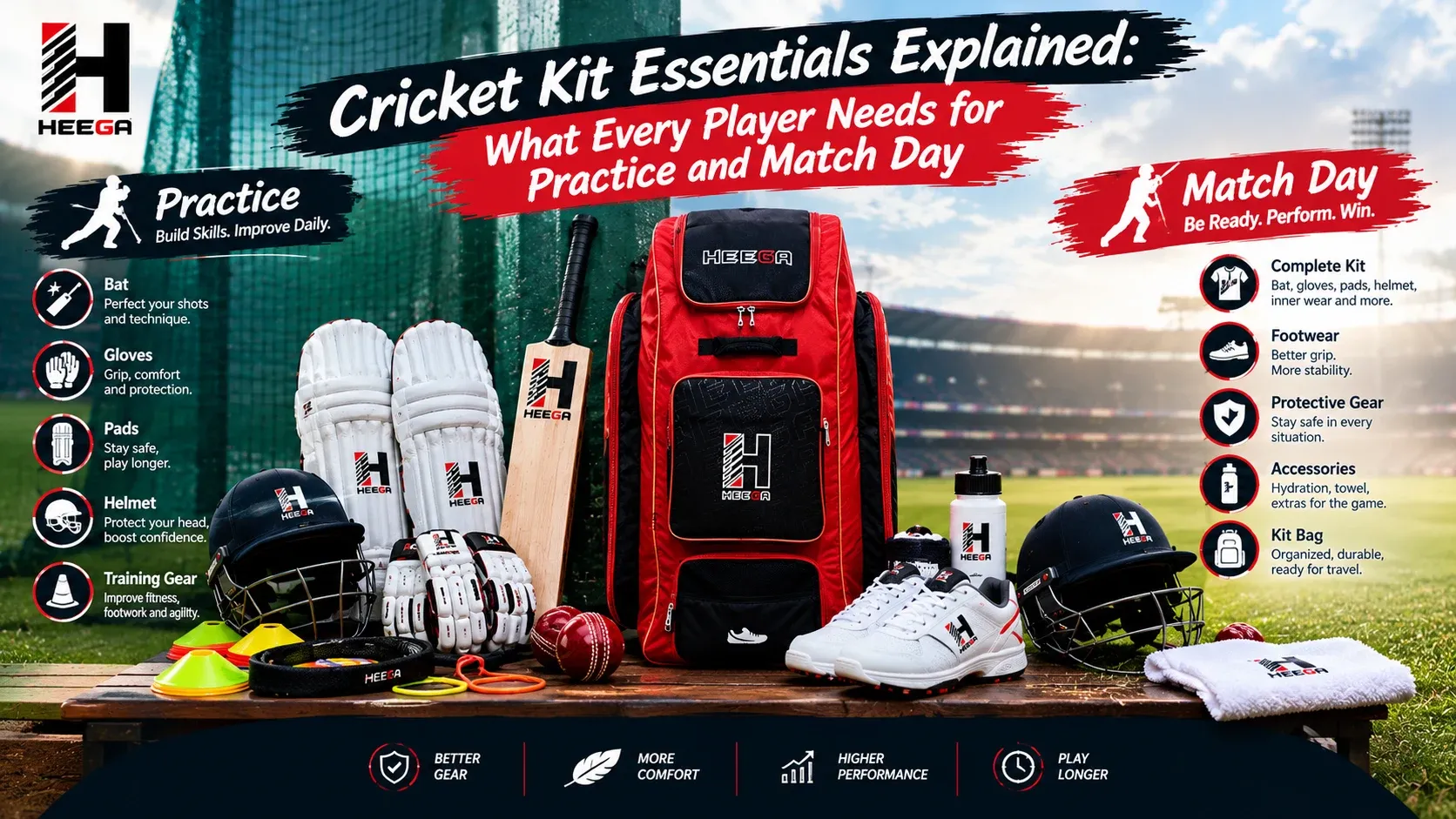
A typical kit may include:
- Cricket bat
- Batting gloves
- Batting pads
- Cricket helmet
- Abdominal guard or box
- Thigh, arm, or chest protection where appropriate
- Cricket shoes
- Cricket clothing
- Kit bag
- Water bottle and basic personal accessories
Players who bowl or keep wickets may also need role-specific equipment, such as bowling accessories or wicketkeeping gloves and pads.
The exact contents depend on the player's role, age, experience, competition rules, and the type of cricket being played.
A beginner playing with a soft ball will not necessarily need the same equipment as a player facing hard-ball bowling in a competitive match. Choosing gear for the actual level and format of play is the first step toward building a practical cricket kit.
1. Cricket Bat: The Centrepiece of a Batting Kit
For a batter, the cricket bat is one of the most important pieces of equipment. It affects how comfortably you play shots, control the bat, and respond to different deliveries.
But the most expensive bat is not automatically the best choice.
The right bat should suit your strength, height, playing style, and level of cricket.
English Willow vs Kashmir Willow
Cricket bats are commonly made from English willow or Kashmir willow.
English willow bats are often selected by players looking for a particular combination of pickup, feel, and performance. Their quality can vary depending on the cleft, grade, pressing, and manufacturing.
Kashmir willow bats can offer practical value for beginners and club players. They are often considered by players who want a functional bat at a more accessible price.
Neither material guarantees performance on its own. The bat's overall construction, weight, balance, preparation, and suitability for the player all matter.
How to Choose the Right Cricket Bat
Before buying a bat, check:
- Weight: Can you lift and swing it comfortably?
- Pickup: Does it feel manageable when you move it through a shot?
- Size: Is the bat suitable for your height and reach?
- Handle: Does it feel secure and comfortable in your hands?
- Profile: Does the shape suit your preferred style of batting?
- Preparation: Does the bat need knocking-in or other preparation before use?
Avoid choosing a bat just because it looks large or has a particular number of grains. Comfort and control should remain central to your decision.
2. Batting Gloves: Grip, Comfort, and Hand Protection
Batting gloves help protect your hands and fingers from impact while providing a comfortable grip on the bat handle.
They are especially important when facing hard-ball bowling.
A suitable pair should provide protection without making it difficult to hold or move the bat naturally.
What to Look for in Batting Gloves
- Finger protection: Padding should suit the level and pace of cricket you play.
- Grip: The palm should hold the handle securely.
- Fit: The gloves should feel secure without restricting movement.
- Flexibility: You should be able to grip and release the bat naturally.
- Wrist closure: The gloves should remain in place during shots.
Beginners should pay particular attention to fit and protection. Experienced players may have more specific preferences regarding padding, palm material, weight, and flexibility.
Always check your gloves before a match. Torn seams, damaged padding, or a worn palm can affect comfort and protection.
3. Batting Pads: Protecting Your Legs
Batting pads protect the lower legs and knees from impact when batting against a hard cricket ball.
A pad that fits poorly can be distracting. It may shift while running, feel uncomfortable at the crease, or make footwork more difficult.
How to Choose Batting Pads
Consider the following:
- Correct size: Pads should cover the intended areas without being excessively long or short.
- Comfort: The straps should secure the pads without unnecessary pressure.
- Movement: You should be able to take a batting stance and move your feet comfortably.
- Weight: Pads should provide suitable protection without feeling excessively cumbersome.
- Condition: Check straps, fastenings, and protective materials for damage.
Try the pads on with your usual cricket trousers and batting setup if possible. Walk, bend your knees, and practise a few movements before deciding whether the fit is right.
4. Cricket Helmet: An Essential Safety Item
A cricket helmet helps protect the head when batting or performing certain close-in fielding roles. For hard-ball cricket, a properly fitted helmet is an important part of a player's protective equipment.
A helmet should fit securely and be suitable for the level of cricket being played.
Helmet Features to Check
- Correct size and stable fit
- Comfortable padding
- Secure fastening
- Suitable grille or face protection
- Clear forward vision
- No cracks or visible structural damage
The grille should be correctly positioned, and the helmet should not move excessively when you turn your head.
Choose a helmet that meets the relevant standards and requirements for your competition. Follow the manufacturer's fitting and replacement guidance, and replace a helmet after a significant impact if the manufacturer recommends it.
A helmet cannot eliminate every risk, but the right fit and proper use are important parts of cricket safety.
5. Abdominal Guard and Additional Protective Gear
An abdominal guard, commonly called a box, is an important protective item for batters facing a hard cricket ball. The correct guard and an appropriate support garment should fit securely and comfortably.
Depending on the player, bowling speed, role, and playing conditions, additional protection may include:
- Thigh guard
- Arm guard
- Chest guard
- Inner gloves
- Other approved protective equipment required by the competition
Not every player needs every additional item in every setting. The important thing is to understand the risks involved in your role and follow the relevant playing rules.
Protective equipment should never be so uncomfortable that it interferes with movement. Check the fit before facing live bowling, rather than discovering a problem during a match.
6. Cricket Shoes: Finding the Right Footwear
Footwork is important in batting, bowling, fielding, and wicketkeeping. Cricket shoes help provide grip, stability, and comfort as players move across the playing surface.
The right shoes depend partly on the surface you play on.
Spiked vs Rubber-Soled Cricket Shoes
Spiked shoes are commonly used on natural grass pitches where extra traction is needed. The type and configuration of spikes should suit the surface and the rules of the competition.
Rubber-soled shoes can be suitable for artificial surfaces, nets, and certain training environments. They may also be practical for players who need versatile footwear for different sessions.
Always follow the ground's footwear rules.
What Makes a Good Pair of Cricket Shoes?
Look for:
- Secure fit around the heel
- Comfortable toe room
- Suitable grip for the surface
- Adequate support
- Comfort during running and lateral movement
- Materials that suit your training and match conditions
Avoid buying shoes that are too tight in the hope that they will stretch. Try them on with the socks you normally wear for cricket.
7. Cricket Clothing: Comfort During Long Sessions
Cricket clothing should allow you to move freely and remain comfortable throughout practice and matches.
Depending on the format and team requirements, your clothing may include:
- Cricket shirt or team jersey
- Cricket trousers
- Suitable socks
- Training clothing
- Weather-appropriate layers
Choose clothing that allows you to run, bend, stretch, and bowl without restriction.
For hot weather, breathable materials can help improve comfort. In cooler conditions, suitable layers may help you stay warm before play and between overs.
Follow your club or competition's dress code, especially for formal matches.
8. Wicketkeeping Gear: Essentials for Keepers
Wicketkeepers need equipment designed for their position. Their kit often includes several items that are different from those used by other fielders.
Wicketkeeping Gloves
Wicketkeeping gloves are designed to help the keeper receive and control the ball. Look for a suitable fit, comfortable palm design, secure wrist closure, and flexibility.
Wicketkeeping Pads
Wicketkeeping pads are designed for the keeper's stance and movement. They should fit securely while allowing the keeper to crouch, move laterally, and rise quickly.
Inner Gloves
Some keepers prefer inner gloves for comfort, moisture management, or an additional layer beneath their wicketkeeping gloves.
Choose inner gloves that fit smoothly and do not make the outer gloves uncomfortably tight.
Wicketkeeping equipment should be selected according to the player's role, the level of cricket, and the conditions in which they play.
9. Bowling Equipment: What Bowlers May Need
Bowlers use much of the same general kit as other players, but their preparation can include role-specific accessories.
Useful items may include:
- Comfortable cricket shoes suitable for the surface
- Training clothing that allows a full bowling action
- A towel for managing sweat
- Personal water bottle
- Suitable recovery and warm-up accessories
Some players also use training aids during practice, depending on the coach's plan.
The essentials remain the same: suitable protective equipment, comfortable footwear, and clothing that allows safe movement. Any specialist training aid should support a clear training goal rather than simply add more items to the kit bag.
10. Cricket Kit Bag: Keeping Everything Organized
A cricket kit bag makes it easier to transport equipment and keep items in good condition.
The right bag should fit your equipment without forcing you to squeeze everything inside.
What to Look for in a Cricket Kit Bag
- Enough room for your main equipment
- Separate compartments where useful
- A suitable bat compartment or bat sleeve
- Strong zips and stitching
- Comfortable handles or shoulder straps
- Ventilation for damp items, where available
- A size you can carry comfortably
Keep sharp or dirty items separate from gloves and clothing when possible. Avoid storing wet kit in a closed bag for long periods.
A well-organized bag also makes match-day checks quicker because you can see what is missing before leaving home.
11. Small Cricket Accessories Worth Carrying
Small items are easy to overlook, but they can be useful during practice and match day.
Consider carrying:
- Water bottle
- Towel
- Spare socks
- Tape or permitted support supplies
- Personal medication, if needed
- Sunscreen and a cap for suitable conditions
- Spare clothing
- A small bag for used or damp items
- Any competition-required personal items
Depending on your role, you may also need spare grips, a bat mallet for appropriate bat preparation, or other maintenance supplies.
Do not carry equipment you do not understand how to use. Keep your accessories practical and suited to your playing routine.
Practice Kit vs Match-Day Kit: What's the Difference?
Your practice kit and match-day kit will share many items, but the way you prepare them may differ.
EquipmentPracticeMatch Day
Cricket bat
Needed for batting drills
Needed when batting
Batting gloves
Needed for hard-ball batting practice
Needed when batting
Batting pads
Required for relevant hard-ball batting drills
Needed when batting
Helmet
Essential for relevant hard-ball practice
Needed for batting and other applicable roles
Abdominal guard
Use when required for the drill and level of play
Important protective item for batters facing a hard ball
Cricket shoes
Suitable for the training surface
Suitable for the match surface
Team clothing
Training clothes may be acceptable
Follow team and competition rules
Wicketkeeping gloves and pads
Needed for keeping practice
Needed when keeping
Water bottle and towel
Useful
Useful
Kit bag
Keeps equipment together
Makes transport and checks easier
Important: Protective equipment should be used during relevant hard-ball practice, not saved only for match day. Follow your coach's instructions and the safety rules of your training environment.
How to Build a Cricket Kit on a Budget
You do not need to purchase the most expensive equipment to build a useful cricket kit.
The best approach is to prioritize items according to safety, fit, playing role, and frequency of use.
Start with the Essentials
For hard-ball cricket, prioritize a suitable bat if you bat, correctly fitted protective equipment, appropriate footwear, and the gear required for your role.
Choose Fit Over Appearance
A well-fitting helmet, pads, and gloves are more useful than equipment selected only for its design.
Buy for Your Current Level
A beginner may not need every specialist accessory used by an advanced player. Start with the equipment needed for your sessions and add items as your game develops.
Check Quality and Construction
Inspect stitching, straps, padding, handles, and closures. A low price is not a good value if the equipment does not fit or is unsuitable for your level of play.
Maintain What You Own
Cleaning, drying, and storing equipment properly can help extend its useful life and delay unnecessary replacement.
Common Cricket Kit Buying Mistakes
Even experienced players can overlook important details when buying cricket equipment.
Buying a Bat That Is Too Heavy
A heavy bat may look impressive but can reduce control if you cannot swing it comfortably.
Choosing Protective Gear Without Checking the Fit
Poorly fitted equipment may shift, restrict movement, or leave areas inadequately covered.
Ignoring the Playing Surface
Shoes that work well on one surface may not be appropriate for another.
Buying Everything at Once
Some items depend on your role and level of play. Prioritize essentials before spending on optional accessories.
Forgetting Replacement and Maintenance
Worn gloves, damaged straps, cracked helmets, and deteriorating padding should not be ignored.
Packing Wet Equipment Away
Damp gloves, clothing, and pads can develop unpleasant odours and may deteriorate if stored without proper drying.
How to Pack Your Cricket Kit for Match Day
A quick equipment check can prevent last-minute problems.
Before leaving for a match:
- Check your bat and inspect it for visible damage.
- Pack batting gloves and pads if you will bat.
- Check that your helmet is in good condition and fits correctly.
- Pack your abdominal guard and any other relevant protective equipment.
- Check that your cricket shoes suit the match surface.
- Pack wicketkeeping equipment if you are keeping.
- Carry water, a towel, and any useful spare clothing.
- Confirm your team's clothing and competition requirements.
- Make sure your equipment is dry and stored properly.
- Check the kit bag compartments before leaving.
For practice, adjust the checklist according to the planned session. If you are facing hard-ball bowling, do not leave the relevant protective equipment at home.
Cricket Kit Maintenance: Make Your Equipment Last Longer
Good maintenance helps keep equipment comfortable, functional, and ready for the next session.
After Every Session
- Remove dirt from equipment where appropriate.
- Allow damp gloves, pads, and clothing to dry naturally.
- Empty used clothing from the kit bag.
- Check straps, stitching, and closures for damage.
For Your Cricket Bat
Follow the bat manufacturer's guidance for preparation and care. Some bats require knocking-in before match use, while preparation and maintenance depend on the bat's construction and condition.
Avoid using a bat that shows significant damage without checking whether it is safe and suitable to continue using.
For Protective Equipment
Inspect helmets, pads, and gloves regularly. Replace damaged equipment when its protective performance may be compromised.
For Your Kit Bag
Empty it periodically and clean it according to the manufacturer's instructions. Store it in a dry, ventilated place.
A few minutes of maintenance after practice can save time and frustration before the next match.
What Every Cricketer Should Remember About Kit Essentials
The right cricket kit is not about owning the largest number of products. It is about having equipment that suits your role and allows you to practise and compete safely.
A batter needs a suitable bat, batting gloves, pads, a helmet, and other relevant protection. A wicketkeeper needs gloves and pads designed for keeping. Bowlers and fielders need suitable footwear, clothing, and any protective equipment required for their activities.
Fit, comfort, condition, and suitability should guide every buying decision.
As your experience grows, your kit can evolve with your needs. You may choose a different bat profile, more specialized gloves, or additional training accessories. But the basics remain the same: use the right equipment, maintain it properly, and check it before every session.
Heega Sports: Find the Right Cricket Equipment for Your Game
At Heega Sports, the aim is to help players make informed choices about the equipment they use on the field.
Whether you are a beginner building your first kit, a club player preparing for the season, or an experienced cricketer refining your setup, focus on the equipment that matches your role, comfort, and playing conditions.
From cricket bats to essential kit items, choose gear with attention to fit, quality, usability, and proper care.
Explore the available cricket equipment and prepare for your next practice session or match day.
Frequently Asked Questions About Cricket Kit Essentials
1. What equipment does every cricketer need?
The essentials depend on the player's role and format. Common items include suitable cricket clothing, footwear, a kit bag, and role-specific equipment. Batters playing hard-ball cricket also need an appropriate bat and protective gear.
2. What should a beginner buy first?
Start with equipment needed for your training environment and role. For hard-ball cricket, prioritize correctly fitted protective gear and suitable footwear, along with a bat and batting equipment if you will bat.
3. Is a helmet necessary for cricket practice?
When batting against a hard cricket ball, a suitable helmet is an important safety item. Follow your coach's instructions and the safety requirements of the training session.
4. What is the difference between a practice kit and a match-day kit?
Many items are the same. Match day may require team clothing and competition-specific equipment, while practice equipment depends on the drills planned. Protective equipment should also be used during relevant hard-ball practice.
5. Do wicketkeepers need a separate cricket kit?
Wicketkeepers generally use much of the same general equipment as other players, but they also need wicketkeeping gloves and pads designed for their role.
6. How should I choose a cricket kit bag?
Choose a bag with enough space for your equipment, durable construction, practical compartments, comfortable carrying options, and suitable ventilation where possible.
7. How can I make my cricket equipment last longer?
Clean equipment appropriately, dry damp items naturally, store gear in a ventilated place, and inspect it regularly for damage. Follow the manufacturer's care instructions.
8. Should I buy expensive cricket equipment as a beginner?
Not necessarily. Focus on correct fit, suitable protection, quality construction, and your current level of play. Upgrade when your needs and experience justify it.
9. What should I check before a cricket match?
Check your bat, gloves, pads, helmet, abdominal guard, footwear, clothing, and any role-specific equipment. Also carry water and useful personal accessories.
10. Can I use the same cricket kit for every format?
Many items can be used across formats, but your equipment choices may vary with playing conditions, competition rules, pitch surfaces, and your role. Check the requirements for each match.
Final Thoughts
A well-planned cricket kit helps you arrive at practice or match day prepared, comfortable, and ready to focus on cricket.
Start with the essentials for your role. Choose equipment that fits properly, offers suitable protection, and works for the conditions in which you play. Keep your kit organized, inspect it regularly, and replace items when they are no longer in suitable condition.
You do not need to buy everything at once. Build your kit thoughtfully, maintain what you own, and upgrade as your game develops.
The best cricket kit is the one that meets your needs, supports your performance, and helps you play with confidence.
Shop Cricket Equipment at Heega Sports
Prepare for your next net session, club fixture, or competitive match with cricket equipment suited to your game.
Explore Heega Sports and find the gear you need to get ready for the field.
Shop Now: www.Heegasports.com
Related posts
 How Young Cricketers Can Turn Regular Practice Into Real Match Performance.Learn how young cricketers can turn regular practice into match performance through realistic drills, match simulations, decision-making, pressure training, and consistency.
 Why Cricket Players Practice Leaving the Ball Outside Off StumpDiscover why cricket players practice leaving the ball outside off stump and how this simple skill improves shot selection, patience, balance, and batting confidence.
 How to Choose the Right Cricket Ball for Practice, Nets and MatchesLearn how to choose the right cricket ball for practice, nets, and matches based on format, material, weight, seam, durability, player level, and use.