How Young Cricketers Can Turn Regular Practice Into Real Match Performance.

Introduction: Practice and Matches Are Not the Same
A young cricketer can spend hours practicing in the nets and still feel completely different when a real match begins.
During practice, there may be no scoreboard.
There may be no opposition.
There may be no pressure to protect a wicket or defend a target.
A batter can play the same shot repeatedly without worrying about getting out.
A bowler can bowl another delivery immediately after making a mistake.
A fielder can repeat a catching drill without the consequences of dropping an important catch.
Matches are different.
Every delivery has a context.
Every decision can have a consequence.
This is why young cricketers need to learn how to transfer their practice skills into real match situations.
The answer is not necessarily to practice more.
It is to practice with greater purpose.
Good practice should prepare a player not only for the skill itself but also for the decisions, pressure, movement, communication, and uncertainty that come with competitive cricket.
What Does Match Performance Actually Mean?
Match performance is more than the number of runs or wickets a player produces.
A young cricketer performs well when they can use their skills effectively in the situation they are facing.
That may involve:
- Choosing the right shot.
- Bowling to a plan.
- Taking a difficult catch.
- Running between wickets intelligently.
- Communicating with teammates.
- Staying focused after a mistake.
- Following instructions.
- Making decisions under pressure.
A player does not need to have a perfect match to demonstrate good performance.
Sometimes the biggest sign of progress is simply making better decisions than they did previously.
Why Practice Does Not Always Transfer Automatically
Repeating a skill does not guarantee that it will appear naturally during a match.
A batter might practice cover drives hundreds of times.
But during a match, the ball may be:
- Moving.
- Faster than expected.
- Outside the ideal area.
- Bowled with a different field.
- Delivered when the batter is nervous.
The player must recognize the situation and decide what to do.
This is why practice should gradually include realistic conditions.
Practice Should Have a Purpose
One of the easiest mistakes young players make is practicing without a clear objective.
They may simply:
- Hit as many balls as possible.
- Bowl as fast as possible.
- Catch repeatedly.
- Take hundreds of throws.
There is nothing wrong with repetition.
But repetition becomes more valuable when players know what they are trying to improve.
Instead of saying:
"Let's practice batting."
a player might say:
"Today I want to improve my decision-making against short bowling."
That gives the session a purpose.
Set One or Two Goals Per Session
Young players do not need complicated training plans.
One or two clear goals can be enough.
For example:
Batting Goal
Improve front-foot movement against full deliveries.
Bowling Goal
Improve consistency around an off-stump line.
Fielding Goal
Improve the first movement and throwing accuracy.
Keeping the focus narrow allows players to pay attention to quality.
Quality Matters More Than Endless Repetition
A young player can hit 100 balls without thinking about what they are doing.
Another player can hit 40 balls while carefully focusing on movement, shot selection, and balance.
The second session may be more useful.
Practice should not become a competition to see who can complete the most repetitions.
The objective is improvement.
Turn Nets Into Situations
Traditional net practice can be useful.
But players can make it more realistic by introducing situations.
For example:
"You have 20 runs to get from 18 balls."
Now the batter has to think about scoring rate and risk.
Or:
"You have three wickets left and need to defend your total."
Now the batter must consider survival and control.
Situations make practice more similar to matches.
Use Match Simulations
Match simulation is one of the most effective ways to connect practice with competition.
Players can recreate situations such as:
- Chasing a target.
- Defending a total.
- Batting after early wickets.
- Bowling the final over.
- Protecting a boundary.
- Fielding with a close score.
The goal is not to create unnecessary pressure.
It is to make match situations familiar.
Start With Simple Scenarios
Young players do not need advanced tactical simulations immediately.
Start with simple situations.
For example:
Scenario:
The team needs 15 runs from 12 balls.
Ask the batter:
"What should you be trying to do?"
The player may decide to:
- Look for singles.
- Attack poor deliveries.
- Avoid unnecessary risks.
The important part is the thinking process.
Practice Decision-Making
Cricket requires constant decisions.
A batter decides:
Attack or defend?
A bowler decides:
What delivery should I bowl?
A fielder decides:
Where should I throw?
These decisions happen quickly.
Practice should therefore include opportunities for players to make choices.
Don't Tell Players Every Answer
Coaches and parents naturally want to help.
But if adults provide the answer every time, children may never learn to think independently.
Instead of saying:
"Play this shot."
ask:
"What shot do you think is available here?"
Instead of:
"Bowl outside off."
ask:
"Where would you bowl to this batter?"
Questions encourage cricket intelligence.
Batting Practice Should Include Shot Selection
Young batters often practice individual shots.
That is useful.
But they should also learn when to use those shots.
A cover drive is a skill.
Knowing when to play the cover drive is game awareness.
A pull shot is a skill.
Knowing whether the delivery is suitable for the pull is decision-making.
Both abilities need to develop together.
Practice Leaving the Ball
Young batters sometimes believe every ball needs to be played.
That is not true.
Learning to leave unsuitable deliveries can be an important part of batting.
Practice can include sessions where the player must decide:
- Play.
- Defend.
- Leave.
This develops observation and patience.
Practice Rotating the Strike
Not every scoring opportunity comes from a boundary.
Young players should practice finding:
- Singles.
- Twos.
- Quick runs.
- Gaps in the field.
This can make their batting more adaptable.
A player who can rotate the strike is not dependent entirely on boundaries.
Practice Running Between Wickets
Running drills should involve more than simply sprinting between the creases.
Players can practice:
- Calling.
- Turning quickly.
- Judging the fielder.
- Completing the first run.
- Deciding whether to attempt a second.
The drill becomes more realistic when a coach introduces a fielder.
Practice Against Different Types of Bowling
A batter who only practices against one type of delivery may struggle when conditions change.
Young players should gradually experience:
- Fast bowling.
- Medium pace.
- Spin.
- Swing.
- Short bowling.
- Full bowling.
The goal is not to overwhelm beginners.
It is to gradually expand their experience.
Bowlers Should Practice Plans, Not Just Deliveries
A bowler may spend an entire session trying to bowl faster.
Speed can be useful.
But accuracy and planning are equally important.
A bowler can practice:
- Line and length.
- Setting up a batter.
- Bowling to a field.
- Controlling scoring.
- Changing pace.
- Using variations appropriately.
The bowler should understand the reason behind the delivery.
Practice Bowling to Field Placements
Instead of simply bowling at the stumps, coaches can create a field.
Then the bowler can think:
Where am I trying to make the batter hit?
This teaches the relationship between bowling and fielding.
The bowler begins to understand that a delivery is part of a larger plan.
Practice Different Match Phases
Cricket changes throughout an innings.
The beginning may require one approach.
The middle overs may require another.
The final overs can create a completely different situation.
Young players can gradually learn about:
- Building an innings.
- Maintaining pressure.
- Accelerating scoring.
- Defending a total.
- Chasing a target.
Understanding phases makes practice more relevant.
Fielding Practice Should Include Decision-Making
Fielding drills often involve a coach hitting or throwing the ball.
But players can also be given decisions.
For example:
"You collect the ball with a runner coming toward the crease. Where do you throw?"
The player must observe and decide.
This makes fielding more realistic.
Practice the First Step
Fielders can work on reacting to a signal.
The coach can point or hit the ball in different directions.
The player focuses on:
- Initial movement.
- Acceleration.
- Balance.
- Direction change.
A quick first step can make a significant difference.
Practice Ground Fielding Under Pressure
Instead of collecting stationary balls, players can practice while:
- Moving quickly.
- Changing direction.
- Dealing with uneven bounces.
- Preparing to throw.
This introduces some of the uncertainty found in matches.
Practice Catching in Different Situations
Young players should gradually experience different catches.
These can include:
- High catches.
- Close catches.
- Moving catches.
- Running catches.
- Reaction catches.
The purpose is to build confidence across different situations.
Communication Should Be Part of Practice
Cricket is a team game.
Players need to communicate during matches.
Practice should therefore include:
- Calling.
- Back-up communication.
- Catching calls.
- Running calls.
- Fielding instructions.
Good communication can prevent avoidable mistakes.
Practice Under a Scoreboard
A scoreboard can completely change the way a player thinks.
For example:
Target: 120
Score: 90/5
Overs remaining: 10
Now the batter has a reason to think about the situation.
Even a simple scoring system can make a practice session more realistic.
Introduce Consequences Carefully
Coaches can sometimes add consequences to practice.
For example:
If a batting team loses a wicket, the target becomes harder.
If a bowler bowls a wide, an extra run is added.
If a fielder misses a chance, the batting team gains an advantage.
These consequences teach players that decisions matter.
However, the objective should be learning—not embarrassing players for mistakes.
Pressure Should Be Introduced Gradually
Young players should not be placed under extreme pressure simply to make training difficult.
Pressure should increase gradually.
A session might begin with:
"Score 10 runs."
Later:
"Score 10 runs from 8 balls."
Eventually:
"Score 10 runs from 8 balls without losing your wicket."
The player gradually learns to manage pressure.
Learn to Reset After Mistakes
One of the most important match skills is recovering quickly.
A batter gets out.
A bowler concedes a boundary.
A fielder drops a catch.
The next action still matters.
Players can practice resetting after mistakes.
A simple routine can be:
Acknowledge → Breathe → Refocus → Next Ball
The goal is to avoid carrying one mistake into the next moment.
Don't Try to Make Practice Perfect
Matches are unpredictable.
The ball can take an unexpected edge.
A fielder can misjudge a bounce.
A batter can make an unplanned decision.
Practice should therefore include some uncertainty.
Players need to become comfortable with situations they cannot completely control.
Use Random Practice
Once players develop basic skills, coaches can introduce unpredictable drills.
For example, a coach can randomly call:
- Forward.
- Back.
- Leave.
- Defend.
- Attack.
The player has to react.
This can improve adaptability.
Video Can Help Players Understand Their Performance
Recording practice sessions can reveal things that players do not notice themselves.
A young batter may discover:
- Their head moves too much.
- Their feet stop moving.
- Their backlift changes under pressure.
A bowler may notice:
- Their run-up changes.
- Their front-foot position varies.
- Their release point moves.
Video should be used constructively.
The objective is improvement, not criticism.
Review Decisions, Not Just Results
After practice, players can ask:
"Did I make a good decision?"
rather than only:
"Did I score?"
A good decision can sometimes produce a poor result.
A batter can choose the correct shot and still get caught.
A bowler can bowl a good delivery and still concede a boundary.
Learning to evaluate decisions helps players develop a healthier understanding of performance.
Practice Match Communication
Young players should learn how to communicate with:
- Captains.
- Bowlers.
- Batting partners.
- Wicketkeepers.
- Fielders.
They should feel comfortable asking questions and sharing information.
Good communication can improve team performance.
Learn to Read Field Placements
Field placement can tell a batter something about the bowler's plan.
If a fielder is positioned at:
- Fine leg.
- Square leg.
- Point.
- Cover.
- Midwicket.
- Long-on.
- Long-off.
the batter should start noticing what scoring areas are available and what shots may carry risk.
The objective is understanding rather than memorization.
Learn to Read the Bowler
Young batters can gradually learn to watch:
- Run-up.
- Bowling angle.
- Release.
- Pace.
- Line.
- Length.
This information can help them prepare before the ball arrives.
Learn to Read the Batter
Young bowlers and fielders can also observe the batter.
Ask:
- What shots does the batter prefer?
- Where does the batter score?
- How do they react to short bowling?
- Do they move across the crease?
- Are they attacking or defending?
Observation can help create better plans.
Practice With Different Pitch Conditions
If possible, young players should experience different surfaces.
These may include:
- Grass wickets.
- Matting wickets.
- Artificial pitches.
- Indoor cricket surfaces.
Different conditions can change bounce, pace, and movement.
Players who experience variety become more adaptable.
Practice Should Reflect the Player's Role
Not every player needs the same training.
A top-order batter may need extensive batting practice.
An all-rounder needs balanced batting and bowling work.
A wicketkeeper needs specialized catching and movement practice.
A fielder needs repeated movement and throwing work.
Practice should match the player's role while still developing overall cricket ability.
Build a Personal Practice Routine
Young cricketers can benefit from having a simple routine.
For example:
Before Practice
- Prepare equipment.
- Warm up.
- Decide on one goal.
During Practice
- Focus on quality.
- Ask questions.
- Repeat important movements.
- Practice realistic situations.
After Practice
- Think about what improved.
- Identify one area to work on.
- Note any useful feedback.
A simple routine can make practice more productive.
Parents Can Help Without Becoming Coaches
Parents have an important role.
They can help by:
- Making sure equipment is ready.
- Encouraging regular practice.
- Providing transportation.
- Supporting healthy routines.
- Listening to the child.
- Encouraging confidence.
But parents do not need to correct every technical mistake.
That responsibility should usually remain with the coach.
Make Practice Enjoyable
Young players are more likely to stay committed when cricket remains enjoyable.
Practice can include:
- Competitions.
- Games.
- Challenges.
- Team activities.
- Target drills.
- Friendly matches.
Enjoyment and development can exist together.
Don't Compare Practice Progress With Other Children
Every young cricketer develops differently.
One child may improve quickly.
Another may need more repetition.
Someone else may become confident later.
Parents and coaches should focus on individual progress rather than constantly comparing players.
Rest Is Also Part of Training
Young players need time away from cricket.
Practice should be balanced with:
- Rest.
- School.
- Family.
- Other interests.
- Recovery.
More practice is not automatically better practice.
Consistency over time matters more.
Equipment Should Support Practice
Suitable equipment can make practice more comfortable and effective.
Young players may need:
- Correctly sized cricket bats.
- Batting gloves.
- Batting pads.
- Helmets.
- Cricket shoes.
- Practice balls.
- Cricket kit bags.
- Practice nets.
Equipment should match the player's age, size, ability, and training environment.
Choosing the Right Bat for Practice
A bat that is too heavy can make it harder for a young player to control their movements.
Parents should consider:
- Player height.
- Strength.
- Bat size.
- Weight.
- Balance.
- Comfort.
The goal is to help the player practice the correct movements naturally.
Practice Balls Can Make Training More Flexible
Young players do not always need a match-quality leather ball for every drill.
Practice balls can be useful for:
- Repetition.
- Reaction drills.
- Indoor sessions.
- Beginner training.
- Fielding exercises.
Different training situations may require different types of balls.
Practice Nets Create More Opportunities
A cricket practice net allows players to work on skills repeatedly without needing a full field.
Nets can support:
- Batting practice.
- Bowling practice.
- Throwdowns.
- Reaction drills.
- Individual training.
They can be particularly useful when players have limited access to full match facilities.
From Practice to Competitive Cricket
The transition from practice to competitive cricket should happen gradually.
Young players first develop basic skills.
Then they learn to apply those skills in controlled situations.
Then they experience practice matches.
Eventually, they become more comfortable using their skills in competitive games.
This progression helps reduce the gap between training and actual matches.
Nepal, Germany, USA, Canada, the Netherlands, and the UK
Young cricketers around the world train in different environments.
In Nepal, many young players are developing through schools, clubs, academies, and local cricket programs.
In Germany, growing cricket participation is creating opportunities for young players to move from beginner training into structured competition.
In the United States, expanding youth cricket programs are helping children gain more opportunities to practice and compete.
In Canada, seasonal outdoor cricket and indoor training can provide different environments for development.
In the Netherlands, structured cricket programs can help young players develop both technical and tactical understanding.
The United Kingdom has a long-established junior and club cricket culture with many opportunities for young players to experience competitive cricket.
The environment may be different in each country.
But the challenge is similar:
How do you turn practice skills into match performance?
The answer begins with purposeful practice.
A Simple Practice-to-Match Development Plan
Young players can follow a gradual progression.
Stage 1: Learn the Skill
Develop the basic technique.
Stage 2: Repeat the Skill
Practice until the movement becomes more comfortable.
Stage 3: Add Decisions
Introduce choices and different types of deliveries.
Stage 4: Add Pressure
Use targets, time limits, and realistic situations.
Stage 5: Simulate a Match
Recreate genuine match scenarios.
Stage 6: Play Competitive Cricket
Apply the skills in real games.
Stage 7: Review and Improve
Identify what worked and what needs more practice.
This process creates a bridge between training and competition.
A Young Cricketer's Match-Preparation Checklist
Before a match, players can ask:
Skills
- What have I been practicing?
- What is one thing I want to focus on?
Strategy
- What is my role?
- What does the team need?
Equipment
- Is my bat comfortable?
- Are my gloves and pads ready?
- Do I have suitable shoes and practice equipment?
Mindset
- Can I stay focused?
- How will I respond if I make a mistake?
- Am I ready to enjoy the game?
These simple questions can help players arrive mentally prepared.
The Most Important Lesson About Practice
Young cricketers sometimes believe that becoming better means practicing for as many hours as possible.
That is not always true.
The better question is:
"Am I practicing the things I need to perform in a match?"
A player who practices only perfect situations may struggle when the game becomes unpredictable.
A player who practices decisions, pressure, movement, communication, and realistic situations is better prepared for what competition actually feels like.
How Heega Sports Supports Young Cricketers
At Heega Sports, we understand that quality practice is an important part of every young cricketer's development.
Our cricket range includes equipment designed to support training at different stages, including:
- Junior cricket bats.
- Kashmir Willow cricket bats.
- Leather cricket balls.
- Practice cricket balls.
- Batting gloves.
- Batting pads.
- Cricket helmets.
- Cricket shoes.
- Cricket kit bags.
- Practice nets.
- Training accessories.
The right equipment can help players practice comfortably and consistently.
But the biggest improvement comes when good equipment is combined with purposeful coaching, realistic practice, and regular match experience.
Final Thoughts
Turning practice into match performance is one of the biggest challenges young cricketers face.
A skill that looks easy in the nets can feel completely different when there is a scoreboard, opposition, teammates, and pressure involved.
That is why young players should gradually move beyond simple repetition.
They should practice making decisions.
They should experience different bowling and fielding situations.
They should learn how to communicate.
They should understand field placements.
They should practice running between wickets.
They should experience pressure in controlled situations.
Most importantly, they should learn how to recover when something goes wrong.
The goal is not to make every practice session feel exactly like a professional match.
The goal is to make players comfortable enough with realistic situations that matches no longer feel completely unfamiliar.
Good practice builds skills.
Purposeful practice builds confidence.
Realistic practice builds decision-making.
And regular match experience teaches young players how to bring everything together.
For young cricketers, the journey from practice to performance is gradual.
There will be mistakes.
There will be difficult matches.
There will be days when improvement seems slow.
But every purposeful session adds another piece to the player's development.
The best young players are not necessarily those who practice the most.
They are often the ones who understand what they are practicing, why they are practicing it, and how it will help them when the real match begins.
🏏 Turn Practice Into Performance With Heega Sports
Explore junior cricket bats, Kashmir Willow bats, leather balls, practice balls, batting gloves, pads, helmets, cricket shoes, kit bags, practice nets, and training accessories designed to support young cricketers as they practice, learn, and compete.
Shop Now
Heega Sports – Supporting Young Players From Practice Ground to Match Day.
Related posts
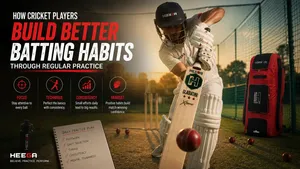 How Cricket Players Build Better Batting Habits Through Regular Practice.Learn how cricket players build better batting habits through regular practice, focused drills, match situations, repetition, feedback, and consistent routines.
 Cricket Kit Essentials Explained: What Every Player Needs for Practice and Match DayDiscover essential cricket kit items for practice and match day, including bats, protective gear, clothing, footwear, and accessories for every player.
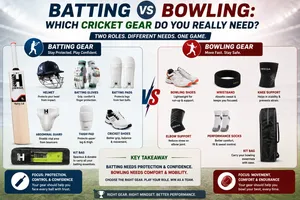 Batting vs Bowling: Which Cricket Gear Do You Really Need?Learn the essential cricket gear needed for batting and bowling. Compare bats, gloves, pads, helmets, shoes, protective equipment, and training gear.