The Psychology of Cricket: Why Mental Strength Wins Matches.

Introduction: Cricket Is Played with the Mind as Much as the Bat and Ball
A batter who has scored three centuries can still get out for zero.
A fast bowler who dominated the first spell may struggle in the next over.
A fielder who has taken hundreds of catches can suddenly drop an easy chance.
Cricket has a unique way of testing not only a player's skill but also their mindset.
Unlike many sports, cricket gives players time to think.
Sometimes, too much time.
A batter waits between deliveries.
A bowler walks back to their mark.
A captain constantly makes tactical decisions.
These moments make mental strength one of the biggest differences between good players and consistently successful ones.
Across Nepal, Germany, the United States, Canada, the Netherlands, and the United Kingdom, coaches increasingly recognize that developing the mind is just as important as developing technique.
What Is Mental Strength in Cricket?
Mental strength is the ability to perform consistently regardless of the situation.
It includes:
- Confidence.
- Focus.
- Emotional control.
- Resilience.
- Patience.
- Decision-making.
Mentally strong players remain composed whether they are winning comfortably or facing intense pressure.
Confidence Helps Players Trust Their Skills
Confidence is not about believing you'll never fail.
It is about trusting the work you've already done.
Confident players:
- Commit fully to their shots.
- Bowl with purpose.
- Stay positive after mistakes.
- Make clearer decisions.
Confidence grows through preparation rather than luck.
Focus Wins Small Battles
Cricket demands concentration for long periods.
A single lapse in attention can result in:
- A missed catch.
- A run-out.
- A poor shot.
- An expensive over.
Elite players learn how to stay present instead of worrying about previous mistakes or future outcomes.
Handling Pressure Is a Skill
Pressure appears in every match.
Examples include:
- Chasing a difficult target.
- Bowling the final over.
- Facing a hat-trick ball.
- Protecting a narrow lead.
Pressure itself is not the problem.
How players respond to pressure determines the outcome.
Learning from Failure
Every cricketer experiences disappointment.
Even the greatest players have:
- Been bowled first ball.
- Dropped catches.
- Lost important matches.
- Faced criticism.
Mentally strong players do not ignore failure.
They analyze it, learn from it, and move forward.
Emotional Control Improves Decision-Making
Cricket rewards calm thinking.
Players who react emotionally often make rushed decisions.
Emotional control helps players:
- Stay patient.
- Avoid frustration.
- Communicate better.
- Recover after setbacks.
Keeping emotions balanced leads to better performance.
Positive Self-Talk Matters
The conversation players have with themselves influences performance.
Instead of thinking:
"I always fail."
Successful players replace negative thoughts with constructive ones such as:
- "Focus on the next ball."
- "Trust your preparation."
- "Stay patient."
Positive self-talk builds consistency.
Visualization Helps Prepare the Mind
Many professional players mentally rehearse before matches.
They imagine:
- Playing strong shots.
- Bowling accurate deliveries.
- Taking catches.
- Responding confidently to pressure.
Visualization helps the brain prepare for real match situations.
Routines Build Consistency
Many cricketers develop small routines before performing.
Examples include:
- Taking a deep breath.
- Adjusting gloves.
- Marking the bowling run-up.
- Looking at a specific point before facing the ball.
Simple routines help players remain calm and focused.
Communication Strengthens Teams
Mental strength is not only individual.
Strong teams communicate clearly.
Good communication includes:
- Encouragement.
- Honest feedback.
- Positive body language.
- Supporting teammates after mistakes.
A confident team environment improves collective performance.
Coaches Play an Important Role
Modern coaches increasingly develop both technical and mental skills.
Good coaches encourage players to:
- Set realistic goals.
- Reflect after matches.
- Celebrate progress.
- Learn from mistakes.
Creating a safe learning environment allows players to grow with confidence.
Nepal: Confidence Through International Success
Nepal's recent achievements have inspired a generation of young cricketers.
Growing international exposure continues helping players develop belief in their abilities.
Germany: Building Mental Skills Alongside Technique
German academies increasingly recognize that confidence and decision-making are important parts of long-term player development.
United States: High Expectations Create New Challenges
As cricket expands rapidly in the USA, players increasingly learn to manage competition, expectations, and performance pressure.
Canada: Staying Motivated Throughout the Year
Canadian players often maintain focus through long indoor training periods before returning to outdoor competition.
Mental discipline becomes an important advantage.
The Netherlands: Calm, Consistent Cricket
Dutch cricket has earned respect for disciplined performances built on patience, preparation, and intelligent decision-making.
United Kingdom: Experience Meets Mental Preparation
British cricket has long emphasized temperament alongside technique.
Modern coaching now combines traditional experience with sports psychology and performance coaching.
Mental Strength Can Be Trained
Contrary to popular belief, mental strength is not something players either have or don't have.
It improves through practice.
Players can strengthen their mindset by:
- Setting achievable goals.
- Reflecting after training.
- Practicing mindfulness.
- Building consistent routines.
- Learning from setbacks.
Like batting or bowling, the mind becomes stronger with repetition.
How Heega Sports Supports Confident Performance
At Heega Sports, we believe confidence starts with preparation.
While mental strength comes from practice and experience, dependable equipment allows players to focus on performance instead of worrying about their gear.
Our collection includes:
- Kashmir Willow cricket bats.
- Leather cricket balls.
- Practice balls.
- Cricket helmets.
- Batting gloves.
- Batting pads.
- Cricket shoes.
- Practice nets.
- Cricket kit bags.
- Training accessories.
Quality equipment helps players train consistently and compete with confidence.
Final Thoughts
Cricket is often described as a game of skill.
In reality, it is equally a game of mindset.
Every delivery presents a decision.
Every over creates pressure.
Every match offers opportunities to stay calm, adapt, and respond with confidence.
Across Nepal, Germany, the United States, Canada, the Netherlands, and the United Kingdom, players who develop mental strength alongside technical ability are better prepared for every challenge the game presents.
Because when skills are evenly matched, it is often the strongest mindset that makes the biggest difference.
🏏 Build Confidence with Heega Sports
Explore premium-quality Kashmir Willow cricket bats, leather cricket balls, practice balls, cricket helmets, batting gloves, batting pads, cricket shoes, practice nets, cricket kit bags, and training accessories designed to help players prepare with confidence.
Shop Now
Heega Sports – Helping Players Train Better, Play Smarter, and Perform with Confidence.
Related posts
 Long Sixes: Is It Strength or Timing?Mostly timing. A well-timed shot with moderate force travels farther than a hard swing that misses the middle. What bat speed, balance and the sweet spot do.
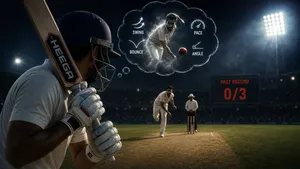 Why Cricket Players Struggle Against Certain Bowlers: Understanding the Psychology of MatchupsWhy do cricket players struggle against certain bowlers? Discover how bowling styles, matchups, confidence, technique, decision-making, and psychology influence batting performance.
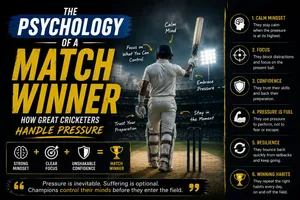 The Psychology of a Match Winner: How Great Cricketers Handle PressureLearn the psychology of a match winner and discover how great cricketers handle pressure. Explore practical cricket mindset, confidence, visualization, breathing, preparation, and performance strategies.