What Happens When You Train Your Mind as Seriously as Your Cricket Skills

How Mental Training Can Improve Confidence, Decision-Making, Focus, and Performance Under Pressure
Cricket training usually focuses on what players can see.
Batting drills. Bowling sessions. Fitness workouts. Fielding practice.
But there is another part of the game working during every delivery—the mind.
A batter can have excellent technique but struggle after losing an early wicket. A bowler can have great skills but panic after conceding boundaries. A fielder can be technically sound but lose concentration during a crucial moment.
This is why mental training deserves the same attention as physical and technical preparation.
When you train your mind as seriously as your cricket skills, you can become more focused, confident, resilient, and prepared for the moments that decide matches.
At Heega Sports, we believe great cricket performance comes from preparing the complete player—skills, body, mindset, and equipment.
Here's what can happen when you start training your mind seriously.
1. You Become More Comfortable Under Pressure
Pressure is unavoidable in competitive cricket.
The scoreboard is close. The required run rate is rising. You have one over left. A new batter has just arrived.
Mental training helps you stay focused instead of becoming overwhelmed.
Practicing breathing, visualization, routines, and pressure simulations can make difficult situations feel more familiar.
The goal isn't to eliminate pressure.
It's to learn how to perform while pressure exists.
2. Your Concentration Improves
Cricket can involve long periods of waiting followed by one critical moment.
A fielder might stand in the same position for several overs before the ball suddenly comes toward them.
Mental training teaches you to stay engaged.
Simple habits include:
- Refocusing before every delivery
- Using short mental cues
- Staying aware of the match situation
- Avoiding unnecessary distractions
Better concentration can lead to better reactions and decisions.
3. You Recover Faster From Mistakes
Every cricketer makes mistakes.
You can:
- Get out cheaply
- Bowl a poor delivery
- Drop a catch
- Misfield
- Make the wrong tactical decision
The difference is how long you carry the mistake.
Strong mental training teaches you to acknowledge what happened, learn from it, and reset.
A useful mindset is:
"That delivery is finished. The next one is mine."
4. Your Decision-Making Becomes Clearer
Pressure can make players rush decisions.
A batter might attack a ball they should defend.
A bowler might abandon their plan after one boundary.
A captain might change the field unnecessarily.
Mental preparation creates space between emotion and decision.
Instead of reacting immediately, you learn to assess the situation and execute your plan.
5. Your Confidence Becomes More Reliable
Confidence based only on recent results can disappear quickly.
One low score can destroy it.
One bad bowling spell can create doubt.
Mental training helps you build confidence around preparation instead.
You know you've practiced.
You know you've worked on your weaknesses.
You know you've prepared for pressure.
That type of confidence is more stable because it isn't completely dependent on the scoreboard.
6. You Start Visualizing Success
Visualization is a useful mental-training tool.
Before training or a match, imagine yourself:
- Playing a particular shot correctly
- Bowling your ideal delivery
- Taking a difficult catch
- Staying calm during a tense chase
- Recovering after a mistake
Visualization doesn't replace physical practice.
It complements it by helping your brain become familiar with the actions and situations you want to execute.
7. You Develop Better Pre-Delivery Routines
Consistency is powerful in cricket.
A batter might check their gloves, breathe, look at the field, and settle into their stance.
A bowler might walk back to the mark, breathe, visualize the target, and begin the run-up.
A repeatable routine provides something familiar during pressure.
The more consistent the routine, the easier it can be to return to your process when distractions appear.
8. You Learn to Control Your Self-Talk
Your internal conversation can influence your behavior.
Negative thoughts might sound like:
"Don't get out."
"I always struggle against this bowler."
"I'm going to mess this up."
Replace them with simple, actionable cues:
- "Watch the ball."
- "Stay balanced."
- "Trust your technique."
- "Hit your area."
- "Next ball."
The goal isn't unrealistic positivity.
It's useful thinking.
9. You Become More Patient
Cricket rewards patience.
A batter may need to spend time building an innings.
A bowler may need several deliveries to create an opportunity.
Mental training teaches you not to force the game.
You learn to wait for the right opportunity instead of chasing immediate results.
10. You Handle Setbacks Better
Mental strength becomes particularly valuable when things don't go according to plan.
A player might lose selection, suffer poor form, or struggle with an injury.
Instead of seeing the setback as the end, a mentally strong player asks:
What can I control now?
That question redirects attention toward action and improvement.
11. You Train With Greater Purpose
Mental training doesn't just help during matches.
It can improve practice.
Before each session, establish:
One technical goal.
One mental goal.
For example:
Technical goal: improve back-foot shots.
Mental goal: remain patient when deliveries are difficult.
This approach develops the mind and body together.
12. You Become Better at Handling Distractions
Cricket contains plenty of distractions:
- Crowd noise
- Opponent behavior
- Umpire decisions
- Weather changes
- Scoreboard pressure
- Personal frustration
You can't control all of these.
You can control where you place your attention.
Mental training teaches you to notice distractions without allowing them to dominate your decision-making.
13. You Prepare for the Toughest Moments
Don't only visualize perfect performances.
Prepare mentally for difficult situations too.
Imagine:
- Losing early wickets
- Conceding boundaries
- Being under pressure
- Making a mistake
- Facing an aggressive opponent
Then visualize your response.
This teaches your mind:
"If something goes wrong, I know what to do next."
That can create enormous confidence.
14. Your Equipment Becomes Part of Your Mental Preparation
Mental confidence is easier to maintain when you aren't distracted by equipment problems.
Before a match, check:
- Bat condition and grip
- Helmet fit
- Glove comfort
- Pad fit
- Cricket shoe grip
- Bag organization
Reliable equipment allows you to focus on the game rather than avoidable problems.
At Heega Sports, players can find cricket bats, helmets, batting gloves, pads, cricket shoes, bags, accessories, and sportswear designed to support serious training and match-day performance.
The goal isn't simply to purchase premium products. Choose equipment that fits correctly, suits your playing style, and gives you confidence when you step onto the field.
A Simple Mental Training Routine
You don't need hours of meditation to train your cricket mindset.
Try this 10-minute routine.
2 Minutes: Breathing
Slow your breathing and relax your body.
3 Minutes: Visualization
Imagine yourself executing important cricket skills successfully.
2 Minutes: Positive Cues
Choose two or three short phrases such as:
"Stay balanced."
"Watch the ball."
"Trust the process."
3 Minutes: Match Simulation
Imagine yourself handling a difficult match situation calmly.
Repeat this regularly.
Mental skills improve through repetition just like physical skills.
Common Mental Training Mistakes
Avoid:
- Trying to eliminate all nervousness
- Overthinking every delivery
- Using unrealistic positive thinking
- Changing routines constantly
- Focusing only on results
- Ignoring physical preparation
Mental training works best when combined with technical practice, fitness, recovery, and good preparation.
The Complete Cricketer
A well-rounded player develops four areas:
Skill
Batting, bowling, fielding, and tactical knowledge.
Body
Strength, speed, mobility, endurance, and recovery.
Mind
Focus, confidence, resilience, decision-making, and composure.
Preparation
Training routines, match planning, and reliable equipment.
When these areas work together, your performance becomes more complete.
Your Mental Training Checklist
Before your next match:
✅ Set a clear goal.
✅ Visualize important situations.
✅ Establish a pre-delivery routine.
✅ Prepare your equipment.
During the match:
✅ Focus on one delivery.
✅ Use simple mental cues.
✅ Reset quickly after mistakes.
After the match:
✅ Review what worked.
✅ Identify one mental improvement.
✅ Carry the lesson into your next session.
Final Thoughts
Cricket is played with a bat and ball, but many matches are influenced by what happens inside a player's mind.
When you train your mind as seriously as your cricket skills, pressure becomes easier to manage, mistakes become easier to recover from, and decisions become clearer.
You don't need to become emotionless.
You need to become more aware of your emotions and better at responding to them.
Build your routines. Practice visualization. Control your breathing. Improve your self-talk. Train under pressure. Learn from mistakes.
Most importantly, make mental preparation part of your regular cricket routine rather than something you remember only before an important match.
Your next level of performance may not require a completely new technique.
It may begin with a stronger mind.
At Heega Sports, we're committed to supporting serious cricketers with cricket bats, helmets, gloves, pads, shoes, bags, accessories, and sportswear that complement disciplined preparation and confident performance.
Train your skills. Train your body. Train your mind. Become the complete cricketer.
Shop Now
Heega Sports – Helping Young Cricketers Pack Smart, Prepare Better, and Play With Confidence.
Related posts
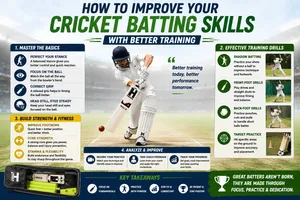 How to Improve Your Cricket Batting Skills with Better TrainingImprove your cricket batting skills with effective training drills, better technique, footwork, shot selection, timing, fitness, and practical practice tips.
 When Should You Start Playing Cricket? A Guide to Choosing the Right Age and Training PathWondering when to start playing cricket? Discover the ideal age to begin training, explore age-by-age development stages, and learn how to choose the right path for beginners and aspiring professionals.
 How Young Cricketers Can Improve Their Cricket Fitness Without Overtraining.Learn how young cricketers can improve fitness safely without overtraining through balanced exercise, recovery, nutrition, mobility, and age-appropriate practice.