What Separates Cricketers Who Improve Every Year From Those Who Don't

The Habits, Mindset, and Training Principles That Create Long-Term Cricket Improvement
Every cricketer wants to get better.
But look around any club, academy, or local competition and you'll notice something interesting: some players become noticeably better every season, while others seem to remain at almost exactly the same level year after year.
The difference isn't always talent.
Often, it's the way players approach improvement.
Players who continue progressing understand that cricket development is a long-term process. They train with purpose, analyze their performances, work on weaknesses, maintain their fitness, and adapt when something isn't working.
At Heega Sports, we believe that consistent improvement comes from combining smart preparation, disciplined habits, and dependable cricket equipment. Here's what separates players who keep progressing from those who get stuck.
1. They Set Specific Goals
Players who improve don't simply say:
"I want to become a better cricketer."
They create measurable targets.
For example:
- Improve batting consistency
- Increase bowling accuracy
- Take more catches
- Improve running speed
- Become more confident against spin
Specific goals give training a clear direction.
2. They Practice With a Purpose
Spending hours in the nets doesn't automatically make someone better.
Progressive players know exactly what they're trying to achieve during each session.
One session might focus on footwork.
Another could target short-ball technique.
Another might focus entirely on death bowling or catching.
Purposeful practice makes every training session more valuable.
3. They Work on Weaknesses
It's natural to practice what you're already good at.
But players who improve consistently spend time fixing their weaknesses.
If a batter struggles against swing, they practice swing.
If a bowler loses accuracy under pressure, they train accuracy under pressure.
If a fielder struggles with high catches, they repeat that skill.
Weaknesses become strengths when they're addressed consistently.
4. They Analyze Their Performances
Improvement requires feedback.
After a match, ask:
What worked?
What didn't?
What mistake did I repeat?
What should I practice next?
Players who review their performances turn matches into learning opportunities.
Players who don't analyze often repeat the same mistakes.
5. They Train for Match Situations
Good players practice skills.
Smart players practice situations.
They recreate:
- Difficult run chases
- Early wickets
- Death-over bowling
- Pressure catches
- Batting against quality spin
- Limited-over scenarios
The goal is to make match pressure familiar.
6. They Take Fitness Seriously
Skill matters, but fitness determines how effectively you can use that skill.
Players who improve year after year work on:
- Strength
- Speed
- Endurance
- Mobility
- Recovery
Better fitness can help maintain concentration and technique throughout long matches.
7. They Understand Their Equipment
Equipment should support your development rather than distract from it.
Serious players pay attention to:
- Bat balance and pickup
- Glove comfort
- Pad fit
- Helmet fit
- Shoe grip and support
As your game develops, your equipment may need to evolve with you.
At Heega Sports, players can find cricket bats, helmets, gloves, pads, shoes, bags, accessories, and sportswear designed to support different playing requirements.
The objective isn't to own the most expensive kit. It's to use reliable equipment that suits your game and allows you to focus on performance.
8. They Maintain Their Gear
Players who care about their equipment often develop better overall discipline.
Simple habits include:
- Checking bat grips
- Cleaning equipment
- Drying gloves and pads
- Maintaining cricket shoes
- Organizing the kit bag
- Replacing damaged equipment when necessary
Good maintenance can extend equipment life and help keep your kit match-ready.
9. They Accept Coaching
Players who improve remain open to feedback.
They don't automatically defend every mistake.
Instead, they listen to coaches, teammates, and experienced players.
Not every piece of advice will work for every cricketer, but being willing to evaluate feedback is essential for development.
10. They Don't Chase Every New Technique
Constantly changing your technique can create confusion.
Progressive players make changes carefully.
They test an adjustment, practice it repeatedly, and evaluate whether it actually improves performance.
Improvement requires experimentation—but also patience.
11. They Learn From Other Players
Watching cricket can become another form of education.
Study how experienced players:
- Build an innings
- Set up batters
- Adapt to conditions
- Handle pressure
- Communicate with teammates
Don't just watch the result.
Watch the decisions behind it.
12. They Develop Mental Resilience
Every season includes setbacks.
There will be:
- Poor innings
- Expensive overs
- Dropped catches
- Injuries
- Selection disappointments
- Difficult matches
Players who continue improving don't let setbacks become permanent.
They learn, reset, and return to training.
13. They Respect Recovery
Training hard every day without recovery can eventually reduce performance.
Smart players understand the importance of:
- Sleep
- Hydration
- Nutrition
- Mobility
- Rest
Recovery allows the body and mind to adapt to training.
14. They Stay Patient
One of the biggest differences between progressive and stagnant players is patience.
Cricket improvement isn't linear.
You may improve rapidly one month and see little visible progress the next.
That's normal.
The important thing is continuing the process.
15. They Adapt Every Season
The player you were last season doesn't have to be the player you are this season.
Progressive cricketers review their game regularly and ask:
What's next?
Maybe they need to improve against spin.
Maybe their fitness needs attention.
Maybe their decision-making needs work.
Maybe their equipment needs an upgrade.
Adaptation keeps development moving forward.
The Improvement Cycle
Players who improve consistently tend to follow a simple cycle:
Train → Perform → Analyze → Adjust → Train Again
This cycle turns experience into development.
Players who remain stuck often repeat:
Train → Perform → Forget → Repeat
The difference is reflection and adjustment.
Signs You're Improving
Not every improvement appears immediately in your statistics.
Look for signs such as:
- Better decision-making
- Fewer repeated mistakes
- Improved fitness
- Greater confidence
- More consistent technique
- Better response to pressure
- Greater understanding of your game
These improvements eventually translate into better match performances.
What Holds Players Back?
Players often stop progressing because they:
- Practice without goals
- Avoid weaknesses
- Ignore fitness
- Resist feedback
- Repeat the same routines
- Neglect recovery
- Give up too quickly
- Focus only on statistics
Changing these habits can restart your development.
A Simple Annual Cricket Improvement Plan
Pre-Season
Evaluate your previous season and identify three areas to improve.
Early Season
Build technique, fitness, and confidence.
Mid-Season
Analyze match performances and adjust your training.
Late Season
Focus on consistency and pressure situations.
Off-Season
Recover, review, and prepare for the next challenge.
This approach turns every season into part of a larger development journey.
Your Cricket Improvement Checklist
If you want to keep improving every year:
✅ Set measurable goals.
✅ Practice with purpose.
✅ Work on weaknesses.
✅ Train under pressure.
✅ Stay physically fit.
✅ Analyze every performance.
✅ Listen to useful feedback.
✅ Maintain your equipment.
✅ Recover properly.
✅ Adapt when necessary.
Most importantly, stay consistent.
Final Thoughts
The cricketers who improve every year aren't necessarily the ones with the most natural talent. They're the ones who treat improvement as a continuous process.
They set goals instead of relying on motivation. They practice with purpose instead of simply spending time in the nets. They work on weaknesses, analyze performances, maintain their fitness, listen to feedback, and adapt when their current approach stops producing results.
They also understand that progress takes time.
If you want to become a better cricketer next season, don't wait for a dramatic transformation. Start with one weakness, one habit, or one training goal today.
Then repeat the process tomorrow.
Over an entire season, those small improvements can become the biggest difference between staying where you are and reaching a completely new level.
At Heega Sports, we're proud to support players who are committed to long-term improvement with cricket bats, helmets, gloves, pads, shoes, bags, accessories, and sportswear designed for players at different stages of their cricket journey.
Your next season can be better than your last—but the improvement starts with what you do today.
Shop Now
Heega Sports – Helping Young Players Enjoy the Game, One Practice at a Time.
Related posts
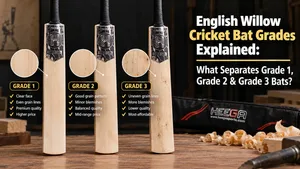 English Willow Cricket Bat Grades Explained: What Separates Grade 1, Grade 2 & Grade 3 Bats?Learn the differences between Grade 1, Grade 2, and Grade 3 English Willow cricket bats, including grains, appearance, performance, durability, and value.
 How to Build the Perfect Cricket Kit for Year-Round Training and Match DaysLearn how to build the perfect cricket kit for year-round training and match days. Discover expert tips for choosing cricket bats, helmets, gloves, pads, shoes, bags, accessories, and sportswear with premium cricket equipment from Heega Sports.
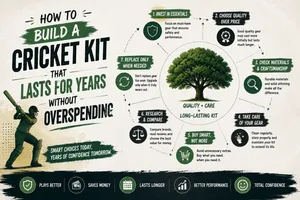 How to Build a Cricket Kit That Lasts for Years Without OverspendingLearn how to build a cricket kit that lasts for years without overspending. Discover smart tips for choosing durable cricket bats, helmets, gloves, pads, shoes, bags, and accessories with premium cricket equipment from Heega Sports.