Beyond the Basics: 10 Cricket Equipment Choices That Can Improve Your Performance

The smart cricketer's guide to choosing bats, gloves, helmets, pads, shoes, and other equipment that support better comfort, control, confidence, and consistency
Cricket improvement doesn't come from one thing.
There is no single bat that will transform your technique.
No pair of shoes will automatically make you faster.
No gloves will suddenly turn an average player into a match winner.
But the right equipment can make an important difference by creating better conditions for you to use the skills you've already developed.
When your gear fits properly, feels comfortable, suits your playing style, and matches your conditions, you can spend more time focusing on cricket and less time thinking about equipment.
That's why smart equipment selection matters.
At Heega Sports, we believe cricket gear should be selected with purpose. Instead of simply buying the latest or most expensive products, players should understand how each piece of equipment fits into their game.
Here are 10 cricket equipment choices that can support better performance.
1. Choose a Cricket Bat Based on Pickup, Not Just Weight
One of the biggest mistakes players make is choosing a bat based solely on the number written on it.
Two bats can have the same listed weight but feel completely different.
Why?
Because weight distribution matters.
A bat with excellent pickup may feel lighter and easier to maneuver than another bat with the same actual weight.
When choosing a bat, consider:
- Weight
- Pickup
- Balance
- Sweet-spot position
- Profile
- Handle
- Grip
- Your playing style
A batter who can control the bat comfortably may find it easier to generate consistent bat speed and timing.
The lesson: Don't just ask, "How heavy is it?"
Ask:
"How does it feel when I play my shots?"
2. Select Batting Gloves for Control as Well as Protection
Batting gloves protect your hands, but they also influence how you hold the bat.
A good pair should provide an appropriate combination of:
- Finger protection
- Thumb protection
- Grip
- Flexibility
- Wrist support
- Comfort
If the gloves are too loose, they may move during batting.
If they're too tight, they may restrict movement.
The right fit should feel secure without becoming distracting.
A comfortable grip can help you focus on timing and shot selection instead of constantly adjusting your hands.
3. Get the Cricket Helmet Fit Right
A helmet isn't something you should choose purely based on appearance.
Fit is critical.
A suitable helmet should remain stable while allowing:
- Clear vision
- Comfortable movement
- Appropriate face protection
- Secure chin-strap adjustment
- Suitable ventilation
When trying a helmet, move your head naturally.
Look left.
Look right.
Look up.
Look down.
Take your batting stance.
If the helmet shifts excessively or creates uncomfortable pressure, reassess the fit and sizing guidance.
A helmet should protect without becoming a distraction.
4. Choose Batting Pads That Balance Protection and Mobility
Batting pads need to protect your legs, but they shouldn't unnecessarily restrict your movement.
This is particularly important because batting involves constant footwork.
You may need to:
- Move forward
- Move back
- Shuffle
- Rotate
- Run between wickets
When choosing pads, consider:
- Weight
- Protection
- Knee alignment
- Fit
- Straps
- Mobility
- Comfort
Lightweight designs can be attractive for players who spend long periods at the crease, but don't choose solely on weight.
Protection and fit always matter.
5. Match Cricket Shoes to Your Playing Surface
Your shoes connect you to the ground.
That makes surface compatibility extremely important.
Different environments may require different footwear characteristics.
Think about whether you regularly play on:
- Natural grass
- Artificial turf
- Hard practice surfaces
- Damp grounds
- Dry surfaces
Spiked footwear can be appropriate for certain natural surfaces, while rubber-soled options may be more suitable for particular training environments.
Don't assume one shoe is perfect everywhere.
The right sole for the wrong surface is still the wrong choice.
6. Choose a Cricket Bat Grip That Feels Secure
The grip is a small piece of equipment, but it has a direct relationship with bat control.
A good grip should feel:
- Comfortable
- Secure
- Stable
- Appropriate for your hand size and preference
Your grip shouldn't make your hands work unnecessarily hard.
If the grip is worn, damaged, or excessively slippery, replacing it can be a simple way to improve comfort and control.
Always install and maintain grips according to appropriate product guidance.
7. Invest in a Cricket Bag That Protects Your Equipment
A cricket bag isn't going to score runs.
But it can make a difference to how well you organize and protect your gear.
A good cricket bag should provide enough space for your equipment without becoming unnecessarily difficult to carry.
Consider:
- Bat compartments
- Helmet storage
- Shoe compartments
- Separate sections for clothing
- Ventilation
- Durability
- Carrying comfort
An organized kit makes preparation easier.
Instead of searching for gloves or pads before a match, you know exactly where everything is.
8. Choose Cricket Clothing for Comfort and Movement
Cricket can involve long periods of activity.
Your clothing should allow you to move naturally while helping you remain comfortable.
Look for clothing that provides suitable:
- Fit
- Breathability
- Flexibility
- Moisture management
- Durability
A batter should be able to move freely.
A bowler should be able to complete their run-up naturally.
A fielder should be able to sprint and dive without unnecessary restriction.
Good cricket clothing supports movement rather than competing with it.
9. Don't Ignore Training Equipment
Performance equipment isn't limited to match-day gear.
Training equipment can play an important role in development.
Depending on your goals, useful training equipment may include:
- Cricket balls
- Training cones
- Stumps
- Batting targets
- Throw-down equipment
- Practice nets
- Resistance or agility equipment
The best training equipment is the equipment that helps you practice a specific skill with purpose.
Buying equipment is easy.
Using it consistently is what matters.
10. Choose Protective Accessories Based on Your Needs
Some players overlook smaller protective products because they aren't as visible as bats or helmets.
Depending on your role and playing conditions, appropriate protective accessories may include:
- Abdominal guards
- Arm protection
- Thigh protection
- Chest protection
- Wicketkeeping gloves
- Inner gloves
The exact equipment you need depends on your role, level, and playing environment.
Protection should always be appropriate to the demands of your cricket.
Why Equipment Choice Matters
Think about what happens when your equipment is wrong.
A heavy bat can make movement difficult.
Loose gloves can affect grip.
An unstable helmet can become distracting.
Poorly fitted pads can interfere with footwork.
Unsuitable shoes can reduce confidence in your footing.
The common theme is distraction.
Good equipment helps remove unnecessary distractions.
The 10-Choice Cricket Equipment Checklist
Before your next equipment purchase, ask:
1. Bat
Can I control it comfortably?
2. Gloves
Do they provide protection without restricting my grip?
3. Helmet
Does it fit securely and provide clear vision?
4. Pads
Do they protect me while allowing natural movement?
5. Shoes
Are they appropriate for my playing surface?
6. Grip
Does it feel secure and comfortable?
7. Bag
Can I carry and organize my equipment effectively?
8. Clothing
Can I move comfortably throughout a long session?
9. Training Gear
Does it help me practice a specific skill?
10. Protective Accessories
Do they match my role and level of cricket?
These simple questions can prevent many unnecessary purchases.
Don't Confuse Better Equipment With Better Cricket
There's an important distinction between better equipment and better cricket.
Equipment can support performance.
It cannot replace:
- Technique
- Practice
- Fitness
- Game awareness
- Tactical thinking
- Mental preparation
- Recovery
A player with average equipment and excellent fundamentals can outperform someone with expensive gear and poor preparation.
The goal is not to become obsessed with equipment.
The goal is to remove equipment-related limitations so you can concentrate on developing your game.
Match Your Equipment to Your Playing Role
Different players need different priorities.
For Batters
Focus on:
- Bat balance
- Bat pickup
- Gloves
- Helmet
- Pads
- Footwear
For Fast Bowlers
Pay attention to:
- Cricket shoes
- Comfort
- Stability
- Appropriate traction
- Clothing
- Training equipment
For Spin Bowlers
Consider:
- Footwear
- Mobility
- Comfortable clothing
- Training equipment
- Fielding gear
For Wicketkeepers
Pay particular attention to:
- Wicketkeeping gloves
- Pads
- Helmet
- Shoes
- Protective accessories
Your role should influence your buying decisions.
Don't Copy a Professional's Entire Kit
Professional cricket is a different environment.
Players at that level often have:
- Specialized equipment
- Customized bats
- Professional fitting
- Extensive testing
- Different playing conditions
- Dedicated support staff
You don't necessarily need exactly what they use.
Instead, learn from their approach:
They choose equipment that suits their individual game.
You should do the same.
Price Isn't the Same as Performance
It's tempting to believe:
Higher price = better performance.
But that's not always true.
A premium bat may not suit your technique.
The most expensive shoes may not be appropriate for your surface.
A high-end helmet may not fit your head correctly.
A cheaper product that fits properly and meets your needs can be a much better choice.
Think about value, not simply price.
When to Upgrade Your Cricket Equipment
You don't need to replace your entire kit every season.
Consider upgrading when:
- Your equipment is damaged
- Your size has changed
- Your playing level has increased
- Your technique has evolved
- Your equipment no longer fits
- Your playing conditions have changed
- A particular product is limiting your movement or comfort
Upgrade with a reason.
Equipment Maintenance Is Part of Performance
The right equipment won't remain right if you don't look after it.
After training and matches:
- Air out gloves
- Dry wet equipment properly
- Inspect protective gear
- Clean shoes according to manufacturer guidance
- Check bat condition
- Inspect straps
- Keep your bag organized
Regular maintenance can help you identify problems before they become match-day surprises.
The Smart Cricketer's Equipment Formula
Think of good equipment selection like this:
Right Product + Correct Fit + Suitable Conditions + Playing Style = Better Equipment Compatibility
And better compatibility can contribute to:
Comfort → Confidence → Fewer Distractions → More Consistent Performance
That's the real advantage.
Final Thoughts
Cricket equipment doesn't make the player.
But the right equipment can help the player perform without unnecessary obstacles.
From your cricket bat and batting gloves to your helmet, pads, shoes, clothing, bag, and training equipment, every choice should have a purpose.
Don't choose gear simply because it's popular.
Don't choose it simply because it's expensive.
And don't choose it just because a professional uses it.
Choose equipment that fits your body, your role, your playing conditions, and your style of cricket.
At Heega Sports, we help cricketers build practical, performance-focused kits with cricket bats, helmets, batting gloves, pads, cricket shoes, bags, accessories, and sportswear.
The smartest equipment decision isn't always the biggest upgrade.
Sometimes it's simply finding the product that removes one small limitation from your game.
And when enough small improvements come together, they can make a meaningful difference.
Because better cricket isn't always about having more gear. It's about making smarter choices with the gear you use.
Shop Now
Heega Sports – Helping Players Turn Practice Skills Into Match-Day Performance.
Related posts
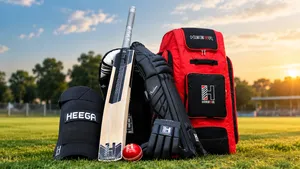 Ordering Cricket Equipment for a Club or Academy: An Overseas Buyer's ChecklistOrdering cricket equipment for your club or academy from overseas? Use this checklist for bats, protective gear, quantities, samples, shipping and quotations.
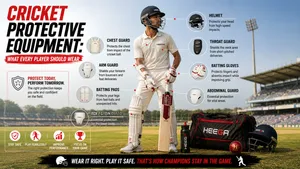 Cricket Protective Equipment: What Every Player Should WearLearn what cricket protective equipment every player needs, including helmets, batting pads, gloves, abdominal guards, chest guards, arm guards and more.
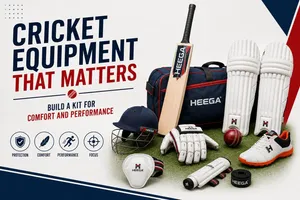 Cricket Equipment That Matters: Build a Kit for Comfort and PerformanceLearn how to build a cricket kit for comfort and performance with practical guidance on choosing bats, gloves, helmets, pads, cricket shoes, clothing, bags, and protective accessories.