Cricket Protective Equipment: What Every Player Should Wear

Introduction: Why Cricket Protective Equipment Matters
Cricket is a skill-based sport, but it is also a sport where the ball can travel at high speed. Whether you are facing a fast bowler, keeping wickets close to the stumps, or fielding in a position where the ball can come quickly, the right protective equipment can make a major difference.
Good cricket gear does more than protect the body. It also gives players the confidence to play naturally, focus on technique, and concentrate on the game instead of worrying about potential injuries.
Protective equipment is especially important for beginners and young players because they are still developing their reactions and understanding of the game. At higher levels, properly selected protection becomes even more important because of faster bowling, harder cricket balls, longer playing sessions, and competitive match conditions.
The right equipment depends on your role, age, playing level, and personal requirements.
This guide explains the essential cricket protective equipment every player should know about, what each item does, when you need it, and how to choose the right gear.
What Is Cricket Protective Equipment?
Cricket protective equipment refers to the safety gear worn or used by players to reduce the risk of injury while playing cricket.
Some protective items are designed for specific body parts, while others protect players during particular roles.
The most common cricket protective equipment includes:
- Cricket helmet
- Batting gloves
- Wicketkeeping gloves
- Batting pads
- Thigh guard
- Arm guard
- Chest guard
- Abdominal guard
- Wicketkeeping pads
- Inner gloves
- Protective footwear
- Fielding protection
Not every player needs every item.
A batter, wicketkeeper, bowler, and fielder have different safety requirements. Understanding those differences helps you build a practical cricket kit instead of buying unnecessary equipment.
Why Is Protective Gear Important in Cricket?
A cricket ball can cause serious injury when it strikes an unprotected part of the body. Even experienced players can misjudge a delivery or react too late.
Protective equipment provides an additional layer of safety.
Protection Against High-Speed Cricket Balls
Fast deliveries can reach the batter in a very short time. Helmets, gloves, pads, and body protection help reduce the impact if the ball makes contact.
More Confidence at the Crease
A player who feels properly protected can focus more on footwork, shot selection, balance, and timing.
Useful During Training
Protective equipment is not only for competitive matches. Players should also use appropriate protection during serious practice sessions, especially when facing hard cricket balls.
Important for Young Players
Junior players may have less experience judging pace and bounce. Appropriate protective equipment is therefore particularly important during training and matches.
Essential Cricket Protective Equipment for Batters
Batters generally require the most extensive protection because they directly face the cricket ball.
A complete batting protection setup usually includes several pieces of equipment.
1. Cricket Helmet
The cricket helmet is one of the most important pieces of protective equipment for a batter.
It protects the head and face from fast deliveries and unexpected bounce.
A cricket helmet generally includes:
- Outer shell
- Internal padding
- Grill or faceguard
- Chin strap
- Ventilation areas
- Adjustable fitting system
What to Look For in a Cricket Helmet
When selecting a helmet, consider:
- Correct size
- Comfortable fit
- Secure chin strap
- Strong face protection
- Adequate visibility
- Proper ventilation
- Suitable certification or safety standards
- Good internal padding
The helmet should sit securely on the head without being excessively tight or loose.
A loose helmet can move during play, while an uncomfortable helmet can distract the batter.
Helmet Fit Matters
Do not choose a helmet simply because it looks good or because another player uses the same model.
Your head size and shape are different.
A properly fitted helmet should remain stable when you move your head and should not obstruct your vision.
2. Cricket Batting Gloves
Batting gloves protect the hands and fingers while also helping the batter maintain a comfortable grip on the bat.
A cricket ball can cause significant damage to the fingers if it strikes an unprotected hand.
Most batting gloves include protective sections around:
- Fingers
- Knuckles
- Back of the hand
- Thumb
Some gloves use additional protection in high-impact areas.
How to Choose Batting Gloves
Look for:
- Correct size
- Comfortable finger movement
- Secure wrist closure
- Good grip
- Adequate finger protection
- Breathable materials
- Strong stitching
The gloves should feel secure but should not restrict your ability to hold and control the bat.
Do Batting Gloves Need to Be Expensive?
Not necessarily.
The important factors are fit, construction, protection, comfort, and suitability for your playing level.
Beginners can choose practical gloves with reliable protection, while advanced players may prefer more specialized designs based on personal preference.
3. Cricket Batting Pads
Batting pads protect the lower legs and knees from cricket ball impacts.
They cover the front of the leg and are particularly important because batters may have very little time to move the legs away from an incoming delivery.
A good pair of batting pads should provide:
- Shin protection
- Knee protection
- Comfortable straps
- Secure fitting
- Lightweight movement
- Adequate impact absorption
Choosing the Right Batting Pads
Pads should fit the player's leg properly.
If they are too large, they can restrict movement. If they are too small, important areas may remain exposed.
When trying pads, check whether you can comfortably:
- Walk
- Bend your knees
- Take your batting stance
- Move between the wickets
- Play shots without restriction
Comfort is extremely important because a batter may wear pads for several hours during a match.
4. Abdominal Guard
An abdominal guard, commonly known as a box, provides protection to one of the most sensitive areas of the body.
It is especially important for batters and is also commonly used by wicketkeepers and other players positioned close to the ball.
The guard should fit securely and comfortably.
It should not move excessively during running, batting, or wicketkeeping.
Important Tip
Never treat an abdominal guard as optional simply because you are an experienced player.
Unexpected deflections and fast deliveries can happen at any level of cricket.
5. Thigh Guard
A thigh guard protects the upper leg from fast deliveries.
It can be particularly useful for batters who regularly face fast bowling.
Thigh guards can protect areas such as:
- Inner thigh
- Outer thigh
- Upper leg
Some players prefer integrated protection, while others use separate guards.
Who Needs a Thigh Guard?
It is particularly useful for:
- Fast-bowling conditions
- Competitive cricket
- Experienced batters
- Players who regularly face hard cricket balls
- Training against pace bowling
For beginners, the decision can depend on the level and intensity of training.
6. Chest Guard
A chest guard provides additional protection to the upper body.
It can help protect the chest and ribs from a direct impact.
Chest protection can be particularly useful for players facing fast bowling or players who prefer additional upper-body protection.
The guard should allow comfortable movement while maintaining good coverage.
7. Arm Guard
The forearm and elbow can be vulnerable when facing fast bowling.
An arm guard provides additional protection in these areas.
It can be useful for batters who regularly face pace bowling and want additional confidence when playing shots close to the body.
When selecting an arm guard, consider:
- Coverage
- Weight
- Comfort
- Flexibility
- Secure fitting
- Freedom of movement
The protection should not interfere with your batting technique.
Complete Batting Protection Checklist
A serious batter's protective setup may include:
- Helmet
- Batting gloves
- Batting pads
- Abdominal guard
- Thigh guard
- Chest guard
- Arm guard
- Inner gloves
- Appropriate cricket shoes
The exact setup depends on the player and playing conditions.
Cricket Protective Equipment for Wicketkeepers
Wicketkeepers have a unique position on the cricket field.
They spend long periods behind the batter and are constantly involved in catching, diving, collecting the ball, and reacting to deflections.
Their protective equipment includes:
- Wicketkeeping helmet or appropriate head protection
- Wicketkeeping gloves
- Wicketkeeping pads
- Abdominal guard
- Inner gloves
- Suitable footwear
Wicketkeeping Gloves
Wicketkeeping gloves are different from standard batting gloves.
They are specifically designed to help the wicketkeeper catch and control the ball.
Important features include:
- Large catching surface
- Finger protection
- Flexible construction
- Secure wrist fit
- Comfortable palm area
- Suitable padding
The gloves should provide protection without making it difficult to move the hands quickly.
Wicketkeeping Pads
Wicketkeeping pads are designed specifically for the movements required behind the stumps.
They are generally lighter and shaped differently from traditional batting pads.
A wicketkeeper needs to:
- Squat comfortably
- Move sideways
- Stand quickly
- Dive
- Collect low deliveries
- Move towards the ball
Therefore, mobility is just as important as protection.
Protective Equipment for Bowlers
Bowlers usually do not require the same level of protection as batters, but they still need appropriate equipment.
The most important areas to consider include:
- Feet
- Ankles
- Lower legs
- Hands
- Fingers
- Head during fielding
Fast bowlers should pay particular attention to footwear because their run-up and delivery stride place significant demands on the feet and legs.
Good cricket shoes can provide:
- Grip
- Stability
- Support
- Traction
- Comfort
Bowlers should also use appropriate protection during batting and fielding situations.
Protective Equipment for Fielders
Fielders are often overlooked when people discuss cricket safety.
However, fielders can face hard-hit balls from relatively short distances.
A cricket ball can travel quickly after being struck, especially from powerful batters.
Fielders should therefore understand their position and the risks associated with it.
Close-In Fielders
Players positioned close to the batter may need additional protection depending on the playing situation and level of cricket.
Useful equipment can include:
- Helmet
- Chest protection
- Arm protection
- Abdominal guard
Outfielders
Outfield players usually focus more on:
- Proper cricket shoes
- Comfortable clothing
- Good visibility
- Safe catching technique
Fielders should also avoid unnecessary distractions and maintain awareness throughout the delivery.
Cricket Protective Equipment by Player Type
EquipmentBatterWicketkeeperBowlerFielder
Helmet
Essential in hard-ball cricket
Often useful/required depending on position
Situation dependent
Situation dependent
Batting gloves
Essential
No
During batting
During batting
Batting pads
Essential
No
During batting
During batting
Wicketkeeping gloves
No
Essential
No
No
Wicketkeeping pads
No
Essential
No
No
Abdominal guard
Strongly recommended
Strongly recommended
Useful
Useful depending on position
Thigh guard
Useful
No
No
No
Arm guard
Useful
No
No
Situation dependent
Chest guard
Useful
No
No
Situation dependent
Cricket shoes
Essential
Essential
Essential
Essential
How to Choose the Right Cricket Protective Equipment
Buying cricket protective equipment should not be based only on price or appearance.
Use the following factors when choosing your gear.
1. Choose the Correct Size
Incorrect sizing can reduce both comfort and protection.
Always check manufacturer sizing information and try equipment where possible.
2. Prioritize Fit
A well-fitting product should remain stable during movement.
It should not constantly slide, rotate, or require adjustment.
3. Check Protection
Look at the areas covered by the equipment and consider the level of cricket you play.
A player facing fast bowling may require more protection than someone playing casual beginner cricket.
4. Consider Weight
Heavy equipment can become uncomfortable during long matches.
Lightweight construction can make movement easier, but protection should never be sacrificed simply to reduce weight.
5. Look for Quality Construction
Check:
- Stitching
- Padding
- Straps
- Fasteners
- Shell construction
- Grill quality
- Material durability
6. Think About Comfort
If protective equipment is uncomfortable, players may adjust it constantly or avoid wearing it correctly.
Comfort is therefore an important part of safety.
Protective Equipment for Beginners
Beginners do not necessarily need the most expensive cricket kit.
However, they should have the essential protection required for the type of cricket they are playing.
A beginner playing hard-ball cricket should generally consider:
- Cricket helmet
- Batting gloves
- Batting pads
- Abdominal guard
- Cricket shoes
Additional protection can be added as the player's skill and playing level increase.
Beginner Tip
Do not buy equipment just because a professional player uses it.
Professional players often have highly specific requirements based on their technique, playing role, and competition level.
Choose equipment that suits your own body, skill level, and style of play.
Protective Equipment for Academy Players
Academy players often face structured training sessions involving:
- Bowling machines
- Fast bowlers
- Hard cricket balls
- Extended batting practice
- Fielding drills
As training intensity increases, proper protection becomes more important.
Academy players should regularly inspect their equipment and replace items when they become damaged or no longer fit correctly.
Protective Equipment for Club Cricketers
Club cricket can involve long match days and different playing conditions.
Club players should build a complete and practical kit rather than focusing only on the bat and cricket ball.
A good club player's kit may include:
- Helmet
- Batting gloves
- Batting pads
- Abdominal guard
- Thigh protection
- Arm guard
- Chest protection
- Inner gloves
- Cricket shoes
- Wicketkeeping protection if required
Players should also carry spare essential items whenever possible.
Protective Equipment for Advanced Players
Advanced players often have more specific requirements.
At this level, players may choose equipment based on:
- Bowling speed
- Playing position
- Batting technique
- Body shape
- Match format
- Personal comfort
- Professional playing requirements
An advanced player should regularly evaluate whether their equipment still provides the required protection.
Common Mistakes When Buying Cricket Protective Equipment
Mistake 1: Buying the Wrong Size
Large or small equipment can reduce effectiveness and comfort.
Mistake 2: Choosing Only Based on Price
The cheapest option is not always the best choice, and the most expensive option is not automatically the right one.
Consider fit, construction, protection, and durability together.
Mistake 3: Ignoring Comfort
You may wear protective equipment for several hours.
If it is uncomfortable, it can affect concentration and movement.
Mistake 4: Using Damaged Equipment
Cracked helmets, broken straps, damaged padding, or worn-out protection should not be ignored.
Inspect your equipment regularly.
Mistake 5: Buying Everything at Once
New players sometimes purchase every type of protection without considering what they actually need.
Build your kit according to your role and level.
How to Maintain Cricket Protective Equipment
Good maintenance can help extend the usable life of cricket equipment.
Keep Equipment Dry
After playing, allow your gear to dry naturally before placing it inside a kit bag.
Avoid storing damp equipment for long periods.
Clean Regularly
Remove dirt, sweat, and dust after training or matches.
Follow the manufacturer's cleaning instructions for each item.
Inspect Straps and Padding
Check straps, buckles, stitching, and padding regularly.
Small problems can become bigger if ignored.
Store Equipment Properly
Do not place heavy objects on top of helmets, pads, or other protective gear.
Keep equipment organized inside a suitable cricket kit bag.
How Weather Can Affect Protective Equipment
Weather conditions can affect comfort and equipment care.
Hot Weather
Ventilation becomes especially important during hot conditions.
Players may sweat more, so gloves, inner gloves, helmets, and other equipment should be dried properly after use.
Wet Conditions
Moisture should not be left trapped inside a kit bag.
Dry equipment properly before storage.
Cold Conditions
Players may require additional warm-up time to prepare muscles and joints for movement.
Protective equipment should still fit correctly over appropriate clothing without restricting movement.
Protective Equipment and Batting Technique
Protective gear should support your technique rather than interfere with it.
A batter should be able to:
- Take a natural stance
- Move the feet freely
- Rotate the body
- Play front-foot shots
- Play back-foot shots
- Run between wickets
- Turn comfortably
If your equipment constantly restricts movement, reassess the fit or design.
Why Comfort and Protection Must Work Together
The best cricket protective equipment is not simply the equipment with the most padding.
Protection and mobility must work together.
Imagine a batter wearing very bulky equipment that makes it difficult to move the front foot. Although the batter may feel protected, restricted movement can affect technique and performance.
Likewise, extremely lightweight equipment that does not provide sufficient coverage may not offer the confidence and protection required.
The goal is to find the right balance.
Building a Complete Cricket Safety Kit
A complete cricket safety kit can be organized into three categories.
Head Protection
- Cricket helmet
- Face grill
- Chin protection
Body Protection
- Batting pads
- Thigh guard
- Chest guard
- Arm guard
- Abdominal guard
Hand and Foot Protection
- Batting gloves
- Inner gloves
- Wicketkeeping gloves
- Cricket shoes
This approach makes it easier to check whether you have everything required before a match.
What Makes Good Cricket Protective Equipment?
High-quality protective equipment should combine several important characteristics.
Reliable Protection
The primary purpose of protective equipment is safety.
Comfortable Fit
Equipment should remain comfortable during extended use.
Durable Construction
Stitching, padding, straps, and other components should be designed for regular cricket use.
Freedom of Movement
Players should be able to move naturally.
Practical Design
Good cricket gear should be easy to wear, adjust, maintain, and store.
Suitable for the Player
The right equipment depends on the player's age, size, role, skill level, and playing conditions.
How Coaches Can Help Players Choose Protective Gear
Coaches play an important role in helping players understand cricket safety.
A coach can help a player identify:
- Required equipment
- Correct sizing
- Suitable protection level
- Proper fitting
- Equipment that needs replacement
- Role-specific requirements
Young players should be encouraged to make protective equipment part of their normal cricket routine rather than treating it as something optional.
Heega Sports: Building the Right Cricket Kit
At Heega Sports, cricket equipment is designed around the practical requirements of players, academies, clubs, and cricket organizations.
A complete cricket setup is about more than selecting a bat and ball. Protective equipment plays an equally important role in helping players train and compete with confidence.
Whether you are putting together your first cricket kit or upgrading equipment for a competitive team, focus on the essentials first and choose products according to your playing requirements.
Heega Sports offers cricket equipment across different categories, including:
- Cricket bats
- Cricket balls
- Batting gloves
- Batting pads
- Protective equipment
- Cricket kit bags
- Cricket nets
- Training equipment
- Other sports equipment
The right combination depends on your role, playing level, and training environment.
Frequently Asked Questions About Cricket Protective Equipment
What protective equipment is essential for a cricket batter?
For hard-ball cricket, essential protection generally includes a helmet, batting gloves, batting pads, and an abdominal guard. Additional protection such as thigh, chest, and arm guards can be useful depending on the player's level and conditions.
Do beginner cricketers need a helmet?
Yes, when playing hard-ball cricket, appropriate head protection is important even for beginners. Beginners may have less experience judging pace, bounce, and movement.
Do wicketkeepers need protective equipment?
Yes. Wicketkeepers commonly use wicketkeeping gloves, wicketkeeping pads, abdominal protection, and suitable head protection depending on their position and playing conditions.
Is an abdominal guard necessary in cricket?
An abdominal guard is strongly recommended for players who are at risk of being struck by the cricket ball, particularly batters and wicketkeepers.
Should bowlers wear protective equipment?
Bowlers should use appropriate footwear and any role-specific protection required for their playing conditions. They should also wear batting protection whenever they bat.
How often should cricket protective equipment be replaced?
There is no single replacement schedule for every product. Inspect equipment regularly and replace it when it becomes damaged, excessively worn, no longer fits properly, or does not provide the expected protection.
How should cricket protective equipment be stored?
Clean and dry equipment before storage. Keep it in a dry, ventilated environment and avoid placing heavy objects on protective items such as helmets and pads.
Is expensive cricket protective equipment always better?
Not necessarily. The most important factors are correct fit, suitable protection, construction quality, comfort, and suitability for the player's needs.
Final Thoughts
Cricket is a game of skill, timing, concentration, and confidence. But no matter how experienced a player becomes, safety should never be overlooked.
The right cricket protective equipment can help reduce the risk of injury while allowing players to concentrate on their technique and performance.
For batters, this means paying attention to helmets, gloves, pads, abdominal protection, and additional body protection when required. Wicketkeepers have their own specialized equipment, while bowlers and fielders should also consider protection appropriate to their roles.
Most importantly, choose equipment that fits correctly, provides suitable protection, allows natural movement, and matches your level of cricket.
A well-prepared player does not simply carry a cricket bat and ball. They build a complete kit that helps them play safely, train confidently, and perform at their best.
Build Your Complete Cricket Kit with Heega Sports
Looking for reliable cricket equipment for practice, academy sessions, club cricket, or competitive play?
Explore Heega Sports cricket products, including:
- Cricket Bats
- Cricket Balls
- Batting Gloves
- Batting Pads
- Protective Equipment
- Cricket Kit Bags
- Cricket Nets
- Training Equipment
Choose the equipment that fits your game and get ready for your next innings.
Shop Now and Build Your Cricket Kit with Heega Sports.
Related posts
 Ordering Cricket Equipment for a Club or Academy: An Overseas Buyer's ChecklistOrdering cricket equipment for your club or academy from overseas? Use this checklist for bats, protective gear, quantities, samples, shipping and quotations.
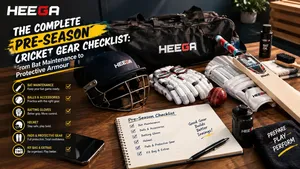 The Complete Pre-Season Cricket Gear Checklist: From Bat Maintenance to Protective Armour.Get match-ready with the ultimate pre-season cricket gear checklist. Learn how to inspect, restore, and maintain your bats, protective armour, spikes, and kit bag.
 What Cricket Wear Is Best for Mobility?Which cricket clothing and accessories let you bat, bowl and field without restriction: fit before price, breathable fabric, grip socks, finger and arm sleeves.