Kashmir Willow Cricket Bat Durability: What Causes Cracks, Surface Wear and Blade Damage?
Introduction: Why Cricket Bat Durability Matters
A cricket bat experiences considerable stress every time it is used. From powerful shots in the nets to repeated defensive strokes during a match, the blade must withstand regular impacts while maintaining its shape and structural integrity.
For many players, a Kashmir Willow cricket bat is an important part of their cricket journey. It may be the first bat they purchase after joining an academy, the equipment they use during regular club practice, or the bat they rely on for weekend matches.
Although Kashmir Willow bats are known for their practical durability and value, no wooden cricket bat is completely resistant to damage.
Small surface marks can develop naturally. The toe may show signs of wear after repeated contact with the ground. Cracks can appear after heavy impacts, while moisture and unsuitable storage conditions may contribute to changes in the wood's condition.
The important thing is understanding the difference between normal wear and damage that requires attention.
Kashmir Willow cricket bat durability depends on several factors, including wood quality, bat preparation, ball type, playing conditions, maintenance, and how the bat is used.
By understanding these factors, players can make better equipment decisions, recognise early warning signs, and avoid unnecessary damage.
What Makes Kashmir Willow Suitable for Cricket?
Kashmir Willow is widely used in cricket bat manufacturing, particularly for bats aimed at developing players, club cricketers, and those seeking practical equipment for regular practice.
The wood comes from willow trees grown in the Kashmir region and is used to create cricket bats with different weights, profiles, and specifications.
The durability of a finished bat does not depend on the name of the wood alone. The quality of the timber, its seasoning, the manufacturing process, and the way the bat is prepared all influence its performance and lifespan.
A well-made Kashmir Willow bat can provide reliable service when it is selected appropriately and maintained correctly.
Wood Quality and Natural Variation
Wood is a natural material, so every bat has its own characteristics.
Differences in grain structure, density, moisture content, and internal wood characteristics can influence how a blade responds to repeated impacts.
Two bats that look similar may not behave identically during use.
This is why players should consider the overall quality of the bat rather than judging durability solely by its appearance or price.
Manufacturing and Bat Preparation
The way the blade is shaped, pressed, finished, and prepared also matters.
A cricket bat must balance impact resistance, responsiveness, and practical usability. Manufacturing choices influence how the wood performs under repeated ball contact.
Even a bat made from good-quality willow can suffer damage if it is poorly prepared, used incorrectly, or exposed to unsuitable conditions.
Understanding the Main Types of Cricket Bat Damage
Before learning how to protect a Kashmir Willow cricket bat, it helps to understand the different types of damage that can occur.
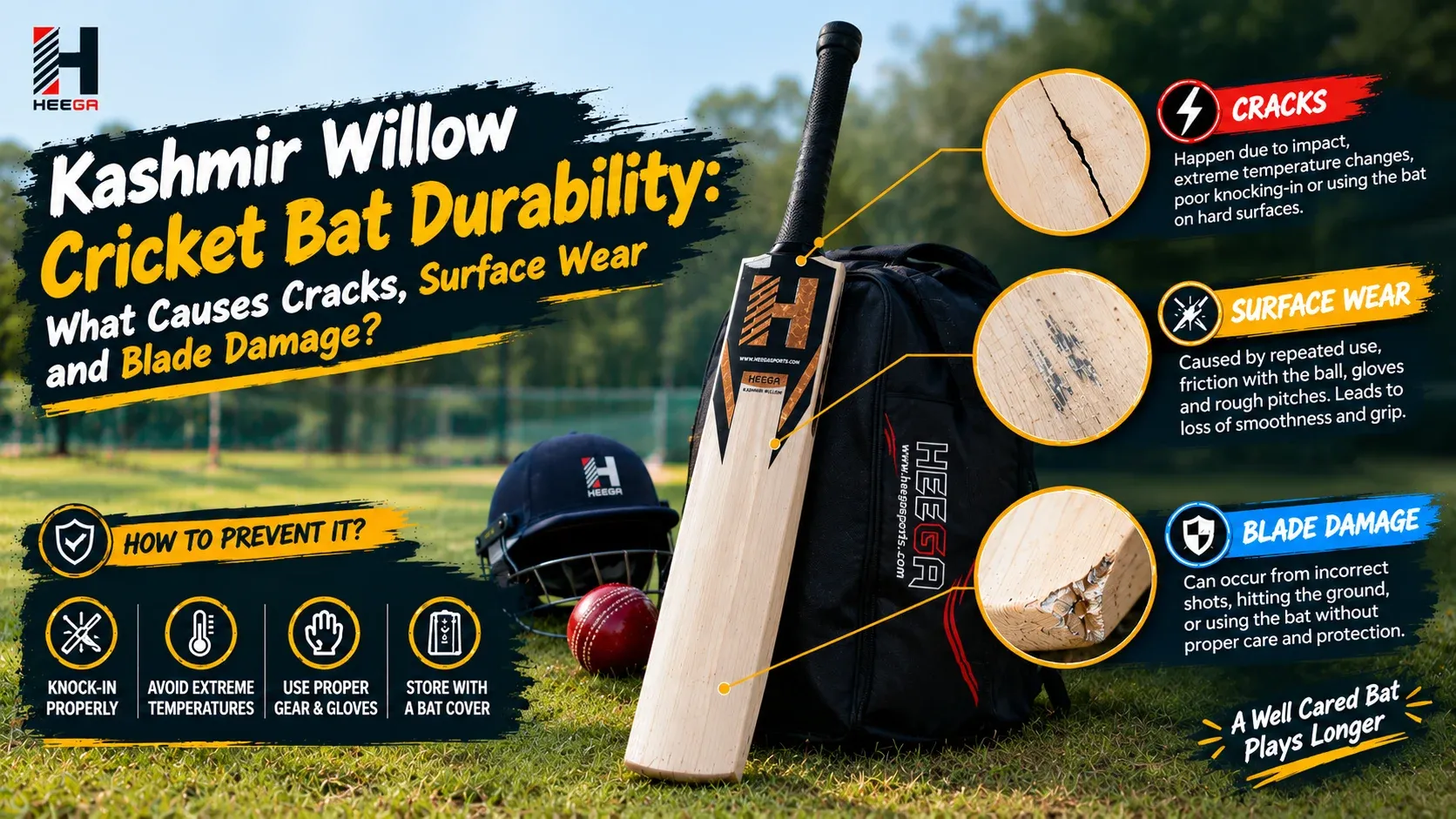
1. Surface Marks and Ball Imprints
Surface marks are among the most common changes players notice on a used cricket bat.
Repeated contact with the ball can leave small indentations, scuff marks, and areas where the surface finish has worn away.
These marks are particularly noticeable when a bat is used frequently during net sessions.
Are Surface Marks Normal?
In many cases, yes.
A cricket bat is designed to strike a ball repeatedly, so minor surface marks are expected during normal use.
Small marks do not automatically mean that a bat is damaged beyond use. The important considerations are their depth, location, and whether they are accompanied by cracks, splintering, or loose pieces of wood.
When Should Players Be Concerned?
Pay closer attention when surface damage becomes deep, develops into a crack, or causes wood fibres to separate.
If a section of the blade begins lifting or splintering, the bat may need repair before it is used again.
A qualified cricket equipment specialist can help assess whether the damage is cosmetic or structural.
2. Cracks Along the Blade
Cracks can develop when the wood experiences repeated stress or a particularly heavy impact.
Some cracks are small and superficial, while others extend deeper into the blade.
Their seriousness depends on their depth, direction, location, and whether they continue to grow.
What Causes Blade Cracks?
Several factors may contribute:
- Repeated impacts from cricket balls.
- Heavy or unusually hard ball contact.
- Existing weaknesses in the wood.
- Inadequate preparation for the intended use.
- Using a bat outside its intended playing conditions.
- Changes in moisture conditions that affect the wood.
- Previous damage that was left untreated.
Cracks do not always mean that the bat was poorly manufactured. Even a well-made bat can develop damage under demanding conditions.
Why Early Inspection Matters
A small crack may remain stable, or it may become more serious as the bat continues to experience impacts.
If you notice a new crack, inspect the area carefully and avoid continuing to strike hard balls with the damaged blade until its condition has been assessed.
Continuing to use a structurally damaged bat can worsen the problem.
3. Toe Damage
The toe is the bottom end of the cricket bat, making it especially vulnerable to wear.
During normal play, the toe may come into contact with the pitch, damp ground, hard surfaces, or the ball.
Repeated contact can gradually wear away the wood.
Why Is the Toe So Vulnerable?
The toe often experiences different types of stress from the main hitting area.
For example, a batter may accidentally drag the bat across the ground while running, repeatedly tap it on a hard surface, or use it on a damp pitch.
These actions can cause wear around the bottom edge.
Moisture is another concern. The exposed end grain of the wood can absorb water more readily than some other parts of the blade, which is why protecting the toe can be helpful.
How Can Toe Damage Be Reduced?
Players can take several precautions:
- Avoid repeatedly striking the toe against hard ground.
- Do not leave the bat resting in standing water.
- Dry the bat naturally if it becomes damp.
- Consider suitable toe protection when appropriate for the bat.
- Inspect the toe regularly for cracks, softness, or separation.
Toe protection can reduce exposure to moisture and everyday wear, but it cannot make the bat waterproof or prevent every type of impact damage.
4. Edge Damage
The edges are the sides of the bat blade.
They can experience heavy stress when a delivery strikes away from the centre of the blade.
Repeated impacts near the edge may produce small cracks, dents, or splintering.
Why Do Edges Get Damaged?
Batters do not always make perfect contact with the ball.
Inside edges, outside edges, mistimed shots, and repeated impacts in the same area can place additional stress on the blade.
Hard practice sessions can make this more noticeable, especially when players face many deliveries in a short period.
How to Protect the Edges
Players should inspect both sides of the blade after regular practice.
Small cosmetic marks may be normal, but deep cracks or loose wood should not be ignored.
Avoid using the bat to strike objects other than the intended cricket ball, and ensure that the bat is appropriate for the type of ball being used.
Does the Type of Cricket Ball Affect Bat Durability?
Yes. The type of ball used can influence the amount of stress placed on a cricket bat.
Different balls vary in weight, hardness, construction, and impact behaviour.
A bat used regularly against one type of ball may experience different demands when used against another.
Kashmir Willow Bats and Tennis Ball Cricket
Many beginners use tennis balls or other soft practice balls when learning cricket.
These can be suitable for introductory practice, depending on the ball and bat manufacturer's recommendations.
However, some tennis-ball games involve hard hitting, rapid swings, or heavy balls that may still place considerable stress on the blade.
Players should choose equipment suitable for their specific style of play rather than assuming that every Kashmir Willow bat is designed for every tennis-ball format.
Kashmir Willow Bats and Leather Ball Cricket
Leather cricket balls are harder than many soft practice balls and can deliver substantial impact to the blade.
Regular leather-ball use can create significant demands on the wood, particularly during intensive net sessions.
Players should select a bat intended for the type of leather-ball cricket they play and follow the manufacturer's preparation instructions.
A bat designed primarily for casual tennis-ball cricket may not be appropriate for repeated use against hard leather balls.
Why Matching the Bat to the Ball Matters
Using a bat outside its intended application can increase the risk of damage.
Before buying, check the product specifications and intended use. If you regularly switch between tennis-ball and leather-ball cricket, consider whether you need different equipment for each setting.
This is especially important for players who train frequently or face high-speed deliveries.
How Knocking-In Can Influence Bat Durability
Knocking-in is a preparation process used for many traditional wooden cricket bats before regular leather-ball use.
The process helps prepare the blade for repeated impacts by gradually compressing and conditioning the surface fibres.
It is not a guarantee against cracks, and the correct preparation method depends on the bat's construction and the manufacturer's guidance.
Why Preparation Matters
A new bat may require preparation before it is ready for its intended use.
Using an unprepared bat against hard deliveries may increase the likelihood of damage in some circumstances.
Knocking-in should be done carefully and progressively rather than by applying excessive force.
Does Every Kashmir Willow Bat Need Knocking-In?
Not necessarily in the same way.
Preparation requirements vary according to the particular bat, its manufacturing process, and whether it has already been prepared by the manufacturer.
Some bats may require traditional knocking-in, while others may come with specific instructions.
Always follow the manufacturer's recommendations rather than assuming that every bat needs an identical process.
Avoid Rushing the Preparation Process
A common mistake is trying to prepare a bat quickly by striking it forcefully with a hard ball.
Preparation should be gradual and controlled.
If you are unsure how to prepare your bat, ask the seller or a cricket bat specialist for guidance.
How Moisture Affects Kashmir Willow Cricket Bats
Moisture management is one of the most important aspects of wooden bat care.
Wood naturally interacts with moisture in its surroundings. Excessive dampness and significant changes in moisture conditions can affect the material.
What Happens When a Bat Gets Wet?
If a bat becomes wet, the wood may absorb moisture.
Repeated or prolonged exposure can contribute to changes in the blade's condition and may increase the risk of deterioration.
The toe is particularly worth checking because it can come into direct contact with damp ground.
What Should You Do If Your Bat Gets Wet?
If your bat becomes damp:
- Wipe away surface moisture with a clean, dry cloth.
- Allow the bat to dry naturally in a well-ventilated area.
- Keep it away from direct heat and intense sunlight.
- Do not place it next to a heater or use a hairdryer to speed up drying.
- Check the blade and toe for any changes once it has dried.
Avoid storing a damp bat inside a closed kit bag for long periods.
Can Dry Conditions Also Be a Problem?
Wood can respond to changes in humidity and temperature.
Extremely dry environments, excessive heat, and sudden environmental changes may affect the condition of the wood over time.
The aim is not to make the bat completely moisture-free. It is to store it in stable, sensible conditions and avoid prolonged exposure to extremes.
Why Proper Storage Extends Bat Life
The way a bat is stored between matches can influence its long-term condition.
Even a good-quality bat can deteriorate prematurely if it is consistently exposed to moisture, heat, or unnecessary physical stress.
Store the Bat in a Dry Place
Choose a cool, dry location with reasonable ventilation.
Avoid leaving the bat:
- In a damp garage or shed.
- Inside a wet kit bag.
- In a vehicle exposed to high temperatures.
- In direct sunlight for extended periods.
- Against a surface where the blade can be knocked or bent.
Avoid Unnecessary Pressure
Do not place heavy equipment on top of the bat or leave it in a position where it can be crushed.
Although a cricket bat is built to withstand ball impact, that does not mean it should be exposed to unrelated pressure or careless handling.
Check the Bat After Long Breaks
If the bat has not been used for several weeks or months, inspect it before returning to practice.
Check the blade, toe, edges, handle, and grip.
Look for new cracks, loose fibres, changes in the handle, or signs of moisture damage.
The Role of Bat Weight and Player Technique
Bat durability is not determined by the wood alone. How the player handles and uses the bat also matters.
Choosing a Manageable Bat Weight
A bat that is too heavy for the player may be difficult to control.
When a player struggles to manage the bat, mistimed shots and poor contact can become more common.
Selecting a comfortable weight helps the player develop better control and use the bat more naturally.
A lighter bat is not automatically more durable, and a heavier bat is not automatically stronger. Weight should be chosen according to the player's physical ability, technique, and playing requirements.
Poor Technique Can Increase Unnecessary Stress
Batters sometimes strike the ground heavily during their swing, drag the bat while running, or repeatedly tap the toe against a hard surface.
These habits can create unnecessary wear.
Coaching can help players improve their movement and bat control while reducing avoidable contact with the ground.
Practice With Purpose
A long practice session is not necessarily a better practice session.
Players should focus on technique, timing, and controlled repetition rather than simply hitting as many balls as possible.
Regularly inspecting equipment during training can also help identify problems before they become more serious.
Does Bat Quality Determine Durability?
Bat quality is important, but it is not the only factor.
Two Kashmir Willow bats may differ in wood quality, preparation, blade construction, and manufacturing consistency.
These differences can influence how the bats respond to regular use.
Look Beyond Appearance
When choosing a Kashmir Willow bat, do not judge it only by colour, visible grains, stickers, or price.
Consider the overall build quality and whether the bat is suitable for your playing needs.
Inspect the blade for visible cracks, loose wood, unusual surface defects, or damage around the toe and edges.
Ask About the Intended Use
A bat intended for casual practice may have different specifications from one intended for regular competitive leather-ball cricket.
Understanding the product's intended use helps you select equipment that better matches your training demands.
Price Is Not a Guarantee of Lifespan
A more expensive bat is not automatically guaranteed to last longer.
Likewise, a more affordable bat can provide useful service when it is well made and properly maintained.
The best choice is one that meets your requirements, fits your budget, and is appropriate for your style of cricket.
How to Recognise Serious Cricket Bat Damage
Regular inspection helps players distinguish normal wear from potential structural problems.
Some warning signs deserve particular attention.
Deep or Growing Cracks
A crack that becomes longer, wider, or deeper may indicate that the blade is under significant stress.
Stop using the bat against hard deliveries until it has been assessed.
Loose or Splintering Wood
If fibres begin lifting from the blade or a piece of wood becomes loose, continued use may worsen the damage.
Avoid pulling or cutting away large sections yourself.
A Damaged Handle
The handle is essential for controlling the bat.
Cracks, unusual movement, or separation between the handle and blade should be checked promptly.
A damaged handle can affect control and make the bat unsafe to use.
A Soft or Deteriorating Toe
If the toe feels unusually soft, shows signs of moisture damage, or begins separating, it may require professional attention.
Do not assume that applying a protective layer will solve an underlying structural problem.
When Should You Replace the Bat?
Replacement may be appropriate when damage is extensive, the handle is structurally compromised, or the bat can no longer be used safely.
Minor cosmetic marks alone do not necessarily mean that a bat needs replacing.
When in doubt, ask a qualified cricket bat repair specialist to assess the damage.
Can Cricket Bat Repairs Extend Its Lifespan?
In many cases, suitable repairs can help extend a bat's useful life.
The right repair depends on the type and severity of the damage.
Minor Surface Repairs
Small surface marks and limited areas of fibre lifting may be repairable, depending on their location and depth.
A specialist can determine whether the blade needs light surface treatment or more involved work.
Crack Repairs
Some cracks can be repaired using appropriate methods.
However, repair does not always restore the bat to its original condition. The location of the crack and the structural integrity of the surrounding wood are important considerations.
Toe Repairs and Protection
Minor toe wear may be manageable with suitable repair or protective treatment.
If the toe has become soft or severely damaged due to moisture, the underlying condition should be assessed before applying protection.
Handle Repairs
Handle damage should be treated seriously because the handle affects control.
A specialist can advise whether the handle can be repaired or replaced safely.
The key lesson is simple: repair damage early, but do not rely on repairs to make a badly damaged bat suitable for continued use.
A Simple Maintenance Routine for Kashmir Willow Bats
You do not need a complicated maintenance system to take good care of a cricket bat.
A short routine before and after practice can help you notice problems early.
Before Practice
- Check the blade for visible cracks.
- Inspect the toe and edges.
- Make sure the handle and grip feel secure.
- Confirm that the bat is suitable for the ball you will be using.
- Follow any preparation instructions supplied with the bat.
After Practice
- Wipe away dirt and surface moisture.
- Check for fresh marks or cracks.
- Avoid leaving the bat on wet ground.
- Store it in a dry, ventilated location.
- Keep it away from excessive heat.
Every Few Weeks
For players who practise frequently, a more careful inspection can help identify changes in the blade, toe, handle, or grip.
If a problem appears to be getting worse, seek advice rather than waiting until the bat becomes unusable.
Common Myths About Kashmir Willow Bat Durability
There are several misconceptions about wooden cricket bats that can lead to poor equipment decisions.
Myth 1: Every Crack Means the Bat Is Finished
Not all cracks are equally serious.
A superficial mark may be repairable or may not affect normal use significantly. A deep or growing crack can be more concerning.
The location, depth, and progression of the damage matter.
Myth 2: Kashmir Willow Bats Never Need Maintenance
Every wooden cricket bat benefits from sensible care.
Kashmir Willow bats can develop surface wear, toe damage, cracks, and handle problems under regular use.
Routine inspection and appropriate storage remain important.
Myth 3: Toe Protection Makes a Bat Waterproof
Toe protection can help reduce direct exposure to moisture and everyday wear.
However, it cannot make the bat completely waterproof or eliminate the effects of prolonged dampness.
Myth 4: The Most Expensive Bat Always Lasts the Longest
Price alone does not determine durability.
Construction, wood quality, preparation, playing conditions, and maintenance all contribute to a bat's useful life.
Myth 5: A Bat Should Be Used for Every Type of Ball
Not every bat is designed for every ball type.
Players should follow the manufacturer's guidance and choose a bat suited to their playing conditions.
Using the wrong equipment can increase the likelihood of premature damage.
Kashmir Willow Bat Durability for Different Types of Players
Different players place different demands on their equipment.
Understanding those demands can help them make better decisions.
Beginners
Beginners should prioritise a manageable weight, suitable size, and a bat designed for their intended type of cricket.
Learning good technique and avoiding careless contact with hard surfaces can help reduce unnecessary damage.
Academy Players
Academy players may face many deliveries during structured training sessions.
Frequent practice makes routine inspections especially valuable.
Players should pay attention to new cracks, edge wear, toe damage, and any changes in handle condition.
Club Cricketers
Club players may use their bats in both practice and competitive matches.
They should select equipment appropriate for their regular playing conditions and maintain it throughout the season.
Frequent Net Players
Players who spend long periods in the nets may expose their bats to repeated impacts.
Using the correct type of bat, following preparation guidance, and inspecting the blade regularly can help identify damage early.
How Heega Sports Helps Players Choose Suitable Cricket Equipment
At Heega Sports, we understand that choosing a cricket bat involves more than finding an attractive blade or a suitable price.
Players need equipment that matches their skill level, playing conditions, physical ability, and training requirements.
Kashmir Willow bats are a practical option for many developing players and club cricketers, provided the selected model is suitable for their intended use.
When choosing a bat, players should consider its size, weight, pickup, construction, and care requirements.
Heega Sports offers a range of cricket equipment for players at different stages of development, including Kashmir Willow cricket bats, junior bats, leather cricket balls, practice balls, batting gloves, batting pads, kit bags, practice nets, and training accessories.
Whether you are purchasing your first bat or looking for equipment for regular training, understanding product specifications can help you make a more informed choice.
Explore the available cricket range at Heega Sports.
Final Thoughts: Good Care Starts With Understanding Your Bat
Kashmir Willow cricket bats can provide reliable service for players who choose suitable equipment and maintain it properly. However, repeated impacts, surface wear, cracks, toe damage, moisture, and poor storage can all affect a bat's condition.
The best way to protect your equipment is to understand what causes damage and respond to early warning signs.
Choose a bat that matches your playing conditions. Follow the manufacturer's preparation instructions. Keep the blade dry, store it sensibly, avoid unnecessary impacts against hard surfaces, and inspect it regularly.
Remember that some surface marks are a normal part of cricket. Deep cracks, loose wood, a deteriorating toe, or handle damage require more careful attention.
No maintenance routine can guarantee that a cricket bat will never crack, but sensible use and timely care can help reduce avoidable damage and support a longer useful life.
For beginners, academy players, and club cricketers alike, looking after a bat is part of developing good cricket habits.
A well-maintained bat is not just a piece of equipment. It is a tool that supports practice, confidence, and progress throughout a player's cricket journey.
Choose Your Cricket Equipment With Heega Sports
Explore Kashmir Willow cricket bats, junior bats, leather cricket balls, practice balls, batting gloves, pads, kit bags, practice nets, and other cricket essentials.
Shop Now: https://heegasports.com
Heega Sports – Helping Cricketers Choose, Maintain, and Enjoy Their Equipment.
Related posts
 Kashmir Willow vs. English Willow: An Honest Performance & Durability Comparison for Club CricketersCompare Kashmir Willow vs English Willow cricket bats for club cricket. Learn about performance, durability, weight, pickup, value, and choosing the right bat.
 Kashmir Willow Cricket Bats for Power Hitting: How Blade Shape, Sweet Spot and Edge Thickness Work TogetherLearn how Kashmir willow cricket bat blade shape, sweet spot position, and edge thickness work together to support powerful shots, control, and balance.
 Kashmir Willow Cricket Bats: How Wood Density, Grain Patterns and Moisture Affect PerformanceDiscover how Kashmir Willow cricket bat density, grain patterns and moisture affect bat weight, balance, durability, and batting performance.