How Cricket Helps Kids Learn to Handle Pressure Without Losing Focus.

Introduction: Every Young Cricketer Faces Pressure
Cricket may look like a game of bat, ball, and runs, but for young players, it can also become an important lesson in handling pressure.
A child may feel nervous before batting.
They may worry about dropping a catch.
They may feel anxious when their team needs runs.
A young bowler may become uncomfortable after conceding a boundary.
These moments are completely normal.
The goal is not to remove pressure from a child's cricket experience.
Instead, cricket can help children gradually learn how to recognize pressure, manage their emotions, stay focused, and continue making sensible decisions.
These abilities can become useful far beyond the cricket ground.
What Does Pressure Mean for a Young Cricketer?
Pressure is the feeling that something important is happening and that the result matters.
For a child, pressure might come from:
- Batting in front of teammates.
- Bowling the final over.
- Taking an important catch.
- Chasing a target.
- Playing in a tournament.
- Performing in front of parents.
- Trying a new skill.
The amount of pressure can vary from child to child.
What feels exciting to one player may feel intimidating to another.
Pressure Is Not Always a Bad Thing
A small amount of pressure can actually help children concentrate.
When a player knows that a particular moment matters, they may become more attentive.
The important lesson is learning how to prevent pressure from becoming overwhelming.
Cricket provides repeated opportunities to practice this.
Why Cricket Is a Useful Environment for Learning Focus
Cricket contains many moments where players must concentrate on one task.
A batter needs to watch the next delivery.
A bowler needs to focus on their target.
A fielder needs to stay ready.
A wicketkeeper needs to watch the ball carefully.
This repeated focus can help children develop concentration.
The Next Ball Is What Matters
One of cricket's most valuable lessons is that players cannot change the previous delivery.
If a batter gets out, the next batter must prepare.
If a bowler concedes a boundary, the next ball still needs to be delivered.
If a fielder makes an error, the next opportunity may arrive immediately.
This encourages children to focus on what they can control.
Learning to Move On From Mistakes
Young players naturally become upset after mistakes.
A child may drop a catch and continue thinking about it.
A batter may get out and become frustrated.
A bowler may remember the boundary they conceded.
Coaching can help children learn to acknowledge the mistake and then return their attention to the next moment.
The "Next Ball" Mindset
A simple phrase can help young players:
"Focus on the next ball."
It does not mean ignoring mistakes.
It means learning from them without allowing them to control the rest of the performance.
Batting Can Teach Pressure Management
Batting places a player directly in the center of attention.
Everyone is watching.
The bowler is approaching.
The field is set.
The ball is coming.
For children, this can initially feel intimidating.
With experience, they can learn to focus on the delivery rather than everything happening around them.
Breaking the Moment Into Smaller Tasks
A child facing a difficult chase may think:
"We need 40 runs."
That can feel overwhelming.
A better approach may be:
"Let's focus on this ball."
Then:
"Now let's focus on the next one."
Breaking a large challenge into smaller actions makes pressure easier to manage.
Bowling Teaches Control Under Pressure
Bowling can create its own challenges.
A young bowler may concede a boundary and immediately feel that they must take a wicket.
That can lead to rushed decisions.
Instead, they can learn to return to their bowling plan.
One Bad Ball Does Not Define an Over
A bowler might bowl:
- One boundary.
- Two dot balls.
- One single.
- Another dot ball.
- One wicket.
The over may still be successful.
Children can learn that one mistake does not automatically determine the entire outcome.
Fielding Requires Instant Focus
Fielders may spend several deliveries without touching the ball.
Then suddenly, the ball comes directly toward them.
There may be only a moment to react.
This teaches children to remain mentally prepared even during quiet periods.
Staying Ready When Nothing Is Happening
This is a unique form of concentration.
A child needs to remain involved even when they are not currently holding the ball.
They must continue watching:
- The bowler.
- The batter.
- The ball.
- Their position.
- Possible running opportunities.
Wicketkeeping Can Develop Strong Concentration
Wicketkeepers have to remain involved throughout an innings.
Every delivery requires attention.
They may need to react to:
- Edges.
- Spin.
- Swing.
- Bounces.
- Stumpings.
- Run-out opportunities.
This makes wicketkeeping an excellent position for developing sustained focus.
Pressure and Decision-Making Are Connected
Pressure can affect decisions.
A nervous player may rush.
A frustrated player may take unnecessary risks.
A focused player has a better chance of thinking clearly.
Cricket gives children repeated opportunities to practice making decisions while emotions are present.
Learning to Choose the Right Shot
A young batter under pressure may want to hit a boundary immediately.
But the better decision might be to defend or take a single.
This teaches an important principle:
Pressure should not automatically change good decision-making.
Understanding Risk
Children gradually learn that every cricket action carries some level of risk.
A powerful shot may produce a boundary.
It may also produce a wicket.
A risky second run may produce two runs.
It may also result in a run-out.
Understanding this balance develops maturity.
Pressure Can Improve Awareness
When a match becomes important, players often become more aware of the situation.
They may notice:
- Score.
- Wickets remaining.
- Balls remaining.
- Field positions.
- Opponent strengths.
This can develop cricket intelligence.
Match Situations Teach Real-Time Thinking
Consider a simple situation:
The team needs 12 runs from the final two overs with six wickets remaining.
A child can be asked:
"Would you attack every ball?"
The discussion itself becomes a learning exercise.
Practice Pressure Before Match Day
Coaches can create controlled pressure during training.
For example:
"You have six balls to score eight runs."
The player experiences pressure in a safe environment.
They can then discuss what they felt and how they responded.
Pressure Challenges Should Be Age-Appropriate
Young children should not be placed under intense pressure unnecessarily.
The purpose of pressure drills is learning, not frightening players.
Challenges should gradually become more difficult as children become comfortable.
Small Pressure Builds Bigger Confidence
A child who successfully handles a small challenge may become more comfortable with the next one.
For example:
First
Score three runs from six balls.
Later
Score five runs from six balls.
Eventually
Handle a realistic match scenario.
This gradual progression can build confidence.
Confidence Comes From Experience
Telling a child:
"Don't be nervous."
does not always solve the problem.
Experience is often more useful.
The more children experience challenging moments, the more familiar those moments become.
Children Learn That Nervousness Is Normal
A child may feel nervous before a tournament.
That does not mean they are not ready.
Parents and coaches can explain that even experienced players can feel pressure.
The goal is learning how to respond to it.
Breathing Can Help Young Players Reset
Simple breathing exercises can help children pause before important moments.
For example:
Breathe in slowly.
Breathe out slowly.
Look at the target.
Focus on the next action.
This can become a simple pre-delivery routine.
Pre-Delivery Routines Can Improve Focus
A young batter might develop a routine such as:
- Adjust gloves.
- Look around the field.
- Take a breath.
- Watch the bowler.
- Focus on the delivery.
A bowler might:
- Choose the target.
- Take a breath.
- Begin the run-up.
- Focus on execution.
Simple routines can reduce distractions.
Routines Create Familiarity
When players repeat the same preparation process, important moments can feel more familiar.
The match situation may be different.
But the preparation routine remains consistent.
Parents Can Help Without Adding Pressure
Parents naturally want their children to perform well.
However, excessive pressure can make sport less enjoyable.
Instead of saying:
"You must score today."
try:
"Focus on playing your game and enjoying the match."
Ask About the Experience, Not Only the Result
After a match, parents can ask:
- How did you feel?
- What did you learn?
- Was there a moment when you felt nervous?
- How did you handle it?
- What would you try next time?
These questions encourage reflection.
Avoid Making Every Match About Runs and Wickets
Statistics are part of cricket.
But young children should not feel that their value depends entirely on their score.
A player can have a positive match by:
- Making smart decisions.
- Communicating well.
- Staying focused.
- Supporting teammates.
- Trying something new.
Celebrate Composure
Parents and coaches should recognize moments when children remain calm.
For example:
"You conceded that boundary but came back with three good deliveries. That showed great focus."
This reinforces useful behavior.
Coaches Can Teach Reset Techniques
A coach can teach players what to do after a mistake.
For example:
Mistake → Pause → Breathe → Learn → Reset → Next ball
This gives children a practical response instead of simply telling them to "stay calm."
Turn Pressure Into a Challenge
Language can change how children perceive difficult moments.
Instead of:
"Don't make a mistake."
try:
"Let's see how calmly you can handle this situation."
This changes the focus from fear to learning.
Team Support Can Reduce Pressure
Cricket is a team sport.
Players can encourage one another after mistakes.
A simple:
"Next ball."
or:
"You've got this."
can help a teammate reset.
Communication Builds Confidence
Children who communicate with teammates may feel less isolated during pressure situations.
Batters call for runs.
Fielders communicate about catches.
Wicketkeepers guide bowlers.
Captains organize the team.
Communication creates connection.
Leadership Can Develop Through Pressure
As children become older, they may experience leadership responsibilities.
Captains may need to:
- Set fields.
- Choose bowlers.
- Encourage teammates.
- Make tactical decisions.
These experiences can develop confidence and composure.
Learning to Stay Calm After Losing
Not every match will be won.
Children need to experience both success and disappointment.
A loss can become an opportunity to discuss:
- What went well.
- What went wrong.
- What can improve.
- What the team learned.
This helps children develop emotional resilience.
Cricket Teaches That Results Are Not Always Controllable
A player can make a good decision and still fail.
A batter can play a good shot and get caught.
A bowler can deliver well and still concede a boundary.
A fielder can position correctly and still miss a difficult catch.
This teaches children an important lesson:
Control the process, not every outcome.
Focus on What You Can Control
Players can control:
- Preparation.
- Effort.
- Attention.
- Communication.
- Technique.
- Decision-making.
They cannot completely control:
- Weather.
- Umpire decisions.
- Opponent actions.
- Unexpected edges.
- Bad luck.
Understanding this difference can reduce unnecessary frustration.
Watching Experienced Players Can Help
Children can also learn by observing how experienced cricketers behave under pressure.
Parents can ask:
"What did that player do after making a mistake?"
The answer may reveal useful lessons about composure and concentration.
Pressure Can Improve Self-Awareness
Children gradually learn how they personally respond to pressure.
One child may become quiet.
Another may become impatient.
Another may rush.
Recognizing these reactions is the first step toward managing them.
Every Child Handles Pressure Differently
There is no single perfect response.
Some children benefit from quiet time.
Others respond well to encouragement.
Some need a simple instruction.
Others prefer to think independently.
Parents and coaches should learn what works for each child.
Avoid Comparing Children's Pressure Responses
One child may look completely calm.
Another may appear nervous.
That does not necessarily mean one is mentally stronger.
Children have different personalities.
The goal should be individual development.
Cricket Can Teach Patience During Pressure
Pressure often creates the desire to act immediately.
But cricket rewards players who can wait.
A batter may wait for the right ball.
A bowler may patiently build pressure.
A fielder may wait for an opportunity.
Patience and focus work together.
Physical Preparation Can Improve Mental Confidence
Children often feel more confident when they know they have prepared.
Regular practice can help them feel familiar with:
- Batting movements.
- Bowling actions.
- Catching.
- Running.
- Match situations.
Preparation cannot guarantee success, but it can improve readiness.
Equipment Should Not Become an Extra Distraction
Children should have equipment that fits properly and feels comfortable.
An overly heavy bat or poorly fitting protective gear can distract a player during practice or competition.
Junior Cricket Equipment Matters
Young players should generally use equipment suited to their physical development.
This can include:
- Junior cricket bats.
- Appropriate batting gloves.
- Properly fitted pads.
- Suitable helmets.
- Comfortable cricket shoes.
The objective is to help children concentrate on learning.
Kashmir Willow Can Be a Practical Choice for Young Players
For many developing cricketers, Kashmir Willow bats can provide a practical combination of durability and value for regular practice.
The most important factor remains choosing a bat that matches the child's size, strength, and ability to control it.
A Simple Pressure Drill for Kids
Try this with a coach or parent.
Set up a six-ball challenge.
For example:
"Score six runs from six balls."
But add one rule:
The player must make a deliberate decision before every delivery.
After the challenge, ask:
- Did you feel nervous?
- Did you rush?
- Which ball was easiest?
- Which decision was difficult?
- What would you do differently?
This turns pressure into a learning experience.
A Bowling Pressure Drill
Give a young bowler six deliveries.
Set a target:
"Hit the target four times."
If they miss, they continue.
The focus is on returning to the plan rather than becoming frustrated.
A Fielding Pressure Drill
Create a simple situation:
"Three runs are needed from the final two balls."
Hit or roll the ball toward the child.
The player must field it and make the correct decision.
The objective is not to create fear.
It is to practice thinking while under controlled pressure.
Keep Pressure Drills Fun
Children should finish training feeling encouraged.
If a challenge creates too much anxiety, reduce the difficulty.
The purpose is to develop confidence, not fear.
Nepal, Germany, USA, Canada, Netherlands, and UK
Youth cricket continues to grow across Nepal, Germany, the United States, Canada, and the Netherlands, while the United Kingdom has a long-established junior and club cricket culture.
Young players in each environment may experience different levels of competition.
But the ability to stay focused under pressure is valuable everywhere.
Whether a child is playing a school match, academy game, club tournament, or friendly match, learning to manage pressure can improve both performance and enjoyment.
Pressure Skills Can Transfer Beyond Cricket
The lessons children learn on the cricket field can also help in everyday situations.
For example:
School
Staying calm before an exam.
Public Speaking
Managing nervousness before speaking.
Learning New Skills
Continuing after making mistakes.
Team Activities
Communicating under pressure.
Everyday Problems
Thinking before reacting.
Cricket therefore becomes a practical environment for developing life skills.
What Parents Should Teach Their Children
Parents can encourage five simple habits:
- Breathe.
- Watch carefully.
- Focus on the next action.
- Learn from mistakes.
- Trust your preparation.
These principles are simple enough for children to remember.
What Coaches Should Focus On
Coaches can help children by:
- Creating realistic but manageable challenges.
- Encouraging good decisions.
- Praising effort.
- Allowing mistakes.
- Teaching reset routines.
- Avoiding unnecessary criticism.
- Helping players understand match situations.
The Goal Is Not to Eliminate Pressure
Pressure is part of competitive sport.
Children will experience it.
The goal is to help them understand:
"I can feel pressure and still make a good decision."
That is a much stronger lesson than simply trying to avoid nervousness.
How Heega Sports Supports Young Cricketers
At Heega Sports, we believe young players need a positive environment where they can practice, experiment, and develop confidence.
Our cricket range includes:
- Junior cricket bats.
- Kashmir Willow bats.
- Leather cricket balls.
- Practice balls.
- Batting gloves.
- Batting pads.
- Cricket helmets.
- Wicketkeeping gloves.
- Cricket shoes.
- Cricket kit bags.
- Practice nets.
- Training accessories.
Comfortable, appropriately sized equipment can help children focus more clearly on their skills and less on equipment-related distractions.
Final Thoughts
Cricket gives children countless opportunities to experience pressure.
A difficult delivery.
An important catch.
A close run chase.
A final over.
A disappointing mistake.
A big tournament.
These moments can feel challenging, but they can also become valuable learning experiences.
Young players gradually discover that pressure does not have to control their decisions.
They can breathe.
They can pause.
They can focus on the next ball.
They can trust their preparation.
They can communicate with teammates.
They can learn from mistakes without allowing those mistakes to define them.
The most important lesson is not that a child should never feel nervous.
It is that being nervous does not mean they cannot perform well.
When children learn to stay focused while experiencing pressure, they develop something much more valuable than a cricket skill.
They develop confidence in their ability to handle difficult moments.
And that confidence can follow them far beyond the cricket field.
🏏 Help Your Child Build Confidence Through Better Cricket Training
Explore junior cricket bats, Kashmir Willow bats, leather balls, practice balls, batting gloves, pads, helmets, wicketkeeping gloves, cricket shoes, kit bags, practice nets, and training accessories at Heega Sports.
Shop Now
Heega Sports – Helping Young Cricketers Stay Focused, Handle Pressure, and Keep Growing.
Related posts
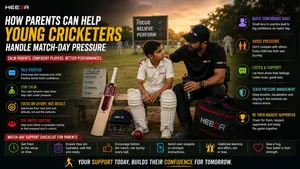 How Parents Can Help Young Cricketers Handle Match-Day PressureLearn how parents can help young cricketers handle match-day pressure, manage nerves, build confidence, and enjoy competitive cricket without unnecessary stress.
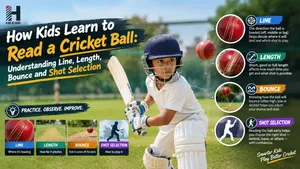 How Kids Learn to Read a Cricket Ball: Understanding Line, Length, Bounce and Shot SelectionLearn how kids can read a cricket ball by understanding line, length, bounce and shot selection to develop better batting skills and confidence.
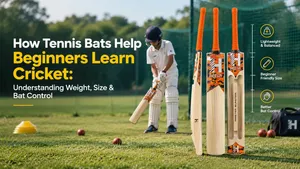 How Tennis Bats Help Beginners Learn Cricket: Understanding Weight, Size & Bat ControlLearn how tennis bats help beginners learn cricket by improving bat control, timing, balance, grip, confidence, and basic batting technique through simple practice.