How Cricket Statistics Help Teams Win: Understanding the Numbers Behind Modern Cricket

Introduction: Cricket Is No Longer Guided Only by Instinct
For decades, cricket decisions were based largely on experience.
Captains trusted their instincts.
Coaches relied on observation.
Selectors judged players by what they saw on the field.
Experience remains valuable today.
However, modern cricket has added another powerful tool—statistics.
Every run, ball, wicket, partnership, and fielding effort can now be measured and analyzed.
These numbers help teams prepare more effectively, understand opponents better, and make smarter decisions during matches.
Across Nepal, Germany, the United States, Canada, the Netherlands, and the United Kingdom, cricket analytics is becoming an essential part of player development, coaching, and match strategy.
Understanding the numbers behind the game helps explain why statistics have become one of cricket's greatest competitive advantages.
Why Statistics Matter in Cricket
Statistics turn performances into measurable information.
Instead of relying only on opinions, teams can evaluate:
- Consistency.
- Strengths.
- Weaknesses.
- Improvement over time.
- Match trends.
This allows better planning before, during, and after every game.
Batting Average
Batting average remains one of cricket's most recognized statistics.
It measures how many runs a batter scores, on average, before being dismissed.
A strong batting average usually reflects:
- Consistency.
- Good shot selection.
- Reliable performance.
Although important, batting average tells only part of the story.
Strike Rate
Strike rate measures how quickly a batter scores runs.
It has become particularly important in:
- T20 cricket.
- One Day Internationals.
- Limited-overs domestic competitions.
A batter with a high strike rate can change the momentum of a match within a few overs.
Bowling Average
Bowling average measures how many runs a bowler concedes for every wicket taken.
Lower bowling averages generally indicate greater effectiveness.
This statistic helps coaches evaluate bowling performance across different competitions.
Economy Rate
Economy rate measures how many runs a bowler concedes per over.
This is especially valuable in limited-overs cricket where controlling scoring becomes just as important as taking wickets.
Captains often rely on economy rates when planning bowling rotations.
Bowling Strike Rate
Bowling strike rate shows how frequently a bowler takes wickets.
Bowlers who dismiss batters regularly often create pressure that changes matches.
Combining strike rate with economy provides a more complete picture of bowling performance.
Partnership Statistics
Cricket is rarely won by individuals alone.
Strong batting partnerships build innings and reduce pressure.
Teams study partnership data to understand:
- Which players work well together.
- Where innings usually improve.
- Which combinations produce the best results.
Fielding Statistics
Modern cricket increasingly measures fielding performance.
Common statistics include:
- Catches taken.
- Run-outs completed.
- Direct hits.
- Fielding efficiency.
These numbers encourage higher fielding standards throughout the team.
Match Situation Analysis
Statistics also help teams understand specific situations.
For example:
- Performance while chasing.
- Success batting first.
- Results at particular venues.
- Performance under lights.
- Results against spin or pace.
These insights improve tactical planning.
Opposition Analysis
Teams now study opponents in great detail.
They analyze:
- Preferred scoring areas.
- Bowling lengths.
- Boundary percentages.
- Weaknesses against certain deliveries.
Preparation becomes far more specific than in previous generations.
Player Workload Management
Statistics are not limited to match performance.
Coaches also monitor:
- Overs bowled.
- Sprint distance.
- Recovery time.
- Fitness workload.
This helps reduce injuries while maintaining performance.
Technology Makes Statistics More Valuable
Modern software automatically records large amounts of information.
Coaches use:
- Video analysis.
- Ball tracking.
- Performance dashboards.
- Digital scorebooks.
- Match databases.
Technology allows faster and more accurate analysis than ever before.
Statistics Never Replace Skill
Although data is valuable, it does not replace:
- Talent.
- Practice.
- Experience.
- Decision-making.
Statistics support human judgment—they do not replace it.
Successful teams combine both.
Nepal: Analytics Supporting Player Development
As cricket continues growing in Nepal, coaches increasingly use performance data to help players improve technical consistency and match awareness.
Germany: Smarter Coaching Through Data
Germany's expanding cricket programs continue adopting statistical analysis to support player development and structured coaching.
United States: Professional Cricket Using Advanced Analytics
Professional cricket in the USA increasingly relies on detailed performance analysis to guide selection, tactics, and player preparation.
Canada: Improving Through Measurable Progress
Canadian clubs and academies increasingly monitor player statistics to track improvement throughout the season.
The Netherlands: Tactical Cricket Built on Preparation
Dutch cricket emphasizes intelligent preparation, with statistics helping teams make informed tactical decisions before every match.
United Kingdom: Data Supporting Elite Cricket
Professional cricket in the UK makes extensive use of analytics across county competitions, franchise leagues, and international cricket.
Statistics have become an important part of high-performance environments.
Statistics Help Young Players Improve
Young cricketers also benefit from simple performance tracking.
Recording basic information such as:
- Runs scored.
- Balls faced.
- Overs bowled.
- Wickets taken.
- Catches completed.
helps players understand their progress over time and stay motivated.
Good Equipment Supports Better Performance
Accurate statistics begin with consistent performance, and consistent performance starts with dependable equipment.
Players benefit from quality:
- Kashmir Willow cricket bats.
- Leather cricket balls.
- Practice balls.
- Cricket helmets.
- Batting gloves.
- Batting pads.
- Cricket shoes.
- Practice nets.
- Cricket kit bags.
Reliable equipment allows players to focus entirely on improving their game.
How Heega Sports Supports Player Development
At Heega Sports, we believe improvement should be measurable.
Whether players are training in schools, academies, clubs, or professional environments, quality equipment helps them perform consistently while tracking meaningful progress.
Our collection includes:
- Kashmir Willow cricket bats.
- Leather cricket balls.
- Practice balls.
- Cricket helmets.
- Batting gloves.
- Batting pads.
- Cricket shoes.
- Practice nets.
- Cricket kit bags.
- Training accessories.
We proudly support players and coaches who use both hard work and smart analysis to reach their goals.
Final Thoughts
Modern cricket has become a game where information matters almost as much as execution.
Batting averages, strike rates, economy rates, partnerships, and fielding statistics all help teams understand performance more clearly.
But numbers alone never win matches.
They guide preparation.
They reveal opportunities.
They support better decisions.
Across Nepal, Germany, the United States, Canada, the Netherlands, and the United Kingdom, cricket continues proving that success comes from combining skill, experience, and intelligent analysis.
Because in today's game, the teams that understand the numbers often understand the game itself a little better.
🏏 Improve Your Performance with Heega Sports
Explore premium-quality Kashmir Willow cricket bats, leather cricket balls, practice balls, cricket helmets, batting gloves, batting pads, cricket shoes, practice nets, cricket kit bags, and training accessories designed to help every cricketer perform consistently and improve with confidence.
Shop Now
Heega Sports – Quality Equipment for Smarter Cricket.
Related posts
 Mastering Bat Balance and Pick-Up Weight: Why Digital Scale Numbers LieDiscover why digital scale numbers lie when buying a cricket bat. Learn how pick-up weight, center of gravity, and mass distribution affect balance and power.
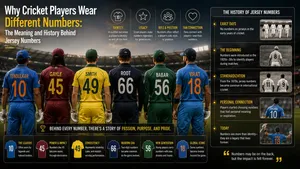 Why Cricket Players Wear Different Numbers: The Meaning and History Behind Jersey NumbersWhy do cricket players wear different jersey numbers? Discover the history, purpose, and meaning behind cricket shirt numbers and how they became part of player identity.
 Kashmir Willow Cricket Bats for Power Hitting: How Blade Shape, Sweet Spot and Edge Thickness Work TogetherLearn how Kashmir willow cricket bat blade shape, sweet spot position, and edge thickness work together to support powerful shots, control, and balance.