How to Choose the Right Cricket Bat for Your Playing Style

Introduction: Choosing the Right Cricket Bat
Choosing a cricket bat is not always as simple as picking the one that looks the best.
If you are new to cricket equipment, you may focus mainly on the design, stickers, or price. But once you start playing regularly, you quickly realise that every bat can feel different.
The weight can be different.
The pickup can feel different.
The balance can change.
The size and shape of the blade can affect how you play your shots.
The handle can also make a difference to comfort and control.
This is why choosing the right cricket bat matters.
A beginner may need a lighter and easier-to-control bat, while an experienced player may prefer a particular willow grade, profile, weight, or sweet spot based on their technique.
There is no single cricket bat that is perfect for every player.
The better choice depends on your playing style, physical strength, experience level, batting position, playing format, and personal preference.
In this guide, we will explain the main factors you should consider before buying a cricket bat and help you understand which type may suit your game.
What Is a Cricket Bat?
A cricket bat is one of the most important pieces of equipment used by a batter.
It is designed to allow players to defend the ball, rotate the strike, find gaps, and hit attacking shots.
A traditional cricket bat consists of several important parts, including:
- Blade
- Handle
- Splice
- Shoulder
- Edges
- Spine
- Toe
- Grip
Each part contributes to the overall feel and performance of the bat.
The exact design can vary between manufacturers and bat models.
The purpose, however, remains similar: provide the player with a comfortable and reliable tool for controlling the ball and playing shots.
Cricket bats are available for:
- Beginners
- Junior players
- School cricket
- Academy players
- Club cricket
- Professional-level cricket
- Practice and training
Choosing the correct bat for your level can make training more comfortable and help you develop better batting habits.
Why Your Playing Style Matters
Every batter has a different way of scoring runs.
Some players depend heavily on timing.
Others like to hit the ball hard.
Some batters are strong on the front foot, while others are more comfortable playing back-foot shots.
A player who loves cover drives may prefer a different bat feel from someone who spends most of the innings playing pulls and cuts.
Before buying a cricket bat, think about your natural batting style.
Ask yourself:
- Do I prefer timing or power?
- Do I play more front-foot shots?
- Do I prefer back-foot strokes?
- Do I like attacking from the beginning?
- Am I a defensive or aggressive batter?
- Do I play leather-ball cricket?
- Do I mainly train in nets?
- Do I play club or competitive cricket?
Your answers can help narrow down your options.
Cricket Bat Weight: Light vs Heavy
Bat weight is one of the first things players usually consider.
A lightweight cricket bat can provide quick movement and easy control.
A heavier bat can offer a more solid feel and may suit players who like powerful stroke play.
However, the heaviest bat is not automatically the best bat.
The right weight is the one you can control comfortably.
Lightweight Cricket Bats
A lightweight cricket bat can be useful for players who prefer quick hands and easy movement.
It may suit players who:
- Like fast bat speed
- Play wristy shots
- Prefer quick singles
- Depend on timing
- Play cuts and pulls
- Are younger or physically smaller
A lighter bat can also make it easier to adjust your shot at the last moment.
This can be useful when facing faster bowling.
However, going too light can also be a problem.
If the bat feels too light for your strength and technique, you may lose the stability you need when hitting the ball.
Heavier Cricket Bats
A heavier cricket bat may suit stronger players who prefer power and stability.
It can be useful for players who:
- Like attacking cricket
- Play powerful drives
- Prefer a solid pickup
- Have good physical strength
- Are comfortable with slower bat movement
The important thing is control.
If you cannot comfortably lift and manoeuvre the bat during your normal batting movement, it is probably too heavy for you.
Choose the heaviest cricket bat you can comfortably control, not simply the heaviest one you can hold.
Cricket Bat Balance and Pickup
Weight is important, but balance is equally important.
Two bats can have the same overall weight and still feel completely different.
This happens because the weight may be distributed differently throughout the blade.
One cricket bat may feel lighter in the hands, while another may feel more bottom-heavy.
This is known as the bat's pickup.
A comfortable pickup can help you:
- Lift the bat naturally
- Play faster shots
- Adjust your hands
- Control the bat face
- Maintain your batting rhythm
Before buying, hold the bat in your normal stance.
Try a few natural batting movements.
Ask yourself:
Does the bat feel easy to control?
If it feels natural, that is a good sign.
Cricket Bat Profile
The profile describes the overall shape and distribution of wood in the blade.
Different profiles are designed for different combinations of power, balance, and control.
When comparing cricket bat profiles, you may notice differences in:
- Spine height
- Edge thickness
- Sweet spot position
- Toe shape
- Blade shape
- Weight distribution
Some bats are designed with a larger hitting area.
Others focus more on balanced pickup and traditional bat feel.
Your choice should depend on how you naturally play.
What Is the Sweet Spot?
The sweet spot is the area of the cricket bat where the ball generally comes off the blade most effectively.
The location of the sweet spot can influence the way the bat feels during different shots.
Low Sweet Spot
A lower sweet spot can suit players who spend a lot of time playing front-foot shots.
It can also be useful on pitches where the ball tends to stay lower.
Players who prefer drives and controlled front-foot batting may enjoy this type of profile.
Mid Sweet Spot
A mid sweet spot is a versatile option for many players.
It can work well for batters who play a mixture of front-foot and back-foot shots.
For players who want an all-round cricket bat, a mid-position sweet spot can be worth considering.
High Sweet Spot
A higher sweet spot may suit players who regularly play back-foot shots.
It can be useful for batters who are comfortable playing:
- Pulls
- Cuts
- Back-foot drives
- Other aggressive back-foot strokes
There is no universally best sweet spot.
The right position depends on your technique and playing conditions.
English Willow vs Kashmir Willow Cricket Bat
Willow is another major consideration when choosing a cricket bat.
The two names you will commonly come across are English Willow and Kashmir Willow.
English Willow Cricket Bat
English Willow is commonly associated with premium cricket bats and competitive cricket.
It is a popular choice among serious players who want a high-performance bat for regular matches and training.
English Willow bats are available in different grades, allowing players to choose according to their requirements and budget.
They can be suitable for:
- Advanced players
- Club cricketers
- Competitive players
- Academy players
- Serious match preparation
Kashmir Willow Cricket Bat
Kashmir Willow is another popular option.
It can be a practical choice for players who want a dependable cricket bat without necessarily moving into the premium end of the market.
Kashmir Willow bats can be suitable for:
- Beginners
- Junior players
- School cricket
- Recreational cricket
- Practice
- Developing players
The most expensive bat is not automatically the right bat for every player.
Your experience, playing frequency, budget, and requirements should all be considered.
Cricket Bat for Beginners
Beginners should focus on control and comfort.
When learning cricket, the player is already trying to develop:
- Batting stance
- Grip
- Footwork
- Head position
- Shot selection
- Timing
- Balance
A cricket bat that is too heavy can make this process more difficult.
For beginners, look for:
- Manageable weight
- Comfortable pickup
- Correct size
- Good balance
- Comfortable grip
- Durable construction
The goal is to make the bat easy to control.
A beginner does not need to buy the largest or most expensive bat available.
Cricket Bat for Junior Players
Young players should use equipment that matches their age, height, and physical development.
An adult-size cricket bat may be too large or heavy for a junior player.
A properly sized bat allows young players to learn better technique without fighting the equipment.
When selecting a junior cricket bat, consider:
- Player height
- Age
- Strength
- Bat weight
- Handle comfort
- Overall pickup
The right size can help make practice more enjoyable while supporting proper batting development.
Cricket Bat for Aggressive Batters
If you naturally play attacking cricket, your bat should support that approach.
Aggressive batters often look for:
- Strong pickup
- Good stability
- Large hitting area
- Substantial profile
- Comfortable grip
- Enough mass for power
However, a larger cricket bat is not always better.
If the bat becomes difficult to control, your bat speed and timing may suffer.
The ideal attacking bat is one that gives you enough power without taking away control.
Cricket Bat for Timing-Based Batters
Some players do not rely on brute force.
They score runs by using timing, placement, and gaps in the field.
For these players, bat control can be more important than maximum size.
A timing-based batter may prefer:
- Balanced pickup
- Comfortable weight
- Quick hands
- Good control
- Comfortable handle
- Suitable sweet spot
A well-balanced cricket bat can help the batter move the bat face into the right position and play controlled strokes.
Cricket Bat for All-Round Players
All-round players often need versatility.
One match may require defensive batting.
Another may require aggressive scoring.
Because of this, an all-rounder may prefer a cricket bat that offers a balance between control and power.
A versatile bat should feel comfortable when playing:
- Defence
- Drives
- Cuts
- Pulls
- Flicks
- Lofted shots
A balanced profile can be a practical choice for players who do not rely on only one style of batting.
Cricket Bat for Different Batting Positions
Your position in the batting order can also influence your equipment choice.
Opening Batter
Openers usually face the new ball and may spend a long time at the crease.
They may prefer a cricket bat that provides:
- Good balance
- Comfortable pickup
- Reliable control
- Suitable sweet spot
- Confidence against pace
Middle-Order Batter
Middle-order players often need flexibility.
They may have to rebuild an innings or increase the scoring rate depending on the situation.
A versatile cricket bat can therefore be a useful option.
Lower-Order Batter
Lower-order players may sometimes need to score quickly.
Power can be important, but control should not be ignored.
A bat that is too heavy can make it harder to react to different deliveries.
Cricket Bat Handle
The handle is an important part of the bat because it connects your hands to the blade.
A comfortable handle can improve control and make long batting sessions easier.
When choosing a cricket bat, consider:
- Handle comfort
- Grip thickness
- Grip quality
- Flexibility
- Overall feel
The grip should also feel comfortable in your hands.
If it is too thin or too thick, it may affect your control.
Sometimes changing the grip can make a familiar bat feel completely different.
Cricket Bat Size
Choosing the correct size is especially important for junior players.
A bat should match the player's height and physical development.
A bat that is too large can be difficult to control.
A bat that is too small may not provide the right reach or feel.
A correctly sized cricket bat should allow the player to:
- Maintain a comfortable stance
- Lift the bat naturally
- Control the downswing
- Play different shots comfortably
- Move the bat without unnecessary effort
For young players, correct size should come before appearance or brand preference.
Match Bat vs Practice Bat
Think about where you will use your cricket bat.
A player who trains every day may have different requirements from someone who plays only occasional matches.
Match Cricket Bat
For competitive matches, focus on:
- Weight
- Pickup
- Balance
- Willow
- Profile
- Comfort
- Construction
Your match bat should give you confidence when you walk onto the field.
Practice Cricket Bat
Practice bats may be exposed to more frequent use.
If you spend several hours every week in the nets, you may prefer a cricket bat that can handle regular training.
Some players use a separate bat for practice so their main match bat receives less wear.
How to Test a Cricket Bat Before Buying
If possible, always try to understand how the bat feels before making your final decision.
Hold the cricket bat in your normal batting stance.
Try a few natural movements such as:
- Defensive shot movement
- Straight drive movement
- Pull-shot movement
- Cut-shot movement
- Lofted shot movement
You do not necessarily need to hit a ball.
You are simply checking the pickup and control.
Ask yourself:
- Is it comfortable?
- Can I lift it easily?
- Does it feel balanced?
- Can I move it quickly?
- Does the grip feel natural?
If the answer is yes, you may have found a good match.
Cricket Bat Comparison by Playing Style
Playing StyleWhat to Look For
Timing-based batter
Balanced pickup and comfortable weight
Aggressive batter
Strong profile and stable feel
Wristy player
Lightweight and quick pickup
Front-foot player
Suitable low or mid sweet spot
Back-foot player
Suitable mid or high sweet spot
All-rounder
Balanced profile and versatile feel
Beginner
Correct size and manageable weight
Junior player
Lightweight and age-appropriate size
Club player
Quality construction and personalised balance
Advanced player
Suitable willow, profile, weight and pickup
These are general guidelines.
Your own comfort should always be the final consideration.
Common Cricket Bat Buying Mistakes
Choosing a Bat That Is Too Heavy
A heavy bat can look powerful, but if you cannot control it, your batting can suffer.
Choosing Only by Appearance
Stickers and design can make a bat look attractive, but performance and comfort should come first.
Copying a Professional Player
Your favourite player's cricket bat may not suit you.
Players have different heights, strengths, techniques, and preferences.
Focusing Only on Price
A more expensive bat does not automatically mean it is the right bat for your playing style.
Ignoring Balance
Two bats with similar weights can feel completely different because of their weight distribution.
Buying the Wrong Size
This is especially important for young players.
The bat should match the player's height and strength.
Ignoring Grip Comfort
A poor grip can affect control and make long batting sessions uncomfortable.
How to Maintain Your Cricket Bat
Once you have selected the right cricket bat, proper care becomes important.
Good maintenance can help keep your bat in better condition for longer.
Some basic habits include:
- Store the bat in a dry place
- Protect it from unnecessary moisture
- Avoid extreme heat
- Check the blade regularly
- Inspect the handle for damage
- Keep the grip comfortable
- Follow suitable knocking-in procedures when required
- Use the bat for its intended purpose
Your cricket bat is an important part of your equipment, so treating it properly can help you get more value from it.
When Should You Replace Your Cricket Bat?
There is no fixed replacement period for every cricket bat.
The lifespan depends on:
- How often you play
- How hard you use the bat
- Type of cricket
- Bowling speed
- Playing surface
- Maintenance
- Existing damage
You may need to consider repair or replacement if you notice:
- Major cracks
- Significant blade damage
- Loose handle
- Serious toe damage
- Reduced performance
- Repeated structural problems
In some situations, a professional repair may be enough.
Cricket Bat for Different Levels of Players
Choosing equipment according to your playing level can make the process easier.
Beginner
Focus on:
- Correct size
- Manageable weight
- Good balance
- Comfortable grip
School Player
Look for:
- Age-appropriate size
- Durable construction
- Comfortable pickup
- Suitable willow
Academy Player
Consider:
- Batting style
- Willow quality
- Sweet spot
- Profile
- Match requirements
Club Player
Focus on:
- Personalised weight
- Balance
- Willow
- Profile
- Match and practice requirements
Advanced Player
More experienced players can be more specific about:
- Pickup
- Sweet spot
- Edge profile
- Spine
- Willow grade
- Handle preference
- Batting conditions
How Playing Conditions Can Influence Your Cricket Bat
Your playing environment can also affect your preference.
A player who regularly plays on hard, fast surfaces may have different requirements from someone who plays on slower pitches.
Think about:
- Pitch type
- Bowling pace
- Match format
- Ground conditions
- Playing frequency
- Front-foot vs back-foot batting
Your cricket bat should complement the conditions you regularly experience.
How to Choose a Cricket Bat for Nets
Net practice is one of the best places to understand what works for you.
For beginners, a lighter and easy-to-control cricket bat can make learning more comfortable.
Academy players may want a combination of practice and match-oriented bats.
Club players who train regularly should choose a durable and comfortable option.
For serious match preparation, using a bat similar to your match bat can help you become familiar with its pickup and balance.
Cricket Bat for Different Formats
The format you play can influence your requirements.
Test and Long-Format Cricket
Players may spend long periods at the crease.
Control, comfort, and reliable performance can be important.
ODI Cricket
Players need to balance building an innings with controlled attacking cricket.
A versatile cricket bat can be useful.
T20 Cricket
Aggressive stroke play and quick scoring are often important.
Players may prefer a bat that gives them confidence when playing attacking shots.
However, the right bat still depends on individual preference.
What Makes a Top Quality Cricket Bat?
A top quality cricket bat should match the player's requirements and provide a reliable overall feel.
When choosing a bat, look at:
- Willow quality
- Blade construction
- Balance
- Pickup
- Sweet spot
- Edge profile
- Handle
- Grip
- Finish
- Size
Quality is not only about appearance.
A well-finished cricket bat should also feel comfortable and suitable for its intended use.
Building the Right Cricket Equipment Setup
Your cricket bat is important, but it is only one part of your complete cricket equipment.
A player may also need:
- Cricket helmet
- Batting gloves
- Batting pads
- Thigh guard
- Arm guard
- Cricket shoes
- Cricket kit bag
- Cricket balls
- Practice equipment
- Cricket stumps
The exact setup depends on your playing level and format.
A beginner may need only basic equipment.
A competitive player may require a complete match setup.
How Coaches Can Help Players Choose a Cricket Bat
Coaches can be extremely helpful when selecting equipment.
A player may think they need a heavy bat because they want more power.
But a coach may notice that the player struggles to control it.
Similarly, a young batter may choose a bat that is too large because it looks impressive.
A coach can help identify whether the equipment is actually suitable.
Coaches can consider:
- Batting technique
- Player strength
- Height
- Age
- Shot selection
- Bat control
- Training requirements
This can make the buying process much easier.
How Heega Sports Helps You Choose Cricket Equipment
At Heega Sports, we understand that different cricket players have different equipment requirements.
A beginner does not necessarily need the same cricket bat as an experienced club player.
A junior player needs the correct size and manageable weight.
An academy player may want equipment that supports regular training and match preparation.
A competitive player may be more particular about willow, profile, balance, and pickup.
The right equipment depends on the player, format, training environment, and purpose.
Heega Sports offers a range of cricket equipment, including:
- English Willow cricket bats
- Kashmir Willow cricket bats
- Cricket balls
- Batting gloves
- Batting pads
- Cricket helmets
- Cricket shoes
- Cricket kit bags
- Practice nets
- Cricket stumps
- Training accessories
- Protective cricket equipment
Whether you are learning to play cricket, training at an academy, playing club cricket, or preparing for competitive matches, choosing suitable equipment can make your sessions more comfortable and productive.
Frequently Asked Questions
Which cricket bat is best for beginners?
A beginner should generally choose a cricket bat with a manageable weight, comfortable pickup, correct size, and good balance. Control is more important than choosing the biggest or most expensive bat.
What weight cricket bat should I use?
The ideal weight depends on your strength, height, technique, and personal preference. Choose a bat that you can lift and control comfortably throughout your batting session.
Is a heavier cricket bat better for power hitting?
Not necessarily. A heavier bat can provide a solid feel, but power also comes from technique, bat speed, timing, and strength. A bat that is too heavy can reduce control.
Which is better, English Willow or Kashmir Willow?
Both can be suitable for different players. English Willow is commonly chosen by serious and competitive players, while Kashmir Willow can be a practical option for beginners, developing players, and regular practice.
How do I know if a cricket bat has good balance?
Hold the bat in your normal batting stance and make a few natural movements. If it feels easy to lift and control without excessive effort, the pickup may be suitable for you.
What is the sweet spot on a cricket bat?
The sweet spot is the area of the blade where the ball generally comes off the bat most effectively. Its position can influence how the bat feels during different shots.
Should I buy the same cricket bat as my favourite player?
Not necessarily. Professional players have different physical builds, techniques, and preferences. It is better to choose a bat based on your own game.
What cricket bat size should a junior player use?
Junior players should use a bat appropriate for their height, age, and physical development. A bat that is too large or heavy can make proper technique harder to develop.
How do I test a cricket bat before buying?
Hold the bat in your normal stance and make a few batting movements. Check its weight, pickup, grip comfort, balance, and how naturally you can move it.
How often should I replace my cricket bat?
There is no fixed replacement period. It depends on how frequently you play, how you use the bat, its maintenance, and whether it has developed significant damage.
Final Thoughts
Choosing the right cricket bat does not have to be complicated.
Start with your playing style.
If you are a beginner, focus on control, comfort, size, and manageable weight.
If you are an aggressive batter, look for a bat that gives you enough stability and power without becoming difficult to control.
If you are a timing-based player, balance and pickup may be more important than maximum size.
If you are an all-rounder, choose a versatile cricket bat that allows you to play both defensive and attacking shots.
Experienced players can look more closely at willow, sweet spot, profile, handle, edges, and overall pickup.
Most importantly, do not choose a bat simply because it looks impressive or because another player uses it.
The best cricket bat is the one that feels right in your hands and supports your natural technique.
Think about your height, strength, batting position, experience, format, playing conditions, and training requirements before making your decision.
A good cricket bat should not feel like something you have to fight with.
It should feel like an extension of your hands.
Choose the right bat, practise with confidence, and let your equipment support your game every time you step onto the cricket field.
🏏 Find the Right Cricket Equipment at Heega Sports
Whether you need an English Willow cricket bat for competitive cricket, a Kashmir Willow bat for training, or complete cricket equipment for your next season, Heega Sports offers options for different levels of players.
Explore:
- English Willow cricket bats
- Kashmir Willow cricket bats
- Cricket balls
- Batting gloves
- Batting pads
- Cricket helmets
- Cricket shoes
- Cricket kit bags
- Practice nets
- Cricket stumps
- Training accessories
Shop Now
👉 Heega Sports – Quality Cricket Equipment for Training, Matches, and Player Development.
Related posts
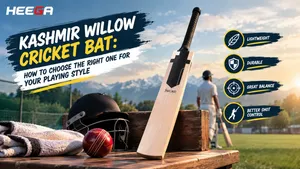 Kashmir Willow Cricket Bat: How to Choose the Right One for Your Playing Style.Learn how to choose the right Kashmir Willow cricket bat based on playing style, size, profile, balance, weight, willow quality, and batting technique.
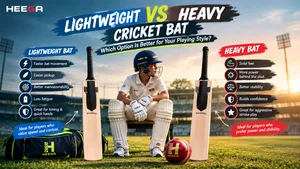 Lightweight vs Heavy Cricket Bat: Which Option Is Better for Your Playing Style?Compare lightweight and heavy cricket bats to understand how weight affects bat speed, power, control, balance, timing, and playing style.
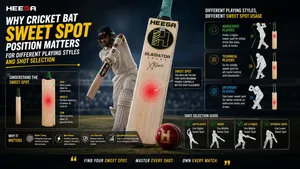 Why Cricket Bat Sweet Spot Position Matters for Different Playing Styles and Shot SelectionLearn how cricket bat sweet spot position affects timing, power, balance, shot selection, and playing style, and discover which position suits different batters.