Why Cricket Bat Sweet Spot Position Matters for Different Playing Styles and Shot Selection

Introduction: The Part of a Bat That Changes How It Feels
When choosing a cricket bat, players often look at the things that are easiest to notice.
They check the weight.
They look at the edges.
They examine the spine.
They ask about the willow grade.
They may even spend several minutes lifting the bat and checking its pickup.
But there is another detail that can have a major influence on how a bat performs:
The position of the sweet spot.
The sweet spot is the area of the blade where the bat can produce a particularly clean feeling when the ball is struck well.
Its position is not exactly the same on every bat.
Some bats have a low sweet spot.
Others have a mid sweet spot.
Some are designed with a high sweet spot.
These differences are not simply cosmetic.
Sweet spot position can influence the way a bat feels, where it performs most naturally, and which types of shots may feel comfortable.
A batter who spends most of their time playing front-foot drives may have different preferences from someone who likes to play off the back foot.
A player on low-bouncing pitches may look for different characteristics from someone regularly playing on pitches with more bounce.
This is why there is no single sweet spot position that is perfect for everyone.
The right choice depends on the player's technique, playing conditions, batting position, and personal preference.
Understanding sweet spot position can therefore make choosing a cricket bat much easier.
What Is the Sweet Spot on a Cricket Bat?
The sweet spot is generally described as the part of the bat face where contact with the ball feels especially clean and efficient.
When the ball meets this area, the batter may experience:
- A solid sound.
- Less unpleasant vibration.
- Good rebound.
- A balanced feeling.
- Efficient transfer of energy.
The sweet spot is not a magical point that automatically produces boundaries.
A batter still needs good timing and technique.
The quality of contact depends on many factors, including the bat, ball, player, and delivery.
However, sweet spot location does affect how the bat is designed and where its mass is concentrated.
That can influence how it feels during different types of shots.
Why Is Sweet Spot Position Different on Cricket Bats?
Manufacturers design bats with different profiles for different preferences.
The position of the sweet spot is influenced by factors such as:
- Blade profile.
- Weight distribution.
- Spine position.
- Bow of the blade.
- Toe design.
- Overall bat balance.
Moving the sweet spot higher or lower can change how the bat behaves.
For example, a bat with a low sweet spot may concentrate more of its effective hitting area toward the lower part of the blade.
A high sweet spot moves that emphasis upward.
A mid sweet spot sits between the two.
These designs allow players to choose equipment that complements their technique and playing environment.
Low, Mid, and High Sweet Spots
For simplicity, cricket bats are often discussed using three broad sweet spot positions.
Low Sweet Spot
The sweet spot is positioned closer to the toe.
Mid Sweet Spot
The sweet spot sits around the middle of the blade.
High Sweet Spot
The sweet spot is positioned higher toward the shoulder.
These descriptions are useful, but they are not perfectly standardized across every manufacturer.
One company's "mid" profile may feel slightly different from another's.
This is why physically trying a cricket bat can be helpful whenever possible.
Low Sweet Spot Bats
A low sweet spot is positioned closer to the bottom portion of the blade.
This design can be attractive to players who regularly encounter lower bounce or prefer playing shots closer to the front foot.
A low sweet spot can also influence the bat's overall balance.
Depending on the profile, the bat may feel particularly comfortable for players who like a lower center of mass.
But this does not mean every batter on a low-bouncing pitch automatically needs a low sweet spot.
Technique still matters.
The bat should complement the player rather than dictate how they play.
Low Sweet Spot and Front-Foot Batting
Front-foot players may naturally be interested in low sweet spot designs.
Consider a batter who enjoys:
- Straight drives.
- Cover drives.
- On drives.
- Front-foot defensive shots.
- Drives through mid-off and mid-on.
These shots often involve contacting the ball lower on the blade than some back-foot strokes.
A low sweet spot can therefore feel natural to certain front-foot-oriented players.
However, the player should still focus on timing and control rather than assuming the bat will automatically improve their technique.
Low Sweet Spot and Low-Bouncing Pitches
Playing conditions can influence equipment preferences.
Some surfaces produce relatively low bounce.
On such pitches, batters may regularly find themselves playing the ball lower on the blade.
A low sweet spot can feel well suited to this type of batting.
This is one reason players who regularly play on certain surfaces may develop specific bat preferences.
But conditions can change.
A player competing in different countries or formats may need equipment that offers greater versatility.
Mid Sweet Spot Bats
Mid sweet spot bats are often considered versatile.
The sweet spot sits around the middle of the blade, creating a balanced option for many styles of batting.
A mid-position can suit players who:
- Play both front and back foot.
- Face varied bowling.
- Want a versatile bat.
- Play on different pitches.
- Prefer a balanced feel.
This can make mid sweet spot bats popular among club and competitive players.
They offer a useful middle ground without strongly favoring one particular area of the blade.
Why Mid Sweet Spot Is Often Considered Versatile
Cricket is unpredictable.
One delivery may require a front-foot drive.
The next may demand a back-foot defense.
A short ball may need a pull.
A fuller delivery may be driven through cover.
A versatile bat can therefore appeal to players who do not want equipment strongly optimized for one specific area.
A mid sweet spot can provide that flexibility.
Again, personal preference remains important.
A player may love a low sweet spot even if another player considers the mid position more versatile.
High Sweet Spot Bats
High sweet spot bats position the effective hitting area farther toward the upper portion of the blade.
This design can appeal to players who spend more time playing back-foot shots or who regularly encounter pitches with higher bounce.
A high sweet spot can also contribute to a different overall balance and pickup.
Some players enjoy the feeling because it allows them to move the bat comfortably while maintaining a higher center of mass.
High Sweet Spot and Back-Foot Players
Back-foot players may naturally prefer high sweet spot designs.
Consider someone who enjoys:
- Cuts.
- Pull shots.
- Back-foot punches.
- Square drives.
- Playing pace through the off side.
These shots can involve contact higher on the blade depending on the delivery.
A high sweet spot may therefore feel comfortable for this style.
It is not a strict rule.
Good players can adapt to different bat profiles.
But equipment preferences often develop around the movements a player uses most frequently.
Sweet Spot Position and Playing Style
Playing style is one of the most important factors when choosing a bat.
A batter who builds innings through controlled front-foot strokes may prefer a different design from an aggressive back-foot player.
Some batters rely on:
- Timing.
- Placement.
- Drives.
- Strike rotation.
Others rely more heavily on:
- Power hitting.
- Pull shots.
- Cuts.
- Lofted strokes.
The bat should feel natural within that style.
Sweet spot position is one of the details that can influence that feeling.
Sweet Spot Does Not Determine Your Playing Style
It is important not to reverse the relationship.
A high sweet spot does not automatically make someone a back-foot batter.
A low sweet spot does not automatically make someone a front-foot player.
The player develops the technique first.
The equipment is then selected to complement it.
This distinction matters.
A batter should not completely change their natural technique simply because a certain bat profile is fashionable.
Sweet Spot and Bat Balance
Sweet spot position is closely connected to balance.
Moving the effective hitting area can change where mass is concentrated in the blade.
This can affect the bat's pickup.
Two bats may have the same listed weight but feel completely different when lifted.
One may feel light through the hands.
Another may feel heavier toward the blade.
This is why experienced players often talk about pickup rather than weight alone.
Sweet Spot and Bat Pickup
Pickup describes how a bat feels when the player lifts and swings it.
A well-balanced bat can feel easier to move than its actual weight might suggest.
Sweet spot location, spine profile, edges, and handle characteristics can all contribute to this feeling.
For players who rely on quick bat movement, pickup can be particularly important.
A bat that feels comfortable during shadow practice may also feel more natural during actual batting.
Does a Low Sweet Spot Mean More Power?
Not automatically.
This is one of the most common misunderstandings about bat profiles.
A sweet spot position does not guarantee that a batter will hit the ball harder.
Power depends on:
- Bat speed.
- Timing.
- Contact quality.
- Player strength.
- Technique.
- Delivery speed.
- Bat construction.
A low sweet spot may simply make a bat feel more suitable for certain types of contact.
The player still creates the shot.
Does a High Sweet Spot Mean Better Bat Speed?
Again, not automatically.
Bat speed depends heavily on the player's technique and physical ability.
However, changes in weight distribution can influence how a bat feels during the swing.
Some players may find a particular profile easier to maneuver.
Another player may find the same profile uncomfortable.
This is why bat selection is personal.
Sweet Spot and Shot Selection
The position of the sweet spot can influence which shots feel most natural.
A player should think about their regular scoring areas.
Do they often play:
- Straight drives?
- Cover drives?
- Pulls?
- Cuts?
- Flicks?
- Lofted shots?
- Back-foot punches?
Understanding your own shot selection can help you decide which bat characteristics deserve attention.
Front-Foot Players and Bat Selection
A front-foot-oriented batter may spend more time playing fuller deliveries.
They may prefer equipment that feels comfortable through the lower and middle parts of the blade.
For such players, a low or mid sweet spot can be worth testing.
But there is no universal recommendation.
A technically strong front-foot batter may prefer a mid or even high sweet spot.
The objective is to find what works naturally.
Back-Foot Players and Bat Selection
Back-foot players often enjoy handling deliveries that are shorter or rising.
They may spend more time playing shots around the middle and upper portion of the blade.
A mid or high sweet spot can therefore be worth considering.
But again, technique and pitch conditions matter.
A player should not choose a bat solely from the sweet spot label.
Aggressive Power Hitters
Power hitters may have different priorities.
They may look for:
- Strong pickup.
- Suitable weight.
- Thick edges.
- A substantial spine.
- Comfortable balance.
- Reliable bat control.
Sweet spot position is one part of this equation.
A power hitter should still be able to control the bat through different shots.
A heavier bat is not automatically more powerful if the player cannot swing it effectively.
Technical Batters
Technical players may prioritize control and feel.
They may be particularly sensitive to:
- Pickup.
- Balance.
- Handle feel.
- Sweet spot location.
- Bat face response.
For these players, the feeling of contact can be more important than simply maximizing the size of the edges.
A comfortable cricket bat can allow them to focus on timing and placement.
Sweet Spot Position and Cricket Pitch Conditions
The pitch can influence how the bat feels during a match.
Different surfaces may provide:
- Low bounce.
- High bounce.
- Variable bounce.
- Slower pace.
- Faster pace.
A player who regularly plays on low-bouncing surfaces may develop different preferences from someone who regularly faces high bounce.
This is one reason professional players sometimes have several bats available.
Playing in Different Countries
Cricketers increasingly travel for competitions.
A player may train in one country and compete in another.
Conditions can change dramatically.
For example, a batter could experience a low-bouncing surface in one match and a faster, higher-bouncing wicket in another.
Equipment preferences may therefore change depending on the conditions.
There is no universal bat profile for every pitch.
Sweet Spot Position and Format of Cricket
Different formats can influence batting approaches.
Test Cricket
Players may value control, patience, and the ability to play a wide range of deliveries.
ODI Cricket
Batters need to combine stability with increasing scoring pressure.
T20 Cricket
Quick scoring and aggressive shot-making can become more important.
A player may therefore prefer different bat characteristics depending on the format.
T20 Players and Sweet Spot Preferences
T20 batters often look for equipment that allows quick movement and aggressive stroke play.
They may consider:
- Bat weight.
- Pickup.
- Balance.
- Sweet spot.
- Edge profile.
- Overall maneuverability.
A particular sweet spot position may feel better for a player's preferred shots.
But there is no universal "T20 sweet spot."
Players use a wide range of bat designs.
Test Players and Sweet Spot Preferences
Test cricket can place greater emphasis on control.
Batters may spend long periods at the crease.
They need to play:
- Defensive shots.
- Drives.
- Leaves.
- Rotating strikes.
- Occasional attacking strokes.
A versatile bat can be particularly attractive.
But individual preferences remain more important than the format alone.
Why Sweet Spot Position Should Not Be Your Only Buying Factor
It is easy to become focused on one specification.
But a bat is a combination of many characteristics.
Before buying, consider:
- Bat size.
- Bat weight.
- Pickup.
- Balance.
- Willow.
- Profile.
- Edges.
- Spine.
- Handle.
- Grip.
- Sweet spot.
- Your playing style.
- Your playing conditions.
A sweet spot position that looks perfect on paper may not feel right in your hands.
Listed Weight vs Actual Feel
This is particularly important.
Imagine two cricket bats that both weigh 2lb 8oz.
One feels comfortable.
The other feels heavy.
How is that possible?
Weight distribution.
The position of mass throughout the bat affects how the player experiences it.
Sweet spot position can be part of that overall design.
This is why players should test pickup whenever possible.
Sweet Spot and the Sound of Contact
Experienced batters often recognize good contact immediately.
The sound changes.
The vibration changes.
The feeling changes.
A well-timed shot can feel effortless.
This is partly why players develop strong preferences for particular bats.
They learn what clean contact feels like.
However, sound alone is not a reliable measure of bat quality.
Technique and contact point still matter.
Why Experienced Players Notice Small Differences
A beginner may pick up two bats and say:
"They both feel the same."
An experienced batter may immediately notice differences in:
- Pickup.
- Handle feel.
- Balance.
- Sweet spot.
- Bat face response.
Years of practice make players more sensitive to equipment.
This is not necessarily because professionals need dramatically better bats.
It is because they understand what feels natural to them.
Young Players Should Keep It Simple
Young cricketers do not need to become obsessed with sweet spot position.
For beginners, the priorities should usually be:
- Correct bat size.
- Comfortable weight.
- Good technique.
- Safe equipment.
- Regular practice.
As the player becomes more experienced, they can explore profile and sweet spot preferences.
Parents Should Consider the Child's Development
A child may change rapidly over a few years.
Their:
- Height.
- Strength.
- Technique.
- Confidence.
- Batting style.
can all develop.
The ideal cricket bat at age ten may not be the ideal bat at age thirteen.
Equipment should evolve with the player.
How to Test Sweet Spot Position Before Buying
If possible, players should test a bat rather than relying entirely on specifications.
During practice, try:
- Defensive shots.
- Straight drives.
- Cover drives.
- Pull shots.
- Back-foot punches.
- Controlled lofted shots.
Pay attention to where the bat feels most comfortable during contact.
Also notice the pickup.
Does it feel easy to swing?
Does it feel balanced?
Can you control it without excessive effort?
These questions provide more useful information than a specification sheet alone.
Common Mistakes When Choosing a Bat Profile
Choosing Based Only on Appearance
A beautiful bat is not necessarily the right bat.
Choosing Based Only on Sweet Spot
Sweet spot position is important, but it is only one specification.
Buying the Heaviest Bat
More weight does not automatically mean more power.
Copying a Professional
A professional's equipment is designed around their body and technique.
Ignoring Playing Conditions
The bat should make sense for the surfaces you regularly play on.
Can a Player Adapt to a Different Sweet Spot?
Absolutely.
Good players can adapt.
A batter who normally uses a mid sweet spot can learn to use a low sweet spot.
However, adaptation takes time.
The bat may initially feel different.
This is why major equipment changes should ideally happen during practice rather than immediately before an important match.
Sweet Spot Position and Confidence
There is also a psychological element.
When a player knows their bat well, they develop familiarity.
They know:
- How it feels.
- How quickly it moves.
- Where it feels strongest.
- How it responds to different shots.
That familiarity can contribute to confidence.
Confidence does not come from sweet spot position alone.
But comfortable equipment can remove unnecessary distractions.
The Best Cricket Bat Is the One That Matches You
There is no universal winner between low, mid, and high sweet spots.
Each design has potential advantages depending on the player.
Low Sweet Spot
Often worth considering for players who prefer lower contact points and certain low-bounce conditions.
Mid Sweet Spot
A versatile option for players who use a broad range of batting movements.
High Sweet Spot
Often attractive to players who prefer back-foot play and higher contact areas.
These are starting points, not strict rules.
Your own technique should remain the deciding factor.
How Heega Sports Helps Players Choose Better Equipment
At Heega Sports, we understand that choosing a cricket bat is about more than looking at a price tag.
Players have different techniques.
They have different strengths.
They play on different pitches.
They prefer different bat profiles.
Our cricket range includes:
- Junior cricket bats.
- Kashmir Willow cricket bats.
- English Willow cricket bats.
- Different bat profiles.
- Cricket bat grips.
- Leather cricket balls.
- Practice cricket balls.
- Batting gloves.
- Batting pads.
- Cricket helmets.
- Cricket shoes.
- Cricket kit bags.
- Practice nets.
- Training accessories.
Whether you are buying your first serious bat or upgrading equipment for competitive cricket, understanding your own playing style can help you make a more informed choice.
A Simple Sweet Spot Selection Checklist
Before choosing your next bat, ask yourself:
Where Do I Usually Make Contact?
Do you naturally strike the ball lower, around the middle, or higher on the blade?
What Shots Do I Play Most?
Are you mainly a front-foot player, back-foot player, or a combination of both?
What Pitches Do I Play On?
Think about bounce and pace.
How Does the Bat Pick Up?
The listed weight does not tell the whole story.
Can I Control It?
A powerful bat is useless if you cannot maneuver it comfortably.
Does It Feel Natural?
This may be the most important question of all.
Final Thoughts
Sweet spot position is one of those cricket bat specifications that becomes more interesting as a player gains experience.
For a beginner, it may seem like another technical term on a product description.
For an experienced batter, it can become an important part of equipment selection.
A low sweet spot may appeal to players who favor front-foot batting and regularly play on lower-bouncing surfaces.
A mid sweet spot can provide a versatile option for players who move between front-foot and back-foot play.
A high sweet spot may suit players who prefer back-foot shots or regularly encounter higher bounce.
But these are not fixed rules.
The perfect bat depends on the person holding it.
Your technique, strength, playing style, pitch conditions, preferred shots, and comfort all matter.
It is also important to remember that sweet spot position does not create batting ability.
A bat cannot replace practice.
It cannot fix poor footwork.
It cannot automatically improve timing.
And it certainly cannot make every delivery disappear over the boundary.
What it can do is provide a design that works naturally with the way you already play.
That is the real purpose of equipment selection.
Instead of asking:
"Which sweet spot is the best?"
A better question is:
"Which sweet spot works best for my game?"
Once you start looking at equipment from that perspective, choosing a cricket bat becomes much easier.
You stop chasing specifications simply because they sound impressive.
You start paying attention to how the bat feels.
You consider the pitches you play on.
You think about your most common shots.
You consider how the bat picks up.
And most importantly, you choose equipment that supports your own development.
For a young player, that might mean prioritizing comfort and control.
For a club batter, it might mean finding a versatile profile.
For an experienced player, it may involve very specific preferences about balance, pickup, weight, and sweet spot position.
There is no single correct answer.
The best cricket bat is the one that allows you to play your natural game with confidence and control.
Because in the end, the sweet spot is not just a location on the blade.
It is part of the relationship between the bat and the player.
And when that relationship feels right, good batting can feel surprisingly simple.
🏏 Find the Cricket Bat Profile That Matches Your Game
Explore junior cricket bats, Kashmir Willow bats, English Willow bats, different bat profiles, batting gloves, pads, helmets, cricket shoes, leather balls, practice balls, kit bags, practice nets, and training accessories at Heega Sports.
Shop Now
Heega Sports – Helping Every Player Find Equipment That Fits Their Game.
Related posts
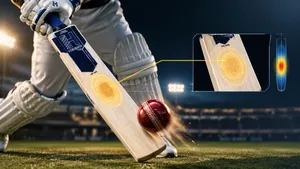 Cricket Bat Sweet Spot Explained: How Its Position Affects Your Batting.Learn what a cricket bat sweet spot is and how its position affects timing, power, balance, shot selection, and performance for different players.
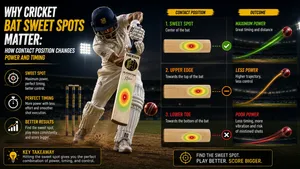 Why Cricket Bat Sweet Spots Matter: How Contact Position Changes Power and TimingWhy does the cricket bat sweet spot matter? Learn how contact position affects power, timing, control, vibration, and batting performance, plus tips to find your bat's sweet spot.
 Cricket Rules for Kids Explained: Understanding Runs, Wickets, Overs and Fielding Positions.Learn cricket rules for kids, including runs, wickets, overs, fielding positions, batting, bowling, and basic match rules in a simple beginner's guide.