Cricket Bat Sweet Spot Explained: How Its Position Affects Your Batting.
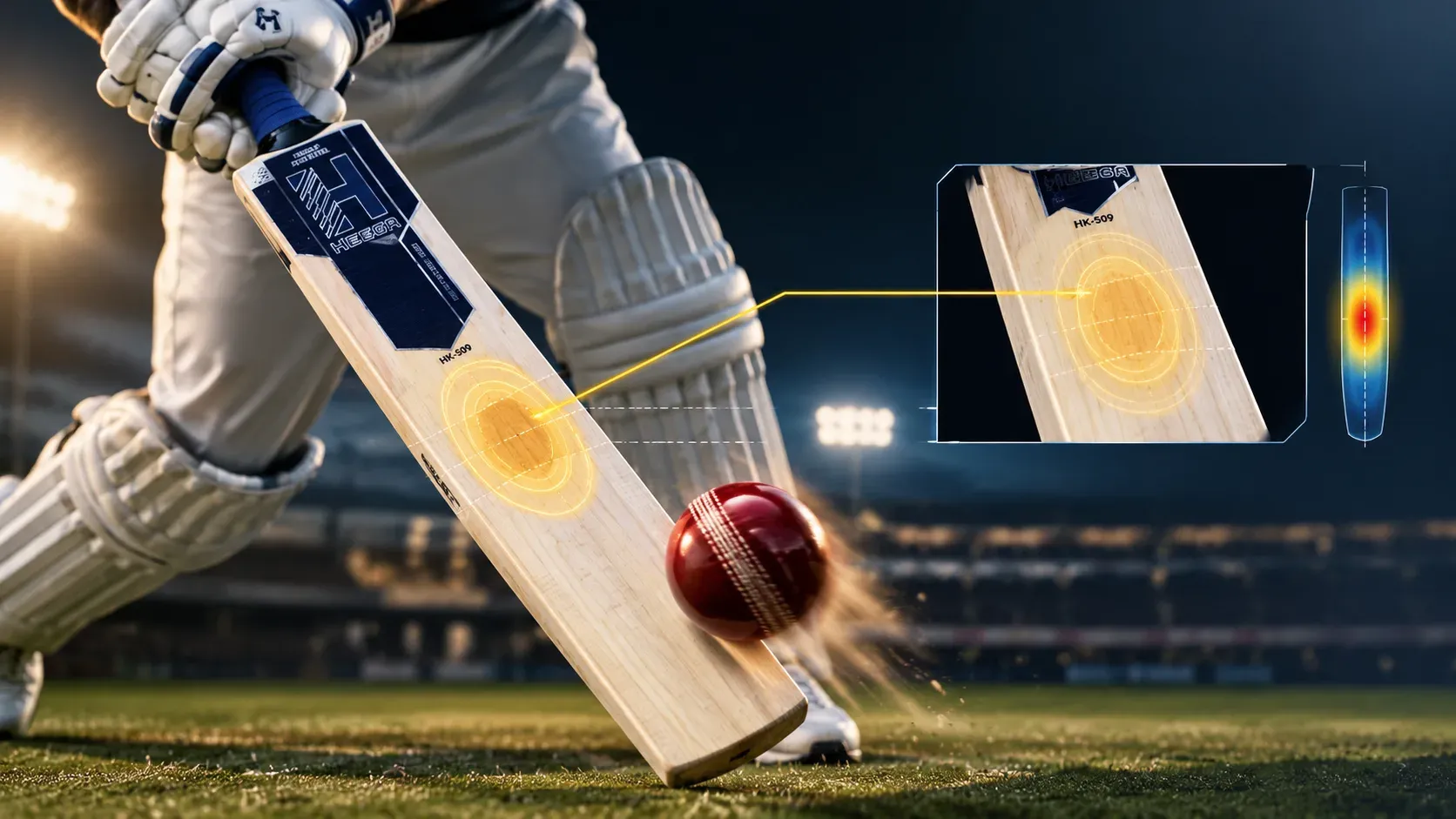
Introduction: Why the Sweet Spot Matters
When a batter strikes the ball perfectly, the shot often feels effortless.
There is a clean sound from the bat, minimal vibration in the hands, and the ball travels with excellent timing.
One reason for this feeling is contact with the bat's sweet spot.
The sweet spot is the area of the bat where impact can feel particularly clean and efficient. Its position influences how the bat responds when the ball is struck.
However, the sweet spot is not the only factor that determines batting performance. Technique, footwork, timing, bat speed, balance, and shot selection remain essential.
Understanding sweet-spot position can nevertheless help players choose a bat that suits their style and playing conditions.
This guide explains what the sweet spot is, where it is located, how it affects batting, and what players should consider before buying a cricket bat.
What Is the Sweet Spot on a Cricket Bat?
The sweet spot is generally the area on the blade where the ball can be struck with a combination of:
- Efficient energy transfer.
- A clean feel.
- Reduced vibration.
- Strong rebound.
- Comfortable impact.
It is often associated with the bat's most responsive hitting area.
The exact sweet spot varies from bat to bat. It depends on the bat's design, shape, weight distribution, blade profile, spine, edges, and manufacturing process.
A sweet spot should not be viewed as a single universal point. In practice, it is better understood as a responsive region of the blade.
Where Is the Sweet Spot Located?
The sweet spot may be positioned in different areas of the bat.
The three common descriptions are:
- Low sweet spot.
- Mid sweet spot.
- High sweet spot.
Each position can influence the way a bat feels and the type of player it may suit.
The ideal position depends on the batter's technique, height, strength, preferred shots, and the pitches they regularly play on.
Low Sweet Spot Cricket Bats
A low sweet spot is positioned closer to the lower part of the blade.
This type of bat may suit players who:
- Regularly play on low-bouncing pitches.
- Prefer front-foot batting.
- Play many drives.
- Like the feeling of power lower down the blade.
- Often face slower or lower bounce conditions.
A low sweet spot can feel useful when the ball reaches the batter around the lower portion of the blade.
However, it does not mean that every player on a low-bouncing pitch must use a low sweet-spot bat. Personal comfort and technique still matter.
Mid Sweet Spot Cricket Bats
A mid sweet spot is positioned around the central area of the blade.
This is often considered a versatile option for many players because it offers a balanced response across a broad range of common batting movements.
A mid sweet-spot bat may suit players who:
- Play a mixture of front-foot and back-foot shots.
- Participate in different formats.
- Want an adaptable bat.
- Prefer a balanced feel.
- Play on varied pitches.
For many developing and club-level cricketers, a mid sweet spot can be a practical choice.
High Sweet Spot Cricket Bats
A high sweet spot is positioned closer to the upper portion of the blade.
This type of bat may suit players who:
- Regularly play on bouncy pitches.
- Prefer back-foot shots.
- Play on fast surfaces.
- Want a lighter pickup.
- Often face deliveries that rise toward the upper blade.
A high sweet spot may also allow the bat to feel more manoeuvrable, depending on its overall weight distribution and profile.
As with other sweet-spot positions, the final decision should be based on how the bat feels during actual practice.
Sweet Spot and Bat Balance Are Connected
Sweet-spot position is closely related to the bat's balance.
A bat with a low sweet spot may feel more bottom-heavy, especially if more mass is concentrated toward the toe.
A bat with a high sweet spot may feel easier to lift, depending on its design.
A mid sweet spot often provides a more neutral feeling, although this is not guaranteed.
Two bats with the same listed weight can have very different pickups because their weight is distributed differently.
This is why players should test the bat rather than relying only on the number printed on the label.
What Is Bat Pickup?
Pickup describes how heavy or light a bat feels when the player lifts and swings it.
It is influenced by:
- Total bat weight.
- Sweet-spot position.
- Spine design.
- Edge thickness.
- Handle construction.
- Weight distribution.
- Blade profile.
A bat with good pickup may feel comfortable even if it is slightly heavier than another model.
A bat with poor pickup may feel difficult to control even when its listed weight is lower.
The best pickup is personal. It should allow the player to move the bat naturally without excessive effort.
Sweet Spot and Batting Timing
Timing depends on several skills, including:
- Watching the ball.
- Footwork.
- Head position.
- Bat speed.
- Bat angle.
- Contact point.
- Balance.
The sweet spot can support a clean feeling when these elements come together.
When the ball is struck in a responsive area of the blade, the player may experience less vibration and better energy transfer.
However, a sweet spot cannot correct poor timing. If the batter reaches for the ball, plays from an unstable position, or mistimes the shot, even a high-quality bat may not produce the desired result.
Sweet Spot and Power Hitting
Many players assume that a bat with a larger sweet spot automatically produces more power.
The reality is more complex.
Power depends on:
- Bat speed.
- Quality of contact.
- Body movement.
- Timing.
- Shot direction.
- Ball speed.
- Bat mass.
- Player strength.
A well-positioned sweet spot can help the player make efficient contact, but the batter must still generate the necessary bat speed and control.
A heavier bat may provide more mass behind the shot, but only if the player can swing it effectively.
Sweet Spot and Vibration
Impact vibration can influence comfort.
When the ball strikes outside the bat's most responsive area, the player may feel more vibration through the handle.
Contact near the sweet spot often feels cleaner.
The amount of vibration also depends on:
- Willow characteristics.
- Bat construction.
- Handle design.
- Grip.
- Impact location.
- Ball speed.
- Bat condition.
A player who is particularly sensitive to vibration should test different bats before purchasing.
Sweet Spot and Shot Selection
Different shots involve different contact points.
For example:
- Front-foot drives may involve contact lower on the blade.
- Back-foot cuts may involve a different bat angle and contact position.
- Pull shots may require quick bat movement and controlled balance.
- Defensive strokes require precise timing and soft hands.
- Lofted shots require suitable bat speed and contact.
A bat's sweet-spot location may influence how comfortable certain shots feel.
However, no sweet-spot position is designed for only one shot. Skilled batters use a wide range of movements and can adapt to different bat designs.
Choosing a Sweet Spot Based on Playing Conditions
Playing conditions can influence bat preference.
Low-Bouncing Pitches
Players on low-bouncing pitches may prefer a lower sweet spot because they often make contact closer to the lower part of the blade.
Bouncy Pitches
Players on bouncy surfaces may prefer a higher sweet spot if they regularly play back-foot shots.
Mixed Conditions
Players who compete in different locations may prefer a mid sweet spot for versatility.
The pitch should be considered alongside the player's technique and comfort. It should not be the only deciding factor.
Sweet Spot for Front-Foot Batters
Front-foot batters often move toward the ball and play shots such as:
- Straight drives.
- On drives.
- Cover drives.
- Defensive pushes.
- Flicks.
A lower or mid sweet spot may feel suitable for some front-foot players, particularly when they make contact closer to the lower section of the blade.
Nevertheless, the batter's stance, height, timing, and preferred contact point should guide the final selection.
Sweet Spot for Back-Foot Batters
Back-foot players may regularly use:
- Cuts.
- Pulls.
- Square drives.
- Back-foot defenses.
- Horizontal-bat shots.
A mid or high sweet spot may suit some players who prefer making contact higher on the blade.
This does not mean a back-foot batter cannot use a low sweet-spot bat. Skilled players can adapt to different equipment through practice.
Sweet Spot and Player Height
Player height can influence the position where the ball is naturally contacted.
A taller player may have a different stance and contact point from a shorter player.
However, height alone should not determine sweet-spot selection.
Players should also consider:
- Bat size.
- Stance.
- Footwork.
- Playing style.
- Pitch conditions.
- Comfort.
- Experience.
The sweet spot should complement the player's natural movement rather than force them to change their technique unnecessarily.
Sweet Spot and Bat Size
Bat size and sweet-spot position are connected.
Junior bats often have designs intended for younger players with different heights and physical strengths.
When moving from:
- Size 3.
- Size 4.
- Size 5.
- Size 6.
- Harrow.
- Short Handle.
the player may notice changes in blade length, balance, pickup, and sweet-spot location.
A child should not choose an adult bat simply to obtain a larger hitting area. Oversized equipment can make the bat difficult to control and may affect technique.
Does a Larger Sweet Spot Mean a Better Bat?
Not necessarily.
A larger responsive area can be helpful, especially for developing players, but the bat still needs to suit the player.
A bat should be judged by:
- Comfort.
- Pickup.
- Weight.
- Balance.
- Profile.
- Willow quality.
- Handle feel.
- Construction.
- Playing style.
A bat with a large sweet spot may not be ideal if it is too heavy or difficult to manoeuvre.
Sweet Spot and Cricket Bat Profiles
Bat profiles can influence sweet-spot behaviour.
Common profile features include:
- Thick edges.
- Pronounced spine.
- Traditional blade shape.
- Full profile.
- Concave shaping.
- Low, mid, or high sweet spot.
A pronounced spine and thicker edges may support a power-oriented design, but they can also affect the bat's overall weight distribution.
Players should consider the complete profile rather than focusing on one feature in isolation.
Sweet Spot and Willow Type
Both Kashmir Willow and English Willow bats can be designed with different sweet-spot positions.
Kashmir Willow
Kashmir Willow bats are popular among:
- Beginners.
- Junior players.
- Academy cricketers.
- School players.
- Developing club cricketers.
They can offer durability and value for regular practice.
English Willow
English Willow bats are commonly chosen by advanced club and professional-level players.
They may offer different feel and performance characteristics depending on grade and construction.
However, willow type does not determine sweet-spot position by itself. The bat's complete design is more important.
Sweet Spot and Bat Weight
Sweet-spot location can affect how the bat's weight feels.
A lower sweet spot may create a more bottom-heavy sensation.
A higher sweet spot may contribute to a lighter-feeling pickup in some designs.
A mid sweet spot may provide a more neutral balance.
The listed weight should always be considered alongside pickup.
A player should be able to:
- Lift the bat comfortably.
- Complete the backlift.
- Move into position quickly.
- Control defensive strokes.
- Play attacking shots.
- Maintain technique throughout practice.
How to Test a Cricket Bat's Sweet Spot
Players can perform simple checks before buying.
Shadow Batting
Practice several movements without a ball.
Try:
- Straight drives.
- Defensive shots.
- Pulls.
- Cuts.
- Back-foot punches.
Notice how naturally the bat moves.
Gentle Ball Testing
If the seller permits it, use controlled contact with an appropriate ball.
Avoid striking the bat aggressively, especially if it has not been prepared.
Check the Feel
Pay attention to:
- Vibration.
- Pickup.
- Balance.
- Contact comfort.
- Swing speed.
- Overall control.
Compare Multiple Bats
Testing two or three bats can reveal differences that are not obvious from product descriptions.
Do Not Confuse Sweet Spot With Bat Quality
A sweet spot is only one part of bat performance.
A high-quality cricket bat also requires:
- Suitable willow.
- Good construction.
- Proper balance.
- Reliable handle.
- Appropriate weight.
- Correct preparation.
- Proper maintenance.
A bat with an attractive sweet-spot description may still be unsuitable for a particular player.
The right bat is the one that performs comfortably in the player's hands.
Common Sweet-Spot Buying Mistakes
Choosing Only by Sweet-Spot Location
A low, mid, or high sweet spot does not automatically determine whether a bat is suitable.
Ignoring Pickup
Two bats with the same sweet spot may feel very different because of weight distribution.
Buying an Oversized Bat
A larger blade is not useful if the player cannot control it.
Assuming More Power Comes Automatically
Power depends on technique, bat speed, and quality of contact.
Ignoring Playing Conditions
The bat should suit the pitches and formats the player regularly encounters.
Focusing Only on Appearance
A stylish finish does not guarantee comfort or performance.
Skipping Preparation
A bat intended for leather ball cricket should be prepared according to the manufacturer's instructions.
Sweet Spot for Beginners
Beginners should prioritize:
- Correct bat size.
- Comfortable weight.
- Easy pickup.
- Basic control.
- Durable construction.
- Affordable pricing.
A beginner does not need to select a bat based on highly specialized sweet-spot specifications.
The most important objective is to develop sound technique and confidence.
A comfortable mid sweet-spot bat may be a useful starting point, but the final choice should depend on the player's individual needs.
Sweet Spot for Academy Players
Academy players may benefit from experimenting with different bat designs.
As their technique develops, they may discover preferences concerning:
- Contact point.
- Bat balance.
- Profile.
- Pickup.
- Sweet-spot position.
- Playing conditions.
Coaches can help players understand whether a particular bat supports or interferes with their technique.
Sweet Spot for Club and Advanced Players
Experienced players often have a clearer understanding of their preferences.
They may select a bat based on:
- Preferred scoring areas.
- Front-foot or back-foot style.
- Format.
- Pitch conditions.
- Bat speed.
- Weight.
- Pickup.
- Sweet spot.
- Handle feel.
At this level, small differences can influence comfort and confidence, although technique remains the primary factor in performance.
How Heega Sports Helps Players Choose the Right Bat
At Heega Sports, we understand that every cricketer has different batting requirements.
Whether you are a beginner, academy player, school cricketer, or competitive club batter, the right cricket bat should support your technique and playing style.
Our cricket range includes:
- Kashmir Willow cricket bats.
- Junior cricket bats.
- Size 3, 4, 5, and 6 bats.
- Harrow bats.
- Short Handle bats.
- Long Handle bats.
- Leather cricket balls.
- Practice cricket balls.
- Batting gloves.
- Batting pads.
- Cricket helmets.
- Cricket shoes.
- Cricket kit bags.
- Practice nets.
- Training accessories.
Our goal is to help players choose equipment that provides comfort, control, and confidence during regular practice and match preparation.
Final Thoughts
The sweet spot is an important part of a cricket bat's design.
Its position can influence:
- Pickup.
- Balance.
- Contact feel.
- Vibration.
- Shot comfort.
- Batting preferences.
A low sweet spot may suit some players who regularly play on low-bouncing pitches or prefer front-foot shots. A high sweet spot may appeal to players who often play back-foot strokes on bouncy surfaces. A mid sweet spot can offer versatility for many cricketers.
However, there is no universally perfect sweet spot.
The best cricket bat is the one that matches your height, strength, technique, playing style, format, and playing conditions.
Instead of choosing a bat based only on sweet-spot claims, test its weight, pickup, balance, and comfort.
When the bat feels natural in your hands, it becomes easier to focus on what matters most: watching the ball, moving well, timing your shots, and playing with confidence.
🏏 Find the Right Cricket Bat for Your Playing Style at Heega Sports
Explore Kashmir Willow cricket bats, junior bats, Size 3, 4, 5, and 6 bats, Harrow bats, Short Handle bats, Long Handle bats, leather balls, practice balls, batting gloves, pads, helmets, shoes, kit bags, practice nets, and training accessories.
Shop Now
Heega Sports – Helping Every Cricketer Find the Right Balance of Control, Comfort, and Performance.
Related posts
 Kashmir Willow Cricket Bats for Power Hitting: How Blade Shape, Sweet Spot and Edge Thickness Work TogetherLearn how Kashmir willow cricket bat blade shape, sweet spot position, and edge thickness work together to support powerful shots, control, and balance.
 Understanding Cricket Bat Profiles: How Sweet Spot Placement & Spine Height Affect Your Shot-MakingDiscover how cricket bat profiles, sweet spot placement, spine height, and edge thickness impact your shot-making, pick-up, and power transmission on the pitch.
 Cricket Rules for Kids Explained: Understanding Runs, Wickets, Overs and Fielding Positions.Learn cricket rules for kids, including runs, wickets, overs, fielding positions, batting, bowling, and basic match rules in a simple beginner's guide.