Play Better, Gear Smarter: The Cricket Equipment Choices That Matter Most

How choosing the right cricket bat, gloves, helmet, pads, shoes, and accessories can support comfort, confidence, control, and better performance
Cricket is a game of skill, patience, decision-making, and consistency.
You can spend hours improving your batting technique, perfecting your bowling action, or working on your fielding—but there's another factor that can influence how comfortably you perform:
Your equipment.
The right cricket gear won't turn an average player into a professional overnight. Equipment cannot replace practice, coaching, fitness, or experience.
But the right gear can help you perform without unnecessary distractions.
A bat that feels comfortable can support better control.
Well-fitted gloves can provide a secure grip.
A properly fitted helmet can provide appropriate protection while allowing clear vision.
Comfortable pads can support mobility.
Suitable cricket shoes can provide the traction and stability you need for your playing surface.
This is why smart equipment selection matters.
At Heega Sports, we believe players should choose cricket gear based on their individual needs—not simply price, appearance, or what another player happens to use.
Here's how to play better by gearing smarter.
1. Start With Your Cricket Role
Before buying equipment, understand what your game requires.
A batter's priorities aren't identical to those of a fast bowler.
A wicketkeeper needs specialized equipment that an opening batter may never use.
An all-rounder needs a versatile kit that supports multiple roles.
Start by identifying your primary role.
Batters may prioritize:
- Cricket bat
- Batting gloves
- Helmet
- Batting pads
- Cricket shoes
- Protective accessories
Fast Bowlers may focus on:
- Appropriate cricket shoes
- Stability
- Comfort
- Training equipment
- Protective gear where appropriate
Spin Bowlers may prioritize:
- Mobility
- Footwear
- Training equipment
- Comfortable clothing
Wicketkeepers need:
- Wicketkeeping gloves
- Pads
- Helmet
- Protective accessories
- Suitable footwear
Your role should influence your equipment choices.
2. Choose a Cricket Bat You Can Control
Your bat is one of the most important pieces of equipment in your kit.
But bigger doesn't always mean better.
A bat with enormous edges may look impressive, but if it's difficult for you to control, it may not be the right choice.
Consider:
- Weight
- Pickup
- Balance
- Sweet-spot position
- Profile
- Handle
- Grip
- Willow type
The ideal bat should feel comfortable during your normal batting movement.
Why pickup matters
Two bats can have the same listed weight but feel completely different.
Weight distribution affects how the bat feels when you lift and swing it.
A manageable pickup can make it easier to control the bat and adjust to different deliveries.
Smart choice: Don't choose your bat solely by weight or appearance. Test how it feels in your hands.
3. Think About Sweet-Spot Position
The sweet spot is the area of the blade designed to provide an efficient response when the ball is struck cleanly.
Its position varies between bat designs.
You may find:
- Higher sweet spots
- Mid-position sweet spots
- Lower sweet spots
Your preferred position can depend on your technique and the conditions you usually play in.
Instead of asking:
"Which sweet spot is the best?"
Ask:
"Which sweet spot suits my game?"
That's the smarter question.
4. Choose Batting Gloves That Fit Properly
Batting gloves perform two important jobs:
Protection and control.
They should protect your hands while allowing you to hold and maneuver the bat naturally.
Look for an appropriate combination of:
- Finger protection
- Thumb protection
- Grip
- Flexibility
- Comfort
- Wrist support
Gloves that are too loose may shift.
Gloves that are too tight can restrict movement.
Smart choice:
Try the gloves with a bat whenever possible.
Check how naturally you can grip the handle and move your fingers.
5. Never Compromise on Helmet Fit
A cricket helmet is protective equipment, so fit and safety should come first.
When choosing a helmet, consider:
- Correct size
- Secure positioning
- Clear vision
- Chin-strap adjustment
- Grille placement
- Ventilation
- Applicable safety standards
Take your normal batting stance while testing it.
Move your head naturally.
Look in different directions.
The helmet should remain appropriately positioned.
Always follow the manufacturer's sizing, fitting, and safety instructions.
6. Find the Right Balance in Batting Pads
Batting pads need to provide appropriate protection without unnecessarily restricting your movement.
Good mobility matters because batting involves constant movement.
You may need to:
- Move down the pitch
- Play back-foot shots
- Shuffle across the crease
- Run between wickets
Consider:
- Protection
- Weight
- Fit
- Knee alignment
- Straps
- Mobility
- Comfort
Smart choice: Don't choose pads based on weight alone. Look for the right combination of protection and mobility.
7. Choose Cricket Shoes for Your Surface
Your shoes are your connection to the ground.
That makes surface compatibility particularly important.
Consider whether you regularly play on:
- Natural grass
- Artificial turf
- Hard training surfaces
- Damp grounds
- Dry grounds
Depending on the surface and conditions, different sole designs may be appropriate.
Suitable footwear can support:
- Traction
- Stability
- Movement
- Confidence
Always select footwear according to the playing environment and manufacturer's recommendations.
8. Don't Ignore Footwear Comfort
A cricket match can last for hours.
Your shoes need to remain comfortable throughout training and competition.
Pay attention to:
- Fit
- Heel security
- Foot support
- Cushioning
- Weight
- Traction
A shoe that feels fine for five minutes may not feel the same after several hours.
Smart choice: Consider how the footwear feels during realistic cricket movements—not just when standing in a shop.
9. Choose Your Bat Grip Carefully
The bat grip is easy to overlook.
But it can influence comfort and handling.
A good grip should feel secure without making your hands uncomfortable.
Check for:
- Suitable texture
- Secure installation
- Comfortable thickness
- Consistent feel
Replace a grip when it becomes excessively worn or slippery.
10. Build a Cricket Bag Around Your Needs
A cricket bag doesn't directly improve your technique, but good organization can make preparation easier.
Depending on your kit, look for:
- Bat compartments
- Helmet storage
- Shoe compartments
- Clothing sections
- Accessory pockets
- Ventilation
- Durable zippers
- Comfortable carrying straps
Choose a size that fits your actual equipment.
A huge bag isn't useful if most of the space remains empty.
11. Choose Cricket Clothing for Movement
Cricket clothing should allow you to move naturally.
Look for:
- Comfortable fit
- Breathability
- Flexibility
- Moisture management
- Durability
This matters during:
- Batting
- Bowling
- Fielding
- Running
- Training
If clothing restricts your movement, it can become another unnecessary distraction.
12. Invest in Appropriate Protective Accessories
Depending on your role, age, level, and playing conditions, additional protection may include:
- Abdominal guards
- Thigh guards
- Arm protection
- Chest protection
- Inner gloves
- Wicketkeeping protection
You don't necessarily need every available accessory.
Choose protection appropriate to the demands of your cricket and follow fitting instructions.
13. Make Training Equipment Work for You
Training equipment should solve a problem.
Before buying a product, ask:
"What am I trying to improve?"
If your goal is footwork, use drills and equipment that encourage better movement.
If you're working on reaction time, choose equipment that allows repeated reaction-based practice.
If you're improving accuracy, use suitable targets.
Training products can include:
- Cones
- Stumps
- Training balls
- Batting targets
- Throw-down equipment
- Agility equipment
- Practice nets
Smart choice: Buy training equipment around a specific goal.
14. Don't Buy Equipment Just Because It's Popular
Popularity isn't the same as suitability.
A product may be widely used and still be wrong for your needs.
Ask:
- Does it fit me?
- Does it suit my role?
- Does it work for my conditions?
- Is it comfortable?
- Do I actually need its features?
The right equipment is personal.
15. Don't Automatically Copy Professional Cricketers
Professional players are excellent sources of inspiration.
But their equipment is often highly personalized.
They may use:
- Customized bats
- Professionally fitted equipment
- Specialized footwear
- Individual protection
- Equipment designed around their technique
Instead of copying their exact kit, learn from their approach.
They understand what works for them.
You should understand what works for you.
16. Don't Confuse Price With Quality
Cricket gear comes in a wide range of price points.
Higher-priced equipment may offer premium materials or additional features.
But the most expensive product isn't automatically the best option for you.
A premium bat that feels too heavy isn't a smart purchase.
An expensive shoe that doesn't suit your surface isn't a smart purchase.
A high-end helmet that doesn't fit properly isn't a smart purchase.
Think about:
Fit + Function + Protection + Comfort + Durability + Value
Then consider price.
17. Test Equipment With Realistic Movement
One of the best ways to assess equipment is to simulate how you'll actually use it.
With a bat:
Practice your backlift.
With gloves:
Grip the handle.
With a helmet:
Take your batting stance.
With pads:
Walk and bend your knees.
With shoes:
Move, stop, and change direction.
This can reveal problems that aren't obvious when you're standing still.
18. Maintain Your Equipment Properly
Smart equipment selection also means smart equipment care.
Bat
Follow appropriate care and knocking-in guidance.
Gloves
Allow them to air after use.
Pads
Check straps and protective sections.
Helmet
Inspect the shell, grille, padding, and straps.
Shoes
Clean according to manufacturer instructions and inspect the soles.
Bag
Check zippers, stitching, and compartments.
Regular inspection can help identify wear before it becomes a match-day problem.
19. Know When Equipment Needs Replacing
Equipment doesn't last forever.
Look for:
- Cracks
- Broken straps
- Damaged padding
- Loose components
- Excessive wear
- Poor fit
- Structural damage
Protective equipment deserves particular attention.
If a helmet or other protective equipment has experienced a significant impact, follow the manufacturer's recommendations regarding inspection and replacement.
Don't compromise safety to save money.
20. Upgrade With a Purpose
You don't need to replace your entire kit every season.
Consider an upgrade when:
- Your size changes
- Your playing level develops
- Your technique changes
- Your equipment no longer fits
- Your playing conditions change
- Equipment becomes damaged
- Your current gear creates discomfort or limits movement
Ask yourself:
"What problem will this upgrade solve?"
If you don't have a clear answer, you may not need the upgrade yet.
The Smart Cricketer's Gear Checklist
Before purchasing any cricket product, ask:
Fit
Does it fit correctly?
Role
Does it suit my position?
Conditions
Is it appropriate for where I play?
Comfort
Can I use it for long periods?
Protection
Does it provide the protection appropriate to its purpose?
Movement
Can I move naturally?
Function
Does it provide features I actually need?
Durability
Can it handle my training and match frequency?
Value
Does it offer good value for my needs?
If you can answer these questions confidently, you're making a smarter equipment decision.
Your Cricket Gear Should Reduce Distractions
Imagine stepping onto the field and never thinking about your equipment.
Your bat feels natural.
Your gloves feel secure.
Your helmet stays in position.
Your pads don't restrict you.
Your shoes feel stable.
Your clothing allows movement.
That's the goal.
Equipment should support your attention—not compete for it.
The more comfortable and appropriate your equipment feels, the more attention you can devote to:
- The bowler
- The ball
- The pitch
- The field
- Your tactics
- Your next decision
Gear Is a Support System, Not a Shortcut
It's important to keep expectations realistic.
The right cricket gear can support:
- Comfort
- Control
- Mobility
- Protection
- Confidence
- Consistency
But it cannot replace:
- Practice
- Coaching
- Technique
- Fitness
- Tactical awareness
- Mental preparation
- Match experience
Your equipment is part of your preparation.
It isn't your preparation.
Build a Kit That Grows With You
Your first cricket kit doesn't have to be perfect.
As your game develops, your requirements will change.
You may eventually discover:
- A preferred bat weight
- A particular pickup
- A specific glove fit
- A preferred shoe type
- Different protective requirements
- Specialized training needs
Pay attention to these preferences.
Over time, you'll develop a much clearer understanding of what equipment works best for you.
Final Thoughts
Playing better isn't always about doing something dramatic.
Sometimes it's about making smarter small choices.
Choosing a bat you can control.
Finding gloves that fit properly.
Wearing a helmet that is appropriately fitted.
Selecting pads that provide protection without unnecessary restriction.
Choosing shoes that match your playing surface.
Wearing comfortable cricket clothing.
Maintaining your equipment.
Replacing damaged protective gear when necessary.
These decisions may seem small, but together they can create a better environment for performance.
At Heega Sports, we help cricketers find practical equipment for training and competitive cricket, including cricket bats, batting gloves, helmets, pads, cricket shoes, bags, accessories, and sportswear.
The goal isn't to own the biggest kit.
It isn't to buy the most expensive equipment.
And it isn't to copy someone else's setup.
The goal is simple:
Build a cricket kit that works for you.
Because when your equipment fits your game, your attention can stay where it belongs:
on the next ball.
Shop Now
Heega Sports – Quality Cricket Equipment Designed for Players From Head to Toe.
Related posts
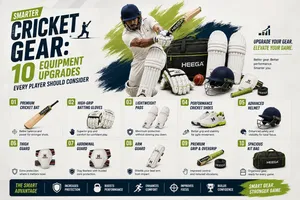 Smarter Cricket Gear: 10 Equipment Upgrades Every Player Should ConsiderDiscover 10 smart cricket gear upgrades every player should consider, from bats and batting gloves to helmets, pads, shoes, bags, clothing, training equipment, and protective accessories.
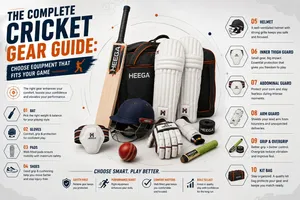 The Complete Cricket Gear Guide: Choose Equipment That Fits Your GameDiscover the complete cricket gear guide and learn how to choose the right bats, gloves, helmets, pads, shoes, bags, clothing, and protective equipment based on your role, playing style, conditions, comfort, and performance needs.
 Ordering Cricket Equipment for a Club or Academy: An Overseas Buyer's ChecklistOrdering cricket equipment for your club or academy from overseas? Use this checklist for bats, protective gear, quantities, samples, shipping and quotations.