The Cricket Gear Advantage: How the Right Equipment Can Transform Your Game

From bats and batting gloves to helmets, pads, and cricket shoes, the right equipment can help you play with greater comfort, confidence, control, and consistency.
Cricket is a game of skill.
Your technique determines how you play a cover drive. Your training shapes your fitness. Your decision-making influences how you respond to pressure.
But there's another part of performance that players sometimes underestimate:
Your equipment.
The right cricket gear won't turn an average player into a professional overnight.
But the wrong equipment can create unnecessary distractions.
A bat that feels too heavy can affect bat speed.
Poorly fitted gloves can interfere with grip.
Uncomfortable pads can restrict movement.
A poorly fitted helmet can become distracting.
Unsuitable cricket shoes can affect traction and footwork.
When your equipment fits properly and suits your playing style, you can focus more on the game and less on what's happening with your gear.
That's the real cricket gear advantage.
1. The Right Equipment Supports Your Technique
Good technique requires freedom of movement.
A batter needs to control the bat naturally.
A bowler needs a consistent run-up and delivery stride.
A fielder needs to accelerate, stop, and change direction.
Equipment should support these movements—not interfere with them.
Think of your cricket gear as an extension of your technique.
The better the match between player and equipment, the more naturally you can perform.
2. Your Cricket Bat Can Influence Your Shot-Making
The cricket bat is probably the most personal piece of equipment in a batter's kit.
Weight matters.
But weight isn't everything.
You should also consider:
- Pickup
- Balance
- Sweet-spot position
- Profile
- Handle
- Grip
- Willow type
- Your batting style
Two bats with identical listed weights can feel completely different.
One may feel easy to maneuver.
Another may feel heavier because of its weight distribution.
The best bat isn't necessarily the heaviest or most expensive.
It's the one you can control confidently.
3. Bat Balance Can Affect Bat Speed
Bat speed is important for both attacking and controlled stroke play.
If a bat is too heavy for you, maintaining efficient movement can become difficult.
You may find yourself:
- Slowing your backlift
- Struggling to adjust quickly
- Losing timing
- Feeling tired during long innings
A manageable bat can allow you to maintain better control throughout your innings.
This is why pickup deserves as much attention as the number on the scale.
4. Batting Gloves Do More Than Protect Your Hands
Batting gloves are often viewed purely as protective equipment.
But they also influence your relationship with the bat.
The right gloves can provide:
- Secure grip
- Finger protection
- Thumb protection
- Wrist stability
- Flexibility
- Comfort
A glove that moves around or feels restrictive can become distracting.
A properly fitted glove should allow you to focus on the bowler rather than your hands.
5. A Well-Fitted Helmet Builds Confidence
Facing fast bowling requires concentration.
You don't want to constantly think about whether your helmet is moving or whether the grille is positioned correctly.
A good helmet should provide an appropriate combination of:
- Protection
- Stability
- Visibility
- Comfort
- Ventilation
- Correct fit
The chin strap should be properly adjusted, and the helmet should remain stable during normal movement.
Confidence doesn't come from equipment alone—but appropriate protection can remove unnecessary distractions.
6. Cricket Pads Should Protect Without Restricting Movement
Batting pads protect important areas of the legs.
But excessive bulk can make movement feel less natural.
Players should consider:
- Weight
- Fit
- Knee alignment
- Protection
- Straps
- Mobility
- Comfort
Lightweight pads can be particularly appealing to players who value freedom of movement and spend long periods at the crease.
The goal isn't simply to find the lightest pads.
It's to find the right balance between protection and mobility.
7. Cricket Shoes Connect You to the Ground
Every cricket movement begins with your feet.
Batting.
Bowling.
Fielding.
Running between wickets.
Your shoes provide the connection between your body and the playing surface.
That's why surface compatibility matters.
Depending on where you play, you may need different types of soles or traction.
Consider:
- Natural grass
- Artificial surfaces
- Training grounds
- Damp conditions
- Dry conditions
The right footwear can help you move with greater confidence.
8. Footwear Can Influence Bowling Performance
Fast bowlers place significant demands on their feet.
A bowling run-up involves acceleration, rhythm, braking, and repeated impact.
Suitable cricket footwear can help provide the traction and stability needed for the playing environment.
Comfort also matters because bowlers may repeat the same movement hundreds of times during training.
Your shoes won't improve your bowling action by themselves.
But inappropriate footwear can become an unnecessary obstacle.
9. Fielders Need Equipment That Allows Quick Reactions
Fielding is unpredictable.
One moment you're standing still.
The next, you're sprinting toward the boundary.
You may need to:
- Accelerate
- Stop
- Turn
- Dive
- Throw
- Jump
Good cricket footwear and comfortable clothing can help you move without unnecessary restriction.
For active fielders, equipment that feels secure and comfortable can be especially valuable.
10. Comfort Has a Bigger Impact Than You Think
Imagine wearing uncomfortable equipment for three hours.
At first, you might ignore it.
Then you start adjusting your gloves.
Then your pads.
Then your helmet.
Then your shoes.
Eventually, your attention is no longer completely on the match.
That's why comfort matters.
Good equipment should ideally become something you don't have to think about.
11. The Right Gear Can Reduce Distractions
Cricket demands concentration.
You need to read:
- The bowler
- The pitch
- The field
- The match situation
- Your opponent's strategy
Equipment problems can steal some of that attention.
A secure helmet.
Comfortable gloves.
Stable pads.
Well-fitting shoes.
A manageable bat.
These details help create a more consistent playing environment.
12. Equipment Should Match Your Playing Style
There's no universal cricket kit.
An opening batter may have different priorities from a lower-order power hitter.
A fast bowler has different footwear requirements from a wicketkeeper.
A junior player has different equipment needs from an experienced club cricketer.
Ask yourself:
How do I actually play?
Then choose equipment around your answer.
13. Don't Copy a Professional Player's Equipment Blindly
Professional cricketers can provide useful inspiration.
But copying their exact equipment isn't always practical.
A professional player's bat weight, glove design, shoe type, or protective equipment may be based on years of experience, personal preference, physical conditioning, and specific playing conditions.
Your equipment should be selected for your body and your game.
14. More Expensive Doesn't Always Mean Better
Price can be an important factor.
But a higher price doesn't automatically mean better performance for every player.
A premium product may include features you don't need.
Another product at a lower price may suit your playing style better.
Instead of asking:
"What's the most expensive option?"
Ask:
"What features actually matter for my game?"
That's a smarter approach.
15. Training Gear Deserves Attention Too
Players often focus on match-day equipment.
But most improvement happens during training.
Your equipment should also support repeated practice.
Training involves:
- Repetition
- Movement
- Impact
- Running
- Long sessions
Durability and comfort can therefore be just as important as appearance.
16. Keep Your Equipment Maintained
Even excellent equipment eventually loses performance if it's neglected.
Develop simple maintenance habits.
Bats
Keep them dry and follow the manufacturer's care guidance.
Gloves
Allow them to air out after use.
Helmets
Inspect straps, grille, padding, and protective components.
Pads
Check straps, stitching, and protective sections.
Shoes
Clean them appropriately and inspect the sole regularly.
A few minutes of care can help you identify problems early.
17. Know When Equipment Needs Replacing
Protective equipment shouldn't be kept indefinitely simply because it still looks usable.
Inspect your gear for:
- Cracks
- Broken straps
- Excessive wear
- Damaged padding
- Loose components
- Reduced structural integrity
If equipment has suffered a significant impact, follow the manufacturer's replacement guidance.
Safety should always come before saving money.
18. Your Gear Should Work as a System
Your cricket equipment doesn't operate independently.
Your bat works with your gloves.
Your pads work with your footwork.
Your shoes work with the pitch.
Your helmet works with your stance and vision.
Your entire kit should work together.
This is why changing one piece of equipment can sometimes change how another piece feels.
19. Build Your Kit Around Your Priorities
You don't necessarily need to replace everything at once.
Start with the equipment that has the biggest impact on your game.
For a batter, that might be:
- Bat
- Helmet
- Batting gloves
- Pads
- Shoes
For a bowler, footwear and comfort may receive greater attention.
Your priorities should reflect your role.
20. Test Equipment Before Making a Decision
When possible, test equipment before purchasing.
With a bat:
- Pick it up
- Check the pickup
- Take your stance
- Practice your backlift
With gloves:
- Close your hand
- Grip a bat
- Move your fingers
With a helmet:
- Check fit
- Adjust the chin strap
- Move your head
- Check visibility
With pads:
- Bend your knees
- Walk
- Take your batting stance
With shoes:
- Walk
- Jog
- Move sideways
- Check heel stability
Real movement tells you much more than simply looking at the product.
The Smart Cricketer's Equipment Checklist
Before buying cricket gear, ask:
☑ Does it fit correctly?
☑ Does it suit my playing role?
☑ Is it appropriate for my level?
☑ Does it support natural movement?
☑ Is it comfortable for long sessions?
☑ Does it provide appropriate protection?
☑ Does it suit my playing conditions?
☑ Is it durable enough for my training schedule?
☑ Have I checked the manufacturer's specifications?
☑ Am I buying features I actually need?
These questions can help prevent expensive mistakes.
Common Cricket Gear Mistakes
Buying Based Only on Appearance
Professional-looking gear isn't necessarily the right gear for you.
Choosing Weight Without Testing Pickup
Especially important with bats.
Ignoring Fit
Poor fit can affect comfort, movement, and confidence.
Buying the Wrong Footwear for the Surface
Traction should match the environment.
Neglecting Protective Equipment
Helmets and pads deserve careful inspection and maintenance.
Replacing Everything Too Frequently
Not every new product will improve your performance.
Keeping Damaged Equipment Too Long
Protective gear should remain in appropriate condition.
The Cricket Gear Advantage Formula
Think about equipment this way:
Right Fit + Right Features + Right Conditions + Right Playing Style = Better Equipment Compatibility
And that compatibility can lead to:
More Comfort → Fewer Distractions → Better Confidence → More Consistent Performance
It isn't magic.
It's simply removing unnecessary obstacles from your game.
Your Equipment Can't Replace Practice
This is perhaps the most important point.
A new bat won't automatically fix your technique.
New shoes won't teach you footwork.
Premium gloves won't improve your timing.
A new helmet won't make you mentally stronger.
Equipment is a support system.
Your biggest improvements still come from:
- Quality practice
- Fitness
- Technique
- Game awareness
- Tactical decision-making
- Recovery
- Mental preparation
The right gear simply gives you a better platform on which to develop those skills.
Final Thoughts
Cricket equipment is more than a collection of products inside a kit bag.
It's the equipment you rely on when:
- Facing a fast bowler
- Playing a long innings
- Delivering a difficult spell
- Chasing a total
- Saving runs in the field
- Performing under pressure
The right gear can provide comfort, protection, control, stability, and confidence.
But the key isn't buying the most expensive equipment.
It's choosing equipment that fits you, suits your role, matches your conditions, and supports the way you play.
At Heega Sports, we help cricketers build practical, performance-focused kits with cricket bats, batting gloves, helmets, pads, cricket shoes, bags, accessories, and sportswear.
Before your next equipment purchase, remember:
Don't buy gear simply because it looks like a professional's kit. Buy it because it helps you become a better version of your own game.
Because the biggest cricket gear advantage isn't having more equipment.
It's having the right equipment.
Shop Now
Heega Sports – Helping Players Turn Practice Skills Into Match-Day Performance.
Related posts
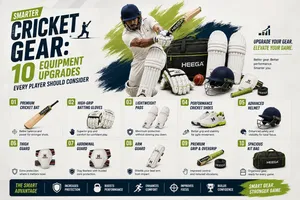 Smarter Cricket Gear: 10 Equipment Upgrades Every Player Should ConsiderDiscover 10 smart cricket gear upgrades every player should consider, from bats and batting gloves to helmets, pads, shoes, bags, clothing, training equipment, and protective accessories.
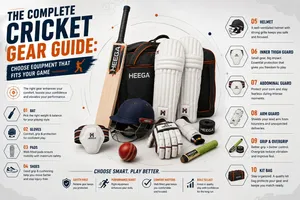 The Complete Cricket Gear Guide: Choose Equipment That Fits Your GameDiscover the complete cricket gear guide and learn how to choose the right bats, gloves, helmets, pads, shoes, bags, clothing, and protective equipment based on your role, playing style, conditions, comfort, and performance needs.
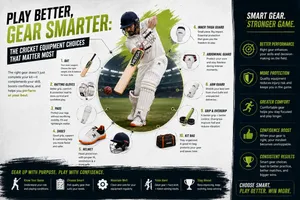 Play Better, Gear Smarter: The Cricket Equipment Choices That Matter MostLearn how to choose smarter cricket equipment, from bats and batting gloves to helmets, pads, cricket shoes, bags, clothing, and protective accessories, to support comfort, control, mobility, confidence, and performance.