The Truth About Kashmir Willow Cricket Bats: Grain Density, Durability, and Performance Explained
Introduction
If you have ever spent a weekend walking through a cricket academy, visiting a local sports shop, or chatting with teammates in the dressing room, you have undoubtedly heard the age-old debate: “Is a Kashmir Willow bat actually good enough for competitive cricket, or do I need to spend a small fortune on English Willow to score real runs?”
For decades, Kashmir Willow has carried an unfair and inaccurate reputation in popular cricket culture. Too often, it is dismissed as merely a "beginner's wood," a heavy budget alternative, or a temporary stepping stone that players use until they can afford an expensive imported blade. But if you talk to seasoned club cricketers, grassroots academy coaches, local bat makers, or leather-ball veterans, you will hear a very different story.
The reality is that Kashmir Willow is an absolute powerhouse of natural timber. Sourced from the cold, mountainous valleys of Jammu & Kashmir, it possesses unique physical traits that make it remarkably tough, reliable, and more than capable of handling high-speed leather-ball impacts. However, understanding how to extract peak performance from a Kashmir Willow blade requires looking past clever marketing myths and closely examining how the wood behaves under real match stress.
In this comprehensive guide, we are pulling back the curtain on Kashmir Willow cricket bats. We will break down what grain density really means, explore why these bats offer exceptional durability, analyze their real-world performance compared to English Willow, and provide an actionable blueprint for choosing, conditioning, and maintaining a blade that delivers serious power and longevity.
The Origin Story: How Geography and Climate Shape the Wood
To understand why a Kashmir Willow bat feels, weighs, and performs the way it does, you first have to understand where the tree grows. Both English Willow (Salix alba 'Caerulea') and Kashmir Willow belong to the willow botanical family, but their natural growing environments could not be more different.
Trees grown in the Kashmir region experience distinct seasonal climate shifts, varying altitude pressures, unique soil mineral concentrations, and cold winter weather cycles. These environmental factors force the tree to grow at a much slower, firmer pace compared to willow cultivated in wet, temperate, highly controlled English plantations.
Because of this specific growth environment, Kashmir Willow naturally develops a significantly higher fiber density. The cellular walls of the wood are tightly packed together, producing a timber that is naturally firmer, slightly denser, and noticeably tougher against physical abrasion. This unique growing process also gives Kashmir Willow its characteristic warm reddish-brown tint and distinct grain structure, setting it apart visually and structurally right from the moment it is harvested.
Furthermore, the natural oil content within Kashmir Willow timber is held within tighter cellular pockets. This structural density gives the wood a natural resistance to atmospheric moisture changes, making it far less fragile when exposed to varying outdoor weather conditions, damp pitches, or intense heat during long summer cricket seasons.
Grain Density: Reading and Understanding the Face of Your Bat
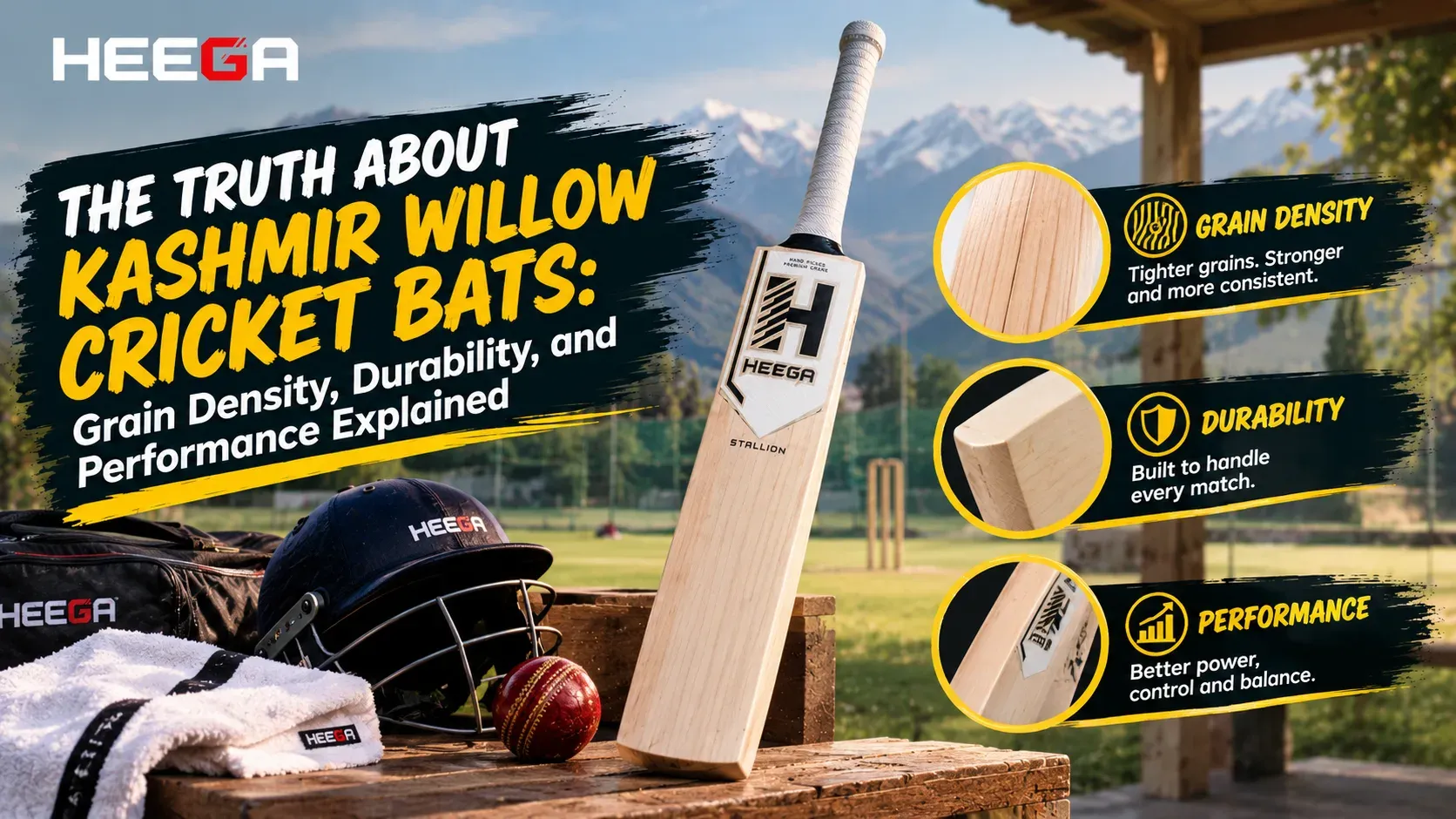
When a cricketer picks up a bat, their eyes almost instantly scan the front face to inspect the grains—those straight, parallel lines running vertically down the blade. A massive amount of misinformation surrounds grain counts in modern cricket, with many players falsely believing that more straight grains automatically equal a better bat. When evaluating Kashmir Willow, reading the grains requires a far more nuanced understanding.
What Grain Density Actually Represents
Each visible grain line on a cricket bat represents one year of the tree’s natural growth cycle. In fast-growing trees located in wet, warm environments, the gap between grains is wide, resulting in soft, porous wood. In trees that grow in colder climates or denser forests, the tree grows slowly, causing the growth rings to sit much closer together. This produces high grain density.
Kashmir Willow naturally features tightly compressed wood fibers. However, because of natural seasonal variations in the mountain valleys, the visual grain lines on Kashmir Willow can sometimes appear less uniform, slightly wider apart visually, or darker in tone compared to English Willow.
Here is how you should evaluate grain density and visual markers on a Kashmir Willow blade:
- Tight, Narrow Grains: These lines indicate older, exceptionally dense timber. A Kashmir Willow bat with tight grains offers immense structural strength and a hard hitting surface. However, because the fibers are so tightly bound, it requires thorough, patient knocking in to soften the outer layer and unlock its springy rebound.
- Wider, Spaced Grains: Wider grains indicate younger timber that grew slightly faster during specific seasons. While wider-grained wood might feel a bit softer initially, it often matures faster during preparation and absorbs ball impacts with a responsive, smooth feel once properly oiled and malleted.
- Speckles, Pin Marks, and Mineral Streaks: It is completely normal to see minor dark specks, small pin marks, or reddish mineral streaks across the face of a Kashmir Willow bat. These are natural cosmetic characteristics of organic timber. They do not indicate structural weakness, nor do they diminish the ping or lifespan of the bat. In fact, slight mineral marks often highlight denser, tougher timber pockets.
The Durability Factor: Why Kashmir Willow is Built to Last
If there is one category where Kashmir Willow decisively outperforms almost every other cricket timber on the market, it is pure, unyielding durability.
Resisting High-Impact Stress
Because the wood fibers in Kashmir Willow are tightly packed and firm, the blade possesses incredible resistance to deep surface denting, crushing forces, and localized impact fractures. When a batter faces fast bowlers delivering brand-new, hard leather balls at high speeds, a soft or delicate bat can easily suffer severe surface gouging or premature seam cracking. Kashmir Willow's dense structure acts as a natural buffer against this heavy physical punishment.
This built-in structural toughness makes Kashmir Willow the ultimate workhorse blade across several real-world playing environments:
- Relentless Net Practice: Net sessions involve facing hundreds of deliveries continuously, often on hard synthetic grass, concrete bases, or worn turf pitches that deteriorate equipment rapidly. A Kashmir Willow bat handles this daily grind effortlessly without showing early signs of structural fatigue.
- Rough Grassroots Grounds: On uneven local grounds where pitches bounce unpredictably, balls frequently stay low, shoot up dangerously, or strike the vulnerable toe area. Kashmir Willow’s firm timber prevents early wood splitting, delamination, and toe chipping under these rough conditions.
- Players Transitioning to Leather Balls: Beginners and junior cricketers upgrading from tennis, rubber, or soft-seam balls to hard leather balls often miss-hit shots while adjusting to the increased ball weight and speed. Kashmir Willow withstands mistimed shots off the toe, high edge catches, and shoulder impacts significantly better than softer, higher-priced alternatives.
The Performance Reality: Ping, Sweet Spot, and Hitting Power
Let's address the single most important question every batter asks before buying a bat: How does a Kashmir Willow bat actually feel when you connect with the ball in the middle of the pitch?
De-Bunking the "Ping" Myth
"Ping" refers to the speed, responsiveness, and effortlessness with which a cricket ball rebounds off the face of the bat upon impact. A persistent myth in cricket claims that Kashmir Willow lacks ping or feels "dead" compared to English Willow. The truth comes down to preparation and conditioning rather than any inherent flaw in the wood.
Straight out of the factory wrapper, a brand-new Kashmir Willow bat can feel firm, dense, or slightly rigid. This happens because its dense wood fibers are tightly compressed during manufacturing. However, once the bat undergoes a proper oiling routine, patient mallet knocking in, and a phased transition through net sessions, those dense fibers open up, relax, and create a highly responsive, springy hitting zone. A fully conditioned Kashmir Willow bat generates a deep, satisfying punch that sends leather balls racing to the boundary with minimal effort.
Sweet Spot Profiles and Weight Distribution
Because Kashmir Willow is naturally denser than softer timbers, master bat crafters shape these blades with great care to achieve optimal weight distribution and balance:
- Modern Profile Shapes: Contemporary Kashmir Willow bats feature full-bodied spines, thick edges, and mid-to-low sweet spot profiles. This design is specifically tailored for modern front-foot driving, pulling, and lofted stroke play on pitches with varying bounce.
- Pick-Up vs. Scale Weight: A Kashmir Willow bat may register a few grams higher on a dead scale compared to a soft English Willow blade of identical dimensions. However, skilled pressing and profile shaping ensure that the pick-up feels balanced and light in your stance. In cricket, a smooth, comfortable pick-up dictates bat speed—and bat speed, combined with timber density, is what truly generates hitting power.
Kashmir Willow vs. English Willow: A Detailed Breakdown
To help you make an informed decision based on your playing level, training volume, and budget, let's look at how Kashmir Willow and English Willow compare across key areas of performance and construction.
Origin and Timber Species
Kashmir Willow is harvested from Salix alba grown in the mountainous regions of Jammu & Kashmir, where cold winters and varied soil conditions create denser wood. English Willow comes from Salix alba 'Caerulea' grown in temperate English plantations, where steady rainfall produces lighter, softer timber.
Natural Density and Overall Weight
Because Kashmir Willow grows in tougher mountain climates, its cellular structure is naturally tighter and firmer. This gives the bat a slightly higher dead weight, which adds extra solid momentum behind every shot. English Willow features a lighter, more porous cell structure, allowing bat makers to craft thick profiles with extremely light pick-up weights.
Visual Appearance and Grain Characteristics
Kashmir Willow typically displays a warm, reddish-brown hue across the blade, often accompanied by unique, darker grains and minor natural specks. English Willow is known for its pale cream or white color tone with distinct, uniform vertical grains running straight down the face.
Impact Durability and Net Usage
When it comes to pure toughness, Kashmir Willow leads the way. Its firm wood structure resists deep surface dents, seam gouging, and toe splitting, making it the ideal bat for high-volume net practice and rough pitch conditions. English Willow offers immense rebound performance, but its softer timber requires careful handling, protective sheets, and smooth turf grounds to prevent surface cracking.
Preparation and Rebound Speed
Kashmir Willow requires patient, thorough knocking in to open up its compressed fibers and reach peak rebound performance. English Willow, being softer, compresses faster under the mallet and reaches its maximum "ping" sooner after unboxing.
Maintenance and Environmental Resistance
Kashmir Willow handles changing weather conditions, humidity shifts, and dry heat remarkably well due to its tight cellular pockets. English Willow is more sensitive to climate changes and requires strict moisture management to avoid drying out or absorbing ground moisture.
Price and Value Proposition
Kashmir Willow offers unmatched value for money, delivering around 80% to 85% of top-tier performance at a fraction of the cost. This makes hard-leather cricket accessible to beginners and club players without requiring a massive financial investment. English Willow carries a premium price tag driven by grading standards and international import costs.
How to Select the Right Kashmir Willow Bat
When stepping into a retail sports store or browsing an online collection, keeping these practical testing criteria in mind will help you pick a high-performing blade:
1. Test the Pick-Up and Swing Balance
Never select a bat based solely on what the weight sticker says. Take the bat in your hands using your normal batting grip, settle into your comfortable batting stance, and execute a few shadow strokes. A bat that feels well-balanced in your swing will allow you to react faster to pace bowling, adjust to late movement, and play late with touch and control.
2. Examine the Face, Edges, and Toe
Look for a clean, structural face where the grain lines run vertically down the blade. Do not be discouraged by small natural pin marks or subtle color variations, as these are normal characteristics of authentic, high-density wood. Ensure the edges are thick and well-formed, and check that the toe has a generous wood profile to protect against low-grubbing deliveries and yorkers.
3. Check Handle Quality and Flex
The handle acts as the steering wheel of your bat. Inspect the handle to ensure it is made from a multi-piece cane construction with rubber spring insertions. A good cane handle should offer a subtle flex when pressure is applied, absorbing shock vibrations before they reach your hands, wrists, and forearms.
Unlocking Peak Performance: Comprehensive Care and Maintenance
A quality Kashmir Willow cricket bat is a long-term investment that will reward you with hundreds of runs across multiple seasons if you treat it with care. Here is how to maintain your bat's condition and performance year-round:
The Complete Knocking-In Routine
Skipping or rushing the knocking-in process is the single biggest mistake players make with a new Kashmir Willow bat. Because the timber is naturally dense, compressed wood fibers need time and physical conditioning to form a protective, springy strike zone.
- Step 1: Light Linseed Oiling: Apply a thin, even coat of raw linseed oil across the face, edges, and toe using a cotton cloth. Avoid getting oil on the handle splice, rubber grip, or back sticker area. Lay the bat flat on its back in a cool room and let it dry for 24 hours. Repeat this process once more before malleting.
- Step 2: Mallet Conditioning: Using a specialized wooden bat mallet, begin striking the face gently, gradually increasing the force over several sessions totaling 4 to 6 hours. Pay special attention to the edges and toe, striking the edges at a 45-degree angle to round them off gently without shearing the wood.
- Step 3: Phased Transition: After malleting, take the bat to the nets for gentle throw-downs using old, soft leather balls. Once the face shows no deep seam indentations, progress to bowling machine sessions or live bowling before taking the bat into competitive match play.
Fitting Essential Protective Accessories
Applying surface protection adds an invaluable layer of defense against environmental elements and edge damage:
- Anti-Scuff Sheets: A clear polyurethane face sheet holds surface fibers together, prevents seam tearing, and reduces the risk of surface splinters during mistimed shots.
- Rubber Toe Guards: Fitting a flexible rubber toe guard or applying water-resistant toe sealant prevents groundwater from seeping into the bottom grain when you tap your bat on damp pitches.
- Fiberglass Edge Tape: Applying reinforced tape along the side edges cushions localized impacts from thick edge catches, keeping the timber intact.
Smart Off-Season Storage
How you store your bat during the off-season or between weekend matches plays a major role in its overall lifespan. Always take your bat out of your main kit bag after matches to let it air out. Moisture trapped inside a zipped bag with sweaty pads and damp clothes leads to wood rot and handle glue breakdown. Store your bat flat in a cool, dry room inside a padded cover, away from direct sunlight, car trunks, or home heating radiators.
Summary
The idea that Kashmir Willow is strictly an entry-level timber is one of the biggest misconceptions in modern cricket. Kashmir Willow is a tough, high-density timber that delivers incredible durability, dependable power, and unmatched value for players at every stage of their journey. When given patient knocking in, light oiling, and consistent care, a quality Kashmir Willow cricket bat will handle fast leather-ball bowling with ease and deliver crisp, powerful shots season after season.
Related posts
 Kashmir Willow Cricket Bats: How Wood Density, Grain Patterns and Moisture Affect PerformanceDiscover how Kashmir Willow cricket bat density, grain patterns and moisture affect bat weight, balance, durability, and batting performance.
 Kashmir Willow vs. English Willow: An Honest Performance & Durability Comparison for Club CricketersCompare Kashmir Willow vs English Willow cricket bats for club cricket. Learn about performance, durability, weight, pickup, value, and choosing the right bat.
 Kashmir Willow Cricket Bats for Power Hitting: How Blade Shape, Sweet Spot and Edge Thickness Work TogetherLearn how Kashmir willow cricket bat blade shape, sweet spot position, and edge thickness work together to support powerful shots, control, and balance.