Why Cricket Bat Knocking-In Matters Before Match-Day Use.

Introduction: Don't Take a New Cricket Bat Straight Into a Match
There is something special about using a new cricket bat for the first time.
The clean face.
The fresh grip.
The untouched willow.
The feeling of holding a bat that you have been waiting to use.
Naturally, most players want to take it straight to the nets and start hitting the ball.
That is where a little patience can make a big difference.
A new cricket bat should generally be prepared before it is exposed to the full intensity of match play, particularly when the manufacturer specifies knocking-in as part of the preparation process.
Knocking-in is not simply an old tradition passed down from one generation of cricketers to another.
It is a practical way of gradually preparing the willow for repeated impact.
A bat faces considerable stress during cricket. Every defensive shot, drive, pull, cut, and mishit sends force into the blade.
If the willow has not been appropriately prepared, exposing it to hard impacts too quickly can increase the risk of premature damage.
The purpose of knocking-in is therefore simple:
Prepare the bat gradually before asking it to handle serious match conditions.
It is one of the most important steps between buying a new bat and trusting it in an important game.
What Is Cricket Bat Knocking-In?
Knocking-in is the process of gradually conditioning the willow on the face and edges of a cricket bat before regular high-impact use.
Traditionally, this is done using a specialist bat mallet.
The player or bat specialist carefully strikes different areas of the blade to help prepare the willow.
The process is controlled.
The objective is not to hit the bat as hard as possible.
Instead, the bat is gradually exposed to impact.
Once the initial preparation is complete, players can usually progress to controlled ball impacts before eventually using the bat in normal training or match situations.
The exact preparation process can vary depending on the bat, willow, manufacturer, and whether the bat has already been knocked in.
Always follow the manufacturer's instructions for the specific bat.
Why Does Willow Need Preparation?
Willow is a natural material.
That is one of the reasons cricket bats have their distinctive feel.
But natural wood also needs to be treated appropriately.
A new blade has not necessarily experienced the repeated impact that comes with cricket.
During knocking-in, the surface and edges are gradually conditioned.
This helps the bat become better prepared for the type of impacts it will experience during normal play.
Think of it as introducing the bat to the demands of cricket step by step rather than throwing it directly into the toughest situation.
Knocking-In Helps Prepare the Bat for Hard Cricket Balls
A leather cricket ball is considerably harder than many of the balls used during casual practice.
When a batter makes contact, the ball transfers significant energy into the blade.
A properly prepared bat is better suited to handling these repeated impacts.
This is particularly important for players who intend to use the bat against hard cricket balls in:
- Competitive matches
- Club cricket
- Academy sessions
- Professional training
- Match simulations
A player should not assume that because a bat looks ready, it is automatically ready for full-intensity use.
Does Every Cricket Bat Need Knocking-In?
No.
This is an important distinction.
Some bats are supplied fully prepared or partially prepared by the manufacturer.
Others require the player to complete additional knocking-in.
Some bats may also come with manufacturer-specific preparation instructions.
Before doing anything, check:
- Product information
- Manufacturer instructions
- Seller recommendations
- Whether the bat is pre-prepared
- Whether additional knocking-in is required
If you are unsure, consult the seller or a professional bat specialist.
You should never assume that every bat requires exactly the same treatment.
Why New Players Should Take Extra Care
Experienced players may already understand how to prepare and maintain a bat.
Beginners often do not.
A new player may think:
“I bought a good bat, so I can start playing immediately.”
Unfortunately, the quality of the bat does not remove the need for appropriate preparation when preparation is recommended.
Young players should learn that buying cricket equipment is only the beginning.
Taking care of that equipment is part of becoming a better cricketer.
What Happens If You Skip Knocking-In?
Skipping recommended preparation can increase the risk of damage when the bat is exposed to hard impacts too quickly.
Possible problems can include:
- Surface cracking
- Edge damage
- Splitting
- Bruising
- Premature wear
This does not mean that every unprepared bat will immediately break.
Willow quality, ball type, impact location, playing conditions, and construction all matter.
But there is little advantage in taking an unnecessary risk with a new bat.
Knocking-In Is Not About Making the Bat Hard
A common misunderstanding is that knocking-in somehow turns soft willow into a completely different material.
That is not really the point.
The process is about preparing the bat's surface and edges to handle impact.
It is controlled conditioning rather than simply trying to make the wood harder.
The objective is to create a bat that is better prepared for normal cricket use.
The Cricket Bat Face Needs Attention
The main face of the bat receives repeated impacts.
This is where the ball normally makes contact.
During preparation, attention is generally given to different parts of the hitting area.
The process should be gradual.
The player should not concentrate all the impacts in one small location.
Even preparation across the blade is important.
However, the precise method should follow the manufacturer's recommendations.
Why the Bat Edges Matter
The edges are particularly vulnerable because they are thinner than the central hitting area.
A ball that catches the edge can produce a concentrated impact.
This is one reason edge preparation is an important part of knocking-in.
The edges should be treated carefully.
Players should avoid aggressively striking them with a mallet.
Instead, preparation should be gradual and controlled.
If you are inexperienced, professional bat preparation is often the safer option.
The Toe Needs Protection Too
The toe is the bottom section of the bat.
It has a difficult job.
It is close to the ground during batting and can be exposed to:
- Moisture
- Grass
- Hard surfaces
- Repeated tapping
- Accidental ground contact
Knocking-in primarily concerns preparation of the willow for impact, but toe protection and proper maintenance are also important parts of long-term bat care.
A suitable toe protector can help protect this vulnerable area from moisture and everyday wear.
Why Mishits Make Preparation Important
Even a technically strong batter does not middle every ball.
Mishits happen.
A ball can strike:
- The edge
- Lower blade
- Upper blade
- Toe
- Other less ideal areas
These impacts can place additional stress on the wood.
This is why players should not assume that only perfectly timed shots matter when thinking about bat durability.
A bat needs to be prepared for the unpredictable nature of actual cricket.
Knocking-In and the Sweet Spot
The sweet spot is the area of the blade where contact often feels particularly clean and powerful.
Players naturally want to find it.
However, a new bat should not be treated as ready for unlimited hard impacts simply because the sweet spot feels good.
Preparation should cover the appropriate areas of the blade according to the bat's requirements.
A player should gradually progress from preparation to controlled ball work.
The Role of a Bat Mallet
A cricket bat mallet is designed specifically for bat preparation.
It provides a controlled way to introduce impact to the willow.
A mallet should not be used like a hammer in a construction project.
The player needs control.
The process should be gradual.
Too much force can damage the bat rather than prepare it.
This is why players who have never knocked in a bat before may benefit from professional preparation.
How to Knock In a Cricket Bat Safely
The exact method depends on the bat and manufacturer's instructions.
A general preparation process may involve:
Step 1: Inspect the Bat
Check the face, edges, toe, handle, and overall construction.
Step 2: Read the Manufacturer's Instructions
Confirm whether the bat needs knocking-in and how much preparation is recommended.
Step 3: Begin Gradually
Use a suitable bat mallet and controlled impacts.
Step 4: Work Across the Blade
Do not repeatedly concentrate force in one small area.
Step 5: Treat the Edges Carefully
Edges require gradual preparation and should not be struck aggressively.
Step 6: Progress to Controlled Ball Impacts
Once the initial preparation is complete, introduce suitable ball impacts gradually.
Step 7: Inspect Again
Look for unusual dents, cracks, or damage.
Step 8: Increase Intensity Slowly
Only move toward full match-speed use when the bat is appropriately prepared.
Start With Gentle Impacts
The first stage should never be about maximum force.
Gentle, controlled impacts allow the player to become familiar with the bat's response.
As preparation progresses, the intensity can be increased according to the manufacturer's guidance.
Patience is important.
There is no prize for finishing the process as quickly as possible.
Why the Edges Should Not Be Hit Too Hard
The edges contain less material than the central part of the blade.
A heavy impact in the wrong location can create damage.
Players should therefore approach edge preparation carefully.
If you are not confident about the process, having the bat prepared by a professional is a sensible choice.
When Should Ball Practice Begin?
Again, there is no universal number of hits or deliveries that applies to every bat.
The appropriate progression depends on:
- Willow type
- Bat construction
- Manufacturer instructions
- Level of preparation
- Ball type
- Intended use
A common approach is to begin with controlled impacts rather than immediately facing full-speed bowling.
The intensity can then gradually increase.
Why Throwdowns Are Useful
Throwdowns provide a controlled way to introduce a bat to ball impact.
A coach or teammate can deliver manageable balls.
The batter can focus on making controlled contact rather than trying to score aggressively.
This makes throwdowns useful when transitioning from knocking-in to normal cricket use.
The player can gradually increase pace as confidence in the bat grows.
Avoid Full-Speed Bowling Immediately
Taking a new, unprepared bat into a high-speed net session can be unnecessarily risky.
Fast bowlers can produce powerful deliveries.
A new bat should be appropriately prepared before being exposed to that level of impact.
It is better to build up gradually.
This is especially important when using a premium bat that the player expects to rely on for an entire season.
What About Tennis Balls?
Tennis balls are commonly used for practice.
They are generally less demanding than hard leather cricket balls.
They can be useful during early batting sessions, particularly for young players.
However, players should still consider the purpose of the bat.
If the bat is intended for leather-ball cricket, tennis-ball practice does not necessarily replace the recommended preparation process.
The manufacturer's instructions should remain the priority.
Knocking-In and Kashmir Willow
Kashmir Willow bats are widely used by:
- Junior players
- Beginners
- Club cricketers
- Academies
- Developing players
Depending on the specific product, preparation requirements can vary.
Players should not assume that every Kashmir Willow bat is identical.
Check whether the manufacturer recommends knocking-in before match use.
Knocking-In and English Willow
English Willow bats are widely used in competitive cricket.
Many players invest significantly in these bats because of their performance characteristics.
That makes preparation particularly important when the manufacturer requires it.
A premium bat deserves proper care.
Spending more money on a bat does not make it immune to damage.
Preparation and maintenance still matter.
Can Pre-Knocked Bats Still Need Preparation?
Sometimes.
A bat advertised as pre-knocked-in may already have undergone a preparation process.
However, the manufacturer may still recommend additional preparation before full-intensity use.
This is why players should read the product description carefully.
“Pre-knocked-in” does not automatically mean “ready for unlimited match use.”
Why Match-Day Use Is Different From Practice
Match cricket is unpredictable.
The bowling can be faster.
The ball can be harder.
The batter may play under pressure.
Mishits become more likely.
There may be no opportunity to stop and inspect the bat after every delivery.
That is why match-day equipment should be properly prepared before the game begins.
The last thing a batter wants is to discover a problem with the bat during an important innings.
A New Bat Should Earn Your Trust
Players often develop a relationship with their equipment.
Once a bat feels comfortable, they stop thinking about it.
That is exactly what you want during a match.
You should be thinking about:
- The bowler
- Field placement
- Shot selection
- Running between wickets
- Match situation
You should not be worrying about whether your new bat is prepared properly.
Knocking-in helps create that confidence.
Signs Your Bat May Not Be Ready
Watch for signs such as:
- Deep marks appearing quickly
- Surface cracking
- Edge damage
- Unusual splitting
- Significant dents
- Damage after relatively light impacts
If you notice something unusual, stop and inspect the bat.
Continuing to use it without understanding the damage can make the problem worse.
What If You Notice a Small Crack?
Do not panic.
Not every small line means the bat is finished.
First, determine whether it is:
- A surface mark
- A shallow crack
- An expanding crack
- Edge separation
- Structural damage
If you are unsure, ask a professional bat repair specialist to inspect it.
Early attention can sometimes prevent a small problem from becoming a major one.
Why Professional Bat Preparation Can Be Worth It
Knocking-in looks simple.
But doing it correctly requires patience and judgment.
A professional bat specialist understands:
- Willow characteristics
- Edge preparation
- Surface preparation
- Bat construction
- Repair requirements
For an expensive bat, professional preparation can provide peace of mind.
It can also save players from accidentally damaging the blade while attempting to prepare it themselves.
Common Knocking-In Mistakes
Hitting Too Hard
More force does not mean better preparation.
Focusing on One Area
Impacts should be distributed appropriately.
Ignoring the Edges
Edge preparation is important.
Skipping Manufacturer Instructions
Every bat can have different requirements.
Using an Ordinary Hammer
Use a suitable bat mallet.
Moving to Hard Bowling Too Quickly
Progress gradually.
Ignoring Cracks
Small damage should be investigated.
Leaving the Bat Wet
Moisture can damage exposed wood.
How Long Does Knocking-In Take?
There is no single answer.
Different bats require different levels of preparation.
Some may be supplied partially prepared.
Others may require more extensive preparation.
The amount of time depends on:
- Bat condition
- Willow
- Manufacturer
- Preparation level
- Intended use
Instead of focusing only on the clock, focus on whether the bat has been appropriately prepared according to its instructions.
Does Knocking-In Make a Bat Last Longer?
Proper preparation can help reduce the risk of premature damage caused by exposing insufficiently prepared willow to hard impacts.
But knocking-in is not a guarantee of a long bat life.
Longevity also depends on:
- Ball quality
- Batting technique
- Playing conditions
- Frequency of use
- Storage
- Moisture
- Maintenance
- Mishits
- Ground contact
Preparation is one part of a much larger bat-care routine.
Bat Maintenance After Knocking-In
The care should not stop once preparation is complete.
Players should:
- Keep the bat dry.
- Use an appropriate cover.
- Protect the toe.
- Check the edges regularly.
- Maintain the grip.
- Store it away from extreme heat.
- Inspect it after intensive sessions.
A well-prepared bat still needs sensible treatment.
Don't Confuse Knocking-In With Oiling
Bat oil and knocking-in are two different parts of bat care.
Oiling may be recommended for certain bats depending on the willow and manufacturer.
Knocking-in is the controlled impact preparation of the blade.
Players should follow the specific manufacturer's instructions rather than assuming every bat needs the same combination of treatments.
Too much oil or incorrect preparation can also create problems.
Why Players Should Avoid DIY Advice From Random Sources
The internet contains countless bat-care tips.
Some are useful.
Others may be outdated or inappropriate for a particular bat.
A method that works for one product may not be suitable for another.
When dealing with an expensive cricket bat, the safest approach is to prioritize:
- Manufacturer instructions.
- Professional bat specialists.
- Reliable cricket equipment retailers.
- Experienced coaches.
Good advice can protect both your equipment and your investment.
How Parents Can Help Young Players
Parents buying a first bat for a child should understand that preparation matters too.
A young player may not know the difference between a new bat and a properly prepared one.
Parents can:
- Check the manufacturer's instructions.
- Ask the coach for guidance.
- Arrange professional preparation when necessary.
- Teach the child basic bat care.
- Make sure the bat is stored properly.
These habits can help young players develop a responsible attitude toward their equipment.
Academy Players Should Take Preparation Seriously
Academy players often train frequently.
Their bats may face hundreds of impacts in a short period.
That makes preparation especially important.
A properly prepared bat can then be introduced gradually to:
- Throwdowns
- Net sessions
- Bowling-machine practice
- Match simulations
- Practice matches
The transition should be controlled rather than rushed.
Bowling Machines and Bat Preparation
Bowling machines can produce consistent deliveries at high speeds.
That makes them useful for serious training.
But a new bat should not be placed immediately into intense bowling-machine sessions unless it has been appropriately prepared and the manufacturer permits that use.
The controlled nature of a machine can actually make progression easier.
Players can begin with moderate speeds and gradually increase intensity.
Why Match Preparation Includes Equipment Preparation
Players spend time preparing themselves before a match.
They warm up.
They hydrate.
They check their kit.
They study the opposition.
The bat deserves the same attention.
A few minutes spent checking the blade, edges, grip, and toe can prevent avoidable surprises.
Preparation is part of match readiness.
A Simple Pre-Match Cricket Bat Checklist
Before walking onto the field, check:
Bat Face
Look for unusual cracks or deep damage.
Edges
Make sure there is no significant separation.
Toe
Check for damage and moisture.
Grip
Make sure it feels secure and comfortable.
Handle
Check that it feels firm and normal.
Cover
Keep the bat protected when it is not being used.
These simple checks take very little time.
Why Good Preparation Builds Confidence
There is also a mental side to equipment preparation.
When players know their bat has been properly prepared and maintained, they can step onto the field with confidence.
That does not mean the bat will suddenly make them score more runs.
Technique still matters.
Decision-making still matters.
Fitness still matters.
But confidence in reliable equipment can remove one unnecessary distraction.
The Right Time to Upgrade Your Bat
Players sometimes replace bats simply because they want a newer model.
That is perfectly understandable.
However, a new bat should be treated as a new piece of equipment that needs appropriate preparation.
Do not assume that moving from an old bat to a premium new model means you can skip the preparation stage.
Every new bat should be evaluated according to its own requirements.
How Heega Sports Supports Cricket Players
At Heega Sports, we understand that a cricket bat is an important part of a player's equipment.
Our cricket range includes:
- Kashmir Willow cricket bats
- English Willow cricket bats
- Junior cricket bats
- Cricket bat care products
- Cricket bat oil
- Leather cricket balls
- Practice cricket balls
- Batting gloves
- Batting pads
- Cricket helmets
- Cricket shoes
- Cricket kit bags
- Practice nets
- Cricket training accessories
Whether you are buying your first junior bat, preparing for academy cricket, or looking for equipment for competitive matches, choosing suitable gear and caring for it properly can make your cricket experience more enjoyable.
Knocking-In Is an Investment in Your Equipment
A new bat represents an investment.
That investment is not only financial.
Players invest time in finding the right bat.
They choose a size.
They compare weights.
They test pickup.
They consider willow.
They select a profile that matches their playing style.
Once they find the right equipment, it makes sense to prepare it properly.
Knocking-in is therefore a small investment of time that can help protect a much larger investment.
Final Thoughts
A new cricket bat can be exciting, but it should not be rushed into match-day use.
When a bat requires knocking-in, the preparation process gives the willow a gradual introduction to the repeated impacts it will experience during cricket.
The process should be controlled.
It should follow the manufacturer's instructions.
And it should never be treated as an opportunity to hit the bat as hard as possible.
Start gradually.
Prepare the face.
Treat the edges carefully.
Protect the toe.
Introduce controlled ball impacts.
Inspect the bat regularly.
Then increase the intensity as appropriate.
It is also worth remembering that knocking-in is only one part of proper bat care.
How you use the bat matters.
The type of ball matters.
Playing conditions matter.
Storage matters.
Maintenance matters.
Even batting technique can influence how much stress the blade experiences.
For beginners and young players, learning these habits early can make equipment care feel like a normal part of cricket.
For academy and club players, proper preparation can help them feel more confident when transitioning from practice to competition.
And for serious cricketers investing in premium equipment, careful preparation is simply good practice.
Your bat does not need to be treated like a museum piece.
It is made to play cricket.
It is made to hit the ball.
It is made to be used.
But like any good piece of sporting equipment, it performs best when it is prepared properly and treated with care.
So before taking that brand-new bat into an important match, take a moment to ask yourself one simple question:
Is my bat actually ready for the demands of match-day cricket?
If the answer is yes because you have followed the correct preparation process, you can walk to the crease with one less thing to worry about.
And when the bowler begins their run-up, your attention can be where it belongs:
On the ball.
🏏 Prepare Your Cricket Bat. Prepare Your Game.
Explore quality cricket bats, Kashmir Willow bats, English Willow bats, junior bats, cricket bat care products, leather balls, practice balls, batting gloves, pads, helmets, cricket shoes, kit bags, practice nets, and training accessories.
Shop Now
Heega Sports – Helping Players Prepare Their Equipment and Play With Confidence.
Related posts
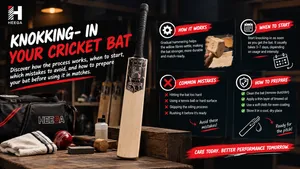 English Willow Cricket Bat Knocking-In Explained: Preparing the Blade Before Match UseLearn how to knock in an English Willow cricket bat, prepare the blade before match use, avoid common mistakes, and protect your bat from premature damage.
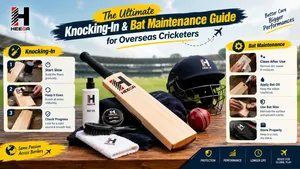 The Ultimate Knocking-In & Bat Maintenance Guide for Overseas CricketersLearn how to knock in and maintain your cricket bat for overseas cricket, including oiling, moisture control, storage, repairs, travel, and seasonal care.
 The Pre-Game Ritual: Knocking Hammers That Extend Bat Life Discover how using the right knocking hammer prepares your cricket bat for peak performance and durability. Learn the art, science, and technique behind this vital pre-game ritual.