Why Cricket Bats Have Different Shapes: Understanding Profiles, Edges, and Sweet Spots.

Introduction: Why Don't All Cricket Bats Look the Same?
At first glance, cricket bats may appear to be almost identical.
They all have a flat blade.
They all have a handle.
They are all designed to hit a cricket ball.
But look more closely and you will notice important differences.
Some bats have thick edges.
Others have a pronounced spine.
Some have a low sweet spot.
Others are designed with a higher hitting area.
Some feel light in the hands despite having a substantial profile, while others feel heavier because more weight is positioned toward the blade.
These differences are not simply about appearance.
The shape of a cricket bat affects its balance, pick-up, power potential, control, and suitability for different playing styles.
Bat manufacturers spend considerable time refining these characteristics because even small changes in shape can influence how a player experiences the bat.
Understanding bat profiles can therefore help players make more informed decisions when choosing equipment.
What Is a Cricket Bat Profile?
The profile refers to the overall shape and distribution of wood through the blade.
It includes features such as:
- Spine height.
- Edge thickness.
- Bow.
- Toe shape.
- Sweet spot position.
- Weight distribution.
Two bats may have similar overall dimensions but feel completely different because their profiles distribute material differently.
Why Bat Shape Matters
The shape of a bat influences how it feels during a shot.
A well-designed profile can help provide:
- Better balance.
- Comfortable pick-up.
- Strong impact response.
- Suitable power.
- Greater control.
However, there is no single profile that is perfect for every player.
The best choice depends on technique, strength, playing conditions, and personal preference.
Understanding the Cricket Bat Spine
The spine is the raised central section running along the back of the bat.
It is one of the most noticeable features of modern bat design.
A larger spine generally means more wood is concentrated around the central hitting area.
Manufacturers use spine design to influence the bat's power and weight distribution.
Why Do Some Bats Have a Large Spine?
A pronounced spine can provide substantial material behind the main hitting zone.
This can contribute to:
- Strong impact characteristics.
- A substantial hitting profile.
- Increased bat volume.
- A powerful feel.
However, a larger spine does not automatically mean that every player will perform better with the bat.
Balance remains equally important.
What Are Cricket Bat Edges?
Edges are the thicker sections along the sides of the blade.
Modern bats can have noticeably thick edges, particularly around the main hitting zone.
Edge thickness contributes to the overall profile and can affect how the bat feels during impact.
Why Are Thick Edges Popular?
Thicker edges allow manufacturers to retain more wood around key areas of the blade.
This can help create a powerful profile without necessarily making the entire bat excessively heavy.
The objective is to create an effective combination of:
- Hitting area.
- Stability.
- Power.
- Manageable weight.
What Is the Sweet Spot?
The sweet spot is the part of the bat where a well-timed shot generally feels most comfortable and efficient.
When the ball strikes this area cleanly, players often experience:
- Less unwanted vibration.
- A solid impact.
- Better energy transfer.
- A satisfying feel.
The exact location and size of the effective hitting area can vary between bats.
Low, Mid, and High Sweet Spots
Bat manufacturers often describe sweet spot positions as:
Low Sweet Spot
The main hitting area is positioned closer to the toe.
This design can suit players who frequently play shots through the front foot or encounter lower-bouncing conditions.
Mid Sweet Spot
The hitting area sits around the central portion of the blade.
This is a versatile design that can suit a wide range of players.
High Sweet Spot
The main hitting area is positioned higher on the blade.
This can be useful for players who regularly encounter higher bounce or prefer a particular style of stroke play.
Sweet spot positioning should be considered alongside playing conditions and technique.
What Is the Bow of a Cricket Bat?
The bow refers to the gentle curve built into the blade.
A bat is not always completely flat from toe to shoulder.
The amount and position of the bow can influence:
- Pick-up.
- Balance.
- Shot feel.
- Batting comfort.
Different players may prefer different levels of bow depending on their technique.
Weight Distribution Matters More Than the Number on the Scale
Two bats can have exactly the same listed weight but feel completely different.
Why?
Because the weight may be distributed differently.
A bat with more weight toward the toe can feel heavier during the swing.
Another bat with a higher centre of mass may feel quicker in the hands despite having a similar total weight.
This is why players should pay attention to pick-up, not just the number printed on the bat.
What Does "Pick-Up" Mean?
Pick-up describes how heavy or light a bat feels when a player lifts and swings it.
Good pick-up does not necessarily mean the bat is physically lighter.
It means the weight is distributed in a way that feels comfortable to the individual player.
This is highly personal.
A bat that feels perfectly balanced to one player may feel different to another.
Bat Shape and Playing Style
Different playing styles can influence profile preferences.
Front-Foot Players
Players who frequently attack through the front foot may appreciate a profile that provides a comfortable lower or middle hitting zone.
Back-Foot Players
Players who prefer cuts and pulls may look for a profile with a sweet spot positioned higher on the blade.
Aggressive Stroke Players
Power-oriented players may prefer substantial edges and a strong overall profile.
All-Round Batters
Players who use a broad range of shots may prefer a balanced profile that does not strongly favor one particular area.
There is no universal answer.
The right bat should complement the player's technique.
Why Manufacturers Create Different Profiles
Cricket players are not identical.
They differ in:
- Height.
- Strength.
- Technique.
- Batting position.
- Shot selection.
- Playing conditions.
- Personal preferences.
Different bat profiles allow manufacturers to create equipment for different types of players.
Kashmir Willow Bats and Bat Profiles
Kashmir Willow cricket bats are popular among junior players, developing cricketers, clubs, schools, and players looking for practical performance at accessible price points.
Modern Kashmir Willow bats are available with different:
- Blade profiles.
- Edge designs.
- Sweet spot positions.
- Handle constructions.
- Weight distributions.
Players should therefore look beyond the willow type and understand the complete bat profile.
English Willow Bats Also Come in Different Profiles
English Willow bats are available in a wide range of shapes and specifications.
Even bats made from the same willow category can feel different because of:
- Profile.
- Grade.
- Weight.
- Balance.
- Spine.
- Edge thickness.
The willow type alone does not determine whether a bat is right for a particular player.
The Importance of Bat Weight
Bat shape and bat weight are closely connected.
A player should choose a weight they can comfortably control.
A bat that is too heavy can make it difficult to:
- Lift the bat quickly.
- Maintain timing.
- Play late shots.
- Control the swing.
A comfortable weight allows the player to focus on technique rather than fighting the equipment.
Bigger Does Not Always Mean Better
A common misconception is that a bat with the largest possible edges or biggest spine must be the best choice.
That is not necessarily true.
More wood can create a substantial profile, but players also need:
- Control.
- Balance.
- Comfortable pick-up.
- Appropriate weight.
The best bat is not necessarily the biggest bat.
It is the bat that works best for the player.
How Bat Design Has Changed
Cricket bat design has evolved significantly.
Older bats generally had simpler profiles.
Modern manufacturers have experimented with:
- Larger edges.
- Pronounced spines.
- Different sweet spot positions.
- Improved weight distribution.
- Modern blade shapes.
The goal is to create more efficient equipment without compromising usability.
Technology Is Influencing Bat Development
Modern bat manufacturing increasingly combines traditional craftsmanship with improved measurement and testing techniques.
Manufacturers can study:
- Weight distribution.
- Blade dimensions.
- Handle characteristics.
- Impact behaviour.
- Player feedback.
This allows designers to refine profiles more precisely.
Why Handle Design Also Matters
The blade is only part of the bat.
The handle influences how the player controls the equipment.
A well-constructed handle can help with:
- Shock absorption.
- Grip comfort.
- Flexibility.
- Control.
Handle construction should therefore be considered alongside blade profile.
The Toe Has an Important Job
The toe is the bottom section of the bat.
It experiences repeated contact with the ground and can also encounter low deliveries.
Bat manufacturers therefore pay attention to:
- Toe shape.
- Protection.
- Wood distribution.
- Durability.
Players should also maintain the toe properly to extend the life of the bat.
Bat Profile Should Match the Player
When choosing a bat, players should consider more than appearance.
Ask:
- Does the bat feel comfortable?
- Is the pick-up suitable?
- Where is the sweet spot?
- Does the weight match my strength?
- Does the profile suit my style?
- Can I control the bat naturally?
These questions are more useful than simply choosing the bat with the largest edges.
Nepal: Growing Demand for Better Cricket Equipment
Cricket continues expanding across Nepal, creating greater demand for bats that suit players at different stages of development.
Junior players, academy cricketers, and competitive players can benefit from understanding bat profiles before making a purchase.
Germany: Choosing Equipment for Developing Players
As cricket continues developing in Germany, players from different backgrounds are discovering the importance of selecting equipment that matches their individual technique.
Understanding bat balance and profile can make the buying process easier.
United States: More Players, More Equipment Choices
The growth of cricket in the USA is creating opportunities for players to explore a wider variety of equipment.
As participation increases, understanding bat design becomes increasingly useful for beginners and experienced players alike.
Canada: Equipment Must Match the Player
Canadian cricket includes players competing across different environments and levels.
Choosing a suitable bat profile helps players maintain control and confidence during training and matches.
The Netherlands: Precision and Technique Matter
Dutch cricket has a strong tradition of technical development.
For players focused on improving their batting, selecting a bat with a comfortable profile and appropriate balance can support better practice habits.
United Kingdom: A Long Tradition of Bat Craftsmanship
The United Kingdom has played an important role in the development of modern cricket bat manufacturing.
Today, players continue benefiting from the combination of traditional craftsmanship and modern bat design.
How to Choose the Right Cricket Bat Profile
Before buying a bat, follow these simple steps.
1. Consider Your Height
The bat should be appropriate for your body size and playing position.
2. Choose a Comfortable Weight
Do not select a bat that is difficult to control simply because it has a larger profile.
3. Check the Pick-Up
Hold and move the bat naturally.
It should feel comfortable rather than excessively heavy.
4. Understand the Sweet Spot
Think about where you normally make contact with the ball.
5. Match the Profile to Your Style
Consider whether you are primarily a front-foot player, back-foot player, or all-round stroke maker.
6. Consider Your Playing Conditions
The pitches and formats you regularly play can influence which profile works best.
Why Quality Equipment Matters
A well-designed bat can support a player's development, but equipment should always complement good coaching and technique.
Players also need dependable:
- Cricket balls.
- Batting gloves.
- Batting pads.
- Helmets.
- Cricket shoes.
- Practice nets.
- Cricket kit bags.
A complete cricket setup allows players to train consistently.
How Heega Sports Supports Better Bat Selection
At Heega Sports, we understand that every player has different requirements.
Our cricket equipment range is designed to support players across different ages, skill levels, and playing styles.
Our collection includes:
- Kashmir Willow cricket bats.
- Junior cricket bats.
- Leather cricket balls.
- Practice balls.
- Batting gloves.
- Batting pads.
- Cricket helmets.
- Cricket shoes.
- Practice nets.
- Cricket kit bags.
- Training accessories.
Whether a player is starting cricket for the first time or preparing for competitive matches, choosing suitable equipment can make every training session more productive.
Final Thoughts
A cricket bat is much more than a flat piece of wood with a handle.
Its profile, edges, spine, bow, sweet spot, and weight distribution all contribute to the way it feels and performs.
Some players prefer powerful profiles.
Others value quick pick-up and control.
Some benefit from a lower sweet spot, while others prefer a higher hitting area.
The important thing is to understand that bigger does not automatically mean better.
The right cricket bat is the one that matches the player's height, strength, technique, playing conditions, and personal preference.
As cricket continues growing across Nepal, Germany, the United States, Canada, the Netherlands, and the United Kingdom, better equipment knowledge can help players make smarter choices.
When the bat feels right in your hands, you can stop thinking about the equipment and start focusing on the game.
🏏 Find the Right Cricket Bat at Heega Sports
Explore Kashmir Willow cricket bats, junior bats, leather cricket balls, practice balls, batting gloves, pads, helmets, cricket shoes, practice nets, kit bags, and training accessories designed for players at every level.
Shop Now
Heega Sports – Helping Every Player Find the Right Balance Between Power, Control, and Confidence.
Related posts
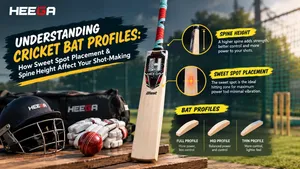 Understanding Cricket Bat Profiles: How Sweet Spot Placement & Spine Height Affect Your Shot-MakingDiscover how cricket bat profiles, sweet spot placement, spine height, and edge thickness impact your shot-making, pick-up, and power transmission on the pitch.
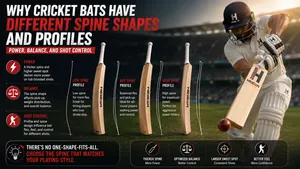 Why Cricket Bats Have Different Spine Shapes and Profiles - Power, Balance, and Shot ControlLearn why cricket bats have different spine shapes and profiles and how bat design affects weight distribution, power, balance, pick-up, timing, and shot control.
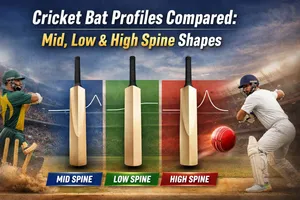 Cricket Bat Profiles Compared: Mid, Low & High Spine ShapesExplore cricket bat profiles in detail with a complete comparison of mid, low, and high spine shapes. Learn how each bat profile affects power, balance, pickup, and performance across different playing conditions and formats.