Why Cricket Bats Have Different Spine Shapes and Profiles - Power, Balance, and Shot Control

Introduction: Why Don't All Cricket Bats Look the Same?
Walk into a cricket equipment store and look at a selection of bats.
At first glance, they may all seem similar.
They have a blade.
They have a handle.
They have a toe.
They have a spine.
But look more closely and you will notice something important.
The shape of the blade can be completely different from one bat to another.
Some bats have a tall, prominent spine.
Some have a flatter profile.
Some have a thick middle.
Others distribute more wood toward the edges.
Some feel light and quick in the hands, while others feel powerful and substantial.
These differences are not simply about appearance.
Bat profile is an important part of cricket bat design.
The shape and distribution of wood can influence:
- Weight distribution
- Pick-up
- Balance
- Sweet spot characteristics
- Power potential
- Timing
- Maneuverability
- Player comfort
This is why two cricket bats with the same listed weight can feel completely different when a player picks them up.
Understanding bat profiles helps players make more informed equipment choices instead of selecting a bat based only on weight, brand, or appearance.
What Is a Cricket Bat Profile?
A cricket bat profile describes the overall shape and distribution of wood throughout the blade.
It includes characteristics such as:
- Spine height
- Edge thickness
- Blade shape
- Sweet spot position
- Toe shape
- Distribution of mass
Manufacturers can adjust these elements to create different performance characteristics.
What Is the Spine of a Cricket Bat?
The spine is the raised central area running along the back of the bat.
It is one of the most noticeable elements of modern bat design.
The spine generally becomes more prominent around the central hitting area and gradually reduces toward the toe and shoulders.
Why Is the Spine Important?
The spine contributes to the distribution of wood through the blade.
More wood in the central region can help create a substantial hitting area.
The exact effect depends on the complete bat profile rather than the spine alone.
What Are Bat Edges?
The edges are the thicker sections running along the sides of the blade.
Edge thickness is another important part of bat design.
A bat with larger edges can have more material distributed toward the outer portions of the hitting area.
Why Do Manufacturers Increase Edge Thickness?
Increasing edge thickness can allow manufacturers to retain more mass around the hitting zone.
It can also influence the bat's overall profile and balance.
Spine Height and Edge Thickness Work Together
Players should not look at spine height in isolation.
A bat with a tall spine and moderate edges can feel different from a bat with a slightly shorter spine and larger edges.
The entire profile determines how the mass is distributed.
Why Two Bats With the Same Weight Can Feel Different
Imagine two bats that both weigh 1.2 kg.
One has more mass concentrated around the middle.
The other distributes more mass toward the edges and lower blade.
Although the scales show the same weight, the bats may feel completely different during a swing.
This is known as pick-up.
What Does Pick-Up Mean?
Pick-up describes how heavy or light a bat feels when a player lifts and swings it.
It is influenced by:
- Actual weight
- Balance point
- Mass distribution
- Handle design
- Bat profile
Why Pick-Up Matters
A bat that feels comfortable in the hands can make it easier for a player to:
- Move the bat quickly
- Adjust to deliveries
- Control the swing
- Change shot direction
Listed Weight Is Not the Whole Story
Many players make the mistake of looking only at the number printed on a bat.
For example:
1.2 kg
That number tells you the physical weight.
It does not completely explain how the bat will feel during a swing.
Balance Changes Bat Feel
The position of the bat's center of mass affects how it feels.
A bat with more weight toward the lower blade can feel different from one with more mass closer to the hands.
Low-Middle Profiles
A low-middle profile places a significant portion of the hitting area and mass toward the lower section of the blade.
This type of design can suit players who frequently play on lower-bouncing pitches or prefer a particular balance.
Mid-Middle Profiles
A mid-middle profile distributes the main hitting area more centrally.
It can offer a versatile balance between power and maneuverability.
High-Middle Profiles
A higher middle can suit players who prefer the bat to feel more maneuverable and whose playing conditions or technique favor a higher contact area.
The best profile depends on the individual player.
Why Sweet Spot Position Matters
The sweet spot is the region where the bat generally delivers efficient contact and a favorable feel when striking the ball.
Its position is influenced by the bat's construction and profile.
A Low Sweet Spot
A lower sweet spot can suit players who make frequent contact lower on the blade.
It may also work well for certain pitch conditions.
A Mid Sweet Spot
A middle sweet spot is a versatile option for many players.
It can provide a balanced hitting area for a broad range of shots.
A High Sweet Spot
A higher sweet spot may suit players who naturally make contact higher on the blade.
It can also be appropriate for certain playing conditions.
Profile and Playing Conditions
Bat selection should not happen in isolation.
The pitch can influence which type of profile feels most appropriate.
Hard, Bouncy Pitches
Players facing higher bounce may prefer a bat profile that complements their contact position and playing style.
Lower-Bouncing Pitches
Players on slower or lower-bouncing surfaces may prefer a profile that provides a comfortable hitting area closer to where they naturally make contact.
Profile and Playing Style
Players have different techniques.
Some stand deep in the crease.
Others move aggressively toward the ball.
Some rely heavily on front-foot shots.
Others are comfortable playing from the back foot.
Front-Foot Players
A player who frequently drives the ball may prefer a profile that provides a comfortable hitting area for their typical contact position.
Back-Foot Players
Players who regularly play cuts and pulls may prefer a different sweet spot location.
All-Round Batting Styles
Players who use a wide variety of shots may prefer a more balanced profile.
Why Bat Profiles Are Personal
There is no single bat profile that is perfect for every cricketer.
The ideal design depends on:
- Height
- Strength
- Technique
- Batting position
- Playing conditions
- Preferred shots
- Personal feel
Why Bigger Edges Don't Automatically Mean More Performance
Modern cricket bats often feature large edges.
However, bigger edges alone do not guarantee that a bat will perform better for every player.
The overall construction matters.
Why Manufacturers Use Modern Profiles
Manufacturers aim to maximize performance while keeping the bat practical to use.
Modern pressing and shaping techniques allow manufacturers to distribute wood strategically.
The Importance of Mass Distribution
A manufacturer can adjust where wood is concentrated.
This can change:
- Balance
- Pick-up
- Feel
- Hitting characteristics
Power Comes From More Than Bat Shape
It is important to understand that bat profile is only one factor in power.
Power also depends on:
- Bat speed
- Contact quality
- Timing
- Player strength
- Technique
- Ball speed
A player with excellent timing can generate impressive results with a relatively traditional profile.
Why Timing Often Beats Raw Power
The most effective contact occurs when the bat meets the ball efficiently.
A well-timed shot can travel quickly without the player needing to swing excessively hard.
Profile Can Influence Confidence
A player who feels comfortable with their bat may naturally become more confident.
Confidence can encourage:
- Better shot selection
- More controlled swings
- Improved timing
- Greater willingness to play attacking shots
Why Pick-Up Can Affect Batting Technique
If a bat feels excessively heavy during movement, a player may unconsciously alter their technique.
They might:
- Swing earlier
- Lose control
- Reduce bat speed
- Compensate with their hands
A Comfortable Profile Supports Natural Movement
The objective should be to find a bat that allows the player's existing technique to work naturally.
Handle and Profile Work Together
The blade is not the only factor influencing pick-up.
The handle also contributes to how the bat feels.
Why Handle Length Matters
Different bats can have different handle configurations and lengths.
These can affect the relationship between the player's hands and the blade.
The Shape of the Handle Matters Too
Handle construction can influence:
- Comfort
- Shock absorption
- Grip
- Control
This works alongside the blade profile to determine overall feel.
Toe Design Also Influences the Profile
The toe is the bottom section of the bat.
Manufacturers can shape it differently depending on the desired balance and construction.
Why Toe Shape Matters
The amount of wood around the toe can influence the bat's weight distribution.
It can also affect how the bat sits when grounded.
Traditional vs Modern Bat Profiles
Older cricket bats often had relatively traditional shapes.
Modern bats can feature:
- Larger edges
- Taller spines
- More pronounced profiles
- Optimized sweet spots
- More aggressive shaping
Why Modern Bats Look Different
The evolution of bat manufacturing has allowed designers to explore new ways of distributing wood.
Players now have more choices than ever.
Why Profile Doesn't Tell You Everything
A bat can have an impressive profile but still feel wrong for a particular player.
The player needs to test the actual bat.
The Importance of Pick-Up Testing
Whenever possible, players should physically pick up a bat before buying.
Try:
- Lifting it
- Taking the stance
- Playing shadow shots
- Moving through a normal swing
Why Shadow Batting Helps
Shadow batting allows players to understand how the bat moves without hitting a ball.
It can reveal whether the bat feels:
- Balanced
- Heavy
- Quick
- Comfortable
Test More Than One Bat
If possible, compare multiple bats with similar listed weights.
You may discover significant differences in feel.
Why Players Should Not Chase Maximum Edges
A huge edge may look impressive in photographs.
But a player should prioritize:
- Balance
- Pick-up
- Quality
- Suitable weight
- Construction
- Comfort
Kashmir Willow and Bat Profiles
Kashmir Willow bats are available in a variety of profiles.
They can be suitable for:
- Beginners
- Club players
- Academy players
- Training
- Competitive cricket
English Willow and Bat Profiles
English Willow bats also come in a wide range of profiles and specifications.
Players can choose designs based on their preferred balance and performance characteristics.
Does Willow Type Change the Profile?
The type of willow and manufacturing process can influence how a bat is constructed.
However, profile remains a separate design characteristic.
Two bats made from the same willow category can still have very different profiles.
Why Grade Does Not Determine Profile
Bat grade generally refers to characteristics of the willow rather than the complete shape of the bat.
A higher-grade bat can still have a profile that does not suit a particular player's preferences.
Why Players Should Consider the Whole Bat
Instead of asking:
“How big are the edges?”
players should ask:
“How does this entire bat feel when I play?”
Bat Profile and Junior Players
Young players also need suitable profiles.
The bat should be appropriate for their:
- Height
- Strength
- Skill level
- Batting style
A large adult-style profile may not be appropriate for a developing player simply because it looks powerful.
Why Correct Weight Still Matters
Profile can improve the feel of a bat, but it cannot eliminate the importance of suitable weight.
A bat should remain manageable for the player.
Signs a Bat Profile May Not Suit You
Players may notice:
- The bat feels heavy during the swing
- The head drops unexpectedly
- Bat speed feels slow
- Timing becomes difficult
- Shots feel uncomfortable
- The player struggles to control the blade
Signs the Profile Feels Right
A suitable bat may feel:
- Natural
- Balanced
- Easy to lift
- Comfortable through the swing
- Stable at contact
Why Professional Players Can Have Different Profiles
Watch elite cricket and you will see that players use bats with different shapes.
This is because professional players have highly individual techniques and preferences.
The Bat Is an Extension of the Player
A cricket bat should work with the player's movement rather than forcing them to change everything about their technique.
Technology Is Improving Bat Design
Manufacturing technology continues to evolve.
Computer-assisted design and improved pressing techniques can help manufacturers create precise profiles.
Future Cricket Bat Profiles
Future designs may continue exploring:
- Improved weight distribution
- Larger effective hitting areas
- Better shock management
- More precise balance
- Personalized profiles
How Heega Sports Supports Better Bat Selection
At Heega Sports, we understand that choosing a cricket bat is about much more than finding the biggest-looking blade.
Our cricket range includes:
- Kashmir Willow cricket bats
- English Willow cricket bats
- Junior cricket bats
- Different bat sizes
- Different bat profiles
- Batting gloves
- Batting pads
- Cricket helmets
- Leather cricket balls
- Practice balls
- Cricket kit bags
- Practice nets
- Cricket shoes
- Training accessories
Our goal is to help players find equipment that matches their playing style and development needs.
How to Choose a Cricket Bat Profile
Before buying a bat, consider these factors.
1. Your Batting Style
Think about where you usually make contact with the ball.
2. Your Playing Conditions
Consider the pitches and grounds where you regularly play.
3. Your Preferred Pick-Up
Do you prefer a bat that feels light and maneuverable or more substantial and powerful?
4. The Bat's Actual Weight
Do not ignore the number on the scale.
5. Balance
Pay attention to where the bat feels heaviest.
6. Spine and Edges
Look at how the wood is distributed throughout the blade.
7. Comfort
A bat should feel natural during shadow batting and normal movement.
8. Your Coach's Advice
A knowledgeable coach can help identify whether a profile matches your technique.
Common Mistakes When Choosing Bat Profiles
Choosing Only by Appearance
A large spine can look powerful, but appearance does not determine suitability.
Choosing the Heaviest Bat
More weight does not automatically mean more runs.
Buying Without Testing Pick-Up
Two bats with identical weights can feel completely different.
Ignoring Playing Conditions
Your preferred profile should make sense for the conditions you regularly face.
Copying a Professional Player
A bat used by a famous player may not suit your technique.
Cricket Bat Profiles Around the World
Cricket is played in very different conditions across Nepal, Germany, the United States, Canada, the Netherlands, and the United Kingdom.
Players in these regions may have different pitch types, weather conditions, facilities, and playing styles.
Nepal
Players can encounter a variety of outdoor surfaces and developing cricket facilities.
A versatile bat profile can be useful for players who regularly move between different playing environments.
Germany
Players may experience both outdoor and indoor cricket throughout the year.
Bat selection should reflect the player's primary playing conditions and technique.
United States
The growing cricket environment includes a variety of playing surfaces and formats.
Players can benefit from selecting a profile based on their individual batting style rather than simply following popular trends.
Canada
Players may move between outdoor summer cricket and indoor winter training.
A comfortable and manageable bat can help maintain consistent technique across different environments.
Netherlands
Changing weather and pitch conditions can create different batting challenges.
Players should consider where they naturally make contact with the ball when selecting a profile.
United Kingdom
The long-established cricket environment offers a broad range of pitches and playing conditions.
Players can choose from traditional and modern bat profiles depending on their technique and preferences.
Why Bat Profile Is Ultimately About Feel
Technical specifications are useful.
They help players compare bats.
But numbers cannot completely describe how a bat feels.
A bat's:
- Weight
- Spine
- Edges
- Balance
- Handle
- Sweet spot
- Toe
- Overall construction
all work together.
Final Thoughts
Cricket bat profiles have evolved considerably over the years.
The modern player can choose from bats with different spine heights, edge thicknesses, sweet spot positions, toe shapes, and weight distributions.
These differences exist for a reason.
Bat designers are trying to create equipment that combines power, balance, durability, and maneuverability.
But there is no universally perfect profile.
A bat that feels exceptional to one player may feel completely wrong to another.
The most important consideration is how the complete bat works with your technique.
Instead of choosing a bat simply because it has the biggest spine or thickest edges, pay attention to pick-up, balance, weight, contact position, playing conditions, and comfort.
The best cricket bat is not necessarily the one with the most dramatic profile.
It is the one that allows you to move naturally, control the blade, time the ball, and play your shots with confidence.
A bat's profile may shape the wood, but the right profile should ultimately shape the way the player feels at the crease.
🏏 Find a Cricket Bat That Matches Your Game With Heega Sports
Explore Kashmir Willow and English Willow cricket bats in different sizes and profiles, along with batting gloves, pads, helmets, leather balls, practice balls, cricket shoes, kit bags, practice nets, and training accessories.
Shop Now
Heega Sports – Helping Every Player Find the Balance Between Power, Control, and Confidence.
Related posts
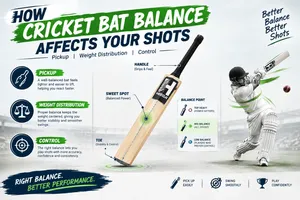 How Cricket Bat Balance Affects Your Shots: Pickup, Weight Distribution, and ControlLearn how cricket bat balance affects pickup, shot control and batting comfort. Understand weight distribution, sweet spot, bat feel and choosing the right balance.
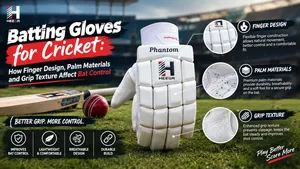 Batting Gloves for Cricket: How Finger Design, Palm Materials and Grip Texture Affect Bat ControlDiscover how cricket batting gloves, finger design, palm materials and grip texture influence bat control, comfort, protection and batting performance.
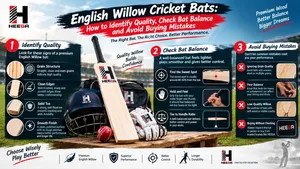 English Willow Cricket Bats: How to Identify Quality, Check Bat Balance and Avoid Buying MistakesLearn how to identify a quality English willow cricket bat, check its balance and pickup, understand grain patterns, and avoid common buying mistakes.