Why Cricket Players Tap Their Bat Before Facing a Delivery: The Meaning Behind the Routine

Introduction: The Small Routine You See Before Almost Every Delivery
Watch a cricket match closely and you will notice something interesting.
Before facing a delivery, many batters perform a small routine.
They may:
- Tap the bat on the ground.
- Mark their guard.
- Adjust their gloves.
- Look toward the bowler.
- Move around the crease.
- Take a breath.
- Reset their stance.
To someone unfamiliar with cricket, these actions may look unnecessary.
But for the batter, they can serve important purposes.
Some movements are practical.
Some are technical.
Some help the batter establish a consistent routine.
Others may simply be personal habits developed over years of playing.
The famous bat tap is therefore more than just a random movement.
It can help a batter prepare physically and mentally for the next delivery.
What Does Tapping the Bat Mean?
There is no single meaning behind every batter's bat tap.
Different players use the movement for different reasons.
A batter may tap the bat to:
- Establish their stance.
- Confirm their position in the crease.
- Mark their guard.
- Create a consistent pre-delivery routine.
- Relax before the ball arrives.
- Refocus attention.
- Prepare mentally for the next delivery.
The meaning depends on the player's individual routine.
It Is Not a Special Cricket Rule
Bat tapping is not a mandatory part of cricket.
A batter does not have to tap the bat before every delivery.
Some players do it frequently.
Others rarely do it.
Some players use different routines depending on the match situation.
Why Batters Mark Their Guard
One of the practical reasons for tapping the bat is establishing a position relative to the wickets.
Batters may ask the umpire for:
- Leg stump guard.
- Middle stump guard.
- Middle-and-leg guard.
The exact terminology and practice can vary.
Once the guard is established, the batter uses their position to judge where they are in relation to the stumps.
Why Position Matters
A batter needs to know where they are standing.
This helps them make decisions about:
- Playing straight.
- Leaving the ball.
- Moving across the crease.
- Accessing different scoring areas.
The Bat Can Help Create a Visual Reference
By placing or tapping the bat near the crease, the batter can reinforce their spatial awareness.
This can become part of their pre-delivery routine.
Bat Tapping Can Create Consistency
Cricket involves uncertainty.
The bowler changes line.
The length changes.
The speed changes.
The field changes.
A personal routine gives the batter something familiar.
The delivery is unpredictable.
The preparation can remain predictable.
Why Consistency Helps
A consistent routine can help a player transition from preparation to performance.
The batter knows what happens before they face the ball.
This can make the process feel more organized.
The Psychological Side of Bat Tapping
Batting is mentally demanding.
A batter needs to concentrate on:
- The bowler's approach.
- Release point.
- Ball movement.
- Field placement.
- Match situation.
A small routine can help bring attention back to the present moment.
A Routine Can Become a Mental Reset
Imagine a batter has just played and missed.
The next ball is coming.
There is no benefit in continuing to think about the previous delivery.
A familiar routine can help the batter reset.
Tap the bat.
Set the feet.
Look at the bowler.
Prepare again.
Why This Matters After a Mistake
Cricket is full of moments where players make mistakes.
A batter can:
- Miss a shot.
- Edge a ball.
- Get beaten.
- Play the wrong shot.
A routine can help separate one delivery from the next.
Bat Tapping and Focus
The movement itself is simple.
But simple movements can become useful cues.
When the batter completes the routine, it can signal:
“Now I am ready for the next ball.”
It Can Help Reduce Distractions
A cricket ground contains many distractions.
There may be:
- Spectators.
- Noise.
- Fielders talking.
- Music.
- Movement around the boundary.
- Match pressure.
A routine can help the batter narrow their attention.
Why Breathing Is Often Part of the Routine
Some players take a deliberate breath before facing a delivery.
This can help them relax.
Excessive tension can affect:
- Grip.
- Movement.
- Timing.
- Decision-making.
A calm breathing pattern can support controlled preparation.
Bat Tapping and Muscle Relaxation
A batter does not want to become excessively tense before the ball.
A short routine can help them return to a comfortable physical state.
Why Players Adjust Their Gloves
You may notice batters repeatedly tightening or adjusting their gloves.
This can be practical.
The gloves need to feel secure.
But it can also become part of the player's routine.
Why Grip Matters
The grip influences how the batter controls the bat.
If the hands feel uncomfortable, the player may become distracted.
Adjusting the gloves or grip can help restore comfort.
Every Batter Has a Different Routine
There is no universal pre-delivery routine.
One batter may:
- Tap twice.
- Look at the bowler.
- Adjust the back foot.
Another may:
- Tap once.
- Check the field.
- Take a breath.
Another may barely move at all.
Personal Routines Develop Over Time
Players usually develop routines through experience.
A movement that initially happens naturally may eventually become a consistent habit.
Why Professional Players Have Strong Routines
Elite players face enormous pressure.
They play in front of large crowds.
They face high-quality bowlers.
They participate in important matches.
A stable routine can provide familiarity in an unpredictable environment.
Routine Does Not Guarantee Performance
A routine is not magic.
Tapping the bat does not automatically improve batting technique.
Its value comes from how it supports the player's preparation.
The Difference Between Routine and Superstition
This is an interesting distinction.
A routine is generally performed because the player believes it helps preparation.
A superstition involves believing that a particular action can influence an outcome in a way that is not directly related to performance.
Cricket contains plenty of both.
Some Players Are Highly Ritualistic
Certain players may repeat specific actions before every delivery.
They may:
- Adjust their clothing.
- Tap the bat a particular number of times.
- Touch the crease.
- Look toward a specific part of the field.
These actions can become deeply personal.
Why Repetition Makes Routines Powerful
The more frequently a player repeats a routine, the more familiar it becomes.
Eventually, the player may perform it almost automatically.
Routines Can Signal Readiness
A pre-delivery routine creates a sequence.
For example:
Reset → Tap → Set → Watch → React
The exact sequence differs from player to player.
Why the Final Step Is Always Important
After completing the routine, the batter needs to shift their attention toward the bowler.
The routine should prepare them for the delivery rather than distract them from it.
What Happens When the Bowler Delays?
Sometimes a bowler pauses during the run-up.
The batter may have already completed their routine.
This can break concentration.
Experienced players often restart their routine.
Why Starting Again Can Help
Repeating the routine can restore the player's preparation.
It creates another clear transition into the delivery.
Bat Tapping and the Cricket Crease
The crease provides important visual references.
Batters need to understand:
- Where they are standing.
- How much they can move.
- Where the popping crease is.
Tapping or placing the bat can reinforce awareness of these boundaries.
Why Foot Placement Matters
Batting technique begins with the feet.
The batter needs a stable base.
A small pre-delivery routine can help them settle their feet before the bowler releases the ball.
Bat Tapping and Balance
A batter should ideally begin from a comfortable and balanced position.
The tap can become the final movement before the player settles into their stance.
The Bat Tap Can Be a Timing Cue
Some players use the movement to establish rhythm.
The bowler approaches.
The batter completes their preparation.
The body becomes ready.
The ball is released.
This rhythm can support concentration.
Why Rhythm Matters in Batting
Batting is highly coordinated.
The player needs to combine:
- Visual tracking.
- Footwork.
- Bat movement.
- Balance.
- Decision-making.
A consistent pre-delivery rhythm can help establish readiness.
Bat Tapping Does Not Predict the Shot
It is important not to overinterpret the movement.
A batter tapping their bat does not necessarily mean they will:
- Defend.
- Drive.
- Pull.
- Sweep.
The tap is generally preparation, not a signal of shot selection.
The Batter Still Has to Read the Ball
Once the ball is delivered, the routine ends.
The batter must react to:
- Line.
- Length.
- Speed.
- Swing.
- Seam.
- Spin.
Why Pre-Delivery Routines Are Useful Against Fast Bowling
Fast bowling leaves little time for conscious preparation.
The batter needs to be ready before the ball is released.
A routine helps ensure that the player reaches their ready position on time.
Why Routines Matter Against Spin
Spin bowling can involve more deception.
The batter may need to read:
- Flight.
- Release.
- Turn.
- Pace.
A clear preparation routine allows the player to begin from a stable position.
Tapping Before a Defensive Shot
A batter might tap the bat and settle before preparing to defend.
The same routine may be used before an attacking shot.
The routine itself does not determine the stroke.
Bat Tapping in Test Cricket
Long-format cricket can make routines particularly valuable.
A batter may face hundreds of deliveries during a match.
Maintaining concentration for long periods is difficult.
A consistent routine can help break the innings into individual deliveries.
One Ball at a Time
A batter cannot control what happened five overs ago.
They can control how they prepare for the next delivery.
This is one of the strongest psychological benefits of a good routine.
Bat Tapping in ODI Cricket
One-day cricket requires a mixture of patience and aggression.
A batter may need to constantly adjust their strategy.
A familiar routine can remain stable even when the scoring approach changes.
Bat Tapping in T20 Cricket
T20 cricket creates intense pressure.
The batter may need to score quickly while making rapid decisions.
A short routine can help maintain focus without wasting unnecessary time.
Why Routines Become Shorter in Fast-Paced Situations
A batter does not want a long routine that delays play or interferes with concentration.
Efficient routines are usually simple.
The Role of the Non-Striker
The non-striker also has a role in the batting partnership.
While one batter prepares, the other may:
- Communicate.
- Watch the field.
- Prepare to run.
- Monitor the bowler.
Communication Before the Delivery
Batters may communicate about:
- Singles.
- Running opportunities.
- Field placements.
- Tactical plans.
Once the bowler begins the delivery, attention shifts toward the ball.
Why the Field Influences Preparation
A batter's routine may include a quick look around the field.
They may identify:
- Boundary riders.
- Gaps.
- Close catchers.
- Running opportunities.
This information can influence their decision-making.
Bat Tapping and Shot Selection
The routine prepares the batter.
The delivery determines the response.
This distinction is important.
A batter may intend to attack but change their mind when the ball is bowled.
The Best Batters Stay Adaptable
A routine should create stability without making the player rigid.
The batter still needs to respond to unexpected deliveries.
Why Beginners Often Develop Similar Habits
Young players naturally copy professional cricketers.
They may begin tapping the bat because they see experienced players doing it.
This is not necessarily bad.
But young players should understand the purpose behind routines rather than copying movements blindly.
Should Young Cricketers Tap Their Bat?
They can if it helps them prepare.
But it is not necessary.
Young players should focus primarily on:
- Correct grip.
- Balanced stance.
- Footwork.
- Watching the ball.
- Shot selection.
The routine should support these fundamentals.
Avoid Making Routines Too Complicated
Young players sometimes create elaborate routines.
This can become distracting.
A simple routine is usually easier to maintain.
A Useful Beginner Routine
A young batter might use:
- Set the feet.
- Check the field.
- Take a breath.
- Tap the bat if comfortable.
- Watch the bowler.
The goal is readiness, not ritual for its own sake.
How Coaches Can Use Routines
Coaches can help players create simple routines that improve concentration.
They can encourage players to use the same sequence during practice and matches.
Why Practice Routines Before Matches
A routine should not be invented for the first time during an important match.
Players should test it during training.
Routine and Confidence
A familiar routine can provide a feeling of control.
The player knows what to do before the delivery.
That familiarity can support confidence.
Routine and Pressure
Under pressure, players may become rushed.
A routine can slow the mental process just enough to restore focus.
Why Routines Help After Long Breaks
Rain delays, drinks breaks, and wickets can interrupt concentration.
A familiar routine can help the batter re-enter the match mentally.
Cricket Is a Sequence of Individual Deliveries
A match may last hours.
But for a batter, the immediate challenge is always the next ball.
Routines help players approach that challenge one delivery at a time.
The Science of Habit Formation
Repeated behaviors can become habitual.
When a player performs the same preparation sequence frequently, it becomes easier to reproduce.
The brain begins to associate the sequence with readiness.
Habit Does Not Mean Automatic Success
A routine can become automatic, but the actual batting response still requires perception and decision-making.
The player must read the ball and react.
Why Elite Players Keep Simple Things Simple
At the highest level, unnecessary movements can become distractions.
Many elite athletes use simple routines because they are easy to repeat under pressure.
Bat Tapping and Equipment Familiarity
The bat itself also contributes to the player's routine.
A familiar bat can provide:
- Known weight.
- Familiar balance.
- Comfortable grip.
- Predictable feel.
Why Bat Balance Matters
A batter who is comfortable with the bat may find it easier to settle into their stance.
Equipment should support confidence rather than distract from it.
Choosing the Right Cricket Bat
Players should consider:
- Height.
- Strength.
- Playing level.
- Bat weight.
- Balance.
- Handle comfort.
A bat that is too heavy can make batting unnecessarily difficult.
Why Grip Condition Matters
A worn grip can affect comfort.
Players should replace grips when they become excessively worn or slippery.
Cricket Bat Care and Routines
Players who develop good equipment habits can include bat checks as part of their preparation.
Before training, they can check:
- Grip.
- Toe.
- Edges.
- Face.
Bat Tapping Is Part of a Bigger Preparation Process
The tap itself is only one small action.
The complete preparation may include:
- Equipment check.
- Field awareness.
- Breathing.
- Foot placement.
- Grip.
- Bat position.
- Visual focus.
Together, these actions prepare the batter for the delivery.
Why Every Player Develops Their Own Style
Cricket is a technical sport, but players are individuals.
Two batters can have completely different:
- Stances.
- Bat lifts.
- Triggers.
- Routines.
- Grip styles.
Both can be successful.
There Is No Perfect Batting Routine
A routine should suit the individual player.
What helps one batter may distract another.
Routine Should Support Technique
The most important thing is that the routine leads into a balanced, ready batting position.
When a Routine Becomes a Problem
A routine can become unhelpful if it:
- Takes too long.
- Causes distraction.
- Creates anxiety when interrupted.
- Makes the player focus more on the ritual than the ball.
The purpose should always be preparation.
The Mental Reset Between Deliveries
One of the biggest benefits of a pre-delivery routine is the reset.
Previous ball finished.
Routine begins.
Next ball starts.
This simple cycle can help players remain present.
Heega Sports and Better Batting Preparation
At Heega Sports, we understand that confident batting starts with proper preparation and reliable equipment.
Our cricket range includes:
- Kashmir Willow cricket bats.
- English Willow cricket bats.
- Leather cricket balls.
- Practice balls.
- Batting gloves.
- Batting pads.
- Cricket helmets.
- Cricket shoes.
- Cricket kit bags.
- Practice nets.
- Training accessories.
The right equipment allows players to build consistent training habits and focus on developing their technique.
Final Thoughts
Why do cricket players tap their bats before facing a delivery?
There is no single answer.
For some players, it helps establish their position.
For others, it is part of their batting stance.
For many, it becomes a familiar routine that helps them reset, focus, and prepare for the next ball.
The tap itself does not make someone a better batter.
What matters is what comes after it.
The batter watches the bowler.
Reads the delivery.
Moves the feet.
Maintains balance.
Selects the appropriate response.
And commits to the shot.
That small tap can therefore represent something much bigger: the transition from preparation to performance.
In a sport where one delivery can change an entire innings, having a reliable way to reset and prepare can be valuable.
The next time you see a batter tap the bat before a delivery, look beyond the movement.
It may be their way of saying:
The previous ball is finished. I am ready for the next one.
🏏 Prepare Better. Play With Confidence.
Explore quality cricket bats, leather balls, practice balls, batting gloves, pads, helmets, cricket shoes, kit bags, practice nets, and training accessories at Heega Sports.
Shop Now
Heega Sports – Helping Players Build Better Habits From Training to Match Day.
Related posts
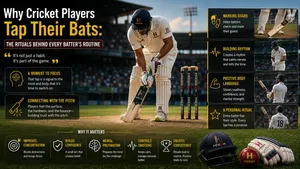 Why Cricket Players Tap Their Bats: The Rituals Behind Every Batter’s RoutineWhy do cricket players tap their bats before facing a ball? Discover the meaning behind bat tapping, guard-taking, trigger movements, practice swings, and other batting rituals.
 Why Cricket Players Wear Different Numbers: The Meaning and History Behind Jersey NumbersWhy do cricket players wear different jersey numbers? Discover the history, purpose, and meaning behind cricket shirt numbers and how they became part of player identity.
 The Hidden World of Cricket Umpires: What They Watch During Every Delivery.Discover what cricket umpires watch during every delivery. Learn how they judge wickets, no-balls, wides, boundaries, catches, run-outs, player conduct, and match conditions.